

If your landscape lighting runs on a simple low-voltage transformer, you already know the pain of leaving lights on all night or fumbling with breaker switches in the dark. A purpose-built landscape transformer with built-in timer and photocell control takes that mental load off your plate, so the system just does the right thing at the right time. I’ve pulled together six solid options that handle the heavy lifting of converting household current to safe low-voltage output for outdoor LEDs and halogens. Each one suits a different yard size, budget, and installation preference, and I’ll walk you through the trade-offs.
The Choices Worth Comparing
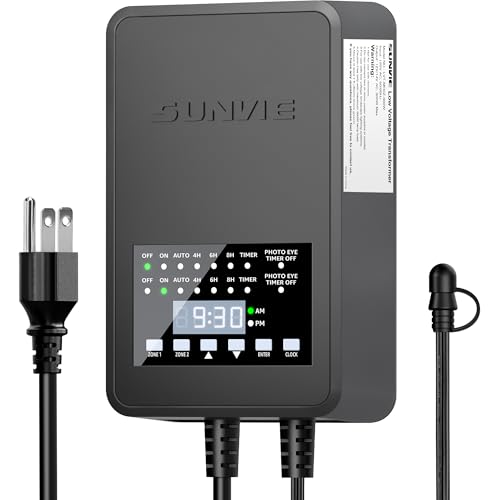
SUNVIE 300W Low Voltage Landscape Transformer with Timer and Photocell Sensor

VOLT 300W Slim Line Low Voltage Transformer (12V/15V)

SUNVIE 100W Low Voltage Transformer Outdoor, 120V to 12V DC

Lightkiwi 300W Landscape Lighting Transformer Adjustable 12-15V Multi-Tap

SUNVIE 200W Low Voltage Landscape Transformer with Timer and Photocell

DEWENWILS 60W 120V Low Voltage Transformer Outdoor
A Closer Look At Each Pick
Yards with a mix of path lights, spotlights, and accent fixtures demand serious power, and this SUNVIE 300W unit leans into that workload without breaking a sweat. It steps 120V household current down to 12V or 14V AC, which means it’s compatible with virtually every low-voltage LED and halogen landscape system on the market.
The two independently controlled output zones are the real headline feature. You can run your front path on one schedule and your backyard uplighting on another, which is a genuine quality-of-life upgrade compared to single-zone transformers. The removable photocell sensor ships with a 6.8-foot UL-listed cord, so you can mount the transformer indoors if you prefer and still get reliable dusk-to-dawn behavior. Weatherproof construction handles outdoor mounting too.
Positive Points
- Two-zone independent scheduling for separating front and back lighting scenes
- 300W capacity handles medium to large landscape installations with headroom
- Detachable photocell with extended UL-listed cord for flexible mounting
- Compatible with both 12V and 14V LED and halogen fixtures for mix-and-match flexibility
- Weatherproof housing rated for outdoor installation near the lighting zones
Things To Consider
- Larger footprint than compact 60W or 100W units, so plan your mounting location
- Programming two zones takes a few extra minutes during initial setup
Key Specs
Who Should Grab It
Homeowners with mid-to-large yards running separate front and back lighting zones who want automatic dusk-to-dawn control without managing two separate transformers.
Consider Something Else When
The VOLT 300W Slim Line is a better match when installation space is extremely tight and you specifically need a low-profile magnetic transformer with 12V and 15V taps for long wire runs.
Not every yard has a shed wall with room for a chunky transformer box. The VOLT 300W Slim Line solves that problem by stripping out unnecessary voltage taps and keeping only the 12V and 15V outputs most modern LED systems actually use. That simplification is what lets the housing stay slim and light.
The 15V tap earns its keep on longer wire runs where voltage drop (the gradual loss of power as electricity travels through long cable stretches) would otherwise dim your far-end fixtures. Built-in timer and photocell inputs handle automatic on-and-off scheduling, which is a nice touch for anyone tired of flipping breakers by hand. Magnetic transformer construction tends to run cooler and quieter than electronic alternatives, depending on your installation.
Practical Advantages
- Slim profile fits tight mounting locations where bulkier transformers won’t go
- 15V tap compensates for voltage drop on extended wire runs
- Magnetic transformer design tends to run cooler under sustained load
- Integrated timer and photocell support for hands-off scheduling
Points To Note
- Limited to two voltage taps (12V and 15V), so older 13V or 14V specialty fixtures may not match
- Magnetic core adds some weight compared to slim electronic units
Made For
Installers working with constrained mounting spaces or long wire runs who appreciate a magnetic transformer’s thermal stability and don’t need extra voltage tap options.
Look Elsewhere When
The Lightkiwi 300W Multi-Tap transformer is the smarter choice when you need 12V, 13V, 14V, and 15V output flexibility for mixed fixture types across the same yard.
Small gardens don’t need 300W of overhead, and that’s exactly where this 100W SUNVIE unit fits into a residential setup. It converts 120V AC household current to 12V DC, which pairs cleanly with most modern DC-input LED landscape fixtures. The compact footprint makes it easy to tuck behind shrubbery or mount on a fence post.
The weatherproof housing handles rain and seasonal moisture without complaint, which matters given how often transformers end up mounted near the actual lighting zones. One thing worth noting: this is a DC output unit, so halogen fixtures won’t work, only DC-compatible LEDs.
Everyday Advantages
- 100W capacity sized appropriately for small to mid garden installations
- 12V DC output pairs with modern LED landscape fixtures efficiently
- Weatherproof construction for direct outdoor mounting
- Compact housing won’t dominate smaller yard aesthetics
Trade Offs
- DC output means halogen and some older AC fixtures won’t work
- 100W ceiling can be limiting if you plan to expand the lighting system later
Quick Facts
Right Fit For
Homeowners with compact yards using DC-compatible LED path lights, spotlights, or in-ground fixtures who don’t need heavy wattage headroom.
Skip It When
The DEWENWILS 60W transformer is a smarter choice when you only need to power a handful of accent lights and want the smallest possible footprint.
Long wire runs and mixed fixture types are the scenarios where multi-tap transformers earn their reputation, and the Lightkiwi 300W brings four output voltages to the table: 12V, 13V, 14V, and 15V AC. That range means you can fine-tune output to compensate for voltage drop across sprawling installations. The ETL listing (a North American safety certification from Edison Testing Laboratories) signals the unit has passed recognized electrical safety testing, which is reassuring for permanent outdoor wiring.
Weatherproof construction supports direct outdoor mounting, so you can position the transformer close to the lighting zones rather than running long home-side wire runs. Compare that to the VOLT Slim Line I covered earlier, which trims the voltage options to just 12V and 15V. The trade-off is housing size: this Lightkiwi unit is bulkier, though it earns that space with genuine flexibility.
A Favorable Mix
- Four voltage taps (12V, 13V, 14V, 15V) handle diverse fixture types in one yard
- 300W capacity supports large residential installations with room to grow
- ETL listed for verified electrical safety compliance
- Weatherproof housing for direct outdoor mounting near lighting zones
- Adjustable output helps maintain consistent brightness across long wire runs
Honest Caveats
- Bulkier than single-tap or two-tap slim transformers
- Multi-tap setup requires basic understanding of voltage drop compensation
Feature Snapshot
Whose Shelf It Belongs On
DIYers with large yards and varied fixture types, plus pros handling multi-zone installs where voltage flexibility matters more than compact housing.
Swap It Out When
The SUNVIE 300W two-zone transformer is a stronger pick when you primarily need separate front and back scheduling rather than multi-tap voltage flexibility.
Mid-size residential yards are the sweet spot for this 200W SUNVIE transformer. It converts 120V household current to 12V or 14V AC, giving you compatibility with most LED and halogen landscape systems without the overkill of a 300W unit. The dusk-to-dawn photocell handles the on-and-off cycle automatically, which means no more remembering to flip switches before bed.
Compatible with path lights, spotlights, deck lights, and string lights, this is the kind of “fits most things” transformer that suits suburban yards with mixed fixture types. Unlike the 100W SUNVIE DC unit I covered earlier, this model outputs AC, so halogen and traditional low-voltage LED fixtures both work.
Real Benefits
- 200W capacity suits mid-size residential yards without significant headroom waste
- 12V and 14V AC output works with both LED and halogen fixtures
- Dusk-to-dawn photocell automates the on-off cycle reliably
- Broad fixture compatibility across path, spot, deck, and string lights
Small Caveats
- Single-zone output means no independent scheduling for separate areas
- Photocell placement depends on access to ambient outdoor light
Best Suited To
Homeowners with average suburban yards running a mix of LED and halogen fixtures who want straightforward dusk-to-dawn automation without zone complexity.
Reach For A Different Pick When
The SUNVIE 300W two-zone transformer is a better match when you want to run separate schedules for different yard areas and need the extra wattage headroom.
Tiny patios and modest accent lighting setups don’t need 300W of capacity, and this DEWENWILS 60W unit keeps things appropriately scaled. It steps 120V AC down to 12V DC, which works with DC-compatible LED fixtures like the small path lights and accent spots you’d typically use on a compact patio. The dusk-to-dawn sensor triggers the lights automatically, so you set it and forget it.
The countdown timer and memory function add a layer of control that helps with energy savings. Compared to the SUNVIE 100W DC unit I covered earlier, this model has less wattage headroom but a smaller footprint, which can matter for tight installations where mounting space is at a premium.
Useful Touches
- Compact 60W capacity fits tiny patios and small accent lighting setups
- Dusk-to-dawn sensor with countdown timer supports energy-saving schedules
- Memory function preserves settings through power interruptions
- Small footprint works in tight mounting locations
A Few Limitations
- DC output only, so halogen and AC-only fixtures are not compatible
- 60W ceiling restricts the total number of fixtures you can run
Feature Rundown
Perfect Match For
Patio owners and renters running a handful of DC-compatible LED accent lights who want automatic dusk-to-dawn behavior without paying for unused wattage capacity.
A Better Fit Elsewhere
The SUNVIE 100W DC transformer is the smarter upgrade path when you anticipate adding more fixtures or want extra wattage headroom for future expansion.
What To Weigh Before Picking A Landscape Transformer
Start with your yard’s actual fixture count and total wattage draw. Add up the wattage rating of every landscape light you plan to connect, then multiply by 1.25 to leave a 25% safety margin. That number tells you the minimum transformer capacity you need, and going one size up gives you room to expand later. A patio with four small path lights can run comfortably on 60W, while a multi-zone yard with uplighting, path lights, and accent spots needs 200W or 300W.
Output voltage matters more than people expect. AC output works with both LED and halogen fixtures, while DC output pairs only with DC-compatible LEDs. If you have older halogen fixtures or plan to mix fixture brands, AC output is the safer bet. For pure modern LED installs, DC units tend to run more efficiently.
Multi-tap transformers (units with several selectable voltage outputs like 12V, 13V, 14V, 15V) help when your wire runs stretch across long distances. Voltage drop, which is the gradual loss of electrical pressure as current travels through long cable runs, dims far-end fixtures. Higher voltage taps compensate for that drop so every fixture in the chain shines consistently.
Photocell sensors and built-in timers handle the daily on-off cycle automatically. Removable photocells with extended cords give you flexibility to mount the transformer indoors while placing the sensor outdoors. For most homeowners, that automation is the single biggest quality-of-life upgrade over a manual setup.
Key Considerations Across These Picks
Where Shoppers Go Wrong
The most common slip-up is buying a transformer sized exactly to current fixture load with zero headroom. Once you add a single uplight or string light set six months later, you’re back shopping for a bigger unit. Underestimating wire run length is another frequent mistake: long cable stretches cause voltage drop that dims far-end fixtures, and shoppers often don’t realize their transformer choice affects that until the lights are already installed.
The Upgrade Payoff
Higher-tier 300W transformers with multi-tap voltage outputs and ETL safety certifications cost more, but they earn that premium in three ways. They support larger installations with room to expand. They let you fine-tune output voltage to compensate for voltage drop across long wire runs. And they typically carry recognized safety certifications that confirm the unit has passed independent electrical testing, which is reassuring for permanent outdoor wiring that stays energized through rain and snow.