

I think the moment you fumble for keys in a dark driveway, or step off a porch into nothing, you understand why motion sensor outdoor lighting exists. This list pulls together seven options that genuinely help: solar sconces, hardwired floods, and a couple of hybrids. I’ll walk through each one with its real-world feel, then a quick buying guide so you can match a fixture to your home.
The Essentials At A Glance

Moodyfei Solar Wall Sconce Lights with Motion Sensor

GOOUQA 18″ Motion Sensor Outdoor Porch Lights (Black)

VIANIS 14″ Bronze Porch Lights with Motion Sensor, 2-Pack

Onforu 75W LED Flood Light Motion Sensor Outdoor, 7000lm
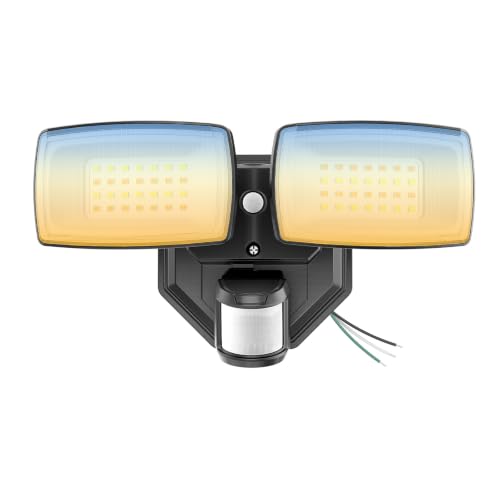
Onforu 32W 2-Head Motion Sensor Outdoor Lights (Black)

Onforu 100W LED Motion Sensor Outdoor Lights, 11000lm

VENSSTNOR Solar Flood Lights with Dual Motion Sensors
The Picks, Examined More Closely
The Moodyfei is a wall-mounted solar sconce, the kind you pop onto a fence post or beside a side gate without touching a wire. Photocell (a sensor that reads ambient light) and PIR motion sensing (passive infrared, which detects body heat movement) work together: at dusk the unit stays quiet until something moves, then it brightens, then dims back down.
You get three lighting modes through a small switch on the housing, ranging from motion-only bursts to a constant low glow. For most backyards, the medium setting reads as the right balance between ambiance and security. Compare that to the hardwired floods later in this list: this one asks nothing of your electrical panel.
Practical Pluses
- Wire-free install, ideal for renters or sheds where running cable is impractical
- Three operating modes let you tune brightness to neighborhood needs
- Solar top-up means no monthly energy cost, and the panel recharges even on partly cloudy days in our view
- Wall-mount design works on wood, masonry, or fence panels with basic screws
- No switch wiring required, so it pairs well with detached garages and gates
Things To Consider
- Cloud-cover runs shorten nightly output, depending on your region and panel angle
- Light throw is narrower than the GOOUQA or Onforu floods below
- Plastic-bodied housings can fade faster than aluminum under constant sun
Who It Suits Best
A renter, garden-path user, or anyone avoiding an electrician benefits most from this cordless option.
Look Elsewhere When
You need to flood a long driveway; the Onforu 75W triple-head handles that workload better.
The GOOUQA is a wall sconce with real presence, an 18-inch body and twin lamp heads that read as architectural rather than utilitarian. A photocell plus PIR sensor package covers a roughly 40-foot detection range, with three modes including a manual override that holds full brightness for about eight hours.
The black modern finish suits contemporary facades, and the IP-rated waterproof construction (IP stands for Ingress Protection, a two-digit code rating how well a fixture resists dust and water) handles rain without complaint. For most front entries, the dual-head spread feels generous without spilling light into the neighbor’s window. Versus the smaller VIANIS 14-inch below, this fixture makes more of a statement.
What Works In Its Favor
- Detection reach extends to roughly 40 feet, generous for driveways
- Twin lamp heads produce a wider spread than a single-head sconce
- Manual override mode is genuinely useful for porch gatherings or working outside after dark
- Modern black finish reads clean against light and dark siding
- Three-mode switch gives flexibility for different nights of the week
Honest Caveats
- 18-inch body overwhelms a narrow entryway; measure first
- Hardwired installation requires basic electrical comfort or a professional
- Manual override resets at dawn, so late-night events need a quick reset the next evening
Built With In Mind
Homeowners with broad garage facades, modern patios, or two-story entries will find the scale suits them.
Swap It Out When
You live with HOA rules on fixture size; the smaller VIANIS 14-inch picks up similar function in a tighter footprint.
The VIANIS porch pair is the most material-forward sconce on this list: 100% aluminum bodies with a bronze finish, sold as a two-pack so you can flank a door or light both ends of a long porch in one go. The sensor suite runs four modes, including an ECO setting that keeps the lamp dark until motion wakes it.
You may find the bronze patina develops nicely over a couple of seasons rather than flaking off like painted steel. Compared to the GOOUQA above, this fixture is more compact and more corrosion-resistant, which matters along coastal air or in rainy climates.
Reasons It Performs
- Anti-rust aluminum body handles salt air better than steel-clad competitors
- Two-pack value gives matched fixtures for double doors or wider porches
- Four working modes including ECO for low-output nights
- Bronze tone blends with traditional and craftsman-style homes
- Dusk-to-dawn photocell means no daily timer management
Small Caveats
- Hardwired install means drilling into masonry or siding, with no plug option
- ECO mode leaves the entry dark between events, which some folks find unsettling
- 14-inch body is smaller than the GOOUQA, so light output on a tall wall feels less dramatic
Whose Shelf It Belongs On
Homeowners in coastal or rainy regions who want a coordinated pair for a craftsman-style entryway.
Consider Something Else When
You want the brightest flood possible; the Onforu 100W triple-head delivers far more lumens for that brief.
The Onforu 75W shifts the conversation from sconce to floodlight. Three adjustable heads let you aim one beam down a driveway, another across a side yard, and a third at the garage door, all from a single wall mount. The 6500K color temperature (a cool, bluish-white tone, often called daylight) reads crisp and clinical, which most folks prefer for security work.
At 7000 lumens, output lands in the middle of the Onforu range, which keeps it usable for residential lots without spilling light onto neighbors. Compared to the solar sconces earlier in this list, this fixture is hardwired and IP65-rated (a rating meaning dust-tight and protected against water jets) for full exposure mounting.
The Upside
- Triple-head adjustability covers up to 270 degrees from one mount
- 7000-lumen output is plenty for a two-car driveway without overkill
- 6500K daylight tone improves camera footage and key-finding moments alike
- IP65 housing shrugs off rain, snow, and sprinkler spray
- Hardwired power means no battery swap or solar panel angle to manage
Room For Improvement
- Requires existing wiring or a new electrical run, so installation cost adds up
- Cool color temperature reads harsh against warm wood or stone facades
- No solar backup; an outage takes the fixture offline entirely
Right Fit For
Homeowners with a mid-size driveway or side yard who want strong security lighting without maxing out the wattage.
A Better Fit Elsewhere
You need a softer porch glow; the GOOUQA twin-head sconce suits an entryway aesthetic better.
The Onforu 32W is the smallest hardwired flood in the lineup, two heads instead of three, and a lower lumen count aimed at tighter jobs. Think single-car garage, narrow side path, or a back patio where you want coverage but not stadium lighting.
The 180-degree detection arc covers the standard approach angle, and owners commonly report the dusk-to-dawn photocell behaving reliably through changing seasons. Versus the bigger 100W sibling, this one stays restrained, easier on neighboring windows in a tight lot.
Notable Gains
- Lower wattage reduces both energy cost and light pollution onto adjacent lots
- Two-head design is more compact on small exterior walls
- Detection range of roughly 19 to 72 feet adapts to narrow or wider coverage
- Hardwired reliability means no battery or panel to maintain over time
- IP65 rating covers rain and dust without extra sealing
Less-Strong Areas
- 3200 lumens reads modest against a long driveway or open yard
- Hardwired only, no solar fallback during power cuts
- Cool 6500K tone can feel stark against warm-toned architecture
Made For
Homeowners with a one-car garage, small patio, or short walkway who want bright motion-triggered light without excess.
Reach For A Different Pick When
You need to light a long driveway; the Onforu 100W covers that scale more confidently.
The Onforu 100W is the heavyweight in this roundup. Three adjustable heads, 11000 lumens, and the same 6500K daylight tone as the smaller floods, all hardwired and rated for full outdoor exposure. It turns night into usable working light across a wide area.
You may find this fixture is the right call only when you genuinely need that much coverage, since overkill floods become neighborhood complaints. For long driveways, big backyards, or working properties, the output is hard to match at this size class.
Where It Helps
- 11000-lumen output covers a long driveway or large yard without supplemental fixtures
- Three adjustable heads let you shape the spread to your property layout
- Daylight 6500K color reads clean for camera footage and outdoor tasks
- IP65 construction handles storm exposure reliably
- Hardwired power keeps output consistent through cloudy stretches
Trade-Offs
- Higher output means more spill light, so aim matters for neighboring windows
- Hardwired install typically calls for an electrician if no junction box exists
- Cool daylight tone reads clinical against traditional or wood-tone facades
Best Suited To
Owners of larger lots, long driveways, or rural properties where full-yard coverage matters.
Not Your Match When
You want a softer entryway look; the VIANIS bronze pair gives decorative porch lighting instead.
The VENSSTNOR closes the list by splitting the difference between the smaller Moodyfei sconce and the Onforu hardwired floods. It is a solar floodlight with dual motion sensors (one on each side of the housing) and three charging methods, including a built-in rechargeable battery for off-grid operation.
You may find this fixture fits the awkward gap between a sconce and a flood, useful where you want flood-style coverage but lack a wire run. For most detached garages, sheds, and remote driveways, that flexibility pays off. The smart display panel on the unit lets you check status at a glance, which is a thoughtful touch.
Benefits That Matter
- Dual sensors widen the trigger zone compared to single-sensor solar floods
- Three charging methods improve reliability across weather conditions
- Rechargeable battery extends run time on cloudy stretches
- Smart display makes troubleshooting simpler than blind indicator lights
- Wire-free install works in spots where trenching cable would be impractical
Practical Considerations
- Solar charging caps output compared to the hardwired Onforu floods
- Larger solar panel footprint means more visible hardware on the wall
- Battery longevity depends on full-day sun cycles, which vary by region
Perfect Match For
Off-grid installations, detached garages, and remote sheds where wiring is impractical but flood coverage matters.
Where Another Pick Suits Better
You already have outdoor wiring; the Onforu 32W gives more reliable, consistent output with no battery aging.
What Matters Most Before Choosing Motion Sensor Outdoor Lightings
Match the Fixture to the Job
Sconces (the Moodyfei, GOOUQA, and VIANIS above) belong beside doors, on porch walls, and along fences. Floods (the three Onforu models and the VENSSTNOR) belong on eaves and garage peaks where you need downward spread. Picking the wrong shape for the location is the most common miss, and no amount of brightness fixes it.
Sensor Range and Mode Behavior
PIR motion sensors detect body heat movement across a defined arc, typically between 40 and 72 feet in this category. Photocell sensors read ambient light to switch the fixture on at dusk. A dual-mode setup lets you choose between full-bright-on-motion or dim-glow-always, which matters when neighbors are close.
Power Source Trade-offs
Solar fixtures install anywhere with a few hours of daily sun and skip the electrician. Hardwired fixtures deliver consistent output through cloudy stretches and storms, but require an existing junction box (the wall-mounted electrical housing the fixture wires into) or a new wire run. Most homes can host either, but remote sheds and fences often force the solar choice.
Weather Rating and Material
IP65 is the practical baseline for outdoor exposure, meaning dust-tight and resistant to water jets. Aluminum bodies handle salt air and rain better than painted steel. Bronze or black finishes hide weathering longer than white or bright tones.
Key Considerations Across These Picks
Wrong Turns To Avoid
Shoppers often grab the brightest floodlight they can find, then realize it lights up the neighbor’s kitchen. Aim matters as much as lumens. The second common miss is ignoring the sensor arc: a flood mounted too high or angled wrong misses the actual approach path, leaving you fumbling in the dark anyway. Measure detection angle against where people actually walk, not where you think they should.
Where The Extra Money Goes
Stepping up to a higher-tier model usually buys more lumens, more sensor modes, or a more corrosion-resistant body. The Onforu 100W vs the 32W is a pure output question, while the VIANIS aluminum vs a plastic sconce is a longevity question. Spend up when the location is permanent and the exposure is harsh; stay modest when the fixture is decorative or tucked under a deep eave.
Frequently Asked Questions
How far do motion sensor outdoor lightings typically detect movement?
Most residential fixtures in this category reach 40 to 72 feet on the high setting, with detection arcs between 180 and 270 degrees. Longer range works for driveways, while tighter arcs suit narrow side paths.
Can motion sensor outdoor lightings stay on all night?
Many models include a manual override mode that holds full brightness for several hours, useful for porch gatherings or outdoor projects. Photocell-controlled dusk-to-dawn models reset at dawn automatically, returning to motion-only the next evening.
Do solar motion sensor outdoor lightings work on cloudy days?
Yes, though output drops. Higher-efficiency solar panels store enough energy for a few nights of dim operation even after overcast stretches, assuming a full day of prior sun. Performance varies by region and panel angle.
What does an IP65 rating actually mean?
IP65 is an Ingress Protection code indicating the fixture is dust-tight and protected against water jets from any direction. For most residential outdoor mounting, this rating covers rain, sprinklers, and snow without extra sealing.
Is hardwired better than solar for outdoor motion sensor lighting?
Neither is universally better. Hardwired fixtures deliver consistent output and handle long, frequent use well, but require an electrical run. Solar fixtures install anywhere with sun, cost nothing to run, and suit remote locations where wiring is impractical.
Closing Remarks
The right motion sensor outdoor lighting depends on where you need light, how you want it triggered, and whether you can run a wire. Sconces work for entries, floods work for driveways and yards, and the hybrid picks bridge awkward middle spots. Match the fixture to the job, and the rest takes care of itself.