

Forgetting to flip the porch light off before bed costs a little on the electric bill and a lot on peace of mind. A plug-in or in-wall timer solves that without rewiring your habits, and the right one for a lamp can look very different from the right one for a bathroom fan. I’ve sorted through six solid options so the choice feels less like guesswork and more like a quick decision.
A Snapshot Of The Selections

Leviton Countdown Timer Switch for Bathroom Fan and Household Lights, 10-20-30-60 min

Intermatic Cycle Timer Clock ON/Off Plastic Switch Trippers

BN-LINK Indoor 7-Day Programmable Digital Timer Outlet, 2 Outlets

BN-LINK 24-Hour Heavy Duty Mechanical Timer Outlet, 3-Prong
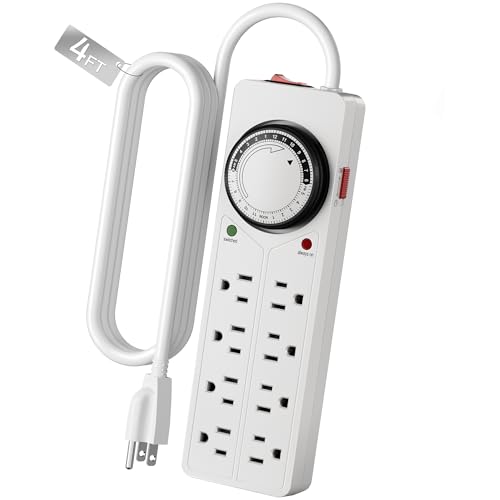
BN-LINK 8 Outlet Surge Protector with Mechanical Timer

myTouchSmart In-Wall Digital Timer with 4 Programmable Buttons
The Details Behind The Selections
Replacing a standard wall switch with a countdown timer changes how a room behaves. The Leviton unit ships with four preset buttons (10, 20, 30, and 60 minutes) so you tap once and walk away, which makes it feel like an elevator button rather than a programming exercise.
Because it doesn’t need a neutral wire, it slips into older switch boxes where many smart switches refuse to go. For a bathroom with a noisy exhaust fan or a hallway where lights stay on too long, that no-neutral design is the real reason it earns its place. Anyone rewiring from scratch won’t notice the benefit, but renters and owners of pre-1980s homes will.
A Few Highlights
- Four preset buttons take the guesswork out of timing
- Shallow body fits crowded or shallow wall boxes
- No neutral wire required, opens up older homes
- Handles motor loads up to 1/2 HP at 9.8A for fans
- Single-pole installation is straightforward for DIYers
Things To Consider
- Countdown only, no sunrise or weekday-specific programs
- Pack-of-ten format is overkill for a single-room install
- White finish is the only listed color option
Who It Suits Best
Older homeowners and renters who want a set-and-forget switch for bathroom exhaust fans or pantry lights.
Consider Something Else When
Shoppers needing weekly recurring schedules should look at the BN-LINK 7-Day Programmable Digital Timer Outlet instead.
Some products aren’t really products so much as they are life support for another product. That’s the honest read on this one: a pack of replacement ON/OFF trippers designed to clip onto the clock dial of an Intermatic mechanical timer. Lose a tripper and the whole schedule falls apart.
The pack contains four green ON trippers and four red OFF trippers, giving a typical homeowner enough to refresh a single timer and keep spares on hand. Compared to the wall-mounted switches earlier in this list, this isn’t a timer at all. It’s a maintenance part, and it’s a lifesaver for owners of TN, PB, and TB series mechanical boxes.
Strong Points
- Brings a worn-out mechanical timer back to life
- Eight trippers per pack covers multiple replacements
- Snaps onto existing dials without rewiring
Worth Noting
- Only fits specific Intermatic TN, PB, TB, and HB models
- Color-coded design means mixing up ON and OFF is easy during install
- Useless without a compatible timer already installed
Made For
Existing owners of Intermatic mechanical timers who need to replace lost or cracked trippers without buying a whole new unit.
Look Elsewhere When
Anyone starting from scratch should pick the BN-LINK 24-Hour Mechanical Timer Outlet for an actual working timer.
Most lamps run on a routine, and routines are exactly what this BN-LINK is built to capture. You can store up to eight separate on or off programs and assign them to individual days, which is more flexibility than a basic plug-in dial timer offers.
The two grounded outlets on the front run on the same schedule, so both lamps in a corner or a lamp-plus-fan pair can react together. A backup battery holds the settings through brief outages, and a daylight savings button skips the seasonal reprogramming most owners forget about. For lamps that need weekday/weekend differences, this one handles the split cleanly.
Where It Delivers
- Eight programs per day with one-minute resolution
- Daylight savings mode keeps the schedule accurate
- Backup battery protects settings during outages
- Two simultaneous outlets handle lamp pairs
Trade Offs
- Outlets operate in lockstep, no independent timing
- Programming interface has a learning curve for first-timers
- Digital display draws a small idle current 24/7
Best Suited To
Lamp owners with a varied weekly routine who want one plug to handle weekday and weekend patterns without re-programming.
A Better Fit Elsewhere
The BN-LINK 8 Outlet Surge Protector with Mechanical Timer suits entertainment centers that need surge protection alongside scheduling.
Feature Snapshot
Mechanical timers have a quiet appeal: no screens, no apps, no firmware updates. The BN-LINK dial uses built-in pins you push down for ON and leave up for OFF, which removes the loose removable pins that classic timers tend to lose down the back of a sofa.
The 3-prong grounded outlet handles heavier loads than a 2-prong design, and an indicator light shows the current state at a glance. Once set, the schedule repeats every 24 hours, which is enough for most lamp owners who want the same routine seven days a week. Compared to the digital unit above, this one trades flexibility for plain mechanical reliability.
Notable Upsides
- Push-pin dial keeps parts from getting lost
- Grounded 3-prong outlet for heavier-duty appliances
- Indicator light confirms timer state in the dark
- Mechanical movement survives power flickers without losing settings
Points To Note
- 24-hour cycle only, no weekday or weekend variation
- Tactile clicking may bother noise-sensitive bedrooms
- Bulkier than a standard outlet cover
Perfect Match For
Lamp owners who want one repeatable daily schedule with zero screens and zero programming menus.
Skip It When
Anyone wanting weekday/weekend variation should consider the BN-LINK 7-Day Programmable Digital Timer Outlet.
Where the previous BN-LINK handled a single lamp, this one is built to manage a whole entertainment corner. Eight outlets sit in a row, four controlled by the timer and four always on, and a circuit breaker switch adds a layer of protection against overloads.
The mechanical timer dial uses black pins that read easier than the older pale designs, and increments drop to 15 minutes for tighter scheduling. A 3-foot cord keeps the strip close to the outlet, which matters when the surge protector lives behind a TV stand. Owners of media consoles will see the value immediately: lamps, game consoles, and speakers can all share the same scheduled on/off behavior.
Practical Pluses
- Eight outlets handle multiple devices at once
- Surge protection covers all eight receptacles
- Circuit breaker switch adds manual cutoff
- 15-minute dial resolution for tighter schedules
Minor Gripes
- Half the outlets are always on, not timer-controlled
- 3-foot cord limits placement behind furniture
- Mechanical dial offers only one daily cycle
Who Should Grab It
Homeowners bundling a lamp or two with a media console, office gear, or a charging station that needs scheduled shutdown.
Another Choice May Suit
For just one or two lamps on a daily routine, the BN-LINK 24-Hour Mechanical Timer Outlet covers the job at a smaller footprint.
Feature Snapshot
An in-wall digital timer looks and feels like a real switch once installed. The myTouchSmart unit pairs four programmable on/off buttons with two manual on/off buttons, so the household can override the schedule without digging into menus.
Blue LED indicators show which program is active, which helps in dark hallways or bedrooms where fumbling for the right button is a nightly routine. Daily cycles repeat every 24 hours, and a battery backup holds the settings through outages. Unlike the plug-in BN-LINK units earlier in this list, this one becomes part of the wall, which suits owners who want a clean, permanent solution for indoor or outdoor lights.
Good Reasons To Consider
- Blue LED feedback makes buttons visible in the dark
- Battery backup preserves the schedule through outages
- Manual override buttons skip programming for guests
- Works for indoor and outdoor hardwired loads
Points To Keep In Mind
- Requires a neutral wire, ruling out some older switch boxes
- Daily cycle repeats, no separate weekday/weekend schedules
- Installation takes more effort than a plug-in timer
Built With In Mind
Homeowners wanting a permanent in-wall upgrade for porch lights, hallway fixtures, or a dedicated reading-lamp circuit.
Reach For A Different Pick When
Renters who can’t modify the wiring should reach for the BN-LINK 24-Hour Mechanical Timer Outlet for a no-tool install.
Feature Snapshot
Choosing Timers For Lamps Without Overthinking It
The first fork in the road is whether the timer lives in the wall or plugs into an outlet. In-wall units like the myTouchSmart look permanent and feel like real switches, but they require wiring work and often a neutral wire, which older homes may lack. Plug-in models such as the BN-LINK units work anywhere there’s a reachable outlet, which is the path of least resistance for most renters.
Load type matters just as much as location. A small table lamp barely strains a mechanical dial, while a multi-device entertainment corner needs the eight-outlet surge protector to handle several plugs at once. Look for grounded 3-prong outlets when the lamp or device has a three-prong plug, and check the wattage rating against anything larger than a lamp.
Schedule complexity separates the contenders. A daily repeat is enough for most routines, but households that want different weekday and weekend behavior benefit from the BN-LINK 7-Day digital unit with eight programs and daylight savings adjustment. For pure simplicity, mechanical dials win: no screens, no menus, just push the pin down.
Backup features are easy to overlook. Digital timers with internal batteries hold their programs through brief outages, while mechanical timers keep ticking because there’s nothing to forget. Either works, but it’s worth knowing which one you’ve bought before the first storm of the season.
Key Considerations Across These Picks
Wrong Turns To Avoid
Buying a timer rated only for 2-prong plugs and discovering the lamp has a grounded cord is a common disappointment. Match the plug type before the wattage, since adapters don’t always fit behind furniture.
Another trap is choosing a digital unit with weekday/weekend programs when a simple 24-hour cycle would do. The added flexibility costs more in setup time, and many owners end up using the same daily schedule anyway.
When Paying More Pays Off
Premium digital timers like the myTouchSmart cost more because they replace a wall switch entirely and add manual override buttons. The upgrade is worth it for permanent fixtures where a plug-in timer would look out of place, especially in hallways or outdoor-rated boxes.
For plug-in options, the higher price tag usually buys more programs, better displays, or surge protection. Shoppers with a single lamp on a simple routine don’t need any of those extras, while households with multiple devices or varied schedules benefit from the additional capability.
Frequently Asked Questions
Do lamp timers use much electricity themselves? Mechanical timers draw essentially nothing because there’s no display to power. Digital timers sip a tiny amount continuously to keep the clock and programs alive, usually under a watt.
Will a timer work with LED bulbs? Yes, modern timers handle LED, CFL, incandescent, and halogen loads across their rated wattage. The actual wattage draw of an LED is much lower than the rating, so there’s plenty of headroom.
Can I use a timer outdoors? Only if the timer’s enclosure is rated for outdoor or damp locations. Plug-in indoor timers like the BN-LINK units should stay under cover, while in-wall outdoor-rated switches can handle direct exposure.
What happens if the power goes out? Mechanical timers simply resume their cycle when power returns, with no memory loss. Digital timers with battery backup keep their programmed schedule; those without reset to defaults.
Is a mechanical or digital timer more reliable? Mechanical timers have fewer parts that can fail and keep working through power flickers without losing settings. Digital timers offer more features but depend on their battery and electronics to maintain programming.