

I know the hunt for soft light bulbs can feel oddly specific. You want a warm, gentle glow that doesn’t blast your eyes after sunset, but the spec sheet reads like a physics exam. Color temperature, lumens, base type, dimming compatibility: it’s a lot. I’ve pulled together six options that cover the most common scenarios, from everyday ceiling fixtures to vintage-style reading lamps and outdoor porches. My goal here is simple: help you match a bulb to a room without second-guessing the choice.
Your Options, Compared

TJOY LED Light Bulbs Daylight 5000K, 60W Eq
Duoled E26 Tube Bulbs 40W Dimmable 3000K T10

TJOY 6 Pack A19 LED Bulbs Soft Warm 2700K

TJOY 6 Pack A19 LED Bulbs Warm White 3000K
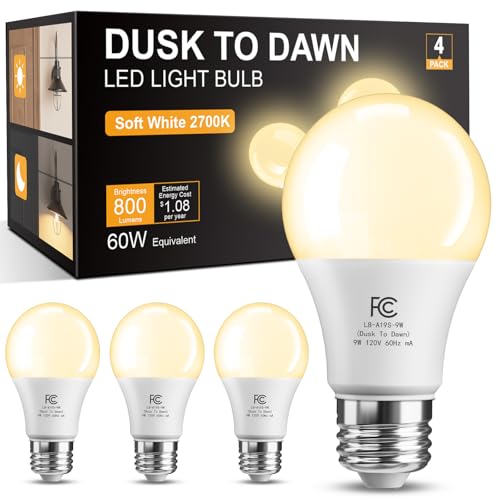
TJOY Dusk to Dawn Light Bulb Outdoor 2700K

Legental GU24 LED Puck Light Bulb 10W 2-Pack
Picking The Right Bulb Before You Click
Color temperature is the first filter. Measured in Kelvin (K), lower numbers read warmer and yellow-leaning, higher numbers read cooler and bluer. For cozy rooms, 2700K to 3000K is the sweet spot. For task-heavy zones like a workshop or a kitchen island, 4000K to 5000K keeps colors honest without feeling sterile.
Brightness comes from lumens, not watts. Watts describe energy use; lumens describe how much light actually lands on the room. A typical 60-watt incandescent replacement puts out around 800 lumens, which is the right anchor for most living spaces.
Base compatibility matters more than people expect. The standard E26 screw base fits most household lamps in North America. The GU24 twist-and-lock base looks nothing like it and only fits specific fixtures, often in newer construction or energy-certified homes. Matching the base prevents the frustrating return trip.
Dimming is another easy miss. Not every LED bulb dims cleanly, even if it claims to. A dedicated dimmable bulb paired with an LED-rated dimmer switch is the safest path, especially for dining rooms and bedrooms where you’ll actually use the slider.
How I Thought Through These Picks
I looked at four signals: real-world use case (living room versus workshop versus porch), color temperature fit, base type coverage, and any meaningful feature like dusk-to-dawn sensing. Bulbs that only exist for one niche got a niche badge. Bulbs that genuinely cover broad scenarios earned everyday or balanced framing. That keeps the list honest instead of pretending six near-identical A19 bulbs are wildly different.
Meet The Standout Selections
This TJOY bulb sits at 5000K, which lands in daylight territory rather than soft territory. That makes it the odd one out on a soft-light list, and that’s intentional. Some rooms want alertness over ambiance, and a home office, garage workbench, or laundry sorting zone is exactly that.
It uses the standard E26 base, runs at 9 watts, and targets the output of an older 60-watt incandescent. For anyone upgrading one room at a time, the same base as the rest of the list means you can swap fixtures without adapters.
Standout Benefits
- Crisp 5000K tone keeps colors true for sorting, crafting, and detail work.
- Standard E26 base drops into any common household socket.
- 9-watt draw replaces a 60-watt incandescent for noticeable energy savings.
- A19 shape fits enclosed and open fixtures equally well.
Things To Consider
- 5000K reads cool and bluish, so it can feel harsh in a bedroom or living room.
- Not the right pick if you specifically wanted the warm side of soft light.
Right Fit For
People who want alertness and color accuracy in a workshop, garage, home office, or laundry room.
A Better Fit Elsewhere
For a warm living-room glow, the TJOY 6 Pack A19 Soft Warm 2700K (pick 3) is the more natural match.
This Duoled bulb is a T10 tube with an exposed-filament Edison look, so it doubles as decor. At 3000K soft white, it reads warm without tipping into candle territory, which keeps skin tones flattering under pendant lighting. Compared to the standard A19 picks above, the form factor is the whole point.
It uses an E26 medium base and is built for dimming. Flicker-free behavior matters here because exposed filaments make any flicker more visible than in a frosted household bulb.
Notable Gains
- Edison-style filament turns the bulb itself into part of the room design.
- 3000K soft white suits dining nooks, bar pendants, and reading sconces.
- Dimmable design lets you slide from task brightness to candlelit mood.
- E26 base means no rewiring or adapter hunt.
Honest Caveats
- T10 tube shape won’t fit standard lamp harps or small enclosed globes.
- 40W-equivalent output is gentler than a 60W replacement, so it works best as a layered light.
Best Suited To
Anyone decorating around a visible bulb, from farmhouse kitchens to mid-century reading lamps where the glow is the centerpiece.
Consider Something Else When
For a primary ceiling fixture that needs to fill a whole room, the TJOY 6 Pack Warm White 3000K (pick 4) gives you the same color temperature in a broader-beaming A19 shape.
This is the bulb I’d hand to anyone redoing a whole apartment in a single trip. The six-pack covers a living room, dining room, and a couple of bedside lamps without leaving anything mismatched. At 2700K, it leans warm and golden, the color temperature most people picture when they say “soft.”
The A19 shape and E26 base fit the fixtures you already own. At 9 watts per bulb, you’re swapping a 60-watt incandescent for noticeably lower energy use without giving up brightness.
The Good Stuff
- 2700K warm white flatters wood tones, warm paint colors, and skin.
- Six-bulb pack standardizes the glow across the whole home.
- Standard A19 with E26 base fits table lamps, ceiling fixtures, and sconces.
- 9-watt draw cuts energy use meaningfully against older incandescents.
Worth Noting
- Not dimmable, so it won’t cooperate with a slider switch.
- No IR radiation and no mercury means safer disposal, but they still belong in proper recycling where available.
Feature Snapshot
Made For
Households doing a whole-home refresh on a single warm color temperature, especially renters and first-apartment dwellers.
Look Elsewhere When
If your kitchen feels gloomy at 2700K, the TJOY 6 Pack Warm White 3000K (pick 4) reads slightly brighter without losing warmth.
The sibling of pick 3, with one meaningful difference: 3000K instead of 2700K. That 300-Kelvin step makes the room feel slightly brighter and more awake while staying clearly warm. Kitchens, hallways, and home workspaces tend to appreciate that nudge.
The hardware is otherwise identical: A19 shape, E26 base, 9-watt draw. People often mix this 3000K pack in the kitchen with a 2700K pack in the bedroom without the rooms clashing, which is the kind of flexibility a single-temperature six-pack can’t offer.
Noteworthy Benefits
- 3000K warm white brightens task-heavy rooms without feeling clinical.
- Six-bulb pack suits a kitchen, hallway run, or small office suite.
- Standard A19 E26 base fits almost any open or semi-enclosed fixture.
- Same 9W draw as the 2700K sibling, so no surprises on the bill.
Points To Note
- Not dimmable, so a slider switch will need a different bulb.
- Not warm enough to mimic candlelight or a true incandescent amber tone.
Whose Shelf It Belongs On
Anyone outfitting kitchens, hallways, or a small office with a warm but functional color temperature.
Reach For A Different Pick When
For a deeply golden, candlelit bedroom feel, the TJOY 6 Pack Soft Warm 2700K (pick 3) is the warmer sibling.
This one is built around a small but useful trick: a built-in photocell sensor that reads ambient sunlight and switches the bulb on at dusk, off at sunrise. You screw it in like any other A19, and the fixture becomes automatic.
At 2700K, it lands on the same warm tone as pick 3, so a porch using this bulb won’t look out of place next to a window glowing with the 2700K indoor six-pack. The sensor reads sunlight specifically, which helps it coexist with other nearby lamps without flickering on and off.
What It Does Well
- Photocell sensor automates porch, garage, or entryway lighting without timers or apps.
- 2700K warm white keeps outdoor spaces feeling inviting rather than harsh.
- Standard A19 E26 base fits common outdoor fixtures.
- Sunlight-specific detection reduces false triggers from nearby lamps.
Trade Offs
- Sensor needs ambient daylight to function, so it isn’t ideal for fully enclosed fixtures with no sun exposure.
- Single-bulb purchase rather than a multi-pack, so outfitting multiple fixtures adds up.
Quick Facts
Who Will Love This
Homeowners and renters who want porch or entryway lighting that turns itself on without a smart-home hub.
Swap It Out When
For indoor-only whole-home coverage in the same warm tone, the TJOY 6 Pack Soft Warm 2700K (pick 3) is the better value.
This Legental bulb only makes sense for one specific scenario, and it’s the GU24 twist-and-lock base. Many newer-construction homes and ceiling-mounted flat puck fixtures use that base, which looks nothing like the screw base on the rest of this list.
At 5000K cool white and 1000 lumens, it leans bright and crisp. It’s the right swap when an older CFL puck finally dies and you want the same form factor with lower energy use.
Notable Upsides
- GU24 base matches specific flat ceiling fixtures where screw-base bulbs won’t fit.
- 1000-lumen output replaces older CFL pucks with similar usable brightness.
- 2-pack covers a hallway or small ceiling run in one purchase.
Practical Considerations
- 5000K reads cool and clinical, not soft, so it isn’t a fit for cozy rooms.
- GU24 base limits use to specific fixture styles, which makes it a niche purchase.
Feature Rundown
Perfect Match For
Anyone replacing a dead CFL in a GU24-base ceiling puck who wants a similar form factor with lower energy use.
Skip It When
If your fixture takes a standard screw base, the TJOY A19 picks above are simpler, warmer, and cheaper per bulb.
Reading The Specs Without Getting Lost
Lumens tell you how much light a bulb puts out, and the rule of thumb is simple. Around 450 lumens works for a bedside lamp or small accent. Around 800 lumens covers a typical ceiling fixture in a living room or bedroom. Around 1100+ lumens belongs in kitchens, workspaces, or anywhere you need crisp visibility. Watts only describe energy use, so the older “60-watt bulb” habit now maps to roughly 800 lumens on modern packaging.
Color rendering index (CRI) measures how accurately a bulb shows colors compared to natural daylight. A CRI of 80 or above handles most home needs, and anything noticeably above that earns its keep in spaces where color matters, like a craft room or a closet where you pick outfits.
Beam angle and bulb shape matter more than people expect. A19 is the classic household shape and throws light in all directions, which is what most ceiling fixtures expect. T10 tubes and exposed-filament styles throw light more like a vintage bulb, which is gorgeous in a pendant but weaker as a main light source.
Practical Scenarios Worth Thinking Through
A reading lamp pair calls for a soft 2700K or 3000K bulb in a moderate lumen count, with dimming if you share the room. A nursery wants a warm color temperature, no flicker claims, and a moderate brightness that still lets you check on a sleeping baby without blasting the room. An outdoor entryway wants a dusk-to-dawn sensor bulb so you aren’t fumbling for a switch with armfuls of groceries. Kitchen task zones want either a cooler 4000K or a brighter 3000K, depending on how warm you like your home overall.
Mistakes Worth Dodging, And Where The Extra Money Goes
Pitfalls Shoppers Hit
The single most common error is matching watts instead of lumens, which leads people to under-light a room with a “40-watt equivalent” they assumed was brighter. Another is buying a bulb before checking the base, which sends them back to the store the moment they try to screw it in. A third is pairing a dimmable LED with an older dimmer switch rated for incandescents, which produces flicker or a low-end buzz that never quite goes away.
What The Higher Tier Buys
Premium pricing on soft light bulbs typically reflects three improvements: better CRI for more accurate color, smoother dimming behavior down to a true low glow, and longer rated lifespans. For most homes, the everyday mid-tier packs on this list hit the right balance. The upgrade is worth it for spaces where the bulb is on display, where color accuracy matters, or where you dim the lights nightly and want a clean low-end glow without flicker.
Frequently Asked Questions
What Kelvin Range Counts As Soft Light?
Soft light typically sits between 2200K and 3000K, with 2700K being the most common household warm white. Anything 3500K or higher starts reading neutral or cool.
Can I Use A 60-Watt Equivalent Bulb In Any Fixture Marked 60 Watts?
Yes, modern LED equivalents draw far less power than the wattage they replace, so they’re safe in fixtures rated for the older incandescent wattage. The fixture rating is a ceiling, not a target.
Do Dimmable LED Bulbs Need A Special Dimmer?
In most cases, yes. An LED-rated dimmer prevents flicker and buzz that older incandescent dimmers can cause when paired with LEDs.
Is A Higher CRI Always Better?
A higher CRI (80+) means colors look closer to natural daylight. The improvement is most noticeable in kitchens, bathrooms, closets, and craft rooms where it actually shows up in what you’re looking at.
How Long Do These Bulbs Typically Last?
Most LED bulbs in this category are rated for many thousands of hours of normal use, which translates to roughly a decade of typical household runtime before noticeable dimming or failure.