

Upgrading the overhead lighting in a home used to mean calling an electrician, swapping cans, and committing to one fixed color temperature. Today’s canless wafer fixtures let me retrofit a ceiling in an afternoon, and smart variants add voice control, dimming curves, and color scenes that ordinary bulbs simply cannot match. The six picks below cover budget-friendly whole-home retrofits, simple dimmable workhorses, and app-driven smart lighting that plays nicely with Alexa or Google.
The Essentials At A Glance

Amico 36 Pack 4 Inch LED Canless Wafer Downlight (White)

Ensenior 6 Pack 6 Inch 3CCT Dimmable Canless Wafer LED

CycevSun 6 Inch Canless LED Recessed Light with Night Light (6 Pack)

Lumary 6 Inch Smart RGBWW Canless Wafer Downlight (13W)

Lumary Smart Recessed Lighting Pro 6 Inch RGB/Night Ring (4 Pack)
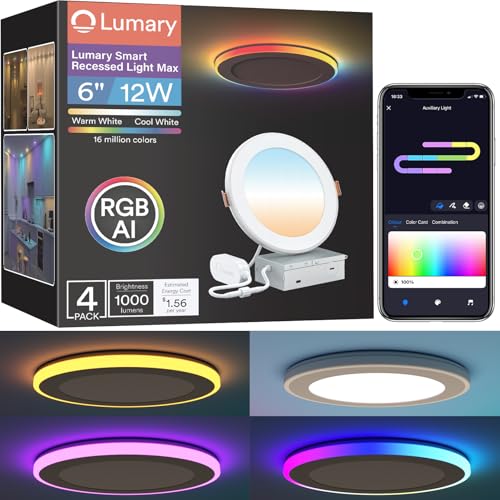
Lumary 6 Inch Smart Recessed Light with RGBAI Gradient & Night Ring (12W)
A Deeper Look At The Lineup
Thirty-six fixtures in a single box is the kind of supply that turns a whole-home retrofit into a weekend project instead of a multi-month saga. The 4-inch aperture is the classic choice for tighter ceiling grids, hallways, and kitchens where smaller pools of light read as more refined than one big fixture overhead.
Canless wafer construction means each unit mounts directly into a cut ceiling hole with spring clips, so I don’t have to wrestle with old-school recessed cans. The five selectable color temperatures (2700K through 5000K) let me dial warm light for living areas and cooler light for task zones without buying separate SKUs. For someone outfitting an entire house on a tight budget, this 36-pack covers nearly every room in one purchase.
A Favorable Mix
- 36 fixtures per pack covers multi-room projects in one shipment
- Five color temperatures on a single switch eliminate guesswork when ordering
- Wafer-thin design fits shallow ceilings where traditional cans will not clear joists
- Bulk pricing per unit beats piecing together smaller packs
Trade Offs
- 4-inch aperture throws tighter, more numerous pools of light, which can look busy in large open rooms
- Smart features are absent, so app and voice control require separate add-ons
- Cutting 36 clean ceiling holes takes longer than the spec sheet suggests
Right Fit For
Homeowners tackling a full-house retrofit on a budget who want consistent fixtures in every room without juggling multiple orders.
Consider Something Else When
Someone wanting a smarter experience should consider the Lumary 6 Inch Smart RGBWW Canless Wafer Downlight, which adds app and voice control for a similar ceiling footprint.
The Ensenior 6-inch wafer is a sensible middle-ground pick when 4-inch apertures feel too small but a full smart system feels like overkill. I find the 6-inch size works particularly well in standard 8-foot ceilings where the wider aperture spreads light more evenly across a room.
Three color temperatures (3000K, 4000K, and 5000K in most configurations) sit on a small selector switch on the junction box, set once at install and forgotten. Smooth dimming down to 5% lets me drop a dining room to candlelight levels without flicker, and the spring-clip mounting is the same forgiving install pattern as the Amico pack above. For first-time retrofitters who want dimming flexibility without an app, this is a clean, predictable choice.
Positive Takeaways
- Three color temperatures cover the most common residential moods
- Smooth dimming down to 5% suits dining and living rooms
- 6-inch aperture spreads light more evenly in standard 8-foot ceilings
Honest Caveats
- Only three temperature settings instead of five, so the warmest and coolest options are limited
- No app integration, which can feel limiting once the rest of a home goes smart
- Dimmable performance depends on the existing wall dimmer switch, which may need replacing for the smoothest curve
Feature Snapshot
Best Suited To
Homeowners upgrading one or two rooms who want dimmable, color-flexible recessed lighting without committing to a smart platform.
Look Elsewhere When
Anyone planning an app-driven lighting system should reach for the Lumary Smart Recessed Lighting Pro 6 Inch, which adds RGB and night modes on top of standard dimming.
Bedrooms, nurseries, and hallways are the sweet spot for this CycevSun design, which pairs a main downlight with a soft amber night-light mode built into the same fixture. Walking to the kitchen at 2 AM under a 2000K amber glow is much easier on sleepy eyes than flipping on full daylight.
Compared with the Ensenior above, this unit trades some color-temperature flexibility for that second operating mode and a useful sync-and-reset function for grouped circuits. When one switch controls multiple fixtures in different modes, holding the switch off and back on resets everything to the standard downlight, which solves a real headache in long hallways with multi-way switching. It’s a thoughtful hybrid for households that want one fixture handling daytime and nighttime duty.
Everyday Wins
- Built-in amber night mode eliminates the need for separate plug-in nightlights
- Sync-and-reset function keeps grouped fixtures on the same mode after switch flips
- Glare-free ambient output suits dark bedrooms and hallways
Points To Note
- Limited to downlight and night-light modes, with no RGB color play
- The reset trick takes a moment of waiting at the switch, which can confuse first-time users
- No smart-home connectivity, so voice control requires an additional bridge or smart switch
Made For
Families with young children, night-shift sleepers, or anyone who wants gentle amber lighting for late-night trips through the house.
Reach For A Different Pick When
Anyone who wants color-changing scenes for movie nights or gaming should look at the Lumary 6 Inch Smart RGBAI Gradient model, which is purpose-built for that use case.
This is the first smart pick in the lineup, and it’s the model I point people toward when they’re ready to retire their wall switches and talk to their lights instead. “RGBWW” means the fixture carries red, green, blue, plus dedicated warm and dedicated cool white diodes, so color scenes look vivid without washing out true white tones.
Wi-Fi connectivity means no separate hub is required, and Alexa plus Google Assistant support covers the two most common voice ecosystems. For most living spaces, 13 watts is plenty bright, and the app handles grouping, scheduling, and remote access from anywhere with internet. Pairing it with a Lumary BT remote controller adds wall-mount control for anyone who prefers a physical button, though the remote ships separately.
The Case For It
- RGBWW diodes deliver true-color whites, not just tinted approximations
- Voice control through Alexa and Google skips the need for a dedicated hub
- App-based grouping and scheduling simplify whole-home lighting routines
Worth Noting
- Smart connectivity adds setup steps that pure dumb fixtures skip entirely
- The BT remote is sold apart and needs AAA batteries, which adds to the total spend
- Wi-Fi reliance means router issues can knock fixtures offline
Quick Facts
Perfect Match For
Smart-home newcomers who want reliable voice and app control without investing in a third-party bridge or ecosystem.
Swap It Out When
Anyone chasing the most expressive color scenes should step up to the Lumary 6 Inch Smart RGBAI Gradient fixture, which adds individually controlled segments.
The Pro version takes what the previous Lumary does well and layers in a dedicated night ring, so the fixture pulls triple duty: standard downlight, soft nightlight, and full RGB color play. For an open-plan living room where the same ceiling serves dinner parties, movie nights, and late-night couch reading, that flexibility earns its keep.
1100 lumens is enough to wash most family-room walls with light without feeling harsh, and the night ring keeps things gentle when full daylight is too much. Compared with the CycevSun’s amber-only night mode, this Lumary Pro offers actual color scenes plus that soft ring, so it’s a true multi-purpose unit. Setup still happens through the Lumary app with Alexa and Google compatibility.
Features That Help
- Three lighting modes in one fixture reduce the need for separate accent lighting
- Night ring provides gentle light without the harsher output of the main downlight
- Full RGB color scenes support holidays, game days, and movie marathons
Small Caveats
- Only four fixtures per pack, which is light coverage for whole-room projects
- Higher feature density means a slightly steeper learning curve for first-time smart-light users
Who It Suits Best
Living rooms and dens where one ceiling needs to handle daily tasks, ambient scenes, and accent color without separate fixtures.
A Better Fit Elsewhere
A whole-home retrofitter should pick the Amico 36 Pack instead, which delivers far more fixtures for the same total investment without the smart features.
RGBAI is the headline feature here, and it’s worth pausing on. Standard RGB fixtures show a single color across the whole aperture, but RGBAI splits the auxiliary ring into 12 individually addressable segments, letting the fixture display gradients, chasing patterns, and rainbow effects across a single light. It’s the difference between a static color wall and a moving light show.
For gaming rooms, home theaters, or anyone who treats the ceiling as part of the decor, that segmented control opens creative scenes other fixtures in this roundup simply cannot produce. Four lighting modes cover the basics, and the night ring keeps late-night output gentle. It’s the most expressive fixture in the lineup, and the right pick when ceiling lighting is meant to entertain, not just illuminate.
What Makes Sense
- Segmented RGBAI ring supports gradients, chasing patterns, and multi-color scenes
- Four lighting modes cover daily, ambient, and entertainment needs
- Night ring keeps after-dark output easy on the eyes
Some Limits To Know
- RGBAI scenes look best in dim rooms; full daylight washes the colored ring into the ceiling
- Smaller pack size per order suits accent rooms more than whole-home runs
- App-based scene design takes time to learn for newcomers to smart lighting
Whose Shelf It Belongs On
Entertainment-focused rooms where the ceiling is part of the experience, from home theaters to gaming setups to kids’ playrooms.
Skip It When
Someone wanting quiet, capable daily lighting should pick the Ensenior 6 Pack instead, which delivers clean dimmable light without the color-show complexity.
Choosing Smart Recessed Lightings That Actually Fit Your Ceiling
The first question is rarely about lumens; it’s about hole size. Older homes with traditional 6-inch cans almost always accept modern 6-inch wafer fixtures without drywall patching, while tighter plenum spaces (the cavity above the ceiling where ductwork and joists live) push people toward ultra-thin 4-inch units. Measuring the available clearance above each ceiling location prevents the disappointment of receiving fixtures that physically cannot seat flush.
Color temperature selection matters more than most first-time shoppers expect. CCT, or correlated color temperature, describes how warm (yellowish) or cool (bluish) white light appears, measured in Kelvin. A living room at 2700K feels like a cozy restaurant, while a kitchen at 4000K reads as clean and task-oriented. Fixtures with selectable CCT on the body let one SKU serve both moods, which is why every pick in this roundup offers some form of tunable white.
Smart-platform compatibility is the second-order decision. Wi-Fi-only fixtures connect through the home router without extra hardware, while Zigbee or Z-Wave models require a compatible bridge. Confirming the existing voice ecosystem (Alexa, Google, or Apple HomeKit) before ordering prevents the frustration of fixtures that technically work but require a separate app for full control.
Finally, lumen output per fixture depends heavily on ceiling height and spacing. For an 8-foot ceiling, 800 to 1100 lumens per fixture is comfortable; for 10-foot ceilings or higher, stepping up to brighter units prevents dim spots between fixtures.
Key Considerations Across These Picks
Common Shopping Slip Ups
The most frequent mistake is undercounting fixtures. A room that “looks fine” with four cans in the showroom can read as dim with the same count once the furniture absorbs light. A second common slip is mixing color temperatures within one room, which creates an uneven, slightly off-putting wash across the ceiling. Picking one CCT per room, or choosing a fixture with selectable CCT on the body, keeps the visual field consistent.
What The Higher Tier Buys
Spending more on smart recessed lighting typically buys three things: deeper color scenes, smoother dimming curves, and broader ecosystem support. Budget fixtures handle on/off and basic dimming, while premium units add per-segment RGBAI control, app-driven scene design, and reliable voice integration that does not require restating commands twice. The upgrade is worth it for entertainment rooms and whole-home smart systems; for a single guest bedroom, the budget tier handles the job without the extra complexity.
Frequently Asked Questions
Do smart recessed lights need a hub?
Wi-Fi models like the Lumary units in this roundup connect directly through a home router and need no separate hub. Fixtures using Zigbee or Z-Wave protocols do require a compatible bridge, so always check the connectivity type before ordering.
Can I install canless wafer lights without an electrician?
Homeowners comfortable with basic wiring, including matching black to black, white to white, and ground to ground, can usually handle a canless wafer retrofit. Cutting the ceiling hole cleanly with the included template is the part that benefits most from a steady hand and a fresh hole saw.
What size hole do I need for a 6-inch recessed light?
Most 6-inch wafer fixtures require a roughly 6.25-inch round cutout, though the included template gives the exact measurement. For 4-inch units, expect a hole in the 4.25-inch range.
How many recessed lights do I need per room?
A common rule is to space fixtures about 4 to 6 feet apart along the ceiling, with one fixture for every 25 to 40 square feet of room area depending on brightness. Bedrooms usually need fewer fixtures than kitchens because the lighting demands are different.
Are smart recessed lights worth the extra cost over standard LEDs?
For households already invested in a smart-home ecosystem, the convenience of voice and scheduling justifies the premium. For homes that just need reliable overhead lighting, a non-smart wafer fixture delivers most of the light quality at a noticeably lower per-unit price.