

A dead phone, a storm cutting the lights, a walk back from the campsite after sundown; bright light stops being optional fast. I put together this shortlist for people who want a rechargeable flashlight that pushes real lumens, holds a charge, and feels solid in the hand without forcing a compromise. Six picks, six different jobs, from a rugged work light to a keychain companion you forget is there until you need it.
A Side-By-Side Look

Streamlight 90545 Survivor Right-Angle Flashlight

Brinyte A02 Rechargeable Keychain Flashlight

Makita DML801 18V Cordless 12-LED Flashlight
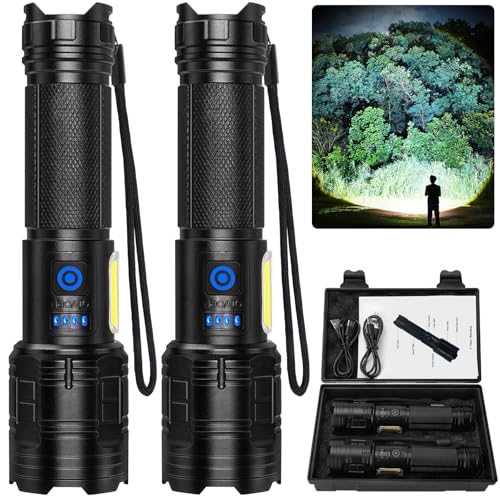
ALSTU 99,000 Lumen 7-Mode Flashlight (2 Pack)

ALSTU 99,000 Lumen 5-Mode IPX7 Flashlight (2 Pack)

ALSTU 90,000 Lumen 5-Mode Flashlight (3 Pack)
The Details Behind The Selections
The Survivor sits in a different category than every other pick here, and that is exactly why it earns the top slot for serious users. Where the ALSTU lights later in the roundup chase raw lumen numbers, Streamlight built this one around intrinsic safety certification, which means the body and switch are engineered to prevent ignition in flammable environments like fuel tanks or chemical sites.
The right-angle head lets firefighters, mechanics, and line workers clip the light to a turnout coat or belt and aim the beam where their hands are working. It runs on a rechargeable battery system and toggles between a high setting for cutting through smoke and a low setting for close-up tasks. For anyone whose work or hobby puts them around gases, solvents, or grain dust, this is the light that lets you stop worrying about the flashlight becoming a liability.
What Works In Its Favor
- Intrinsic safety rating, so it is approved for hazardous locations where sparks would be a real problem.
- Right-angle head pairs well with chest clips and helmet mounts, freeing both hands.
- High and low modes give a useful balance between reach and runtime during long shifts.
- Nylon body is impact-tested and water-resistant, so drops on concrete do not end the shift.
Trade-Offs To Keep In Mind
- The lumen count is modest compared with the ALSTU models later in this list, so casual shoppers chasing brightness may overlook it.
- It is heavier and bulkier than a pocket light, which is fine on a belt but not in a jacket pocket.
- Replacement batteries and chargers are proprietary, so budgeting for spares ahead of time pays off.
Right Fit For
Firefighters, utility crews, and anyone working around flammable vapors who values certified safety over raw output.
Consider Something Else When
The ALSTU 99,000 Lumen 7-Mode Flashlight makes more sense for households who just want maximum brightness during a power outage.
Stepping way down in size from the Streamlight, the Brinyte A02 is the kind of light you forget you are carrying until the moment you need it. I think of it as the backup that is always with you, clipped to a keyring or tucked into a pocket, because it weighs almost nothing and recharges through a modern USB-C port.
The four-mode setup covers most everyday tasks: high for unlocking a dark door at night, mid for reading a menu in a dim restaurant, low for finding a dropped item under a car seat, and strobe for signaling or self-defense. The memory function brings the light back to the last setting used, which is a small touch that saves a lot of fumbling. Compared with the bigger ALSTU models below, this one is not built for lighting up a backyard, but it is the one that is actually in your pocket when the power goes out.
Standout Benefits
- Compact body that disappears on a keyring, so it is always within reach.
- USB-C charging matches the cables most people already own, no special cord required.
- Four modes plus memory function handle doorsteps, restaurants, and dropped-item searches.
Points To Note
- Output is small compared with the high-lumen ALSTU picks, so it is not a searchlight.
- Battery is tiny, meaning heavy use means recharging more often than larger lights.
Who Should Grab It
Daily commuters, apartment dwellers, and anyone who wants a light they will actually have on them when the unexpected happens.
Look Elsewhere When
The Makita DML801 is the better pick for workshop tasks that demand a hands-free folding head.
The Makita lives in toolboxes for a reason. Its folding head rotates and clicks through several stops, so the beam can be aimed forward, down, or sideways without propping the light on a stack of rags. The swiveling hook on the back folds out 360 degrees, meaning it hangs from a rafter, a hose, or the open hood of a car.
This model runs on Makita’s 18V LXT battery platform (the same batteries that power drills, impact drivers, and saws across the brand), so anyone already invested in that system can share packs between tools. The 12 LEDs push a useful spread of light for under-hood work, attic inspections, or crawling through a crawlspace. It is a work light first and a general flashlight second, which is a fair trade for the convenience of dropping it into a charging station that already lives in the shop.
The Case For It
- Folding head with multiple stops directs the beam where the job is, not where gravity puts it.
- Swiveling metal hook frees both hands for plumbing, wiring, or engine work.
- Shares batteries with the rest of the Makita 18V LXT lineup, so no extra charger clutter.
Less Ideal Details
- Battery and charger are usually sold separately, so the total spend climbs fast.
- It is heavier than a pocket light, which makes it less appealing for casual home use.
Best Suited To
Makita owners who want one more tool on the same battery platform, plus anyone who needs a hands-free work light in the garage.
Reach For A Different Pick When
The Streamlight 90545 Survivor is the smarter call for hazardous-location work where intrinsic safety certification matters.
This is where the roundup shifts from specialist tools into household workhorses. The ALSTU two-pack pairs a forward-throw main beam with a built-in COB side panel, which is a flat array of LEDs that turns the flashlight into a broad floodlight for changing a tire on a dark road or reading a map at a campsite.
The seven modes cycle through brightness levels, strobe patterns, and the side COB, which means one flashlight handles a tactical flash and a work-light function. The rechargeable pack sits inside the body, so there is no separate battery sled to lose. The two-pack format is the practical draw here: keep one in the kitchen drawer and one in the trunk, and neither one matters if the other gets loaned out and never comes back. Compared with the Brinyte keychain light above, this is the night-and-day jump in output that most people picture when they search for high-lumen flashlights.
Points In Its Favor
- COB side panel turns one tool into both a spotlight and a floodlight.
- Two-pack format covers home and vehicle without buying twice.
- Rechargeable pack built into the body, so no spare cells rolling around.
Honest Caveats
- Body is larger than a pocket light, so it lives in a drawer or glovebox, not a pocket.
- Maximum output drains the battery faster than the lower modes, so plan charging around heavy use.
Whose Shelf It Belongs On
Homeowners prepping for storm season, drivers who want a glovebox-ready spare, and campers who value a flood option as much as a beam.
Swap It Out When
The ALSTU 99,000 Lumen 5-Mode IPX7 Flashlight is a tighter choice for hikers who care more about waterproofing than mode variety.
The sibling to the previous ALSTU, this two-pack trades some mode variety for a tougher waterproof rating and an adjustable focus head. IPX7 means the light can survive full immersion in water for a short period, which matters more on a wet campsite or a kayak trip than it does in a climate-controlled living room.
The adjustable focus slides between a wide flood for campsite setup and a tight beam for spotting a trail marker at distance. Five modes cover most needs without overcomplicating the switch. Output is in the same range as the 7-mode version, so anyone who already likes that light’s brightness but wants better sealing and a tighter beam will find this one the better match. Like the other ALSTU lights in this list, the rechargeable cell lives inside the body and tops up through a cable most people already own.
What It Does Well
- IPX7 sealing handles rain, splashes, and the occasional drop in a puddle.
- Adjustable focus shifts between flood and spot without swapping lights.
- Two-pack gives flexibility for home, vehicle, or shared camping gear.
Possible Compromises
- Fewer modes than the 7-mode version, so users wanting strobe variety may want the sibling instead.
- Battery life on top mode is shorter than on lower settings, so carrying the cable on multi-day trips helps.
Feature Snapshot
Right Fit For
Campers, hikers, and kayak anglers who need a sealed body and adjustable beam more than they need extra strobe patterns.
Where Another Pick Suits Better
The ALSTU 90,000 Lumen 5-Mode Flashlight (3 Pack) makes more sense for anyone stocking an entire household on a tighter budget.
Closing out the list is the broadest distribution option: a three-pack that puts a high-output light in the kitchen, the car, and the workshop for one purchase. Output is slightly under the 99,000-lumen ALSTU models, but the difference is small enough that most people will not notice in real use.
Five modes keep the switch simple, and the waterproof body is sealed for rain and splashes around the house or campsite. The real draw is redundancy: if one light gets left at the in-laws’ house or sits on a dead battery, two more are waiting. Compared with the Streamlight at the top of this roundup, none of these ALSTU lights carry hazardous-location certification, so they belong in homes and vehicles, not chemical plants. As a household baseline that covers most emergencies, this three-pack is hard to beat on coverage per purchase.
What Pays Off
- Three lights from one purchase covers kitchen, vehicle, and workshop in one go.
- High lumen output handles most household and outdoor needs without overpaying per unit.
- Five-mode switch keeps operation simple enough for everyone in the house.
Factors To Consider
- No hazardous-location certification, so it is not a substitute for the Streamlight in flammable environments.
- Output is a step below the 99,000-lumen ALSTU models, so shoppers chasing maximum reach may want those instead.
- Three lights mean three devices to keep charged, so a shared charging station helps avoid dead batteries.
Best Suited To
Families and homeowners building a multi-room emergency kit who want coverage everywhere without buying lights one at a time.
Skip It When
The Brinyte A02 keychain light is a better fit for anyone whose priority is a flashlight that is always in a pocket, not on a shelf.
Matching Lumens, Battery, and Body to the Job
A high-lumen number on the box tells you how bright the LED can shine at peak, but it does not tell you how long it lasts, how far the beam reaches, or how the light feels after twenty minutes of holding it. The first thing I look at is the balance between output and runtime, because a 99,000-lumen setting that drains the cell in an hour is less useful in a storm than a 5,000-lumen setting that runs all night. Many of the ALSTU models here offer multiple modes for exactly this reason, letting you trade reach for endurance.
Next, think about how the light is held. A right-angle Streamlight Survivor clips to turnout gear for hands-free work, the Makita DML801 hangs from its swiveling hook in a workshop, and the Brinyte A02 disappears on a keyring. Form factor decides where the light lives, which decides whether it is actually with you when the power cuts out. Body materials and impact ratings matter most for job sites and camping, while pocket-friendly sizing matters more for daily carry.
Finally, charging matters more than people expect. USB-C charging, like the Brinyte and the ALSTU packs, removes the need for a special cable and means the same cord that charges a phone tops up the flashlight. Rechargeable batteries built into the body also avoid the slow death of alkalines leaking inside a drawer. Pick the charging style that matches the rest of your household, and the flashlight will actually be charged when it counts.
Runtime vs. Output
Mode count and runtime together decide whether a flashlight feels helpful or frustrating. A light with five or seven modes lets you dial down for map-reading and up for search-and-rescue, which extends battery life dramatically on the lower settings. Shoppers who only need a single bright mode often end up with a light that dies at the worst moment, so a mode switch is more useful than it sounds.
Form Factor and Carry
Body shape decides whether a flashlight gets carried or left behind. Pocket-friendly lights like the Brinyte live on a keyring, larger tactical lights live in a drawer or glovebox, and right-angle lights like the Streamlight clip to clothing for hands-free work. Matching the body to the carry habit matters more than matching the brand to the room.
Charging and Battery Type
Built-in rechargeable cells with USB-C input are now standard in this category. They remove the cost and waste of disposable batteries and let the same cable charge the light as charges a phone. The trade-off is that the cell cannot be swapped in the field, so picking a model with multiple modes lets you stretch runtime when recharging is not an option.
Key Considerations Across These Picks
Common Buying Traps
The most common slip-up in this category is chasing the largest lumen number on the box without checking the mode list, runtime, or focus adjustment. A flashlight that pushes 99,000 lumens for a few minutes before dimming is less useful than one that pushes 10,000 lumens for several hours, so the mode count and advertised runtimes deserve as much attention as the headline number.
Another trap is buying a light that does not match the carry habit. A pocket-sized keychain light does no good in a kitchen drawer during a power outage, and a tactical brick does no good if it never leaves the nightstand. Match the form factor to where the light will actually live, and the rest of the buying decision tends to sort itself out.
Where The Extra Money Goes
Spending more in this category usually buys certification, build quality, and battery engineering, not just more lumens. The Streamlight Survivor costs more than the ALSTU lights because it carries intrinsic safety certification, a tougher nylon body, and a switch rated for glove use, none of which show up in a lumen count. The Makita DML801 costs more for similar reasons: a folding head, a metal hook, and compatibility with an established battery platform.
Higher-tier flashlights also tend to use better LED bins, which produce a more even beam with fewer dark spots, and they tend to regulate output more cleanly, so the light holds steady as the battery drains instead of slowly fading. For shoppers who only need light for the occasional power outage, a value ALSTU pack covers the job well. For shoppers who depend on a flashlight for work or live in a place where the weather routinely knocks out power, the upgrade to a certified or platform-compatible model tends to pay off the first time the lights go out for real.
Frequently Asked Questions
How many lumens do I actually need in a rechargeable flashlight?
For most home and vehicle use, a few thousand lumens handle the job, while searches across a wide yard or down a long trail benefit from higher-output ALSTU models. Match the lumen ceiling to the worst-case scenario you can imagine, not the brightest claim on the box.
What does IPX7 waterproofing mean for a flashlight?
IPX7 means the light can handle full immersion in water for a short period without failing, which is enough for rain, splashes, and accidental drops in puddles. It is a stronger rating than IPX4, which only covers splashes from any direction.
How long do rechargeable flashlight batteries typically last on a charge?
Runtime depends heavily on the mode selected, with the highest lumen settings often lasting only a couple of hours and lower modes running for many more. Carrying the charging cable for multi-day trips is a habit worth building.
Can I take a rechargeable flashlight on a plane?
Most consumer flashlights are allowed in carry-on bags, but loose lithium batteries and high-capacity packs sometimes face airline restrictions. Checking with the specific airline before flying is the safest move.
What is the difference between a flood beam and a spot beam?
A flood beam spreads light across a broad area for close-up work like reading or campsite setup, while a spot beam focuses light into a tight column for distance. Lights with adjustable focus, like the ALSTU IPX7 model, can shift between the two without changing tools.