

A dependable tactical flashlight is one of those quiet tools you forget about until you need it: checking a dark trail, signaling across a parking lot, or searching a basement after a power cut. Patrol officers, night-shift security, and outdoor hobbyists all tend to want the same handful of things from a police flashlight: strong throw distance, simple controls, a holster that actually stays put, and a body that survives drops.
I put together this roundup to compare six tactical flashlights from a single trusted brand, each aimed at slightly different needs. The list moves from the most powerful model down to compact everyday carry, so you can match beam strength, mode count, and form factor to the way you’ll actually carry and use it.
A Side-By-Side Look

ULTRAFIRE 2200 LM Rechargeable Tactical Flashlight with Holster
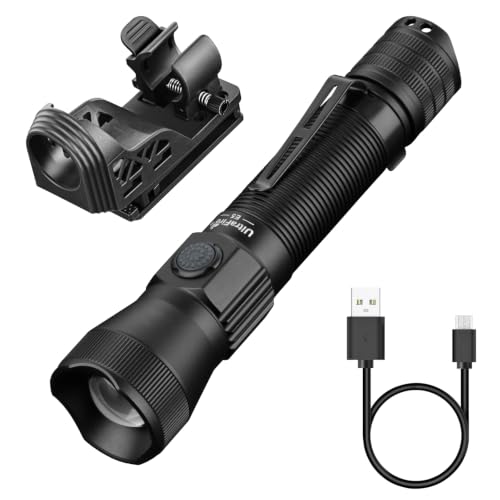
ULTRAFIRE E5 Rechargeable Tactical Flashlight with Holster

ULTRAFIRE E5 1350 Lumens Tactical Flashlight with Holster

ULTRAFIRE Mini Flashlight Rechargeable Single-Mode Zoomable

ULTRAFIRE 1000 LM Single Mode Tactical Flashlight with Holster
ULTRAFIRE WF-502B Single Mode Tactical Flashlight with Duty Belt Holster
The Picks, Examined More Closely
If you measure a tactical flashlight by how far the beam reaches, the C15S sits at the top of this list. It pushes up to 2200 lumens through a reflector built for distance, and ULTRAFIRE rates the throw at roughly 1476 feet. That kind of reach matters during open-area patrols, trail searches, or signaling across a worksite.
The body comes paired with a belt holster, which makes it a natural fit for duty belts and EDC (everyday carry) setups. The unit runs on a rechargeable cell, so you skip the cost and hassle of disposable batteries. Compared with the smaller E5 picks below, this one is longer and heavier, but the extra mass is the price of a brighter, longer-throwing beam.
Positive Takeaways
- 2200 lumen peak output handles long-range illumination and dark-room sweeps alike.
- 1476-foot throw helps identify distant objects, useful for perimeter checks.
- Three lighting modes (High, Low, Strobe) cover most patrol and emergency needs.
- Rechargeable design lowers long-term running cost and battery waste.
- Included holster lets the flashlight ride on a belt within easy reach.
Trade Offs
- Larger and heavier than the E5 models, so pocket carry feels bulky.
- Three modes only, which limits fine-tuning compared with the six-mode E5.
- Charging depends on the included cable, so a worn cable means downtime until replaced.
Key Specs
Made For
Patrol officers, search teams, and outdoor hobbyists who want maximum reach and don’t mind a longer body on the belt.
Look Elsewhere When
Daily pocket carry is the priority, in which case the ULTRAFIRE Mini Flashlight Rechargeable Single-Mode Zoomable is the lighter, more pocketable sibling.
The E5 trades a little peak brightness for more mode flexibility. Rated at up to 1350 lumens with a 1476-foot beam, it still reaches well past the length of a football field, and it adds six operating modes for finer control. That extra granularity helps when you want a soft reading light one moment and a wide search beam the next.
The included holster is the standout hardware feature: it rotates a full 360° on the belt, so the beam angle can be adjusted without unclipping the light. For someone whose work shifts between writing reports and clearing rooms, that pivot saves a lot of fumbling. Compared with the C15S above, this E5 is a bit shorter and noticeably easier to manage with one hand.
Well-Handled Touches
- Six lighting modes give finer control for reading, navigation, and strobe.
- 360° rotatable holster adapts the beam angle while still on the belt.
- 1476-foot throw matches the C15S range, useful for outdoor searches.
- 1350 lumen peak keeps output strong even on lower modes.
- Rechargeable battery avoids the waste stream of disposables.
Honest Caveats
- Six modes mean more button presses to reach a specific setting.
- Holster pivots freely, so a quick jog can shift the angle until you tighten your stance.
- Output is lower than the C15S, so very long-range spotting will look dimmer.
Right Fit For
Officers and security staff who want multiple modes and a holster that aims with them, not against them.
Consider Something Else When
Plain, one-mode simplicity matters most, in which case the ULTRAFIRE 1000 LM Single Mode Tactical Flashlight with Holster is the cleaner choice.
This E5 variant adds a zoomable head to the same 1350-lumen platform, switching the beam between a wide flood for close work and a tight spot for distance. The same 1476-foot throw applies once you push the head forward, which keeps it competitive with brighter but less flexible lights.
It still ships with a belt holster and six modes, making it a good all-around tool for people who split time between indoor searches and outdoor sweeps. The zoom mechanism is the differentiator: it pulls the light away from pure throw and gives it real versatility. Versus the brighter C15S at the top of the list, you give up raw lumens for adjustable focus.
What Stands Out
- Zoomable head switches between flood and spot without changing tools.
- 1350 lumen output covers both close-up tasks and longer throws.
- 1476-foot reach matches higher-output rivals in spot mode.
- Six modes let you pick the right brightness for the moment.
- Holster mount keeps the light accessible during shifts.
Points To Keep In Mind
- Moving zoom head takes two hands and slows one-handed operation.
- Flood mode spreads brightness thin, so very large rooms can feel underlit.
- Head mechanism adds moving parts that can loosen after heavy use.
Feature Snapshot
Best Suited To
People who want a single flashlight that handles both indoor searches and outdoor spotting without swapping tools.
Skip It When
You mostly need maximum throw in a fixed beam, in which case the ULTRAFIRE 2200 LM Rechargeable Tactical Flashlight with Holster out-reaches this one.
Everything above this pick is a full-size duty light. The Mini flips the script with a pocket-friendly body that still puts out a usable 300 lumens and a 328-foot adjustable beam. The single on/off mode is intentional: there is nothing to scroll through when a light is needed right now.
Charging happens through USB-C, so a phone charger or power bank tops it off. The 2-hour runtime is short compared with the larger models, but for a pocket light that gets topped up between uses, it’s plenty. Owners commonly pair this one with the larger C15S or E5 as a backup rather than a primary work light.
The Value In It
- Compact body slips into a pocket or small pouch without bulk.
- Single-mode switch removes any hesitation during sudden use.
- USB-C charging matches modern cables and power banks.
- Zoomable beam shifts between wide coverage and a narrow spot.
- 300 lumen output handles most indoor and close outdoor tasks.
Potential Drawbacks
- Short 2-hour runtime means heavy users recharge often.
- Lower output limits usefulness for long-distance spotting.
- Single mode offers no dim option for night-vision preservation.
Who Should Grab It
Anyone who wants a low-fuss pocket light for dog walks, power outages, and quick household checks.
Another Choice May Suit
Long patrols or property checks are the norm, in which case the ULTRAFIRE E5 Rechargeable Tactical Flashlight with Holster offers more reach and runtime.
The WF-502B goes in the opposite direction of the multi-mode lights: one button, one brightness, no cycling. It still delivers 1000 lumens and roughly 656 feet of throw, which covers most household, hiking, and camping situations without overcomplicating things.
The body comes with a holster, and the simplified switch is genuinely helpful when gloves are on or stress is high. In our view, single-mode lights are often the right answer for older family members or anyone who gets frustrated by hidden mode cycles. Versus the brighter C15S at the top of the list, this one trades reach and output for that simplicity.
Positive Points
- Single on/off switch activates the light with one press, every time.
- 1000 lumen output handles typical indoor and outdoor tasks.
- 656-foot throw suits property checks and trail navigation.
- Holstered carry keeps the light close at hand on a belt.
- Simple interface works well with gloves and cold hands.
Where It May Fall Short
- No dim mode means battery drains at full output during long sessions.
- No strobe for emergency signaling or defensive use.
- Reach falls behind the longer-throwing C15S and E5 models.
Whose Shelf It Belongs On
Anyone who values predictable, no-training operation over maximum output or reach.
Reach For A Different Pick When
Long-range spotting is part of the routine, in which case the ULTRAFIRE 2200 LM Rechargeable Tactical Flashlight with Holster is the brighter option.
The last entry is another WF-502B platform with a focus on the holster. It uses the same 1000-lumen LED and 656-foot throw as the previous pick, but the included holder rotates 360° on the belt, so the beam angle can be aimed while the light stays clipped in. For uniformed officers, that pivot is the headline feature.
It keeps the single-mode operation that made the other WF-502B appealing, so there’s still no mode cycling to worry about. Against the E5 above, this WF-502B gives up output and mode count, but it wins on simplicity and belt-friendly handling. It’s the kind of light a department can hand out without training overhead.
Why It Works Well
- 360° rotating holster angles the beam without removing the light.
- Single on/off switch removes any mode confusion in the field.
- 1000 lumen output covers routine patrol and response tasks.
- 656-foot reach handles property lines and parking lots.
- Belt holster stays secure during walking, bending, and vehicle entry.
A Few Limitations
- Lower output and reach than the C15S and E5 picks.
- Single-mode design offers no brightness control for extended runtime.
- Holster adds bulk to the belt compared with pocket-carry lights.
Feature Card
Perfect Match For
Uniformed officers and security staff who want a holster-mounted light that aims with them.
Swap It Out When
Maximum reach matters most, in which case the ULTRAFIRE 2200 LM Rechargeable Tactical Flashlight with Holster extends well past 656 feet.
Choosing A Police Flashlight That Actually Gets Used
Beam distance and brightness usually get top billing, but the flashlight that ends up in the belt loop is the one that balances four traits: throw, runtime, weight, and controls. A light that reaches 1400 feet but dies in 45 minutes is a poor match for long shifts. A pocket light with a soft beam is great for a hallway but useless in a field.
Mode count is worth thinking about before you commit. Single-mode lights like the WF-502B are simple, but they limit runtime options. Multi-mode lights like the E5 let you dim the output and stretch battery life, at the cost of an extra second of cycling through settings.
Holster design matters more than people expect. A rotating holster lets you aim the beam while the light stays clipped, which is a real advantage during patrol. Fixed holsters are usually fine for home use but can frustrate anyone who moves a lot during a shift.
Lumens Versus Throw
Lumens measure total light output; throw measures how far that light stays useful. A high-lumen flood light is great indoors but loses punch outdoors. A high-throw light looks dimmer up close but reaches much farther. Most of the picks here lean toward throw, which suits outdoor and patrol use.
Mode Count And Battery Runtime
More modes give you control, but each mode cycle costs a second. Lights with strobe and SOS functions are useful in emergencies, but only when the user can reach them quickly. Rechargeable batteries save money over time, but only if a charging routine is realistic.
Holster Fit And Carry Method
Belt carry favors mid-size lights with rotating or locking holsters. Pocket carry pushes toward compact models like the Mini. Uniformed officers usually want the holster to match their belt width and sit at a consistent draw height.
Build Quality And Weather Resistance
Tactical flashlights live hard lives: drops, rain, dust. Look for a knurled grip that stays secure with wet or gloved hands, and a body that seats the lens firmly. None of these picks is a delicate instrument, but rougher duty demands a tougher body.
Common Slip Ups And Upgrade Payoffs
Mistakes Worth Dodging
The biggest slip-up is chasing the highest lumen number without thinking about beam shape. A 2200-lumen flood is a poor search tool compared with a 1350-lumen spot, because the spot reaches farther with the same energy. Buyers often skip the holster and end up with a flashlight that lives in a drawer instead of on a belt.
Where The Extra Money Goes
Higher-tier police flashlights earn their cost through better heat management, stronger LED bins, and more consistent quality control. The extra cost usually buys a steadier beam at the rated output, rather than a brighter headline number. For everyday users, mid-tier lights cover most needs. For uniformed professionals, the upgrade often shows up in long-term reliability rather than first-night performance.
Frequently Asked Questions
How many lumens do I actually need in a police flashlight? Around 1000 lumens handles most household and trail tasks. For patrol or wide-area searches, 1350 to 2200 lumens gives more reach and a wider usable beam.
Is a single-mode or multi-mode flashlight easier to live with? Single-mode designs are simpler and faster, which helps under stress. Multi-mode lights offer more control and longer runtime but require a moment to find the right setting.
What is beam throw, and why does it matter? Throw is how far the beam reaches a useful brightness. Higher throw helps identify distant objects during searches, while lower throw is fine for indoor work.
Do these flashlights use standard rechargeable batteries? These models recharge through their own cables, including USB-C on the Mini. Replacements come through the manufacturer rather than off-the-shelf cells.
Is a holster really necessary? For belt carry, yes. A good holster keeps the light secure, at the right angle, and ready to draw. For pocket carry, the holster is often skipped.