

I spend a lot of time thinking about how a porch light changes the feel of coming home at night, and how a few well-placed path lights can quietly turn a backyard into somewhere people actually want to sit. Outdoor lighting isn’t just decoration; it’s safety, mood, and the way a home looks after the sun goes down. This list covers six solid options that span wall sconces, solar path lights, and permanent smart string lights, each picked for a different kind of outdoor space and a different kind of person who cares about getting the details right.
How The Shortlist Stacks Up

Darkaway Outdoor Wall Light Fixture, Amber Ripple Glass Exterior Wall Sconce
GAAZIE Solid Copper Dusk to Dawn Outdoor Wall Lighting 18.5″

Berrtinfn Solar Pathway Lights Outdoor IP65 10-Pack

Govee Permanent Outdoor Lights Pro 200ft RGBIC
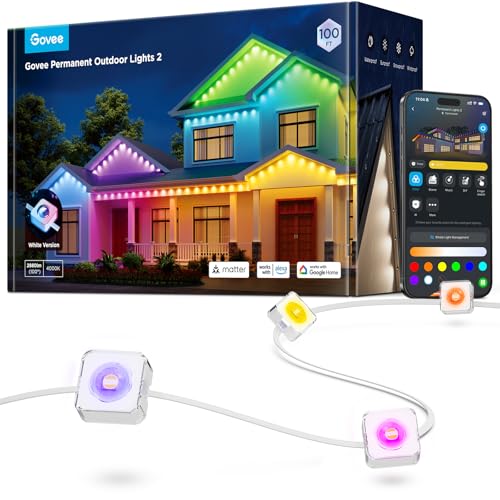
Govee Permanent Outdoor Lights 2 100ft RGBIC

Govee Permanent Outdoor Lights Prism 200ft
The Picks, Examined More Closely
The Darkaway wall fixture leans into old-school porch character, with an amber ripple glass shade and a bronze-finish aluminum body that feels right at home on a craftsman bungalow or a brick colonial. Unlike the GAAZIE copper piece further down the list, this one is built around the glass rather than the metal, which means the visible character comes from the warm, rippled glow that lands on your siding after dark.
Mounting is a standard wall-sconce install, and the glass shade diffuses the bulb’s light into a soft pool rather than a harsh spotlight. Homeowners who want a fixture that reads as a piece of hardware, not just a light source, will probably appreciate the visual weight here. It’s a pick for someone buying on aesthetics first and basic functionality second.
Where It Helps
- Amber ripple glass casts a warmer, more forgiving light than clear panels.
- Aluminum body with bronze finish holds up against rain, rust, and corrosion.
- Wall-mounted format keeps walkways clear, useful for narrow porches.
- Glass shade helps hide the bulb, so a basic E26 bulb looks intentional.
Worth Noting
- No dusk-to-dawn sensor; you’ll need to pair it with a photocell bulb or a switch.
- Single downward-facing glow means it lights the wall more than the steps below.
- Aluminum body, not solid copper, so the patina story is shorter than a true copper fixture.
Right Fit For
Homeowners redoing a craftsman or traditional front entry who want a warm, glass-forward sconce without committing to copper pricing.
Swap It Out When
The GAAZIE Solid Copper Dusk to Dawn Outdoor Wall Lighting makes more sense if you want a built-in sensor and a copper body that ages in place.
The GAAZIE fixture pairs a hand-finished solid copper body with an oil-rubbed bronze accent and clear beveled glass, which gives the light a more traditional, jewelry-box feel than the Darkaway’s amber glass. The real differentiator, though, is the built-in dusk-to-dawn sensor (a small photocell that detects ambient light and turns the fixture on at night, off at sunrise).
Standing 18.5 inches tall, this is a fixture with presence; it reads from the curb, not just from the porch steps. Compared to the Darkaway sconce above, this one is closer to a forever-fixture: copper ages into a verdigris (a greenish surface oxidation) over years, and the sensor means no more forgetting to flip a switch. Owners of entryways, garages, and patio doors that need reliable nightly light without thinking about it will find a lot to like.
The Case For It
- Built-in dusk-to-dawn sensor removes daily switch flipping.
- Solid copper body weathers into a richer finish over years, not months.
- Standard E26 base (the common screw-in bulb socket) keeps bulb replacement simple.
- Clear beveled glass maximizes usable brightness for security and entry visibility.
Trade Offs
- Sensor is integrated, so a sensor failure means replacing the fixture, not just a bulb.
- Copper body is heavier; mounting on older siding may need extra blocking.
- Clear glass shows every dust speck, so plan on occasional wipe-downs.
Quick Facts
Built With In Mind
Homeowners who want a hands-free, set-it-and-forget-it entry fixture on a traditional home, especially those replacing builder-grade sconces with something longer-lasting.
Reach For A Different Pick When
The Darkaway wall sconce fits better if you prefer the warmer amber-glass look and don’t need the auto-on sensor.
Switching from wired fixtures to solar, the Berrtinfn path lights ship as a 10-pack with built-in monocrystalline solar panels (higher-efficiency panels that convert more sunlight into energy than standard amorphous panels). They charge during the day and turn on automatically at dusk, with no trenching, no extension cords, and no low-voltage transformer to hide.
The IP65 rating (an international dust-and-water protection standard where 6 means dust-tight and 5 means resistant to low-pressure water jets) keeps them working through rain and sprinkler splash, which matters for any fixture stuck in a lawn. Compared to the wall-mount sconces earlier in this list, these are aimed at a totally different job: lighting the ground along a walkway or driveway. They’re a sensible pick for renters or anyone who can’t run new wiring.
The Upside
- True wire-free install; stake, place, done.
- Auto on/off at dusk means no switches or timers.
- Ten-pack covers a long walkway without buying separate sets.
- IP65 housing shrugs off rain and seasonal storms.
Small Caveats
- Performance depends on direct sun; shaded yards get shorter run times.
- Output is decorative, not security-grade; pair with a brighter fixture for stairs.
- Stake-style bodies can tilt in soft soil after heavy rain.
Feature Snapshot
Best Suited To
Garden owners with a sunny yard and a long path who want quick, no-tools lighting without hiring an electrician.
A Better Fit Elsewhere
The Govee Permanent Outdoor Lights 2 makes more sense if you actually want to illuminate a patio ceiling or roofline, not a path on the ground.
The Govee Pro model is a permanent install aimed at rooflines, soffits, and long architectural runs. It comes in a 200-foot configuration with 120 RGBIC LEDs, where RGBIC means each LED can show its own color independently, rather than the whole strip changing color at once.
Where the Darkaway and GAAZIE fixtures are about a single warm point of light, this product is about outlining the whole house in color. The anti-glare lens shape helps it read as accent lighting instead of a bright string, and it works year-round rather than only during one holiday. For anyone tired of climbing a ladder every December, the permanent-mount design is the headline feature.
Reasons It Performs
- 200-foot reach covers most full-perimeter rooflines in one go.
- RGBIC per-LED color zones for animated effects beyond a single solid tone.
- Permanent install replaces annual ladder-hanging routines.
- Anti-glare lens shape softens the visible light source.
A Few Limitations
- Permanent mount means a real installation step, not a peel-and-stick job.
- App and Wi-Fi dependency add a small setup layer.
- Color accent lighting reads differently at night than in daylight; try a scene mode first.
Whose Shelf It Belongs On
Owners of mid-to-large homes with long roof edges who want one install that handles holidays, game days, and everyday accent glow.
Consider Something Else When
The Govee Permanent Outdoor Lights 2 is the friendlier pick if 100 feet is enough for your patio or single roof edge.
The Permanent Outdoor Lights 2 is the smaller sibling of the Pro model above, running 100 feet with 100 scene modes baked in. It’s the friendlier entry point for someone who’s never installed permanent exterior lighting and doesn’t want to over-buy.
The same year-round design applies: install it once, then let it do holiday duty, patio dinner duty, and everyday accent duty without ever dragging a ladder out of the garage. The shorter length makes it a natural fit for patios, pergolas, or one side of a roofline rather than a full perimeter. Versus the Berrtinfn solar path lights, this is a wired, app-driven approach to lighting the spaces where people actually gather.
A Few Strong Suits
- 100 scene modes give variety without manual programming.
- Manageable 100-foot length suits smaller homes and patios.
- One-time permanent install beats annual setup chores.
- App-based scheduling for everyday on/off routines.
Honest Caveats
- 100 feet may fall short for full-perimeter homes.
- Color effects look best after dark; daytime viewing is muted.
- App-required setup adds a step for non-smart-home households.
Made For
First-time permanent-lighting households working with a smaller footprint, like a patio ceiling, pergola, or a single roof edge.
Skip It When
The Govee Permanent Outdoor Lights Prism is the stronger fit if you want layered color zones and don’t mind paying for the showpiece tier.
The Prism sits at the top of the Govee permanent-lighting line, with 200 feet of run and three color zones per bulb head. That’s the headline: instead of each LED showing one color at a time, the Prism head blends three zones, which is what produces smoother gradients along the roofline.
Compared to the Pro model reviewed earlier, the Prism trades some scene-mode variety for more sophisticated color blending. It’s the pick for someone treating the roofline as a feature, not just an accent. For most homes, this is overkill; for the right house, it’s the version that finally stops looking like a strip of LEDs and starts looking like architecture.
Benefits That Matter
- Three-zone color blending produces smoother gradients than single-zone strips.
- 200-foot length handles full-perimeter installs on most homes.
- DIY palette tuning lets owners define their own house signature.
- Permanent-mount format for year-round use without seasonal setup.
Points To Note
- Higher complexity than the standard permanent-lights line.
- Color blending shows up best in low-ambient-light settings.
- Larger install footprint means more planning before mounting.
Spec Overview
Perfect Match For
Homeowners who treat exterior lighting as a design feature and want gradient color rather than flat single-tone strips along the whole roofline.
Look Elsewhere When
The Govee Permanent Outdoor Lights Pro is a more comfortable fit for anyone who wants a 200-foot reach without the triple-zone color complexity.
What Matters Before You Choose Outdoor Lightings
Match The Fixture To The Job
Start by deciding what you actually want to light. A front entry needs a wall sconce like the Darkaway or GAAZIE pieces above; a long garden path calls for solar stakes like the Berrtinfn set; a roofline or patio ceiling is the natural home of permanent LED strips. Mixing jobs leads to mismatched fixtures that fight each other visually, so picking a job first makes the rest of the decision easier.
Think About Power And Control
Wired fixtures look polished but need a switched circuit or a sensor; solar path lights need direct sun and reward owners who don’t want to touch them; permanent LED strips want a power outlet and a Wi-Fi signal within reach of the install location. For most homes, the honest read is that one of those three will fit your layout better than the others, and the choice usually solves itself once you walk the yard with a plan.
Match The Style To The Living
A bronze-amber wall sconce reads craftsman and traditional. A copper-and-beveled-glass fixture leans colonial and Tudor. A black solar stake fits modern and contemporary gardens. Permanent LED strips are deliberately neutral, since the color comes from the app. Picking a metal tone and glass style that matches the existing trim, door hardware, and railings keeps the exterior from looking like a clearance bin.
Pick A Realistic Install Path
Permanent LED lighting means drilling, mounting clips, and routing a power cable to an outlet or a junction box; copper and aluminum wall sconces mean a wired box behind the siding. Solar stakes mean a hose or a trowel, nothing else. For renters or anyone avoiding holes in the eaves, solar and stick-on options stay in the running even if they don’t look quite as tailored.
Key Considerations Across These Picks
Mistakes Worth Dodging
A common slip is buying wall sconces based on looks alone and forgetting how much light they actually throw on the ground. Amber-glass fixtures read warm from across the street but barely light the porch steps, which matters for guests arriving at night. Another trap is underestimating solar run times: a path set in a shady spot will dim out long before midnight, leaving the walkway dark when it’s needed most.
Where The Extra Money Goes
Stepping up from a basic plastic solar stake to a copper-and-glass sconce buys you material that ages into a real patina instead of cracking after two winters. Stepping up from a standard permanent LED strip to the Prism tier buys smoother color blending along the roofline. For most homes, the upgrade is worth it when the fixture is in a visible spot from the street and gets used every night, not when it’s tucked behind a hedge where no one sees it.
Frequently Asked Questions
How Long Do Solar Path Lights Actually Stay On?
In full sun during summer, most quality solar path lights run 8 to 12 hours on a full charge. In winter or shaded yards, expect 4 to 6 hours, which is usually enough to cover evening use but not the full night.
Do Dusk-To-Dawn Fixtures Use A Lot Of Electricity?
A standard LED bulb in a dusk-to-dawn fixture uses roughly the same energy as a nightlight. The sensor itself draws almost nothing, so the on-time cost stays low across a full year of nightly use.
Can Permanent Outdoor Lights Stay Up Year-Round?
Yes, that’s the whole point of the permanent-mount design. They’re built to handle seasonal weather without removal, which is why they’re sold as an install-once product rather than a seasonal decoration.
What Bulb Base Should I Look For In Wall Sconces?
E26 is the common screw-in base used across most American fixtures and bulbs. Matching the fixture to E26 keeps bulb replacement simple at any hardware store.
Is Copper Worth It Over Aluminum For A Porch Light?
Copper ages into a natural patina over years and resists corrosion longer than aluminum in coastal or wet climates. Aluminum costs less and still holds up inland; the upgrade mostly pays off when you want the metal itself to be a visible feature.