

A flat keychain torch earns its place by being there when I need it. In a dark parking lot, under a sink during a plumbing fix, or while digging through a tent at midnight, a micro-flashlight delivers more than phone screens ever could. This roundup covers six tiny, rechargeable models built for everyday carry, each with a slightly different personality so I can match the tool to the task.
The Choices Worth Comparing

RovyVon E10 Pro Flat EDC Flashlight
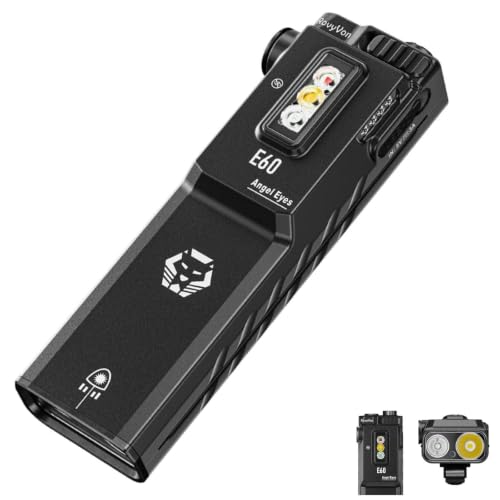
RovyVon Angle Eyes E60 Flat Flashlight

RovyVon E80 3-in-1 Flat EDC Flashlight

RovyVon E60 Flat EDC Flashlight

RovyVon E90 5-in-1 EDC Flashlight
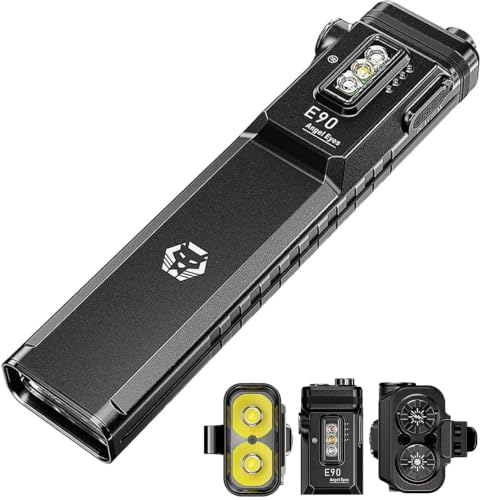
RovyVon E90 Rechargeable EDC Flashlight
The Strengths Of Each Pick
The E10 Pro is the kind of flat light I forget I’m carrying until a hallway fuse blows. Its twin-LED setup pushes a stated 1600 lumens through the main beam while a secondary green beam (a laser-style pointer operating at 520nm, with low output under 1mW and high under 5mW) handles quick visual tasks without flooding a room. Scroll-stepped control makes brightness changes feel deliberate instead of menu-dive annoying.
Compared to the larger Angle Eyes E60 reviewed below, the E10 Pro trades sidelights and runtime for pocket stealth. Folks who want a single bright throw plus a green aiming dot on a single 18650 keychain will appreciate the trade. It suits anyone packing light through airports, hiking trailheads, or late-night dog walks where a phone flashlight just feels rude.
A Few Highlights
- Dual-beam design: a 1600-lumen white flood plus a low-power green pointer, useful for pointing things out without blinding people.
- Scroll-stepped brightness control avoids the hidden-mode frustration common to multi-mode lights.
- Flat keychain profile stays comfortable clipped to a pocket corner or a lanyard loop.
- Green beam operates at 520nm within FDA and IEC 60825-1 safety documentation, so the certification paperwork travels with the light.
Things To Consider
- Avoid pointing the green beam at eyes; direct exposure can be uncomfortable at close range.
- Flat-body lights tend to slide off slanted surfaces if not clipped, so storage in a bag pocket helps prevent scratches.
Who It Suits Best
A daily-carry shopper who wants a single, slim tool for both quick illumination and pointing tasks, and who already keeps gear on a keychain split ring.
Skip It When
Reach for the RovyVon E90 5-in-1 EDC Flashlight instead, since its extra light sources handle trail scanning and household repairs with more headroom.
The Angle Eyes E60 packs more functions into its flat body than most pocket lights twice its size. The main beam (a maximum 1500-lumen white throw rated to reach about 140 meters) handles outdoor navigation, while the body-mounted sidelights add white, red, and UV output for reading maps at night, preserving night vision, or scanning for currency marks and pet stains.
Where the E10 Pro leans toward throw plus pointer, the E60 leans toward multitasking. A 2000 mAh internal battery gives it longer legs than smaller keychain lights. Backpackers, campers, and anyone who treats a pocket light like a pocket toolbox will find the sidelights worth the slightly thicker body. The honest read is that the extra modes take some practice to learn, but the learning curve pays off the moment a hostel bunk goes dark.
Useful Strengths
- Three sidelight modes: white for tent lighting, red to keep night vision intact, and UV for quick document or stain checks.
- 1500-lumen main beam rated to reach about 140 meters, comfortable for trail scanning and dark parking lots.
- 2000 mAh built-in battery stretches runtime compared to coin-cell keychain lights, depending on which mode gets used most.
- Flat form factor still rides comfortably in a pocket alongside a folding knife or wallet.
Worth Noting
- Five-plus light modes means a few minutes of mode memorization before the light feels intuitive.
- Internal battery is rechargeable, not user-swappable, so a charging cable belongs in the same bag for multi-day trips.
Made For
Travelers, campers, and night-shift commuters who want one pocket tool that adapts from trail navigation to reading a bus map without waking the seatmate.
Consider Something Else When
The RovyVon E80 3-in-1 Flat EDC Flashlight is a better fit when UV output matters more than a red sidelight.
The E80 splits its personality between work and play. A stated 1800-lumen white main beam handles walk-up-to-the-front-door duty, while the 365nm UV sidelight reveals the things a flashlight is not supposed to see (think hotel sheets, restaurant restrooms, or a suspicious spill on the carpet). The same green Class 3R pointer beam found on the E10 Pro makes a return here for quick targeting.
Compared to the E10 Pro, the E80 throws a touch harder and adds a real UV channel rather than a red night-vision light. For shoppers who care more about leak detection, counterfeit screening, and pet messes than about preserving dark adaptation, that swap makes sense. It belongs in the pocket of anyone who treats a flashlight as a household diagnostic instrument.
What Stands Out
- 1800-lumen main beam with a green 520nm pointer for visual signaling and pet play.
- 365nm UV sidelight is genuinely useful for stain detection, document checks, and spotting dried liquid residue.
- Green beam ships with FDA and IEC 60825-1 documentation, helpful for workplaces with laser-safety policies.
- Flat body slides into a fifth pocket or a small organizer pouch without printing.
Trade Offs
- 365nm UV light can irritate skin and eyes with prolonged exposure, so avoid skin contact at close range.
- Three light types mean the battery gets split among them, and runtime on the highest white mode drops faster than on lower-output siblings.
Feature Snapshot
Best Suited To
Homeowners, pet parents, and front-desk staff who want one pocket light that doubles as a quick inspection tool for surfaces and paperwork.
A Better Fit Elsewhere
The RovyVon Angle Eyes E60 Flat Flashlight is the stronger pick for backpackers who need a red sidelight for night vision around camp.
The E60 flat EDC keeps the focus on white output with a 1500-lumen ceiling and six adjustable brightness modes. The cool-white 7000K tone leans bright and revealing rather than warm, which is what I want when checking trail markers or reading faded labels in a garage. A green pointer beam plus UV sidelight round out the package for casual inspection tasks.
Sitting between the E10 Pro and the E80, this E60 trades a touch of throw for a fuller mode spread. It works as a calm, balanced option for someone who does not want to learn a complex interface but still wants flexibility. It pairs well with weekend hikers, household handypeople, and anyone who treats a flashlight like a glovebox staple.
Noteworthy Benefits
- Six brightness modes let the owner dial output to the moment, from a candle-flicker locator to a full-flood walk-home beam.
- 1500-lumen cool-white main beam reads cleanly through fog, dust, and dim garage corners.
- Green pointer beam supports quick visual referencing, like highlighting a campsite feature without shouting over the trail.
- Flat body fits a keychain organizer or a small Molle pouch without adding bulk.
Minor Gripes
- Cool-white 7000K tone can feel sterile indoors, so warm-light fans may want to look elsewhere.
- Six modes require brief familiarization, and a few minutes of clicking through levels helps before the first real outing.
Quick Facts
Right Fit For
Casual outdoor enthusiasts and homeowners who want one flat light with enough output flexibility to handle weekend trips and late-night utility checks.
Look Elsewhere When
The RovyVon E10 Pro Flat EDC Flashlight is a better match for shoppers who prefer a slimmer body and do not need six brightness modes.
The E90 5-in-1 is the heavyweight of the roundup. Two cool-white LEDs push a stated 3500 lumens in momentary Turbo mode for scanning a trail head or lighting up a blacked-out basement. A built-in proximity sensor trims output when the light gets close to an object, which helps limit heat buildup during close-range work like changing a tire or swapping a breaker.
Where the smaller E10 Pro and E60 keep things pocket-quiet, the E90 leans into the role of a pocket searchlight. Four additional light sources expand its usefulness for vehicle checks, campsite reading, and quick inspection jobs. USB-C charging means no hunting for a specialty cable on a trip. The honest read is that the size grows with the output, so this one is for pockets that can spare the room.
Features That Help
- 3500-lumen momentary Turbo mode gives a real throw for outdoor scanning and roadside emergencies.
- Proximity sensor drops output near objects, reducing accidental glare and limiting heat during close-up tasks.
- Eco, Low, Medium, and High steady modes stretch runtime for routine household use.
- USB-C recharge port uses the same cable as most modern phones and tablets.
Honest Caveats
- Bigger body than other picks in this list, so it fits loose jacket pockets better than tight jeans.
- Turbo mode is momentary, meaning it stays on only while a button is held, which is a learning moment for first-time users.
Feature Overview
Who Should Grab It
Active outdoorsy types, roadside-prep folks, and home repair regulars who want serious lumen output in a body that still rides in a jacket pocket.
Reach For A Different Pick When
The RovyVon E10 Pro Flat EDC Flashlight is the better call for anyone whose priority is a slim keychain profile over raw output.
The second E90 in this roundup leans hard into daily utility. The same 3500-lumen ceiling shows up here, paired with a built-in proximity induction sensor that adapts output based on how close the light is to nearby surfaces. That sensor turns out to be quietly useful under a sink, where I do not want to blind myself reflecting off chrome fittings.
Compared to the E90 5-in-1 reviewed above, this version sharpens the focus on the beam rather than on extra light sources, making it feel more like a workhorse flashlight than a multi-tool. Vehicle maintenance, workshop inspection, night hiking, and household emergencies all fall within its range. For most backyards, this kind of output is more than enough, and the proximity sensor is the kind of feature I appreciate the first time I forget the light is on.
What It Does Well
- 3500-lumen ceiling handles trail scanning, dark basement work, and roadside checks from a pocketable body.
- Proximity induction sensor responds to nearby surfaces, cutting glare when the light is up close.
- Rechargeable design avoids coin-cell swaps and keeps the package self-contained.
- Beam profile suits both close-up mechanical work and longer-distance outdoor walking.
Points To Keep In Mind
- Proximity sensor can dim output unexpectedly when working under fabric or a tarp that gets close to the lens.
- Output above 2000 lumens drains the battery fast, so keeping a charging cable handy makes sense for extended outings.
Perfect Match For
Home mechanics, vehicle owners, and DIYers who treat a flashlight as a workshop companion and want a proximity-sensor safety net during close-up work.
Where A Sibling Pick Shines
The RovyVon E90 5-in-1 EDC Flashlight is the better choice for shoppers who want additional light sources beyond the main white beam.
What Matters Most Before Choosing Micro-Flashlights
Beam Type And Throw Distance
Throw distance describes how far the light reaches before it dims to a useful level. Micro-flashlights range from short-throw floods for tent reading to long-throw beams that reach across a yard. A wide flood helps indoors, while a tight throw suits outdoor paths.
Brightness Levels And Mode Controls
More modes mean more flexibility, but only if the interface is easy to learn. Some lights use a single button cycle, others a scroll wheel. A mode a person can find with one hand in the dark is more valuable than a feature list.
Battery Type And Charging
Built-in rechargeable cells save on coin-cell waste and pair nicely with USB-C cables most folks already own. Internal batteries do mean the light is useless without a charger on long trips, so the trip length matters when weighing this factor.
Size, Weight, And Pocketability
Flat keychain lights disappear into a pocket corner, while larger flat-body lights give up some stealth for higher output. A light that stays clipped or pocketed is one that gets used, and the most powerful torch does no good if it stays on the nightstand.
Where Shoppers Go Wrong
Skipping The Carry Habit Test
A light only earns its place if it actually rides in the pocket. Buyers who pick the brightest model and then leave it on the counter because it is too bulky never use the lumens they paid for.
Confusing Peak Lumens With Real Output
Peak numbers reflect momentary bursts, not sustained runtime. A flashlight that hits 3500 lumens for seconds but drops fast under heat is not necessarily brighter than a steady 1500-lumen model.
Where The Extra Money Goes
Better Thermal Management
Higher-tier micro-flashlights spread heat across a larger body so they sustain high output longer without throttling. That extra engineering matters for trail scanning and workshop tasks.
Tunable Drivers And Sensors
Proximity sensors, smooth mode ramping, and lockout functions add cost but reduce surprises. A flashlight that does not blind me when I forget it is on under a tarp is worth the premium for regular users.
Frequently Asked Questions
How bright should a micro-flashlight be for everyday carry?
For most daily tasks, somewhere between 500 and 1500 lumens covers door locks, dark hallways, and short walks. Higher output earns its keep for trail scanning or vehicle checks.
What is a green pointer beam used for on a keychain light?
A green pointer beam highlights a spot without flooding the whole area with white light, which is useful for campsite signaling, pet play, and quick visual referencing without disturbing other people nearby.
Are UV sidelights safe on a pocket flashlight?
UV sidelights are useful for document and stain checks but should not be aimed at skin or eyes. Short, intentional bursts at surfaces are the safe pattern.
How do proximity sensors help on a flashlight?
A proximity sensor drops the output when the light comes close to an object, reducing reflected glare and limiting heat during close-up work like mechanical repairs.
Can a micro-flashlight replace a full-size torch?
For most daily tasks, yes. Full-size torches still win on sustained runtime and throw distance, but a flat keychain light covers the bulk of household and travel needs.
Closing Thoughts
A flat keychain flashlight earns its keep by being there when the lights go out. Match the beam profile and mode count to the kind of tasks I actually face, and the right pick becomes obvious. Any of these six models will do the job, and the differences come down to pocket feel, mode personality, and how much output I want within reach.