

Studio lighting shapes everything, from how a portrait feels to whether a product shot reads clean on a client monitor. I’ve spent years watching beginners overspend on lights they don’t need and pros under-buy fixtures that hold them back. The right light depends on your space, your subjects, and how much control you want. These seven picks cover a useful range, from modifier shapes that tame harsh sources to powerful COB (chip-on-board, a single high-output LED module) kits that can light an entire scene. I’ll walk through what each does well, where it bends, and who it actually helps.
Your Options, Compared

GVM Reign 1200W Studio Lights LED Monolight 2700-6800K

GVM SD300B LED Video Light Kit (2-Pack) Bi-Color
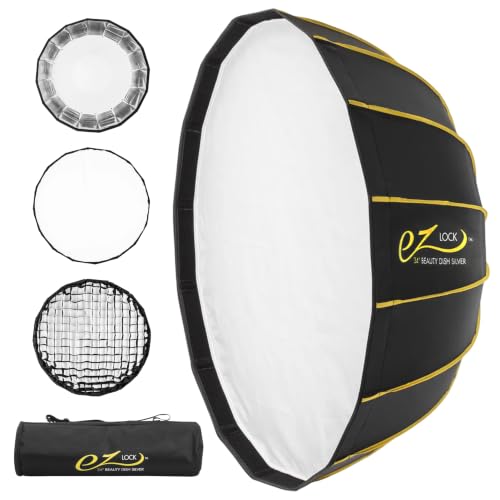
Glow EZ Lock 34″ Beauty Dish Softbox Bowens-Mount

GVM SD500B LED Video Light Kit (2-Pack) COB

Godox UL-Octa Box 120cm Quick Release Softbox

GVM 500W LED Video Light APP Bluetooth Bowens Mount
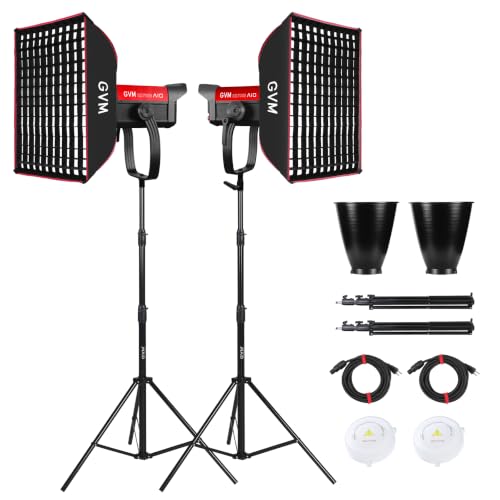
GVM SD700B LED Video Light Kit (2-Pack) Bi-Color
What Each Pick Brings To The Table
The Reign 1200W is a serious piece of kit. I see pros reach for fixtures like this when a single shoot demands DMX (a digital control protocol that lets consoles talk to lights), CRMX (wireless DMX over radio), RDM (remote device management for two-way feedback), and Art-Net (network-based DMX over Ethernet) integration, since those protocols let a gaffer wire the head straight into a larger lighting console without adapters. The 2700K to 6800K range covers everything from candlelit warmth to clean daylight, and COB output at 1200W means the bare bulb pushes roughly 9360 lux at 9.8 feet. That’s more than enough punch for a hair light or to punch through diffusion at distance.
The G7 mount opens up compatibility with common Bowens-style accessories and adapters for ARRI-style hardware, so it slots into most pro rigs without custom brackets. CRI/TLCI (Color Rendering Index / Television Lighting Consistency Index, two scores that measure how faithfully a light renders colors) sit at 97+, which keeps skin tones believable on camera. If you build a multi-light rig on a professional stage, this is the kind of fixture that talks to the rest of the system cleanly.
The Value In It
- Constant 1200W output across the full 2700K to 6800K range, so brightness holds steady as color shifts
- High CRI/TLCI 97+ ratings keep skin tones and product colors faithful, which matters when grading later
- Four control protocols (DMX, CRMX, RDM, Art-Net) cover nearly any pro lighting console
- Brightness adjusts in 0.1% increments from 0.0% to 100%, giving precise exposure control on camera
Honest Caveats
- At 1200W, the head runs hot, so you need proper ventilation in enclosed sets
- Advanced protocol support is wasted if your studio only uses manual on-board controls
Key Specs
Right Fit For
Broadcast gaffers and DPs (directors of photography) building a console-controlled lighting rig on a multi-camera set.
Reach For A Different Pick When
You shoot solo on a small YouTube setup, where the GVM SD300B LED Video Light Kit’s app control and softbox pair saves cost.
The SD300B pair gives creators a complete key-and-fill setup in one box. I think of this kit as the “unbox and shoot” option, since two bi-color heads, softboxes, and stands ship together so you can build a two-point lighting setup (a key light and a fill light, the foundation of most studio looks) the same afternoon. Output reaches 65000 lux at 1 meter with the bare bulb, and CRI 97+ keeps skin tones natural across the 2700K to 6800K range. For YouTube talking heads or small product work, that’s plenty.
DMX support plus app control means you can dial in adjustments from a phone or a console. Twelve built-in effects simulate candlelight, lightning, and other moods, which adds creative range without buying extra accessories. Compared to the Reign 1200W above, this kit trades raw output and protocol depth for portability and a lower learning curve.
A Few Strong Suits
- Dual-head kit with softboxes included, so you skip the matching-shop step
- App control lets you tweak brightness and color from across the set
- Twelve built-in scene effects cover common creative looks without extra gear
- CRI 97+ rating keeps skin tones believable without color correction in post
Trade-Offs To Consider
- Output at 65000 lux falls short of larger COB fixtures for wide sets
- Two-light bundles mean more stands and cables than a single-head option
Best Suited To
Solo creators running a YouTube channel, podcast studio, or a small product shoot who want a complete two-point setup out of the box.
Look Elsewhere When
You need raw punch on a large film set, where the GVM SD700B LED Video Light Kit delivers substantially more output per head.
This Glow modifier isn’t a light itself, but it reshapes what your light does. The 34-inch silver beauty dish softbox attaches to any Bowens-mount strobe or LED, and the EZ Lock frame opens and closes like an umbrella. I value that speed on location shoots where every minute of setup costs the client. The silver interior brightens the output and tightens the beam compared to a white softbox, which gives portrait skin a crisp, sculpted feel rather than a flat wrap.
The kit ships with dual diffusers, an eggcrate grid (a fabric honeycomb that narrows the beam and reduces spill), and a deflector disc, so you can fine-tune the light quality without buying add-ons. Compared to the SD300B kit above, this isn’t a light source, but it’s the modifier that makes those lights look like portrait gear.
Practical Pluses
- EZ Lock setup saves minutes per shoot, which matters on tight schedules
- Silver interior produces punchy, contrast-rich skin rendering for portrait work
- Eggcrate grid and deflector disc ship in the box, so no extra accessory runs
- Standard Bowens mount fits most COB LEDs and strobes already in your kit
Things To Consider
- Softbox only, so you need a separate light head to power it
- Silver interior is less forgiving on older skin or harsh blemishes than a white dish
Who Should Grab It
Portrait and headshot shooters who already own a Bowens-mount light and want faster setup with more directional control.
Skip It When
You want wraparound light for fashion editorials, where the Godox UL-Octa Box 120cm creates softer, more flattering falloff.
The SD500B pair lives in a useful middle ground. Each head pushes 227040 lux at 1 meter with the bare bulb, which is enough punch to light a small film set, a podcast with multiple seated guests, or a commercial tabletop rig. The 2700K to 6800K bi-color range covers warm interior moods to clean daylight without swapping gels. CRI 97+ keeps color accurate, so post-production color grading starts from a clean place.
Bluetooth app control means you can adjust brightness and color from your phone while standing next to the camera, which speeds up iteration. The included softboxes soften the raw COB output into flattering fill, and the adjustable U-frame yoke (the U-shaped bracket that holds the head on the stand) tilts smoothly for overhead or low-angle positions. Compared to the SD300B kit above, this pair trades portability for serious output headroom.
Benefits That Matter
- 227040 lux per head handles large rooms and longer throw distances
- Bi-color range removes the need for gel swaps when matching ambient light
- App-driven adjustments let you fine-tune without climbing a ladder
- CRI 97+ keeps skin tones and product colors accurate across the dimming range
Room For Improvement
- Two COB heads plus stands and softboxes add weight to your load-in
- At full power, the heads need adequate cooling space around the COB module
Made For
Mid-size production teams handling interviews, brand films, or multi-camera streams where each light needs serious punch.
Not Your Match When
You mainly shoot tight headshot frames in a small room, where the Glow EZ Lock 34″ Beauty Dish gives more flattering portraits on lower output.
The Godox UL-Octa Box is a workhorse modifier. At 120cm (about 47 inches) across, it produces soft, even light with a smooth falloff, the kind that wraps around a face rather than raking across it. That wraparound quality is why beauty, fashion, and editorial portrait shooters keep an octagonal softbox in their kit. Circular catchlights in the eyes also look more natural than the rectangular reflections a square softbox produces.
The quick-release umbrella-style setup means no separate rod assembly, so you can collapse the modifier and pack it between takes. Like the Glow beauty dish above, this is a modifier, not a light, so it pairs with any Bowens-mount LED or strobe you already own. The trade-off is size: this softbox eats space in your transport case and demands a sturdy stand.
Bright Spots
- Octagonal shape creates round catchlights, which most clients prefer for portraits
- Quick-release frame sets up in seconds without tools
- 47-inch size wraps light around faces for flattering, even coverage
Less Ideal Details
- Light sold separately, so this is a modifier add-on, not a complete kit
- Large diameter needs a heavy-duty stand to prevent tipping on windy locations
Who Will Love This
Beauty and editorial portrait photographers who prioritize soft wraparound light and clean circular catchlights.
A Better Fit Elsewhere
You shoot fast-moving events or run-and-gun portraits, where the Glow EZ Lock 34″ Beauty Dish opens faster and packs smaller.
The GVM 500W single-head fills a useful slot. If you don’t need a full two-light kit but want pro-grade output, this 500W COB head pushes 227040 lux at 1 meter, matching the per-head output of the SD500B kit above. The 2700K to 6800K range handles warm and cool environments, and Bowens mount compatibility means you can attach the Glow beauty dish or Godox octa reviewed earlier to shape the light however your shoot needs.
Bluetooth app control is the main quality-of-life upgrade. You can adjust brightness and color temperature from your phone without climbing behind the stand, which is genuinely useful when the light is rigged above a backdrop. The standard cover acts as a basic protection shield when the light is stored. Compared to the SD300B kit, this single-head option trades a second fixture for higher output per head and simpler cable management.
Everyday Perks
- Single 500W head delivers high output without doubling your cable count
- Bowens mount accepts the modifiers covered elsewhere in this roundup
- Phone-driven control simplifies adjustments when the light is rigged high
Softer Spots
- Single light limits key-and-fill flexibility without buying a second head later
- At 500W the COB runs hot, so you need clear airflow around the housing
The Right Fit
Solo streamers, talking-head creators, and small product shooters who want one powerful head they can expand later with a modifier.
Swap It Out When
You want a complete two-light setup from day one, where the GVM SD300B LED Video Light Kit ships both heads in one box.
The SD700B kit sits at the top end of this list for raw output. Two 700W COB heads per kit push the bare-bulb reading to 29100 lux at 1 meter, which is enough punch for larger film sets, livestream studios with multiple talent positions, or commercial shoots where diffusion distances run long. CRI/TLCI 97+ keeps skin tones and product colors faithful even at high output, which saves time in color grading.
App control plus 24 built-in scene effects covers both practical adjustments and creative looks. The 2700K to 6800K range matches ambient light without gel swaps. Compared to the SD500B pair earlier, this kit trades affordability for substantially more headroom per fixture, useful when you’re pushing through heavy diffusion or lighting a wide scene.
The Helpful Details
- Two 700W heads give you generous headroom for large rooms and heavy diffusion
- 24 scene effects expand creative options without extra accessories
- Wireless app control keeps adjustments hands-off during complex shoots
Points To Note
- Two high-wattage heads add weight and need robust stands for safe rigging
- Output overkill for small talking-head setups where lower-wattage kits suffice
Key Specs
Perfect Match For
Film producers, livestream crews, and brand content teams running larger sets where each light needs serious wattage.
Consider Something Else When
Your work fits in a home office or small studio, where the GVM 500W LED Video Light’s single-head output is more than enough.
Choosing The Right Studio Lighting For Your Work
Match The Light To The Subject And Space
Portraits benefit from soft, wraparound sources, which is why octagonal softboxes like the Godox UL-Octa Box 120cm and beauty dishes like the Glow EZ Lock 34″ earn their place. Product shots often need even, controlled beams, so bare COB heads with grids or barn doors (metal flaps that shape and direct the beam) work better. Filmmakers chasing cinematic looks usually need high-output fixtures like the SD700B pair, since heavy diffusion eats lux fast.
Room size matters more than people expect. Small home studios stay manageable with a 300W to 500W head and a softbox. Bigger rooms with high ceilings need the punch of 700W+ fixtures to compete with ambient bounce. CRI/TLCI ratings of 97+ across this roundup mean you can trust the color rendering for skin and brand work.
Bi-Color Versus Daylight-Only
Bi-color heads (2700K to 6800K) adjust color temperature on the fly, which matters when you shoot under mixed lighting or want warm interior moods without gels. Daylight-only fixtures (around 5600K) usually cost less per watt but force gel swaps to match warm ambient light. For most working photographers and videographers, bi-color pays back the small premium within a few shoots.
DMX, CRMX, and app control all serve different workflows. DMX and CRMX matter on professional sets with a lighting console. App control helps solo creators tweak output from their phone without breaking the shoot. Manual on-board controls still work fine for static setups, so don’t pay for protocol features you won’t use.
Modifiers Change Everything
A bare COB head produces harsh, directional light. Softboxes, beauty dishes, and octaboxes spread and soften that output. The Glow beauty dish sculpts contrast for portrait skin, while the Godox octa wraps light for beauty and editorial work. Building a kit means matching the modifier to the subject, and Bowens-mount compatibility across this roundup means you can mix brands without adapters.
Wattage isn’t the only number. A 300W head with the right modifier can outperform a 700W bare bulb for portrait work, since softness on the subject matters more than raw punch in the room. Match wattage to throw distance and diffusion rather than chasing the highest number.
What To Watch Before You Commit
Pitfalls Shoppers Hit
Buying wattage you won’t use is the most common trap. A 1200W head costs more to run, demands heavier stands, and forces extra cooling. Most solo creators max out at 500W per head for years before they ever need more. The opposite mistake is buying a single low-watt light and expecting it to fill a large room with softboxes attached, then wondering why everything looks dim.
Skipping modifier compatibility is another miss. A great light with no modifier produces harsh, unflattering output. Before you buy a head, confirm the Bowens mount or check which softbox shapes work with it. The Glow beauty dish and Godox octa in this roundup both use Bowens mounts, which is why they pair cleanly with the GVM heads reviewed here.
When Paying More Pays Off
The premium tier usually buys you better build quality, more consistent CRI across the dimming range, and protocol support for pro consoles. The GVM Reign 1200W justifies its price for broadcast and cinema work because DMX and CRMX integration save time on set. The SD700B pair earns its premium for crews running large livestream studios where two 700W heads can replace a full HMI (hydrargyrum medium-arc iodide, a high-output daylight fixture common on film sets) setup with simpler power and cooling.
Stepping up also buys reliability. Higher-tier heads typically use better cooling fans, more robust yokes, and longer-lasting COB modules. For working professionals who can’t reshoot a missed wedding or a rescheduled commercial, that reliability compounds fast. Hobbies and learning projects do fine with mid-tier options like the SD300B kit, where the lower cost forgives the occasional gear upgrade.
Frequently Asked Questions
What CRI rating should I look for in studio lighting?
A CRI of 95 or above is generally considered accurate enough for skin tones and brand colors. All seven picks in this roundup rate CRI 97 or higher, so you can trust any of them for color-sensitive work.
Do I need softboxes if my lights are bright?
Brightness alone doesn’t make flattering light. Softboxes, beauty dishes, and octaboxes spread the beam and soften shadows, which is what actually flatters skin and reduces hot spots on reflective products.
Can I mix brands in one lighting setup?
Yes, as long as mounts match. The Bowens-mount standard across most picks in this list lets you pair GVM heads with Glow and Godox modifiers without adapters, which keeps multi-brand setups flexible.
How important is bi-color versus fixed color temperature?
Bi-color matters most when you shoot under mixed lighting or want quick warm-to-cool shifts without gels. For controlled studio-only shoots, fixed daylight fixtures are fine, but bi-color adds flexibility that pays off over time.
What wattage do I need for a small home studio?
A 300W to 500W COB head per light handles most home studios cleanly, especially when paired with a softbox or beauty dish. Larger rooms, long throw distances, or heavy diffusion call for 700W+ heads to keep exposure comfortable.
The Takeaway
Pick the light that matches your room and your subject first, then add modifiers that shape the quality you want. Solo creators usually do best starting with a bi-color 300W to 500W kit like the SD300B pair, while portrait shooters should grab a Bowens-mount modifier such as the Glow beauty dish or Godox octa. Larger crews and broadcast work justify the step up to the Reign 1200W or SD700B pair, where protocol support and output headroom earn the premium. The right light is the one you’ll actually use on every shoot.