

Low-sloped ceilings punish tall fixtures, leaving headroom feeling cramped and shadows pooling where you least want them. The fix I keep recommending for friends is a directional surface-mount spotlight: flush to the drywall, swivels where you need light, and disappears visually. I pulled together five solid options from Aisilan that fit this exact scenario, ranging from compact 7W accents up to a 15W gallery-grade pick.
The Choices Worth Comparing

Aisilan 9W Dimmable LED Ceiling Spotlight, 3000K, Black
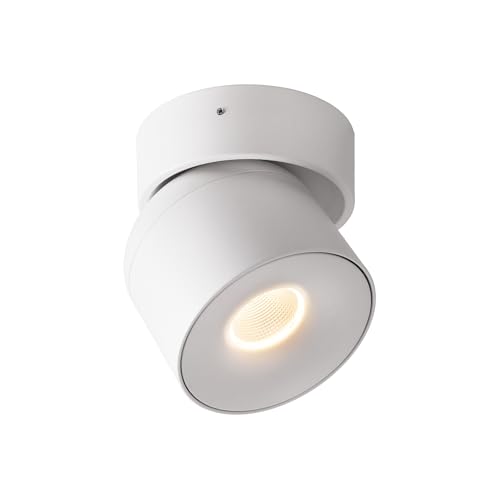
Aisilan 15W LED Dimmable Ceiling Spotlight, 3000K, White
AISILAN Ceiling Spotlight Indoor, 12W COB LED, 1 Pack

Aisilan LED Zoomable Ceiling Spotlight, 7W Dimmable, White

Aisilan 9W Dimmable LED Ceiling Spotlight, 3000K, White
A Closer Look At Each Pick
For a low-sloped ceiling in a kitchen or living room, this 9W black directional spot hits a comfortable middle ground. The sandblasted aluminum body sits flush against the surface, so it won’t drop into the room and steal headroom, and the head pivots so you can aim the beam toward a counter, a piece of wall art, or a reading nook.
I like this pick for homeowners who want a single fixture to do several jobs without committing to a full track system. Compared to the 15W upgrade later in this list, it trades raw punch for a lower profile and easier placement in tighter ceiling zones.
Bright Spots
- Sandblasted aluminum housing keeps the unit cool and looks restrained on white ceilings.
- 9W output at 3000K warm white suits living areas where harsh cool light feels clinical.
- TRIAC dimming from 10 to 100 percent lets one fixture carry both task and mood duty.
- Flush-mount design adds almost no vertical bulk, which matters most under eight-foot ceilings.
Worth Noting
- A compatible dimmer switch is not included, so plan for that add-on if your switch plate is currently a standard on-off toggle.
- The black finish shows dust on the swivel joint more visibly than the white sibling.
Who It Suits Best
A homeowner with a kitchen ceiling under eight feet who wants one directional accent over an island without losing clearance.
Reach For A Different Pick When
The AISILAN 12W COB option suits shoppers lighting artwork, where higher color accuracy matters more than a black housing.
This is the bigger sibling to the first pick, and the upgrade reads on paper: a 4.3-inch body versus the 3.5-inch base, and 15W output instead of 9W. For low-sloped ceilings, that extra reach matters when you’re trying to wash a tall wall of framed art from a ceiling that sits only a few feet off the wall.
I see this working best in hallways with art at the end, or in a small gallery nook where a single fixture needs to push light across eight feet of vertical space. Compared to the 9W black version, it’s the same family but built for coverage, not subtlety.
Strong Points
- 15W output throws farther, useful for tall artwork hung on a short ceiling.
- Larger aluminum body improves heat dissipation and should extend LED lifespan.
- White minimalist finish blends into most ceiling paints without visual clutter.
- Same TRIAC dimming range as the smaller spot, so behavior stays consistent across rooms.
Trade Offs
- The 4.3-inch footprint is more noticeable on the ceiling, which matters in rooms where you want fixtures to disappear.
- Higher output may feel too punchy in a small bedroom, so dimmer planning is essential.
Best Suited To
Shoppers lighting framed artwork or gallery walls in rooms where the 9W version does not quite reach.
Look Elsewhere When
The Aisilan 9W Dimmable LED Ceiling Spotlight in White handles a bedroom or hallway where softer ambient light is enough.
COB LED is a chip-on-board design where many small diodes cluster under one phosphor layer, producing a denser, more uniform beam than standard LED arrays. The 97+ CRI rating here means the light renders colors very close to natural daylight, which is why this fixture lands in art-focused rooms rather than general kitchens.
I recommend this for someone lighting a single hero piece, a textile wall hanging, or a small retail display where color accuracy matters more than raw punch. It’s a step up in purpose from the previous two picks, which are broader household workhorses.
Advantages To Know
- 97+ CRI renders reds, blues, and skin tones accurately under art lighting conditions.
- Flicker-free driver helps reduce eye strain during long viewing sessions.
- Beam angle adjusts between roughly 10 and 55 degrees for narrow spot or wider wash use.
- 12W output sits between the 9W and 15W siblings, balancing reach and efficiency.
Honest Caveats
- Higher CRI usually pairs with a tighter color temperature range, so mood lighting enthusiasts may want to verify the kelvin rating matches their existing fixtures.
- Single-pack quantity means a full room needs multiple units.
Made For
Art collectors and home decorators who want museum-style rendering on framed pieces hung below a low-sloped ceiling.
A Better Fit Elsewhere
The Aisilan 15W LED Dimmable Ceiling Spotlight suits a larger gallery wall where output and reach outweigh CRI precision.
The zoomable beam is the hook here, ranging from a tight 10-degree pin spot to a softer 55-degree wash, all from one fixture. On a low-sloped ceiling, that flexibility is genuinely useful because a single junction box can serve a small framed print one month and a larger wall canvas the next.
At 7W, this is the gentlest option in the lineup, and I think of it as a finishing touch rather than a primary light source. It pairs nicely with the 15W or 12W siblings on the same ceiling, giving layered control without crowding the junction box.
Noteworthy Benefits
- Zoomable optics let one fixture adapt as wall art changes over time.
- 97 CRI rating rivals the COB option for color rendering at lower wattage.
- Hardwired surface mount keeps installation straightforward on existing junction boxes.
- TRIAC dimming from 10 to 100 percent matches the larger Aisilan family.
Points To Consider
- 7W output will not carry a large room on its own, so expect to add multiple units.
- The zoom mechanism adds a small moving part that owners should dust occasionally to keep the beam smooth.
Right Fit For
Collectors who swap artwork often and want one fixture that adjusts beam spread without rewiring.
Not Your Match When
The Aisilan 9W Dimmable LED Ceiling Spotlight in Black fits shoppers who want a fixed-direction spot in a darker finish for a kitchen or living area.
Same hardware as the first pick, finished in white instead of black, which changes the room dynamic more than people expect. On a low-sloped white ceiling, this version nearly vanishes, while the black sibling reads as a deliberate design object.
I lean toward this pick for bedrooms, hallways, and rental-friendly installs where you want the fixture to disappear into the ceiling. Compared to the 15W version, it trades coverage for a quieter visual presence, which suits smaller rooms.
What Helps Most
- White sandblasted finish recedes into most painted ceilings for a clean look.
- 9W output is enough to handle a bedside reading nook or entryway without feeling clinical.
- TRIAC dimming provides smooth control for evening wind-down routines.
- Flush profile preserves headroom in tight bedroom ceilings.
Small Caveats
- Same dimmer compatibility requirement as the black version, so factor that into your budget.
Who Should Grab It
Renters and minimalists who want an unobtrusive directional spot that blends into a white ceiling without rerouting junction boxes.
Swap It Out When
The Aisilan LED Zoomable Ceiling Spotlight fits shoppers who want beam angle adjustability for evolving wall displays.
What To Weigh Before Buying Spotlights For Low Sloped Ceilings
Clearance And Mounting Height
Low-sloped ceilings generally run under eight feet, and every inch of drop counts. A flush-mount or near-flush fixture keeps headroom intact, while a pendant or track head that drops six inches will make a tall person duck. Measure from the ceiling surface to the tallest point of the fixture body before committing, and leave at least six feet six inches of walking clearance in main paths.
Directional Aim And Beam Spread
A fixed-direction spot works when the target, such as a kitchen island or sofa, never moves. A zoomable or pivoting head makes more sense for art walls, gallery nooks, or anywhere the focal point shifts. Beam spread is measured in degrees: tighter beams (10 to 25 degrees) read as accent pin spots, while wider beams (40 to 55 degrees) wash a section of wall.
Dimming And Switch Compatibility
TRIAC dimming is the most common residential protocol, but not every dimmer switch works with every LED driver. Owners commonly report flicker or buzzing when a non-compatible dimmer is paired with a low-wattage LED. Check the fixture’s dimmer compatibility list before buying, and budget for a compatible switch if your current one is a basic on-off toggle.
Color Temperature And CRI
Color temperature is measured in kelvin, with 3000K reading as warm white, 4000K as neutral, and 5000K as cool daylight. CRI, or Color Rendering Index, measures how accurately a light source reveals colors compared to natural light, on a scale of 0 to 100. For art, food, or skin tones, look for CRI 90 or higher.
Key Considerations Across These Picks
Pitfalls Shoppers Hit
The most common mistake I see is choosing a fixture based on wattage alone, then discovering the beam angle is too narrow for the wall it sits over. A 15W spot with a 10-degree pin beam throws a tight dot on the floor, not a usable wash. Always cross-check wattage against beam spread and the height of the target.
Where The Extra Money Goes
Higher-tier picks in this category tend to spend the budget on CRI accuracy, beam zoom mechanisms, and heat dissipation in the aluminum housing. The 12W COB option justifies its position through color rendering, while the 15W version invests in reach. Stepping up makes sense when art or task precision is the goal, not when a hallway just needs general accent light.
Frequently Asked Questions
What Beam Angle Works Best For Low Sloped Ceilings?
A beam angle between 25 and 40 degrees covers most accent and task uses without overblowing the target. Narrower beams work for small artwork, wider beams for wall washes.
Do These Spotlights Need A Special Dimmer?
Yes, they require a TRIAC-compatible LED dimmer. A standard incandescent dimmer often causes flicker or buzzing with low-wattage LEDs.
Can I Install These Without Rewiring?
These units use a standard junction box mount, so most homeowners replace an existing fixture without rerouting wire. Hardwiring is required, so turn off the breaker at the panel first.
Are These Fixtures Safe In Bathrooms Or Kitchens?
The aluminum housing handles normal indoor humidity, but check local code for any room with direct water exposure. Bathrooms above a tub or shower often require damp-rated fixtures specifically.
How Many Fixtures Do I Need For A Room?
A small bedroom usually needs two to three directional spots for balanced coverage. Larger living rooms or gallery walls often need four to six, depending on ceiling height and target size.
Wrap Up
Low-sloped ceilings reward fixtures that stay out of the way and aim with intention, and the Aisilan family covers that brief across several wattages and finishes. Pick by room size, target distance, and whether color accuracy matters more than reach. A thoughtful ceiling layout now saves you from rearranging art later.