

There’s a particular glow that older tungsten bulbs gave a room, a soft amber wash that made everything feel a little more lived-in. Today’s Edison-style replacements aim to recreate that mood while pulling a fraction of the energy, and they come in shapes suited to chandeliers, sconces, vanity bars, and curio cabinets. The trick is matching filament shape, base type, and color temperature to the fixture you already have.
The Lineup, Simplified

Weyolin T45 LED Edison Bulb 4W (4-Pack)

Weyolin T10 Edison LED Bulb 4W (6-Pack)
Weyolin T10 Incandescent Bulb 25W (4-Pack)

Weyolin T10 Amber Incandescent 40W (6-Pack)

Weyolin T10 7.3 Inch LED Tube Bulb 6W (4-Pack)
Bluex R14 LED Mini Reflector 4W (4-Pack)

Weyolin A15 LED Edison Filament 4W (6-Pack)

Weyolin T10 Incandescent 25W (6-Pack)
The Strengths Of Each Pick
The Weyolin T45 sits in a sweet spot for people who want that filament-style look without a spike on their utility bill. Pulling just 4 watts while giving off the warm equivalent of a 40-watt incandescent, it slips into the same E26 medium sockets (the standard size found in most North American lamps) that older bulbs used, so there’s no rewiring. The X-shape filament spreads light evenly inside the clear glass, which matters when the bulb is the design feature, as it often is in pendant clusters.
For everyday living rooms or dining nooks, the 2700K color temperature (a warm white reading on the Kelvin scale, where lower numbers mean yellower light) lands in that comfortable, slightly amber range rather than reading clinical. Most dimmer switches pair with it without complaint, which is something to confirm before buying in volume for a whole-home fixture swap.
A Favorable Mix
- Low 4W draw replaces a 40W incandescent, trimming energy use across fixtures left on for hours.
- Standard E26 base fits the majority of ceiling and pendant sockets without an adapter.
- Clear glass with an exposed X filament doubles as a decorative element in bare-bulb fixtures.
- Dimmable from roughly 10 to 100 percent for mood control at dinner or movie time.
Honest Caveats
- At 4W, brightness is moderate; large rooms with a single bulb may feel underlit.
- Compatibility with older dimmer models can vary, so testing one bulb before buying a full pack is wise.
Feature Snapshot
Best Suited To
Homeowners refreshing pendants or vanity fixtures who want vintage looks without sacrificing efficiency.
A Better Fit Elsewhere
For a longer tubular shape suited to wall sconces, the Weyolin T10 7.3 Inch LED Tube Bulb offers a more elongated silhouette.
The T10 tube shape here trades the round envelope of pick one for something slimmer and more deliberate. That narrow profile is what makes it a natural fit for desk lamps, curio cabinets, and pendant lights where a standard A-shape bulb would look chunky or clip the shade. Six bulbs in the pack make it easier to commit to a whole room or display case at once.
At 4W with a 2700K warm-white output, the light stays easy on the eyes, which matters in a curio where you’re trying to showcase glassware or ceramics without washing them out. The wide 360-degree beam angle means the tube glows evenly along its length, so there’s no dim spot midway down.
The Value In It
- Six-pack format lowers the cost per bulb for whole-room installations.
- Slim T10 profile fits inside narrow lamp shades and tight display nooks.
- Wide 360-degree beam angle lights the full length of the tube without dark zones.
- Compatible with a wide range of dimmer switches, per the manufacturer’s claims.
Points To Keep In Mind
- Tube shape may look unusual in fixtures designed around round A-style bulbs.
- 4W output is best suited to accent or task spots rather than whole-room lighting.
Right Fit For
Curio cabinet owners and home office workers who want warm accent light from a slim, modern LED tube.
Reach For A Different Pick When
The Weyolin T10 7.3 Inch LED Tube Bulb is the longer 6W alternative when more brightness is needed in a vanity bar.
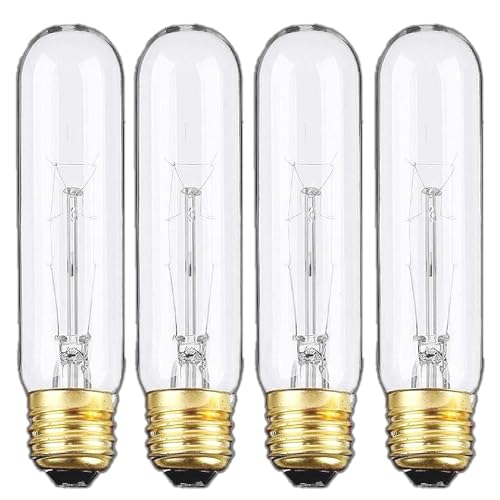
There’s a category of shopper who doesn’t want an LED that imitates an Edison bulb; they want the actual filament glowing. That’s exactly what this 25W incandescent delivers, the same warm wash and slightly uneven shimmer you remember from older houses. It runs on standard 120V household current with an E26 base, so no rewiring or special socket is required.
The trade-off is energy and heat. At 25W, you’re paying more to run it than any LED on this list, and the bulb runs noticeably warmer to the touch. For a showcase cabinet that’s only lit a few hours a day, that cost difference is small. For a fixture left on all evening, it adds up fast.
Key Advantages
- Genuine tungsten filament delivers the authentic vintage shimmer that LEDs approximate.
- Clear glass and visible tube shape suit decorative pendant and showcase use.
- Dimmer compatibility is broad, pairing with most common household switches.
Trade-Offs To Consider
- 25W draw per bulb makes it the least efficient option in this lineup.
- Incandescent filaments have shorter lifespans than LED alternatives, so replacements come sooner.
- Bulb surface runs hot, so enclosed fixtures need ventilation headroom.
Quick Facts
Who Will Love This
Collectors and designers restoring period-correct interiors who want an authentic filament glow above efficiency.
Skip It When
The Weyolin T10 Amber Incandescent 40W gives a richer amber tone for accent-heavy rooms.
The amber glass on this 40W tube shifts the entire mood of a room toward something warmer and more candlelit than clear-glass incandescents can manage. Because the glass itself is tinted, the light comes out softer before it even hits the dimmer. That’s a particular kind of glow that works well in reading corners, bar areas, and restaurant-style kitchens.
Six bulbs in a pack helps when you’re outfitting a fixture with multiple sockets, like a chandelier or a row of pendants over an island. Each bulb pushes 40W, so an eight-bulb fixture at full brightness is meaningful draw, but that’s the cost of true tungsten glow in this style.
What Works In Its Favor
- Amber-tinted glass deepens warmth before dimming is even applied.
- Six-bulb pack suits larger fixtures with multiple sockets.
- E26 base fits standard medium sockets found in most decorative fixtures.
Worth Noting
- 180 lumens per bulb is modest, so clusters are usually necessary.
- Higher wattage means more heat output, especially inside glass-shade pendants.
- Amber glass filters out cooler tones, which can muddy color-critical tasks like food prep.
Made For
Homeowners styling warm ambient zones where mood matters more than color accuracy.
Where Another Pick Suits Better
For efficient warm output without the wattage hit, the Weyolin A15 LED Edison Filament uses far less energy per bulb.
At just over seven inches long, this LED tube is the roomiest shape on the list, and the 600 lumens it produces is the most too. That extra output matters when the bulb is the primary light source in a vanity bar or wall sconce, not just a decorative accent. The 6W draw still sits well below incandescent equivalents, so efficiency holds up at the higher brightness level.
Where the shorter Weyolin T10 from pick two reads as a small accent bulb, this one reads as a statement. Long fixtures with multiple horizontal arms tend to show off the tube shape best. Make sure the socket housing has enough depth; a 7.3-inch tube can crowd shallow sconces.
Notable Gains
- 600 lumen output covers larger mirror and vanity zones without crowding the fixture with extra bulbs.
- 7.3-inch length adds presence inside open-frame sconces and chandeliers.
- 6W draw keeps energy cost low even at the higher brightness tier.
- Dimmable range works with standard household dimmers for layered lighting control.
Some Limits To Know
- Length can be too long for compact fixtures with shallow housing.
- Larger size may dominate small pendants where a tinier bulb would balance the design better.
The Numbers That Matter
Perfect Match For
Vanity and sconce projects where one long tube is preferable to several smaller bulbs.
Look Elsewhere When
Compact fixtures call for the shorter Weyolin T10 Edison LED Bulb from pick two.
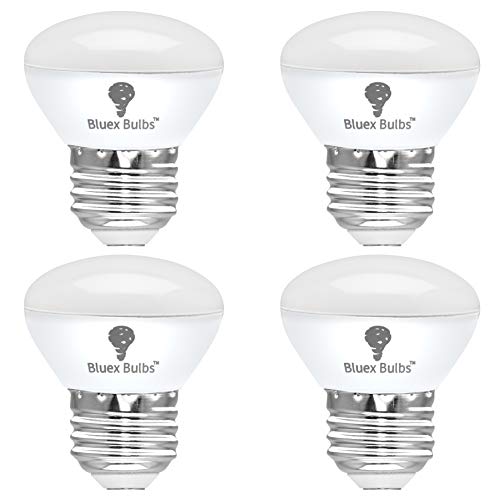
The R14 form factor is the smallest bulb on this list, and it solves a specific problem: fixtures that physically can’t fit a standard A-shape or tube. Curio cabinets, miniature picture lights, range hoods, and some appliance interiors use this short reflector shape, which sends a narrow pool of warm light forward instead of scattering it like a round bulb would.
At 4W replacing a 40W incandescent, the energy math works in your favor over the long run, especially in fixtures that run for hours during cooking or display viewing. The E26 base keeps the swap simple, but always measure the inside of your fixture first, because some enclosed mini lights only accept shorter profiles.
Practical Pluses
- Mini reflector shape directs light forward, ideal for display and accent fixtures.
- Compact dimensions fit inside small enclosed housings other bulbs can’t.
- Full-range dimming supports nuanced lighting in cabinet and signage use.
Points To Note
- Reflector design produces a directional beam, so multiple bulbs may be needed for even coverage.
- Smaller form factor means lower absolute lumen output than longer bulbs on the list.
Who Should Grab It
Owners of curio cabinets, display signage, or compact accent fixtures that need a directional warm-white source.
Swap It Out When
The Weyolin A15 LED Edison Filament suits ceiling fans and small appliances needing an Edison-style filament look.
The A15 shape is the small round bulb you find inside refrigerators, ceiling fan light kits, and certain vanity fixtures. Weyolin built this one to handle all those jobs while still showing off a visible filament, which is something you don’t usually get at this size. The 400-lumen output replaces a 40W incandescent cleanly without feeling harsh in a small interior.
Six bulbs in the pack means it’s easy to refresh multiple ceiling fans or appliances at once. The Edison filament inside adds a layer of warmth that bare appliance bulbs usually lack, which is a subtle upgrade in kitchens and hallways where the bulb is briefly visible.
Everyday Advantages
- A15 size fits appliance and ceiling fan fixtures that reject larger bulb shapes.
- Visible Edison-style filament adds character when the bulb is briefly exposed.
- 4W draw suits continuous-use fixtures like refrigerator interiors.
- Six-bulb pack supports whole-home refreshes in one purchase.
Possible Compromises
- 400 lumens is modest for primary room lighting; best for enclosed or task fixtures.
- Smaller filament means the vintage look is less dramatic than the longer tube options.
At A Glance
The Right Fit
Anyone replacing appliance or ceiling fan bulbs who wants a visible filament instead of a plain white interior.
Not Your Match When
Long-tube vanity installations are better served by the Weyolin T10 7.3 Inch LED Tube Bulb.
The 6-pack format here brings the per-bulb cost down for larger installations, which is what most showcase and curio projects turn into once you start counting sockets. Each bulb is a 25W clear incandescent in the same T10 tube shape as pick three, so the light quality matches if you’re combining the two packs.
For someone outfitting an entire hutch or a row of pendants over a long bar, buying one of these alongside a smaller pack keeps the look consistent. The lower wattage versus the 40W amber option makes this a better fit for enclosed fixtures where heat buildup is a concern.
The Upside
- Six-bulb pack lowers per-unit cost for larger multi-socket installations.
- 25W draw produces less heat than higher-wattage incandescents inside enclosed shades.
- Clear glass shows off the filament inside decorative pendants and showcase cabinets.
- Dimmable range works with most standard household dimmer switches.
Where It Is Less Suited
- Higher running cost than LED equivalents left on for extended periods.
- Shorter filament lifespan means replacements will be needed sooner than LED versions.
Whose Shelf It Belongs On
DIYers and small-business owners lighting multiple pendants or display cases who want consistent filament character across the row.
Consider Something Else When
Efficiency-focused shoppers should pick the Weyolin T10 Edison LED Bulb for a comparable look with much lower wattage.
What To Weigh Before Picking Your 1940 Light Bulbs
Filament shape sets the personality. T45 round bulbs and A15 small rounds read classic, while T10 tubes feel more industrial and intentional. Match the shape to the fixture’s scale so the bulb complements rather than overwhelms the design.
Color temperature makes or breaks the mood. The 2700K warm white used across most of these bulbs lands in the cozy, slightly amber range, while anything above 3000K starts to read more neutral. For a true 1940s-era feel, stick to 2700K or lower.
Base compatibility is the easy step people skip. The E26 medium base is the standard across this list, but older or specialty fixtures sometimes use smaller bases, so always confirm before ordering multi-packs. Dimmer compatibility matters just as much; older switches can cause flicker or buzz with certain LED bulbs.
Brightness versus efficiency is the real trade-off. Incandescent bulbs deliver the truest vintage glow but cost more to run and run hotter. LEDs save energy and last longer but sometimes miss the exact warmth of tungsten. Higher-wattage incandescents belong in fixtures used briefly, while LEDs reward longer-on situations like kitchen pendants or reading lamps.
Key Considerations Across These Picks
Pitfalls Shoppers Hit
Buying the wrong base type is the most common mistake. A 1940s-style bulb in an E26 base won’t help if your fixture actually takes a smaller candelabra base, and the mistake only shows up after the package arrives. Measure the socket or check the fixture manual before ordering.
Assuming every dimmer works with every bulb is the second trap. Older dimmer switches, particularly rotary ones from previous decades, can cause LED bulbs to flicker, hum, or only dim partway. Test a single bulb in your existing dimmer before committing to a multi-pack.
When Paying More Pays Off
Higher-priced picks tend to deliver longer lifespan ratings, broader dimmer compatibility, and tighter color consistency from bulb to bulb. For showcase and curio installations where matching color matters across many bulbs, that consistency is worth the premium.
LED upgrades also tend to earn back their higher sticker price through lower energy bills, especially in fixtures left on for hours. For incandescent lovers, the upgrade calculus is more about authenticity and feel than savings, which is a valid choice for short-use decorative fixtures.
Frequently Asked Questions
What makes a bulb a “1940s style”?
The reference is to the exposed-filament design popular in mid-century fixtures, paired with warm amber-tinted glass and a 2700K color temperature. Modern LED and incandescent reproductions recreate that look while using updated components.
Can I use these bulbs in any lamp?
Any fixture with a standard E26 medium socket will accept these bulbs. Smaller candelabra or specialty sockets won’t, so check your fixture’s base type before ordering.
Are LED Edison bulbs dimmable?
Most in this list are, with a dimming range that typically runs from 10% to 100%. Older dimmer switches sometimes cause flicker, so testing a single bulb before committing to a multi-pack is wise.
How long do these bulbs last?
LED versions generally outlast incandescent options by a wide margin. Actual lifespan depends on usage patterns, dimmer settings, and fixture ventilation, especially in enclosed shades.
Is 2700K warm enough for living spaces?
For most living rooms, dining areas, and bedrooms, 2700K reads as a soft, inviting warm white. Kitchens and task-heavy spaces sometimes benefit from a slightly cooler 3000K tone for better visibility on work surfaces.
Wrap Up
The right 1940 light bulb comes down to the fixture you have and the mood you want. LED options save energy and stay cooler, while incandescents keep the filament glow authentic for collectors and period restorations. Match the shape, base, and color temperature to the room, and the rest tends to fall into place.