

I keep running into the same frustration in closed fixtures, especially ceiling fans, sconces, and porch lamps that trap heat. Most LED bulbs cook themselves in there long before their rated lifespan. The picks below cover a few different bases, color temperatures, and specialty uses so you stop guessing which ones actually survive tucked inside glass and metal housings.
The Lineup, Simplified

TJOY 12 Pack G9 LED Bulb 3000K Soft Warm White

dalattin 24 Pack LED Bulbs Daylight White 5000K 60W Eq A19

dalattin A19 Dusk to Dawn Light Bulbs 5000K 4 Pack

TJOY 24 Pack A19 LED Light Bulbs Soft Warm White 2700K 60W Eq

dalattin 12 Pack A19 Vintage LED Edison Bulbs Dimmable 2700K
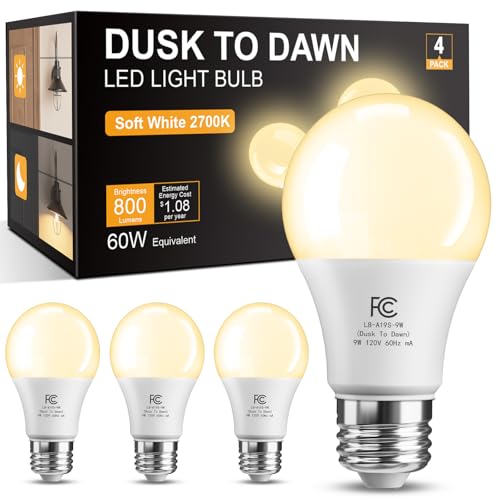
TJOY Dusk to Dawn Light Bulb Outdoor Light Sensor 2700K

Legental GU24 LED Puck Light Bulb 2 Prong 5000K 2 Pack
Why These Options Stand Out
Small enclosed fixtures, the kind found in chandeliers, pendants, and tight sconces, are where a G9 base bulb really earns its place. The TJOY 12-pack swaps a 40W halogen (a small, often heat-prone bulb type) for a 3000K LED that produces 450 lumens, which is roughly the brightness of the bulbs it’s replacing while sipping a fraction of the energy.
It runs on 32 individual LED chips arranged for 360-degree light spread, so a single chandelier arm gets full coverage rather than a hot spot in one direction. The 85+ CRI (Color Rendering Index, a measure of how accurately colors look under the bulb) keeps fabric tones and wood finishes from looking flat. For enclosed glass globes, the cool-running LED body means less thermal stress on the fixture itself.
Reasons It Performs
- 360-degree omnidirectional beam fills multi-arm chandeliers evenly
- 3000K soft white flatters wood tones and warm interiors
- 450 lumen output matches a 40W halogen replacement with no flicker
- Compact G9 base slides into tight, enclosed lamp housings
Worth Noting
- Non-dimmable, so pairing with an old dimmer switch can cause a faint hum
- Only 450 lumens, which can read dim in a large open room without multiple fixtures
Who Will Love This
A homeowner retrofitting several crystal chandeliers or wall sconces with steady, flicker-free warmth will get a clean swap without rewiring fixtures.
Look Elsewhere When
Someone wanting an entire main living area in daylight tones will find the TJOY 24 Pack A19 LED Light Bulbs a stronger whole-room match.
For a home that’s moving away from warm-tinted 2700K living rooms and toward a crisper, work-friendly glow, the dalattin 24-pack offers the right scale. Each A19 bulb (the classic bulb shape, about the size of a traditional 60W incandescent) screws into the standard E26 base, so it fits just about every ceiling fixture, table lamp, and enclosed globe in the house.
At 5000K, this is firmly daylight territory: bright, blue-leaning, and built for task focus rather than mood lighting. The 800 lumens per bulb replace a 60W incandescent while drawing just 9W, and the 80+ CRI keeps everyday color rendering honest for kitchens, home offices, and craft rooms. With 24 bulbs in the carton, a whole-house swap is realistic in one order.
Useful Strengths
- 24-bulk count suits whole-home or office floor replacement
- 5000K daylight tone sharpens task focus in work areas
- UL Listed safety rating helps in enclosed ceiling fixtures
Trade Offs
- Non-dimmable, so it won’t dim smoothly on older rotary switches
- 5000K reads harsh in bedrooms or cozy reading nooks
- Plastic A19 body can feel less premium than glass filament styles
Key Specs
Best Suited To
A home office, garage workshop, or kitchen-heavy remodel that wants an honest, work-grade brightness in every socket.
A Better Fit Elsewhere
Anyone building a warmer, dimmable dining-room vibe will prefer the dalattin 12 Pack A19 Vintage LED Edison Bulbs for their filament glow.
Outdoor fixtures are usually enclosed by design, and forgetting to turn a porch light on at dusk is the kind of small annoyance that adds up over months. The dalattin dusk-to-dawn bulb has a built-in photocell sensor (a small electronic eye that detects ambient light levels) that reacts only to actual sunlight, not neighboring porch lamps.
That isolation matters: cheaper sensor bulbs can cycle off mid-evening when a nearby streetlight hits them, but this one stays on through the night. The 5000K daylight tone doubles as a security-leaning brightness rather than a soft accent, and the 15,000-hour rated lifespan keeps ladder-climbing swaps to a minimum. It’s a set-and-forget upgrade for anyone juggling entry lights, garage lamps, and back doors.
Where It Delivers
- Photocell only responds to sunlight, avoiding false shutoffs near other lights
- 15,000-hour lifespan reduces enclosed-fixture ladder trips
- 5000K daylight tone doubles as a deterrent for darker entryways
Small Caveats
- Sensor needs the bulb’s tip exposed to ambient light, so deeply recessed enclosed globes can confuse it
- 5000K can feel clinical on a cozy front stoop compared with the warm-toned TJOY dusk-to-dawn option
Made For
A homeowner with multiple covered porch or garage fixtures who wants bright, automatic night lighting without rewiring a switch.
Consider Something Else When
A household wanting a softer 2700K glow on the front porch will find the TJOY Dusk to Dawn Light Bulb Outdoor a warmer match for the same sensor-driven convenience.
Most homes lean warm, and at 2700K, this TJOY 24-pack threads that familiar incandescent-like glow without the wattage guilt. The non-flicker build matters more than people realize, especially in reading lamps and dining fixtures where subtle strobing can strain eyes over a long evening.
The 9W draw per bulb replaces a 60W incandescent, and the 13.7-year rated lifespan (assuming three hours of daily use) means fewer trips up a step stool to reach those enclosed ceiling globes that always seem to burn out first. Twenty-four bulbs in a single carton covers bedrooms, hallways, and a kitchen or two in one swoop. It’s the kind of plain-but-correct upgrade that disappears into daily life.
The Good Stuff
- 2700K soft white complements warm wood and earth-tone interiors
- Non-flicker driver eases eye strain during long reading sessions
- 24-pack size suits a whole-home swap in one go
- Cool-running 9W body reduces heat buildup in enclosed fixtures
Honest Caveats
- Non-dimmable, which can clash with existing dimmer switches in older homes
- Plastic housing feels utilitarian, not a look that suits an exposed designer socket
Perfect Match For
A family replacing tired incandescent bulbs in bedrooms, hallways, and dining nooks where warm tone and zero flicker matter more than showpiece styling.
Swap It Out When
Someone wants the bulb itself to be a visible design element, since the dalattin 12 Pack A19 Vintage LED Edison Bulbs do that job while staying warm-toned.
Decorative fixtures deserve a bulb that pulls double duty as light and ornament. The dalattin vintage series leans into a clear-glass filament look inspired by old-school Edison bulbs, with 2700K warmth and a CRI of 80+ that keeps wood and brass from looking washed out.
It also handles real dimming, which sets it apart from the bulk A19 picks earlier on this list. Smooth 10-100% dimming means a chandelier can shift from dinner-party glow to full reading brightness without flicker, and the standard E26 base fits the same fixtures the warm-white TJOY 24-pack would. Twelve bulbs covers a multi-arm chandelier or a few matching pendants without overbuying.
What It Does Well
- Visible filament design doubles as décor in exposed pendants
- True dimming from 10-100% without flicker on compatible switches
- 2700K warmth flatters brass, wood, and vintage interiors
Things To Consider
- 8W draws slightly more than the 9W non-dimmable dalattin A19 (the filament design costs a touch of efficiency)
- Clear glass exposes every dust speck between cleanings
Whose Shelf It Belongs On
A homeowner decorating with exposed pendants, sconces, or a statement chandelier who wants the bulb itself to be part of the room’s character.
Reach For A Different Pick When
A household that wants pure task brightness without visible filaments will find the dalattin 24 Pack LED Bulbs Daylight White more practical for everyday use.
The TJOY dusk-to-dawn bulb offers the same set-and-forget convenience as the dalattin sensor bulb above, but in a softer 2700K tone. For a front porch or patio light where cool daylight reads as harsh and clinical, that warmer shift makes a real difference after dark.
The photocell responds only to actual sunlight, so a neighboring porch lamp or streetlight won’t accidentally trip it. As a 60W-equivalent drawing only 9W, it tucks into enclosed porch lanterns without the heat load that old incandescents created. One bulb solves the most common dusk-to-dawn question: warm light without rewiring a switch.
What Helps Most
- 2700K tone feels welcoming rather than security-alarm bright
- Photocell filters out stray artificial light from neighbors or streetlamps
- 9W draw keeps enclosed outdoor fixtures cooler than legacy incandescents
Possible Compromises
- Sensor can struggle inside deeply recessed globes with little ambient light reaching the tip
- Single-bulb carton means multiple porch fixtures need multiple purchases
Built With In Mind
A homeowner with a covered front porch who wants automatic, warm welcome lighting rather than a daylight-bright security beam.
Where A Sibling Pick Shines
Anyone needing multiple fixtures covered at once will appreciate the dalattin A19 Dusk to Dawn 4 Pack for better coverage per order.
Not every enclosed fixture takes an E26 screw base. Many flush-mount ceiling lights and puck-style fixtures use a GU24 twist-lock base (a two-prong socket that locks with a quarter-turn), and finding a true LED upgrade for those used to mean specialty stores. The Legental puck bulb fills that gap.
At 10W it pushes out 1000 lumens, replacing older 18W CFL pucks while cutting energy use. The 5000K cool white tone suits utility spaces like laundry rooms and closets where bright, focused light matters more than mood. Universal 120-277V compatibility also makes it a fit for some commercial circuits, not just residential ceiling boxes.
Real Benefits
- GU24 twist-lock base matches specialty ceiling fixtures
- 1000 lumen output replaces older 18W CFL pucks cleanly
- 120-277V compatibility broadens residential and light commercial use
- 5000K cool white suits utility and task-only spaces
Points To Keep In Mind
- Only two bulbs per pack, which limits whole-fixture retrofits in one order
- 5000K tone reads cold for living areas and bedrooms
- Specialty base means it’s not interchangeable with the other picks on this list
The Right Fit
A homeowner with GU24 flush-mount or puck fixtures, common in newer construction and apartment buildings, who needs a true drop-in LED replacement.
Not Your Match When
Anyone shopping for standard E26 household fixtures will get better value from the dalattin 24 Pack LED Bulbs Daylight White, which covers a far wider range of sockets.
Picking The Right Bulb For Tight And Enclosed Housings
A few practical attributes separate LED bulbs that thrive in enclosed fixtures from those that quietly cook themselves. Heat tolerance tops the list, since trapped air around the bulb’s heat sink shortens lifespan dramatically in any fixture with a glass or metal shade. Look for a listed enclosed-fixture rating, or at least a wide operating temperature range.
Color temperature and CRI together shape how a room actually feels. The Kelvin scale (K) measures how warm or cool the light appears: 2700K sits in incandescent territory, 3000K leans soft white, and 5000K reads as bright daylight. CRI (Color Rendering Index) measures how truthfully colors appear under the bulb; a CRI above 80 keeps wood, fabric, and food looking accurate, which matters more in living areas than garages.
Base type, lumen output, and dimming compatibility round out the practical filter. Make sure the bulb matches the fixture’s base, whether that’s a standard E26 screw, a bi-pin G9, or a twist-lock GU24. Higher lumen counts replace older incandescents more directly: a 60W incandescent equivalent typically delivers around 800 lumens. If the fixture is on a dimmer, the bulb needs to advertise dimming support, since many LED bulbs flicker or buzz on dimmer switches they weren’t designed for.
Key Considerations Across These Picks
Pitfalls Shoppers Hit
Buying LED bulbs by wattage alone is one of the most common slip-ups. An old 60W incandescent replacement at 9W might dim less than expected in a large room, simply because wattage is about power draw, not actual brightness. Looking at the lumen count instead gives a much truer picture of how a space will look.
A second trap is assuming any LED works in any enclosed fixture. Deep recessed cans, sealed porch lanterns, and tightly capped ceiling globes trap heat, and bulbs without proper thermal engineering often fade long before their rated lifespan. Specialty bases also catch people off guard, since a GU24 or G9 fixture won’t accept an E26 bulb no matter how well the specs match.
Where The Extra Money Goes
Spending up on a smart sensor bulb, like the dusk-to-dawn options above, buys genuine convenience in the form of a photocell that filters ambient light and triggers automatically. A dimmable vintage filament bulb, by contrast, adds a small but meaningful upgrade in driver quality, dimmer compatibility, and visual character inside exposed fixtures.
For most enclosed residential fixtures, mid-tier LED bulbs are the practical sweet spot, but the upgrade is justified when a bulb needs to survive harsh conditions, dim smoothly, or look the part of the décor.
Frequently Asked Questions
Can LED bulbs safely run in fully enclosed fixtures?
Many can, but heat matters. Bulbs in fully sealed glass or metal housings should be rated for enclosed use. Without proper thermal management, the bulb’s lifespan can shorten significantly because trapped heat stresses the driver and LED chips.
What does CRI actually do in everyday lighting?
CRI measures how accurately a light source renders colors compared with natural daylight. A CRI above 80 keeps skin tones, food, and fabrics looking true. Below 80, colors can appear dull or slightly off, which becomes obvious next to a window or in a bathroom mirror.
Why do some LED bulbs hum on a dimmer switch?
That hum usually means the bulb’s driver and the dimmer switch aren’t compatible. Older dimmers were built for incandescent loads and don’t always mesh with LED electronics, causing flicker or buzz. A dimmer-rated LED on an LED-compatible dimmer is the cleanest fix.
Are dusk-to-dawn bulbs worth it for outdoor fixtures?
For entry lights, garage lamps, and side doors, they remove a daily habit and reduce the chance of leaving a light burning through the day. The trade-off is that deeply recessed fixtures can confuse the sensor, so placement matters.
What is a GU24 base and why is it different?
GU24 is a two-prong twist-lock base common in newer construction and some apartment fixtures. Unlike an E26 screw base, it requires a matching bulb. Specialty bases like GU24 are why picking the right bulb base is just as important as picking the right color temperature.
Closing Thoughts
The right LED for an enclosed fixture comes down to matching the base, the color temperature, and the heat conditions to the bulb in front of you. Sensor-equipped and filament-style options solve specific problems, but for most rooms a warm-white, non-dimmable A19 in a 12- or 24-pack will cover the bases without overthinking it. Take stock of the fixtures you actually need to fill, then pick the bulb that lines up with how the space gets used day to day.