

Swapping tired halogen spotlights for fresh LED GU10 bulbs changes how a kitchen, hallway, or gallery wall feels without much fuss. The MR16-shaped GU10 base (a small two-pin twist-and-lock fitting common in track and recessed fixtures) takes the same spot as older halogens, but uses a fraction of the energy. I put together this list for anyone renovating room by room, fitting out a new flat, or just replacing the bulbs that finally gave up.
A Side-By-Side Look

DEWENWILS 10-Pack GU10 LED Bulb Dimmable Replacement
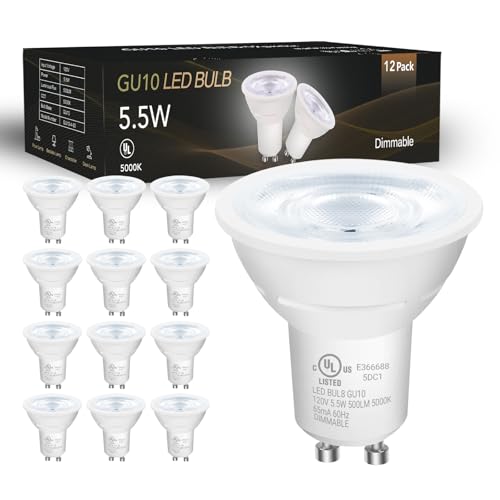
DAYBETTER GU10 LED Light Bulbs Dimmable 12-Pack

TJOY GU10 LED Bulbs MR16 Track 12-Pack

DEWENWILS 6-Pack GU10 LED Bulb Dimmable Replacement

Feit Electric MR16 LED Reflector Dimmable 3-Pack

comzler GU10 LED Light Bulbs 50W Equivalent Daylight
Inside Each Recommended Option
The DEWENWILS 10-pack sits at the top of this list because it covers the most common household scenario: a string of track heads or recessed cans where you want everything dimmable and consistent. Each bulb runs at 7W, stepping in for a 50W halogen (a 50W-equivalent LED draws a fraction of the original wattage yet produces a similar amount of useful light). The stepless dimming from roughly 10% to 100% is the quiet win here, since cheap LEDs often flicker at the low end, while this one tends to dim smoothly.
You mostly benefit from a 10-pack when you have a long kitchen run or several display fixtures that all need replacing at once. For most homes doing a whole-room refit, that’s the practical sweet spot. Installation is the standard twist-and-lock, so swapping old halogens takes seconds per head.
Useful Strengths
- Stepless 10–100% dimming holds steady without the flicker common on cheap LEDs.
- 10-pack lets you replace every fixture in a kitchen or hallway at once and keep spares.
- 7W draws far less than a 50W halogen, so running five or six track heads barely moves the meter.
- Stated lifespan of 10,000+ hours means most owners won’t think about replacements for years.
Things To Consider
- Older dimmer switches designed for halogens sometimes need upgrading to play nicely with LEDs.
- 10 bulbs is overkill for a single pendant, so count your fixtures first.
Feature Snapshot
Right Fit For
Households refitting a kitchen, hallway, or display wall with several matching GU10 fixtures.
A Better Fit Elsewhere
The comzler GU10 bulb suits open-plan living rooms better, where a wider beam angle spreads light more evenly.
DAYBETTER leans into bright, clean light with a 5000K daylight colour temperature (a cooler, bluish-white tone that mimics midday sun rather than the warm glow of old incandescent bulbs). At 5.5W per bulb, the 12-pack is geared toward anyone refitting a whole kitchen or a multi-room flat in one go. Each bulb drops into a standard GU10 holder without rewiring, so the swap from old halogens is straightforward.
Kitchens and range hoods benefit most from this cooler light because it makes countertops and prep surfaces feel sharper and easier to work on. For living areas where you want a softer mood, the daylight tone may feel a bit clinical, and a warm-white option would suit the space better.
The Case For It
- 5000K daylight tone makes kitchens, range hoods, and workspaces feel crisp and alert.
- 12-pack stretches across a whole flat renovation with bulbs to spare.
- Dimmable with most modern LED-compatible wall dimmers.
- Standard MR16 shape with a GU10 base fits existing fixtures without adapters.
Honest Caveats
- The cool 5000K tone can feel stark in a cosy living room.
- 500-lumen output may feel modest in a large open-plan space.
- Owners commonly report needing a compatible LED dimmer to avoid buzz at low settings.
Best Suited To
Anyone replacing a full kitchen’s worth of spots or refitting a range hood with bright, energising light.
Reach For A Different Pick When
The TJOY 4W pack suits longer hallway runs better, where lower wattage adds up to real savings.
TJOY keeps things lean: 4W per bulb, a 5000K daylight tone, and a 12-pack designed for big fixture counts. The trade-off is no dimming support, so this set is for circuits that simply turn on and off. In return, you get the lowest running wattage in this roundup and a stated lifespan around 15,000 hours.
Long hallways, stair runs, and utility rooms are the natural home for these. Without a dimmer in the loop, you avoid the flicker risk that sometimes plagues cheaper dimmable LEDs, and you keep the install simple. The CRI 80+ rating (a Colour Rendering Index of 80 or above means colours look reasonably true under the light, not washed out) keeps skin tones and food looking natural rather than grey.
Everyday Wins
- 4W per bulb is the lowest draw in this list, ideal for long runs of fixtures.
- 15,000-hour lifespan outpaces several pricier options.
- CRI 80+ keeps colours and skin tones looking natural.
- No dimmer compatibility issues, since dimming is off the table.
Softer Spots
- Not dimmable, so it won’t pair with existing dimmer switches.
- 300-lumen output is modest and may feel underpowered for task-heavy kitchens.
- Daylight tone only, with no warm-white variant listed.
Quick Facts
Who Should Grab It
Anyone with long hallway or stair runs who wants no-fuss, low-wattage lighting on a standard switch.
Swap It Out When
The DEWENWILS 10-pack fits better in kitchens where dimming matters for cooking and dining.
The DEWENWILS 6-pack is the same dimmable 7W bulb as the 10-pack above, just in a smaller count. That’s a useful shape for a single-room upgrade, like a study or a small kitchen with only four to six spots. You get the same stepless 10–100% dimming range without committing to more bulbs than you need.
Spare bulbs are part of the practical math here. With LED lifespans stretching into years, a 6-pack may leave you with a couple of unused bulbs, which is a small downside compared to the 10-pack’s “use them all” profile. For most single-room projects, though, six is the right size.
The Value In It
- Right-sized 6-pack for single-room swaps without excess stock.
- Stepless 10–100% dimming matches the larger DEWENWILS pack.
- 7W replaces a 50W halogen for solid running-cost savings.
- Standard GU10 base means no rewiring for older fixtures.
Worth Bearing In Mind
- Spare bulbs may sit unused in a closet for years.
- Older dimmer switches sometimes cause flicker, as with most dimmable LEDs.
Made For
Studio flats and single-room renovations where six fixtures is the actual count.
Look Elsewhere When
The DAYBETTER 12-pack suits multi-room renovations better, since twelve covers a full flat in one go.
The Feit Electric MR16 is the most feature-dense bulb in this list, and it earns that “Premium Pick” badge honestly. The standout is the adjustable colour temperature switch on the bulb itself, so you pick between Bright White, Cool White, and Daylight during installation rather than committing to a single tone. A 90+ CRI rating (well above the 80+ baseline) means colours look noticeably richer, which matters for artwork, photography, and accent displays.
The 25,000-hour lifespan claim is the longest in this roundup, and the 6W draw replaces a 50W halogen with room to spare. The 3-pack is small, but accent fixtures tend to be few. For most display setups, three is plenty, and the higher price per bulb is the trade-off for the colour rendering and the adjustable white.
What Makes Sense
- Adjustable colour temperature at install time lets you tune each fixture to the room.
- 90+ CRI renders artwork, food, and skin tones with real depth.
- 25,000-hour lifespan is the longest in this roundup.
- Dimmable with most modern LED dimmers.
Practical Considerations
- 3-pack is small for whole-room refits and works best in accent fixtures.
- Colour switch is set at install, so swapping tones later means climbing back up.
- Higher price per bulb reflects the CRI and lifespan premium.
Feature Card
Perfect Match For
Galleries, photography setups, and accent displays where colour accuracy carries real weight.
Consider Something Else When
The DEWENWILS 10-pack suits everyday kitchens better, where adjustable colour matters less than dimming at a fair price.
The comzler GU10 rounds out the list with the widest beam angle in the group at 120 degrees. Most spotlights on this list focus their light into a tighter cone, which is great for highlighting one object but less useful for bathing a whole area in light. The comzler’s broader spread makes it a natural fit for open-plan living rooms where the goal is ambient coverage rather than a narrow beam.
Each bulb is 4W with a 5000K daylight tone, and a 6-count or 12-count option covers most room sizes. Owners get the usual LED benefits: low heat, low draw, and a long replacement cycle. The 400-lumen output sits comfortably between the dimmer TJOY and the brighter DAYBETTER, so it fills a middle role for general living spaces.
Where It Delivers
- 120-degree beam angle spreads light across open-plan spaces.
- 5000K daylight tone keeps living areas bright and alert.
- 4W draw replaces a 50W halogen for a steep energy reduction.
- Available in 6-pack and 12-pack options.
A Few Limitations
- Wide beam is less effective for tight spotlight accents on artwork.
- Daylight tone only listed, so no warm-white option in the same model.
- 400 lumens per bulb suits general lighting but may need more fixtures for task work.
Whose Shelf It Belongs On
Open-plan living rooms and shared spaces where even, broad coverage matters more than a tight beam.
Another Choice May Suit
The Feit Electric MR16 suits accent lighting on artwork better, where a focused beam and high CRI carry the scene.
Choosing The Right GU10 Bulbs For Your Home
Wattage And Brightness Trade-Offs
A 4W bulb draws the least power and suits long fixture runs, while a 6W or 7W bulb produces more useful light per fixture. Match the wattage to the room: hallways and stairs cope fine with 4W, but kitchens and workspaces benefit from the extra punch of 6W or 7W. Brightness is measured in lumens, and a higher lumen count means more visible light at the same wattage.
Dimming And Switch Compatibility
Not every GU10 LED plays nicely with older dimmer switches designed for halogens, and mismatches cause flicker or buzz at low settings. Modern LED-compatible dimmers handle low-wattage LED loads more cleanly. Non-dimmable bulbs like the TJOY avoid the issue entirely, but lose the flexibility of adjusting the mood.
Colour Temperature And Room Use
Colour temperature, measured in Kelvin (K), sets the mood: 2700K is warm and cosy, 3000K is neutral, and 5000K leans cool and clinical. Kitchens and home offices often benefit from cooler tones, while living rooms and bedrooms usually feel better in warm whites. Choosing the wrong temperature is one of the most common regrets after a refit.
Pack Size And Spare Planning
Count your fixtures before buying. A 12-pack covers a full flat, a 10-pack covers most kitchens, and a 6-pack handles single rooms. Buying a few extra bulbs as spares is wise, since LED batches vary slightly in colour even within the same product line, and matching new bulbs to old ones months later can be tricky.
Key Considerations Across These Picks
Where Shoppers Go Wrong
A common slip is grabbing the cheapest non-dimmable bulb for a fixture that runs through a dimmer switch, which leads to flicker or a buzzing sound at low settings. Another pitfall is matching wattage without checking the colour temperature, leaving a cosy living room with the cold blue tone of a clinic. Counting fixtures matters too: buying a 12-pack for a four-spot room leaves eight bulbs gathering dust, while a 4-pack for a 12-spot kitchen means a mismatched second order.
When Paying More Pays Off
The higher tier earns its price through colour rendering and longevity. A 90+ CRI bulb makes artwork, food, and skin tones look noticeably richer, which is why galleries and display setups gravitate toward premium picks like the Feit Electric. Longer stated lifespans also reduce ladder-climbing in high ceilings, where replacing a bulb every few years becomes an annoying chore. For everyday kitchens, the mid-tier delivers most of the benefit, and the upgrade only matters where colour accuracy or low-maintenance longevity is the priority.
Frequently Asked Questions
Are GU10 LED bulbs a direct swap for halogen GU10s?
Yes, in most fixtures the GU10 base is the same two-pin twist-and-lock fitting, so the swap is plug-and-play with no rewiring needed.
Do GU10 LEDs work with my existing dimmer switch?
Some do, but older halogen dimmers often need replacing with an LED-compatible model to avoid flicker or buzz.
How many lumens do I need per bulb?
Around 300–400 lumens suits ambient lighting, while 450+ lumens works better for task-heavy kitchens and reading spots.
What does CRI mean for GU10 bulbs?
CRI, or Colour Rendering Index, measures how accurately the bulb shows colours compared to natural light; a higher number means richer, more lifelike tones.
Can GU10 LEDs be used in enclosed or recessed fixtures?
Most can, but enclosed fixtures trap heat and may shorten bulb life, so check the bulb’s rated operating temperature before installing.
Closing Thoughts
The right GU10 bulb comes down to your room and your switch. Kitchens lean toward bright dimmable packs like the DEWENWILS 10-pack, hallways suit low-wattage non-dimmable options like the TJOY, and accent displays benefit from the rich colour rendering of the Feit Electric. Match the bulb to the fixture, the fixture to the room, and the room should feel right the moment you flip the switch.