

Picking the right outdoor lighting often comes down to one overlooked detail: the bulb itself. I’ve watched homeowners wrestle with fixtures that flicker in cold weather, porch lights that stay on at noon, and vintage-style strings that can’t handle a single rainstorm. After digging through specs, sensor logic, and socket compatibility, I pulled together six options that solve the most common frustrations, from automatic dusk-to-dawn operation to smart-home color control, without turning your front porch into a science experiment.
The Lineup, Simplified
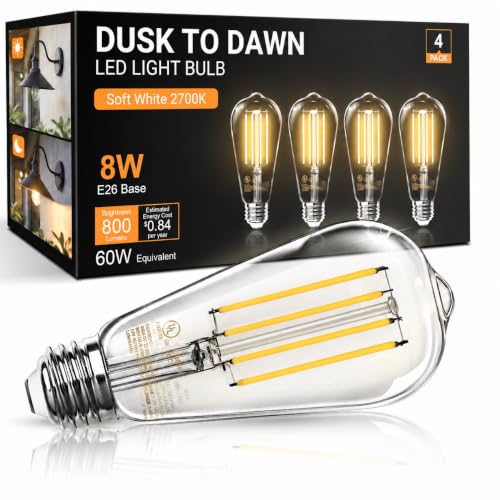
TJOY Dusk to Dawn ST58 Edison Bulbs 4-Pack 2700K

TJOY Dusk to Dawn ST58 Edison Bulbs 2-Pack 3000K

TJOY Dusk to Dawn ST58 Edison Bulbs 4-Pack 5000K

Philips Hue Smart A19 Color Bulb 2-Pack

Duoled T10 4W E26 Tubular Dimmable Bulbs 2700K
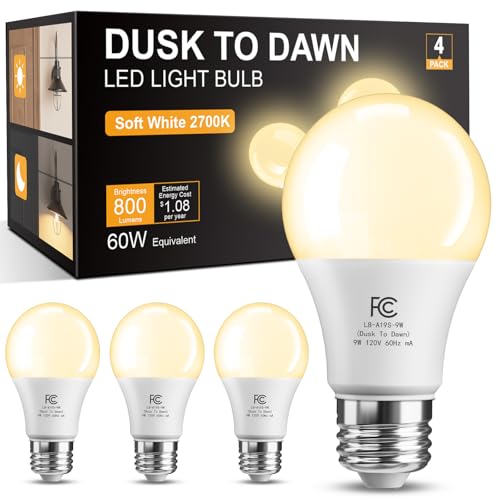
TJOY Dusk to Dawn A19 Sensor Bulb 2700K
Inside Each Recommended Option
Vintage Edison bulbs with smart sensors sound like a contradiction, but TJOY pulls it off in this four-pack. The ST58 shape, the elongated teardrop silhouette you see in old-fashioned street lamps, fits string lights and porch fixtures beautifully. A built-in photoelectric sensor reads only sunlight, so the bulbs know when dusk has actually arrived and switch on without any app or timer.
At 2700K, the color leans warm and golden, the kind of glow that flatters a wood door or a brick façade. Compared to the Philips Hue entry later in this list, these won’t shift colors or talk to your voice assistant, but they ask for zero setup beyond screwing them in. Homeowners with multi-bulb porch setups tend to find the four-pack sizing practical.
Standout Benefits
- Sensor ignores nearby artificial light, so fixtures close to a streetlight still trigger correctly
- Warm 2700K tone flatters traditional architecture and wood accents
- Four-pack covers an entire porch string in one purchase
- Edison-style filament look works in cages and exposed-socket fixtures
Worth Noting
- Photoelectric sensor needs the bulb base exposed to sky, fully enclosed globes may block detection
- Glass ST58 shape is more fragile than plastic A19 alternatives in windy spots
Made For
Homeowners outfitting a wraparound porch or patio string with warm ambient light and wanting true set-it-and-forget-it behavior.
Where Another Pick Suits Better
Shoppers wanting app-based scheduling and color control will find the Philips Hue Smart A19 Color Bulb a better fit.
Same Edison silhouette as the first pick, but this version nudges the color temperature up to 3000K. That shift lands in a “soft white” zone, warmer than task lighting yet noticeably brighter than the candlelit 2700K tone. A two-pack suits a smaller entry or a single strand, the kind of setup where four bulbs would be overkill.
The sensor logic is identical to the 2700K sibling, detecting only direct sunlight so proximity to other fixtures won’t trick it. In my experience weighing these, the 3000K version reads as the more “useful” Edison tone for folks who want a porch that actually illuminates house numbers and faces, not just decorates them.
What Earns Its Place
- 3000K soft white keeps the vintage look while improving visibility
- Two-pack size matches small porches and single-bulb fixtures
- Photoelectric sensor resists false triggers from neighboring fixtures
- Edison filament styling reads warm even at higher color temperatures
Trade Offs
- Two-pack may leave a multi-zone homeowner short on spares
- Sensor still requires some daylight reach, deep soffits may delay activation
Key Attributes
Right Fit For
Homeowners with a single porch fixture or small string setup who want more brightness than candlelight-warm bulbs provide.
Consider Something Else When
Anyone outfitting a larger wraparound porch will get better value from the four-pack 2700K sibling above.
This is the same four-pack Edison build, but the color temperature jumps all the way to 5000K, a clean, daylight-white output. For a porch designed for security or task visibility rather than ambience, this cooler tone makes sense. The Edison shape remains, but the light reads more like a modern flood than a candlelit café.
The dusk-to-dawn sensor behaves the same way as the warmer siblings, watching only the sun, ignoring nearby fixtures. I find 5000K works well on side yards, garage aprons, and back steps where you want to see clearly where you’re walking.
Positive Takeaways
- 5000K daylight tone aids visibility for security or late-night arrivals
- Four-pack covers a full string or multi-bulb fixture
- Photoelectric sensor reduces false-on triggers
- Edison silhouette offers vintage shape with modern output
Points To Keep In Mind
- Cool tone may feel harsh on a traditional home’s façade
- Glass Edison shape can be overkill if the bulb sits inside an opaque fixture
Best Suited To
Households prioritizing visibility over ambiance, especially side yards, alley approaches, and garage-side fixtures.
Skip It When
Readers wanting a relaxed front-porch glow should consider the 2700K version, same sensor logic in a softer tone.
Philips Hue shifts the conversation from “screw it in and forget it” to “what do you want the light to do tonight.” This A19 bulb produces 800 lumens, roughly the output of a 60W incandescent, and supports full color plus tunable white. An E26 base, the standard household screw-in socket, means it fits almost any fixture. The catch: Philips labels it indoor-rated, so this pick belongs under a covered porch or inside a fully sealed outdoor fixture, not exposed to rain.
Via Bluetooth alone, you can run up to ten bulbs in a single room from the Hue app, no hub needed for basic control. Voice control with common assistants is supported as well. Anyone running an existing smart-home setup will appreciate the scheduling, scenes, and remote-on capability that a plain sensor bulb can’t touch.
What Stands Out
- Full color plus tunable white opens up holiday and party scenes
- 800 lumen output replaces a standard 60W incandescent comfortably
- Bluetooth control works without a hub for basic on/off and dimming
- Standard E26 base fits most household fixtures
Honest Caveats
- Listed as indoor-rated, so uncovered outdoor use is not recommended
- Full Hue app features and remote access often require a separate Hue Bridge
- Higher cost than passive sensor bulbs without smart features
Feature Snapshot
Who Will Love This
Smart-home enthusiasts with a covered porch or sealed outdoor sconce who want app-driven scenes and voice control.
A Better Fit Elsewhere
Anyone needing a fully weather-exposed, set-and-forget bulb will be happier with the TJOY dusk-to-dawn sensor options.
The T10 tubular shape solves a problem most shoppers don’t think about until they’re staring at a narrow wall sconce: a standard A19 bulb is simply too round to fit. This Duoled bulb is a slim 4W tube, dimmable, warm white at 2700K, on an E26 base. It slips into fixtures that block anything fatter, like long pendant cages or vintage wall sconces.
There’s no built-in sensor here, no smart features, just a clean, dimmable warm-white tube. For someone remodeling a craftsman-style foyer or restoring a mid-century wall fixture, that simplicity is the point.
Strengths Worth Knowing
- Slim T10 shape fits narrow sconces and tubular pendant cages
- Dimmable output works with standard dimmer switches for evening mood control
- 2700K warm white suits traditional interior and covered-porch fixtures
- E26 medium base drops into most standard sockets
Less Ideal Details
- No built-in dusk-to-dawn sensor, requires manual or switch-based control
- Lower output compared to flood-style bulbs, so reading or task lighting may feel dim
Perfect Match For
Owners of vintage wall sconces, narrow pendants, and tubular fixtures where bulb shape matters as much as light output.
Reach For A Different Pick When
Anyone needing automatic dusk-to-dawn operation should choose the TJOY A19 sensor bulb instead.
For folks replacing a single burned-out bulb, the four-packs above can feel wasteful. TJOY’s standalone A19 sensor bulb solves that. The standard A19 shape, the same rounded “lightbulb” silhouette used in most household lamps, fits enclosed fixtures, basic porch sockets, and garage lanterns without special ordering. A photocell sensor detects only sunlight, so the bulb wakes up at dusk and sleeps at dawn without manual switches.
The 2700K warm white output keeps things gentle on traditional home exteriors. The bulb consumes only 9W while delivering output comparable to a 60W incandescent, useful if your front porch light runs all night. In most cases, this is the simplest path to a “no-thought” porch light.
Well-Handled Touches
- Single-bulb purchase avoids waste for one-fixture replacements
- Standard A19 shape fits enclosed and semi-enclosed fixtures
- Sunlight-only sensor prevents false triggers from nearby fixtures
- 9W draw replaces a 60W incandescent for long-running fixtures
Practical Considerations
- Single bulb means no spare if it fails unexpectedly
- Photoelectric sensor still needs some sky visibility to time dusk correctly
Quick Facts
Built With In Mind
Homeowners replacing a single burned-out sensor bulb without committing to a four-pack.
Not Your Match When
Shoppers outfitting multiple fixtures at once will save with the TJOY four-pack 2700K Edison version reviewed earlier.
What Matters Most Before Choosing Led Bulbs For Outdoor Lighting
Sensor Logic And Placement
The biggest differentiator across outdoor sensor bulbs is what the sensor actually detects. Budget photocells sometimes mistake a streetlight or porch neighbor for sunrise and stay dark all night. Better-built bulbs sense only direct sunlight, so they trigger correctly even in busy suburban lots. Placement still matters: a sensor blocked by a soffit or a deep fixture hood may delay activation by an hour. Before picking, picture where the bulb will sit and whether daylight can reach the sensor unimpeded.
Color Temperature And Mood
Color temperature shapes how a home feels after dark more than almost any other choice. 2700K leans candlelit and warm, the right answer for traditional architecture. 3000K reads as “soft white,” a touch brighter but still gentle. 5000K lands in daylight territory, useful for security lighting but cold on a craftsman bungalow. Pick the tone that matches the home’s personality rather than defaulting to a single number.
Fixture Shape And Bulb Form
Bulb shape decides whether the bulb actually fits. A19 is the universal rounded form. ST58 is the elongated Edison teardrop seen in vintage string lights. T10 is a narrow tube for tight sconces. A wrong-shape bulb either won’t seat or forces you to remove a fixture cage. Always confirm the bulb’s listed dimensions match the fixture’s interior clearance, especially for enclosed globes and pendant shades.
Smart Features Versus Simplicity
Smart bulbs offer scenes, scheduling, and voice control, but they require apps, sometimes hubs, and stable Wi-Fi. Passive sensor bulbs trade features for true set-and-forget reliability. For renters or folks who don’t want another account, the sensor route wins. For smart-home enthusiasts, the Philips Hue option opens up colors and routines that a passive bulb can’t match.
Smart Upgrade Decisions And Common Pitfalls
Hidden Buying Traps
One common mistake is grabbing an indoor-rated smart bulb for an uncovered fixture. The Philips Hue A19, for instance, performs beautifully under a covered porch but isn’t designed for direct rain exposure. Another slip is choosing a 5000K daylight bulb for a cozy front entry; the result can feel clinical and unwelcoming. Finally, shoppers sometimes assume all “dusk to dawn” sensors behave identically, only to discover their photocell triggers off the neighbor’s porch light, leaving them in the dark. Checking sensor logic, fixture exposure, and color tone before purchase prevents most regrets.
When Paying More Pays Off
Higher-tier models in this category tend to add two real benefits: smarter sensors that resist false triggers, and broader compatibility with dimmers, smart-home hubs, and enclosed fixtures. For a single bulb at a single entry, a basic sensor bulb is plenty. For a whole-house upgrade with covered porches, sconces, and a smart-home setup already in place, paying up front for better sensor logic and tunable features tends to feel worth it later. The upgrade pays off most when you want consistent behavior across many fixtures without troubleshooting individual bulbs.