

I built my first outdoor lighting system on a weekend, and the magic happened the moment I could actually turn the lights down. Garden pathways stop looking like airport runways, trees cast softer shadows, and a patio suddenly feels like a room. The right dimmer driver is what makes that possible.
Outdoor LED runs typically operate on low-voltage DC (24V or 48V, the “safe-to-touch” current standard for landscape lighting), and your household dimmer switch alone can’t talk to them directly. You need an LED driver that translates the dimmer signal into something the fixtures understand. I sorted through seven solid options from a single trusted brand so you can match the right driver to your setup without the trial and error.
An Overview Of The Picks

EMITEVER 60W 24V 5-in-1 Dimmable LED Driver
EMITEVER 25W 24V Triac Dimmable LED Driver

EMITEVER 100W 24V Magnetic Dimmable LED Driver

EMITEVER 192W 48V 5-in-1 2-Channel Dimmable LED Driver

EMITEVER 60W 24V Slim Triac Dimmable LED Driver
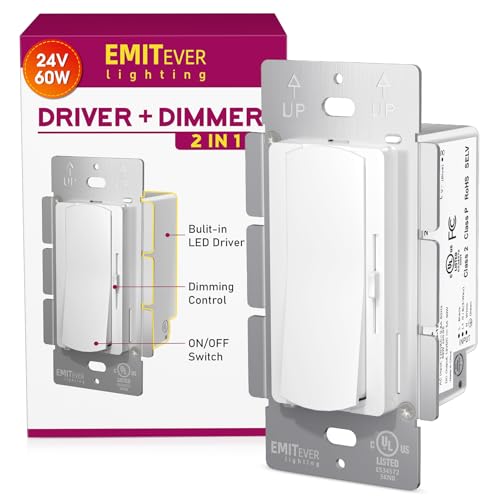
EMITEVER Dimmer Switch & 24V 60W Driver 2-in-1
EMITEVER 60W 24V Dimmable LED Driver
A Breakdown Of The Leading Choices
This driver handles more dimming protocols than almost anything else at this wattage, which is why it’s a sensible anchor for a list about landscape lighting dimmers. It speaks TRIAC (the standard household dimmer protocol that “chops” the AC waveform), MLV (Magnetic Low Voltage), ELV (Electronic Low Voltage), 0-10V, 1-10V, 10V PWM (Pulse Width Modulation, a rapid on-off signal that controls brightness), and a potentiometer input (a simple manual dial), so it works with the wall dimmer you already have or a more advanced control system.
For someone planning a medium-sized yard with mixed fixture types, that’s real flexibility. The 60W rating covers a healthy run of pathway lights, and the wide 110-277V AC input means it can plug into almost any residential or light-commercial service panel. If you don’t yet know which dimming direction your project will go, this one keeps the door open.
Everyday Wins
- Six dimming protocols in one box, so future swap-out projects stay compatible.
- 60W output is a comfortable match for a typical front-yard and patio fixture count.
- Class 2 rated (an NEC safety designation limiting output to a safe low-voltage threshold), which simplifies code-compliant installs.
- 110-277V input range covers most U.S. residential feeds without extra wiring work.
Things To Consider
- Buyers sometimes run into brief flicker near the very bottom of the dim curve on certain TRIAC switches.
- Heavier than a basic electronic transformer, so plan mounting space in advance.
Feature Snapshot
Made For
Homeowners running a mixed-protocol system who want one driver that won’t lock them into a single dimmer brand.
Skip It When
You only need to power a handful of path lights; the smaller EMITEVER 25W Triac driver is a lighter, simpler match.
Small jobs deserve small hardware, and this 25W Triac driver fills that exact slot. It pairs with the same forward-phase dimmers (wall switches that cut the leading edge of the AC waveform to reduce brightness) you’d buy at any home center, including Lutron, Leviton, Legrand, and Cooper AH, which keeps the wall-side installation painless.
The plastic housing is light, but it includes built-in protection against short circuits, overloads, and overheating. For accent strips under a deck rail or a short path-light run, it’s the right scale. Where the larger 60W driver in pick 1 handles whole-yard duty, this one disappears into tight spots.
Well-Handled Touches
- Wide compatibility with mainstream forward-phase TRIAC dimmer brands.
- Flicker-free 0-100% dimming range, useful for slow sunset transitions.
- Plastic enclosure keeps weight and heat low for under-cabinet or recessed spots.
Trade Offs
- 25W ceiling means you’ll outgrow it quickly on bigger installs.
- 120V AC input only, so it won’t drop into a 240V or commercial feed.
Who It Suits Best
DIYers adding a modest deck-strip or step-light run to a single existing dimmer.
Reach For A Different Pick When
Your yard covers more than a few fixtures; the EMITEVER 100W Magnetic driver is the more headroom-friendly upgrade.
Where the first two drivers handled modest loads, this magnetic-core unit steps up to 100W for serious outdoor work. Magnetic drivers tend to behave more like traditional low-voltage transformers, which some long fixture runs prefer for cleaner low-end dimming.
It plays nicely with leading-edge TRIAC and MLV dimmers from the usual-name brands. If your project already leans toward Lutron or Leviton magnetic-compatible controls, this 100W box gives you room to expand without splitting the load across multiple drivers.
Real Benefits
- Magnetic core design tends to dim smoothly at the low end of the curve.
- Plenty of headroom for full-yard installations on a single feed.
- 120V AC to 24V DC conversion handles a standard U.S. residential circuit.
Worth Noting
- Phase dimming only works with leading-edge forward MLV TRIAC switches, so check your existing dimmer compatibility first.
- Heavier than electronic drivers of similar wattage due to the magnetic core.
- Some owners report a faint mechanical hum at certain dim levels, which is common to magnetic transformers.
Quick Facts
Right Fit For
Homeowners wiring an entire front and back yard on a single, robust driver with proven magnetic-style dimming.
A Better Fit Elsewhere
Anyone running a multi-zone system needing independent channels; the EMITEVER 192W 48V 2-Channel driver covers that need.
This is the heavyweight of the lineup, designed for projects that have outgrown a single-channel setup. The two-channel output means you can run separate zones, like front path and back patio, from one driver, each with its own dim control.
At 192W on the 48V output side (a higher DC voltage that reduces current drop across long wire runs), it can feed longer fixture strings without visible voltage sag. The same 5-in-1 protocol flexibility from pick 1 returns here, so you’re not trading compatibility for capacity.
What Makes Sense
- Two channels from one box simplify multi-zone installations.
- 48V output reduces voltage drop on longer wire runs in larger yards.
- Universal 110-277V AC input handles residential and light-commercial service.
- Class 2 design keeps the install aligned with common U.S. electrical code (NEC).
Points To Note
- 48V output means you’ll need 48V-compatible fixtures, not standard 24V landscape lights.
- Physical size is larger than single-channel alternatives.
Tech Sheet
Best Suited To
Property owners with extensive outdoor lighting who want independent zone control without stacking multiple drivers.
Look Elsewhere When
You’re still in the planning stage with a smaller yard; the EMITEVER 60W 5-in-1 driver keeps things simpler and cheaper.
Some installs fight you for every cubic inch. The slim housing on this 60W Triac driver solves that problem by fitting into shallow junction boxes, behind soffits, or inside low-clearance cabinets.
It still supports both forward and reverse-phase dimming, MLV and ELV dimmers, and works with mainstream Lutron, Leviton, Legrand, and Cooper switches. For someone who already has a tight mounting location picked out, this slim build avoids forcing a bigger box into a small space.
A Strong Showing
- Slim form factor fits where standard-depth drivers cannot.
- PWM output (a rapid digital switching technique that controls brightness without color shift) preserves color consistency across the dim curve.
- UL Listed, which helps with permitting and inspection in many jurisdictions.
- Wide 100-277V AC input range across residential and commercial feeds.
Honest Caveats
- Same 60W ceiling as the larger 5-in-1 driver, but fewer protocol options.
- Slim housing can run warmer in enclosed spots; allow airflow where possible.
Feature Rundown
Who Will Love This
Installers with limited mounting depth, like under a deck, behind a siding panel, or in a retrofit junction box.
Swap It Out When
You need 0-10V or PWM dimming for an advanced control system; the 5-in-1 driver covers those protocols.
This one takes a different angle: it combines the dimmer switch and the LED driver in a single wall-box unit. For homeowners who want a clean retrofit without a separate transformer mounted in a basement or attic, that combo removes a lot of friction.
The glossy white finish looks at home next to standard decorator wall plates, and it supports both single-pole and 3-way circuits (wiring setups that let you control the same light from one or two switch locations). That second capability is genuinely useful for hallways or stair runs leading to outdoor fixtures.
The Upside
- One device replaces both the wall dimmer and the remote driver.
- Single-pole and 3-way circuit support covers most residential switch layouts.
- Compact 4.13 x 2.12 x 1.99 inch size fits standard wall boxes.
- UL Listed for residential electrical code compliance.
Factors To Consider
- 60W ceiling means it’s not built for whole-yard scale.
- All dimming electronics live inside the wall box, so heat dissipation matters in tight enclosures.
Perfect Match For
Homeowners wanting the simplest possible install: one wall switch, no remote transformer, just a clean 24V feed out to the fixtures.
Consider Something Else When
You’re driving a high-wattage multi-zone system; the EMITEVER 192W 2-Channel driver separates high power from the wall switch.
Sometimes the simplest tool is the right tool. This 60W electronic transformer takes a 120V AC feed and delivers 24V DC to your LED strips, modules, puck lights, or accent fixtures, no extra protocol complexity to think through.
It accepts standard TRIAC, ELV, and MLV dimmers, which covers the dimmer switches you can find at any big-box store. For homeowners who want one dimmer on the wall and one driver in the closet, this combination keeps the wiring plan short.
Strengths Worth Knowing
- 120V AC input simplifies direct replacement of older landscape transformers.
- Class 2 rated for safe low-voltage output at the fixtures.
- Compatible with the dimmer brands most people already own.
Some Limits To Know
- Output voltage can drift when load drops below 5% of capacity, which can cause visible flicker on very small fixture runs.
- No support for 0-10V or PWM dimming, so it can’t pair with commercial control systems.
Built With In Mind
Residential DIYers replacing a basic non-dimming landscape transformer with a dimmable equivalent on a 120V circuit.
Not Your Match When
You’re running a sophisticated multi-zone setup with 0-10V controls; the EMITEVER 60W 5-in-1 driver supports that protocol family.
What To Weigh Before Buying Landscape Lighting Dimmers
Match The Driver Wattage To Your Load
The wattage rating on the driver should comfortably exceed the combined wattage of every fixture it feeds. A good rule is to stay around 80% of the driver’s rated capacity as your real-world load, leaving headroom for startup surges and future additions. A 60W driver running six path lights at 5W each sits in the sweet spot; stacking twenty fixtures on the same driver will push it past its comfort zone.
Choose The Right Dimming Protocol For Your Switch
TRIAC dimmers (also called phase-cut or forward-phase) are the standard household dimmer and the cheapest to install. MLV and ELV dimmers handle low-voltage circuits more gracefully, especially with magnetic transformers. 0-10V and PWM protocols show up in more advanced control systems. Match the driver to the dimmer you’ll actually mount on the wall, or pick a 5-in-1 driver if you’d rather keep your options open.
Consider Voltage Drop On Long Runs
For cable runs over 50 feet, voltage drop (the gradual loss of electrical pressure as current travels through wire resistance) can dim the farthest fixtures and cause visible brightness differences. 24V systems work well for shorter paths; 48V systems, like the 192W model in this roundup, hold their brightness across longer distances. Heavy-gauge wire also helps reduce drop on longer runs.
Think About The Mounting Location
Drivers generate heat and need some breathing room. A slim driver like the 60W slim Triac model fits behind siding or under a deck, but enclosed spaces can trap heat. Outdoor-rated enclosures, ventilated lofts, or garage walls are safer long-term homes for any LED driver.
Smart Habits For Picking The Right Dimmer Setup
Common Shopping Slip Ups
The biggest mistake I see is buying a dimmer switch without checking which driver protocols it supports. A fancy 0-10V dimmer does nothing for a TRIAC-only driver. The second is underestimating load: small LED fixtures add up fast across a yard. A quick tally of every fixture’s wattage before buying saves a return trip. Third, ignoring voltage drop on longer runs leaves the back of the yard dimmer than the front.
Where The Extra Money Goes
Higher-wattage drivers like the 192W model cost more because they handle larger loads and often include dual channels for independent zones. Multi-protocol 5-in-1 drivers carry a premium for the flexibility of supporting TRIAC, MLV, ELV, 0-10V, and PWM in one box. Magnetic drivers cost more than electronic ones at the same wattage due to the heavier core, but they tend to dim more smoothly at the low end.
Frequently Asked Questions
Do I really need a separate LED driver for outdoor dimming?
Yes. Standard household dimmer switches output a 120V AC signal that low-voltage LED fixtures can’t use directly. A driver translates the dimmer signal into the 24V or 48V DC the fixtures need, while also regulating current to protect the LEDs from damage.
Can I use any dimmer switch with these drivers?
No, the dimmer must match the driver’s supported protocols. Most household dimmers use TRIAC or forward-phase cutting, and the drivers in this list cover those by default. Advanced systems using 0-10V or PWM require a compatible driver like the 5-in-1 models.
What’s the difference between 24V and 48V systems?
24V is the standard for most residential landscape lighting and works well for shorter cable runs. 48V systems, like the 192W 2-channel model, push higher voltage through the wire so less current is needed, which reduces voltage drop across long distances. The fixtures must match the system voltage.
How many fixtures can one driver power?
It depends on each fixture’s wattage and the driver’s rated capacity. A 60W driver can power twelve 5W path lights, while a 100W driver covers twenty. Always leave around 20% headroom below the driver’s maximum rating to keep things cool and reliable.
Can these drivers be mounted outdoors?
The drivers themselves are typically mounted in a protected location like a garage, basement, or weatherproof enclosure. The fixtures are outdoor-rated, but the driver electronics should stay dry. A gasketed enclosure is a common solution for fully exposed installs.
The Takeaway
The right dimmer driver turns outdoor lighting from a binary on-off experience into something you actually want to live with. For most homeowners, the 60W 5-in-1 model strikes a clean balance of capacity and protocol flexibility. Smaller projects fit the 25W Triac driver, while larger multi-zone yards call for the 192W 2-channel unit. Pick the one that matches your scale, your dimmer switch, and your mounting space, then enjoy quieter, softer evenings outside.