

A flickering range hood or a dim fridge interior can quietly derail a routine, and most folks don’t think about the bulb until it dies at the worst time. I wrote this roundup because choosing the right replacement feels more confusing than it should be, with halogens, LEDs, and specialty bases all competing for shelf space. The seven kitchen light bulbs below cover the spots that actually need attention in a busy home, from over the stove to inside the produce drawer.
The Lineup, Simplified

Vinaco PAR20 50W Halogen Bulb Dimmable 120V 3000K Warm White for Range Hood

Vinaco 9PCS Eco Halogen Light Bulb 39W PAR20 Warm White Dimmable

Brightever A19 LED Edison Light Bulb Dimmable 8W E26 60W Equivalent

Vinaco PAR20 Halogen Bulb Dimmable 120V 50W Warm White for Track Lighting

Refrigerator Bulb KEI D28M KEL 2815 LED 100-265V E17 3.8W 5000K Daylight White
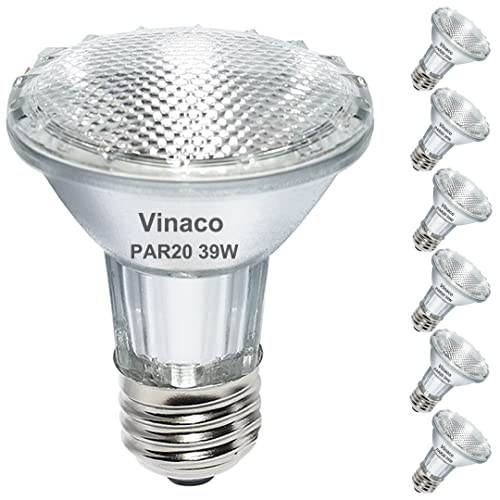
Vinaco PAR20 Halogen Bulb Dimmable 120V 39W 3000K Warm White for Range Hood

2.99″ GU24 LED Puck Light Bulb 2 Prong 10W 1000LM 5000K Cool White 2 Pack
What Each Pick Brings To The Table
A range hood is one of the harshest spots for a bulb, with heat, grease vapor, and frequent on-off cycles all wearing it down. The Vinaco PAR20 50W halogen is built with that reality in mind, running on a 120V circuit and pushing out around 700 lumens of 3000K warm white light. CRI 100 (a perfect score on the Color Rendering Index, which measures how accurately a bulb shows true colors versus daylight) means the red of tomatoes and the brown of toasted bread read correctly, which matters when you’re checking doneness by eye. The beam angle is wide enough to wash a 30-inch cooktop without leaving dark spots.
Compared to the track lighting PAR20 we look at later, this one leans warmer and feels more forgiving on the eyes during a late dinner. The dimming range works with most standard dimmer switches, so you can drop the output when the hood doubles as ambient light.
Strong Points
- CRI 100 produces true-to-life colors, helpful for judging food as it cooks.
- 3000K warm white keeps the kitchen from feeling clinical.
- Dimmable from full output down with compatible dimmer switches.
- PAR20 shape fits standard E26 sockets in most hoods.
- Halogen output reaches full brightness instantly, no warm-up flicker.
Honest Caveats
- Halogen bulbs run hot, so touching them with bare fingers can shorten life; handle by the base.
- 50W draws more energy than an LED equivalent, noticeable on monthly bills for heavy cooks.
- Grease buildup on the bulb glass can dim output faster than in other fixtures.
Made For
Home cooks who want a faithful, warm light right over the stovetop and don’t mind replacing halogen bulbs occasionally.
Skip It When
The lower-wattage Vinaco PAR20 39W suits anyone trying to shave energy use while keeping the same warm halogen feel.
Track lighting across a long kitchen or a row of recessed cans burns through bulbs faster than any single fixture, and replacing them one at a time gets old. The Vinaco 9-pack drops 39W PAR20 halogen bulbs into your hands at a quantity that covers an entire home in one go. Each bulb delivers 480 lumens at 3000K with a 40-degree flood beam angle, a comfortable spread that keeps both the kitchen island and the adjoining hallway lit without harsh edges. The E26 medium screw base fits the same sockets as a standard lamp.
This set trades some lumen output for a friendlier wattage, and it pairs nicely with the brighter 50W PAR20 above when you need layered light. Dimmability from 10% to 100% gives you plenty of headroom for mood changes.
The Good Stuff
- Nine-bulk quantity covers several fixtures at the same time.
- 39W strikes a balance between brightness and energy draw.
- 40-degree flood beam spreads light across wider track runs.
- Compatible with standard E26 sockets and most dimmers.
Points To Note
- At 480 lumens per bulb, dim corners of large kitchens may need supplemental lighting.
- Halogen bulbs are sensitive to oils from skin, so gloves or a tissue during install extend life.
Right Fit For
Homeowners refreshing an entire track lighting run or planning ahead for the next year of replacements.
Look Elsewhere When
The single-pack Vinaco PAR20 50W halogen suits shoppers who only need one bright replacement for a range hood right now.
Open-cage pendants and exposed-bulb chandeliers ask for a bulb that looks as good as it lights, and that’s the whole point of the Brightever A19 Edison LED. The clear glass envelope shows off an LED filament arrangement that mimics the original Edison bulb, while the A19 shape fits standard E26 sockets in any decorative fixture. At 8W it draws a fraction of the power a 60W incandescent would, so leaving the pendant on during dinner parties barely nudges the electric bill.
Unlike the PAR20 halogens we just covered, this bulb focuses on ambience and aesthetics rather than task brightness, so it pairs best as an accent over a kitchen island or breakfast nook. Dimming support lets you tune it for a low, candle-style glow when the meal winds down.
Noteworthy Benefits
- Vintage Edison filament look adds personality to open fixtures.
- 8W LED delivers the visible output of a 60W incandescent.
- Compatible with standard E26 sockets and most dimmers.
- LED filament runs cooler than classic incandescent, easier on fixtures with thin shades.
Less Ideal Details
- Decorative filament look suits pendants but reads as busy inside frosted task fixtures.
- Lower lumen punch than a halogen PAR20 for true task lighting over counters.
Best Suited To
Homeowners styling a kitchen with pendant clusters or a chandelier over the table and wanting warm, decorative light.
Reach For A Different Pick When
The Vinaco PAR20 50W halogen fits anyone whose priority is bright, focused light over the range hood rather than fixture styling.
Track lighting over a kitchen island needs focused, directional output, and the Vinaco PAR20 50W halogen delivers exactly that without overcomplicating the swap. The bulb pushes 700 lumens at a 3000K warm white tone, with a CRI of 100 that keeps food and surfaces looking natural. CE and RoHS compliance (European safety and restricted-substance standards) gives it a baseline safety profile, and the tungsten filament is rated for more than 3000 hours of use. The E26 base fits standard track heads and recessed cans.
Compared to the range hood PAR20 we covered first, this one targets the same lumen level with a slight emphasis on track use cases. For open kitchens, it pairs well with the Brightever Edison bulb over the dining zone, keeping light temperature consistent across the room.
Notable Upsides
- 700 lumen output handles long kitchen runs without dim patches.
- CRI 100 keeps ingredients and finishes looking their real color.
- CE and RoHS compliance signal baseline safety standards.
- 3000K matches most other warm halogen bulbs for visual consistency.
Practical Considerations
- Halogen heat output means caution near low-profile track heads that trap warmth.
- 50W is heavier on the meter than the 39W Vinaco 9-pack for whole-home use.
Quick Facts
Whose Shelf It Belongs On
Kitchens with track lighting over the island or work zones where accurate color and bright light matter most.
Not Your Match When
The Megereet refrigerator bulb fits anyone whose urgent swap is inside an appliance, not above a work surface.
Most of us don’t replace a fridge bulb until the door opens onto a dark interior, and scrambling for a generic replacement usually ends with the wrong base. The Megereet refrigerator bulb targets the E17 base, which is the smaller screw-in size common in Frigidaire, Kenmore, and Electrolux appliances. It’s compatible with KEI D28M and KEL 2815 series as well as the KEI D28X and KEL 2816X variants, so it covers a wide range of model families. The 5000K daylight white tone makes leftovers and produce easier to inspect at a glance.
This is a different category from every other pick on the list, since it lives inside a cold, enclosed space with constant vibration from the compressor. The 3.8W LED draws a fraction of the energy of the 40W halogen it replaces.
The Practical Payoff
- E17 base matches common Frigidaire, Kenmore, and Electrolux refrigerator models.
- 5000K daylight white helps spot expired leftovers quickly.
- 3.8W LED swaps a 40W halogen for meaningful energy savings.
- Wide 100-265V compatibility handles unusual appliance wiring.
Where It May Fall Short
- Cool 5000K tone reads as clinical compared to a warm range hood bulb.
- Single-pack format means buying multiples for fridge plus freezer swaps.
Feature Snapshot
Who Will Love This
Anyone with a Frigidaire, Kenmore, or Electrolux fridge whose interior light finally gave out and wants a direct-fit LED.
Where A Sibling Pick Shines
The Vinaco 9-pack halogen suits homeowners who need track and recessed can replacements across the kitchen rather than a single appliance bulb.
The 39W halogen version of the Vinaco PAR20 targets a sweet spot for households that want halogen warmth without the 50W draw. It still delivers around 480 lumens at 3000K, which is plenty for most range hoods and smaller recessed cans, and the dimming range covers a 10% to 100% sweep for early-morning cooking. The PAR20 shape with an E26 base fits the same fixtures as its brighter sibling.
It shares the dimming profile and warm tone with the 9-pack covered earlier, so mixing the two in a kitchen keeps the light quality consistent from range hood to track head. The 39W spec also gives the filament a slightly easier life under enclosed fixtures, since it runs cooler than the 50W version.
Key Advantages
- 39W draw is friendlier to monthly energy costs than 50W.
- 480 lumens handles most range hood and recessed can tasks.
- Smooth 10% to 100% dimming range for mood control.
- Same warm 3000K tone as other Vinaco PAR20 bulbs for visual consistency.
Small Caveats
- Lower output than the 50W halogen in larger or darker kitchens.
- Still a halogen bulb, so handling by the base extends lifespan.
Feature Card
Who Should Grab It
Homeowners watching their electric bill who still want the warm halogen look over the cooktop or in a recessed can.
Swap It Out When
The Brightever Edison LED is the smarter swap for decorative pendants where an Edison filament look matters more than halogen output.
Older kitchens with puck-style ceiling fixtures often hide a GU24 base, a twist-and-lock two-pin socket that rules out standard screw-in replacements. The Legental 2.99-inch GU24 LED puck bulb handles that situation head-on with 1000 lumens from a 10W draw, putting it in the same output class as a 75W incandescent while sipping energy. The 5000K cool white tone gives a clean, daylight feel that pairs well with stainless steel surfaces and white tile.
It’s a sharper contrast than the warm halogens elsewhere in this roundup, so it fits better in utilitarian kitchens than rustic farmhouse setups. For shoppers upgrading a kitchen with mixed fixtures, the 2-pack format covers two puck lights at once.
Everyday Wins
- 1000 lumen output replaces brighter legacy puck fixtures.
- 10W LED draw is a meaningful drop from older CFL or incandescent pucks.
- 5000K cool white keeps work zones looking crisp and clean.
- Two-pack format handles a pair of ceiling pucks in one purchase.
Things To Weigh
- GU24 twist-and-lock base is specific; verify the existing fixture before ordering.
- Cool white tone reads as hospital-bright for shoppers wanting warm ambience.
Built With In Mind
Homeowners with GU24 puck fixtures who want a bright, energy-frugal replacement in a cool white tone.
A Better Fit Elsewhere
The Vinaco PAR20 50W halogen is the better pick for shoppers with standard E26 track lighting rather than twist-and-lock pucks.
Matching The Bulb To The Socket In Your Kitchen
Picking a kitchen bulb starts with the fixture, since the wrong base type means an immediate return trip. Screw-in E26 bases cover most range hoods, lamps, and standard track heads, while E17 handles compact appliance sockets inside fridges and ovens. The twist-and-lock GU24 base shows up in puck fixtures and some ceiling mounts, and a quick look at the old bulb or fixture label tells you which world you’re in. Matching the base before anything else saves the most frustration.
Color temperature, measured in Kelvin (K) and printed on most packaging, decides whether your kitchen reads cozy or clinical. 3000K warm white flatters wood cabinets and food colors, making it the most common pick for range hoods and general kitchen lighting. 5000K daylight white, like the Megereet fridge bulb and the Legental GU24 puck, brings a cleaner, more energetic feel that suits stainless steel, white tile, and task-focused zones. Halogen bulbs lean naturally toward the warm end, while LEDs span both ranges.
Brightness matters more in task zones than ambience spots. Lumens tell the real story, and most range hoods want somewhere between 450 and 800 lumens per bulb. Track lighting over an island often pushes higher because the fixtures aim at a smaller area from farther away. Dimmability is the bonus that ties it all together, letting one fixture shift from cooking light to dinner party glow with a slider or smart dimmer.
Lifespan and energy draw shape the long-term cost more than any other spec. Halogen PAR20s in this roundup are rated for 3000+ hours, while the LED options stretch that window significantly. A household cooking two meals a day can log hundreds of bulb hours in a single year, so an LED that lasts longer pays back its higher upfront cost through fewer replacements and lower draw.
Things Worth Knowing Before You Click
Where Shoppers Go Wrong
The most common slip-up is buying by wattage alone, since wattage measures energy use rather than brightness. Lumens tell you how much light actually reaches the counter, and a 39W halogen can outshine an 8W LED on paper while drawing far more energy. Another trap is ignoring the base type and ordering an E26 bulb for a fixture that needs E17 or GU24, which leads to returns and lost time. Shoppers also tend to forget about dimmer compatibility, and pairing a non-dimmable LED with an old dimmer switch often causes flicker or buzzing.
When Paying More Pays Off
The premium in this category usually buys longer lifespan, better color rendering, and lower heat output. A higher-tier LED refrigerator bulb runs cooler inside an enclosed appliance, which protects surrounding plastic and wiring over years of use. Better color rendering means food and surfaces look closer to their natural tones, which matters more in a working kitchen than a hallway. For a single range hood replacement, the upgrade is modest; for whole-home refreshes, the cumulative savings and reduced maintenance are where the higher spend earns its keep.
Frequently Asked Questions
What base type does my range hood bulb need?
Most range hoods use a standard E26 screw base, but check the old bulb or the fixture label to confirm before ordering.
Can I swap a halogen bulb for an LED in the same fixture?
Yes, as long as the LED matches the base type and the fixture is rated for the LED’s lower heat output, the swap is straightforward.
How bright should a kitchen light bulb be?
Aim for 450 to 800 lumens per bulb for range hoods and recessed cans, while decorative pendants can sit lower around 300 to 500 lumens.
Is 3000K or 5000K better for kitchens?
3000K warm white flatters most home kitchens, while 5000K daylight white works well for appliance interiors and utilitarian task zones.
How long do halogen PAR20 bulbs last?
Halogen PAR20 bulbs typically last around 3000 hours, which translates to several years of typical household kitchen use.
The Takeaway
The right kitchen bulb comes down to fixture type, brightness needs, and the warmth of light that feels right in your space. For most cooks, a warm PAR20 over the range hood covers daily meals, while specialty picks handle the fridge interior and twist-and-lock pucks. Trust the base type, lean toward the lumen count you actually need, and let the rest of the room guide the color temperature.