

I walk through a lot of homes, and the lighting is what separates a space that feels alive from one that feels flat. Swapping tired bulbs for modern LED indoor light bulbs cuts energy use, lifts color quality, and makes everything from reading to cooking feel easier. This roundup covers everyday basics, smart upgrades, motion-sensing options, and a specialty fridge bulb, so you can match the right shape of light to each room.
A Quick View Of The Lineup

Philips Hue Smart 60W A19 LED Bulb, Color & White Ambiance (2-Pack)

dalattin 24-Pack LED Bulbs 5000K Daylight 60W Equivalent A19

dalattin A19 Dusk to Dawn LED Bulb, Photocell Sensor (4-Pack)

DAYBETTER A19 5000K Daylight LED Bulbs, 100W Equivalent (12-Pack)

dalattin 12-Pack A19 Vintage LED Edison Bulbs, Dimmable 2700K
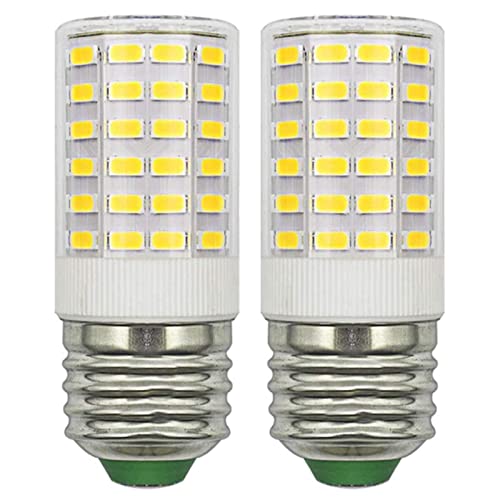
ZHENMING E26 Refrigerator Light Bulb, 7W 6000K Cool White
Feit Electric A19 LED Motion Sensor Bulb, 60W Eq, 5CCT
A Closer Look At Each Pick
Smart lighting used to mean a complicated hub and a stack of apps. The Philips Hue 60W-equivalent A19 keeps things approachable: pair via Bluetooth in one room, and the bulbs dim, shift color temperature, and react to voice through Alexa, Google Assistant, or Apple HomeKit. Where it really earns its keep is in layered rooms where you read, watch TV, and entertain in the same space. Compared to the basic dalattin 60W bulb in slot two, this Hue unit trades simplicity for genuine scene control.
Renters who want a few smart bulbs without rewiring anything find the two-pack friendly. The 800-lumen output matches a traditional 60W incandescent, so it slips into most table lamps and ceiling fixtures without surprises.
A Few Highlights
- Full color plus tunable white, all from the same bulb
- Bluetooth control works without buying a hub, then grows with a Bridge
- Plays nicely with Alexa, Google, and Apple HomeKit out of the box
- Scenes and routines make movie nights and wake-ups feel polished
Things To Consider
- Full feature set asks for the Hue Bridge, sold separately
- Two-pack only covers one room, so expanding the system adds up
Right Fit For
Tinkerers building out a connected home want this for its app polish and broad voice compatibility.
Swap It Out When
Budget-focused shoppers lighting an entire house should reach for the dalattin 24-pack in slot two instead.
There is something satisfying about opening a single box and outfitting every room. The dalattin 24-pack of 5000K daylight A19 bulbs pulls just 9 watts to replace a 60W incandescent, and the E26 base fits the standard sockets already in your ceiling fixtures and lamps. Daylight color temperature, measured in Kelvin (K), leans cool and crisp, so it tends to shine in home offices, kitchens, and craft rooms where you want sharp contrast.
People moving into a new place or replacing bulbs room-by-room tend to value the bulk format most. CRI 80+ (Color Rendering Index, a scale where 100 equals perfect color accuracy) keeps skin tones and food looking natural, which matters when the bulb lights your face in a mirror or the dinner on the table.
Bright Spots
- Twenty-four bulbs in a single box covers most homes end-to-end
- 800 lumens per bulb matches classic 60W brightness
- Daylight 5000K color reads clean and focused in workspaces
- Non-dimmable design keeps the price accessible per bulb
Worth Noting
- Cool daylight can feel harsh in a bedroom meant for winding down
- Not compatible with dimmer switches, so verify your switch type before buying
Made For
Anyone staging a whole-home bulb swap on a budget benefits most from the bulk count and low wattage.
Look Elsewhere When
You want one warm, dimmable fixture centerpiece, where the dalattin Vintage Edison pack in slot five fits the mood better.
Forget-me lighting is the hidden workhorse of any home. The dalattin dusk-to-dawn bulb carries a built-in photocell, a tiny sensor that detects ambient light, so it powers on after sunset and shuts off at sunrise without a timer, app, or smart hub. The 4-pack slots into hallway fixtures, porch lanterns, or a basement stairwell where hands tend to be full.
Families with kids who wander out for water at night appreciate not having to flip switches in the dark. The 5000K daylight tone echoes the dalattin 24-pack, but the automation here is the real story.
Key Advantages
- Photocell sensor reacts only to natural daylight, ignoring nearby lamps
- 9W LED replaces a 60W incandescent, cutting wasted runtime
- 15000+ hour rated lifespan keeps ladder climbs rare
- E26 base fits common ceiling and porch fixtures
Room For Improvement
- Photocell lives inside the bulb, so enclosed frosted fixtures may dim its sensing range
- Cool daylight reads clinical inside a cozy living room
Best Suited To
Busy households wanting automatic safety lighting in hallways, garages, and entryways.
A Better Fit Elsewhere
You want motion-triggered lighting for a closet or pantry, where the Feit Electric bulb in slot seven gives more on-demand control.
Some rooms demand serious brightness. The DAYBETTER A19 cranks out 1500 lumens at a 100W-equivalent level, and the 5000K daylight tone pushes focus and visibility to the front of the room. Garages doubling as workshops, basements outfitted as gyms, and home offices with double monitors benefit from the extra punch.
The 12-pack hits a sweet spot for people who need that brightness in several fixtures without going overboard. Compared to the dalattin 60W 24-pack in slot two, this set costs a little more per bulb but lifts lumen output by nearly double.
Where It Helps
- 1500 lumen output suits task-heavy rooms where details matter
- 15000+ hour rated life holds up to daily long-run use
- 15W draw still lands well below old 100W incandescent consumption
- Daylight color keeps projects and paperwork readable
Some Limits To Know
- Bright daylight can feel sterile in dining or bedroom setups
- Non-dimmable, so adding a dimmer switch on the same circuit may cause flicker
Key Product Details
Whose Shelf It Belongs On
Hands-on hobbyists, remote workers, and garage tinkerers want this for its bright, steady output.
Reach For A Different Pick When
Soft ambient lighting in a dining nook calls for the dalattin Vintage Edison bulb in slot five.
Some bulbs ask to be seen. The dalattin Vintage Edison set uses clear glass and an exposed filament pattern reminiscent of Thomas Edison’s original design, while still drawing only 8 watts for a 60W-equivalent glow. The 2700K soft white tone reads warm and golden, the kind of color that makes a dining room feel like dinner and a bedroom feel like rest.
Anyone restoring a farmhouse table, hanging a cluster of pendants, or finishing a mid-century remodel finds these bulbs doing double duty as both light source and decoration. Dimmability adds the final touch for movie nights or slow Sunday mornings.
Points In Its Favor
- Visible filament doubles as decor in open fixtures
- 2700K soft white flatters wood tones and skin
- Smooth dimming range from 10% to 100% with compatible switches
- CRI 80+ keeps fabrics and food looking true
Honest Caveats
- Clear glass exposes dust, so fixtures need occasional wiping
- Requires a compatible dimmer; older switches may buzz
Who Should Grab It
Design-minded renovators styling exposed pendants, sconces, or chandeliers appreciate the warm glow and filament detail.
Where A Sibling Pick Shines
You need bright, cool task light in a workshop, where the DAYBETTER 100W equivalent pack in slot four pulls ahead.
Appliance bulbs live a different life than ceiling bulbs: cold temperatures, vibration, frequent on/off cycles, and tight spaces. The ZHENMING E26 bulb addresses all of that with a compact tubular shape (about 1.12 inches across and 2.95 inches tall) and a 6000K cool white tone that makes leftovers and produce easier to read at a glance. The 100W-equivalent output from a 7W draw is genuinely surprising the first time you crack the fridge door.
Owners of older refrigerators with a burnt-out bulb find this is one of those small upgrades that pays off every day. The high voltage range (AC 100V to 265V) also makes it forgiving in homes with unusual wiring.
What Earns Its Place
- Compact size fits snug refrigerator sockets
- High lumen output cuts through fridge shadows
- Cool white tone helps spot expired items fast
Less Ideal Details
- Not compatible with dimmer switches, even by accident
- E26 base only; some fridges use the smaller E17 base, so verify before ordering
Perfect Match For
Homeowners replacing a tired fridge bulb get the right size, voltage range, and brightness in one swap.
Consider Something Else When
You want a general-purpose room bulb, where the dalattin 24-pack in slot two serves better at scale.
Motion-activated lighting used to require rewiring. The Feit Electric A19 packs a passive infrared sensor (PIR), which detects body heat and movement, directly into the bulb, with a 19-foot detection range and a five-minute shutoff when the space sits empty. The 5CCT feature means you can toggle between 2700K, 3000K, 3500K, 4000K, and 5000K using the switch on the bulb itself, which is genuinely handy while you decide which room tone you prefer.
Closets, pantries, laundry rooms, and basement stairs feel like a small upgrade in daily life. The 800-lumen output reads bright enough for grabbing clothes or sorting tools, even when the room has no other light source.
What Pays Off
- Motion sensor built in, no extra wiring or smart hub required
- Five selectable color temperatures cover any room tone
- Auto shutoff after five idle minutes saves energy
- Standard A19 shape fits typical fixtures
Practical Considerations
- Sensor range can be foiled by enclosed or deep fixtures
- Detection works best with line of sight, so corners may stay dark
Feature Snapshot
Built With In Mind
Anyone tired of fumbling for a switch in a closet, pantry, or garage loves the on-demand behavior.
Skip It When
You want always-on dusk-to-dawn lighting along a hallway, where the dalattin photocell bulb in slot three fits better.
Picking The Right Bulb For Each Room
A bulb is never just a bulb. The right shape, color, and brightness changes how a space feels and how much energy it burns through the year.
Color Temperature Sets The Mood
Color temperature, measured in Kelvin (K), decides whether a room feels warm and cozy or bright and clinical. Anything in the 2700K to 3000K range reads golden and relaxed, the right call for bedrooms, dining rooms, and living spaces. The 4000K to 5000K range leans cool and energizing, which is why kitchens, home offices, and workshops benefit. Bathrooms often sit somewhere in the middle, since you want clean light for grooming without a sterile feel.
Brightness And Wattage Equivalence
Older bulbs were sorted by wattage, but LEDs sort by lumens, which is the actual measure of visible light output. A typical 60W incandescent puts out around 800 lumens, while a 100W equivalent lands near 1500 lumens. Picking the right lumen count keeps a reading lamp from feeling weak and a kitchen ceiling from blasting like a parking lot. For most living rooms, 800 lumens per fixture is the sweet spot; for task-heavy workshops, 1500 lumens works better.
Smart Features And Sensors
Smart, motion, and photocell bulbs each solve a different problem. Smart indoor light bulbs, like the Philips Hue in slot one, add app control and color scenes. Photocell bulbs, like the dalattin dusk-to-dawn, react to natural light levels. Motion sensor bulbs, like the Feit Electric in slot seven, trigger on movement. Choosing the right feature starts with the use case: whole-room ambiance, safety lighting, or hands-free convenience.
Specialty Bulbs For Appliances
Refrigerators, ovens, and range hoods often use specific bulb shapes and bases. The ZHENMING bulb in slot six is a good reminder to confirm both the base size (E26 versus the smaller E17) and the dimensions before buying, since a too-long bulb may not fit under a lamp shade or inside a tight appliance housing.
Common Slip Ups And Where The Extra Money Goes
Pitfalls Shoppers Hit
The most common mistake is grabbing the wrong base size, E26 versus E17, or assuming any bulb dims on any switch. Non-dimmable LEDs paired with dimmer switches tend to flicker or hum, while a dimmable LED on a regular switch usually runs fine at full brightness. Color temperature mismatches are the next trap: cool daylight in a bedroom feels jarring, and warm 2700K in a workshop feels sleepy. Finally, lumen count gets overlooked, leaving rooms either too dim or too harsh.
What The Higher Tier Buys
Spending more on a smart bulb or a feature-rich model usually buys ecosystem depth, not just basic lighting. The Philips Hue, for example, unlocks app routines, voice integration, and the option to grow into a full-home system. Specialty sensors like the Feit Electric’s motion detection or the ZHENMING’s appliance-grade build cost more because they pack extra hardware into a small package. For everyday rooms, the value tier covers the job well; for connected homes or specialty fixtures, the upgrade earns its keep.
Frequently Asked Questions
What color temperature is best for living rooms?
Soft white in the 2700K to 3000K range tends to make living rooms feel warm and inviting, especially in the evening when the goal is relaxation.
Are LED indoor light bulbs worth the upgrade from incandescent?
Yes, in most cases. LEDs use a fraction of the wattage, run cooler, and last years longer than incandescents, which makes the higher upfront cost easy to recover.
Can I put any LED bulb in a dimmer switch?
No. Only bulbs labeled dimmable play nicely with dimmer switches, and even those may need a compatible LED-rated dimmer to avoid flicker or buzz.
How many lumens do I need for a home office?
Around 1500 lumens per ceiling fixture gives crisp task lighting, while a focused desk lamp in the 800 lumen range works well for screen work without causing glare.
What is CRI and why does it matter?
CRI, or Color Rendering Index, rates how accurately a bulb shows colors compared to natural light, on a scale up to 100. A CRI of 80 or above keeps skin tones, food, and fabrics looking true.
Closing Remarks
Picking the right indoor light bulbs comes down to matching brightness, color temperature, and features to each room’s purpose. The dalattin 24-pack covers a whole home on a budget, the Philips Hue adds app and voice control, and the Feit Electric handles hands-free spaces. For most homes, layering a value bulk pack with one or two specialty bulbs hits the best balance of cost and convenience.