

A burned-out factory bulb or a yellowed pair that’s lost its punch sends most drivers straight to a parts listing, where dozens of near-identical xenon options make the choice harder than it should be. The right HID bulb hinges on your headlight socket type (D1S, D2S, D2R, D3S, or D4S), the color temperature you prefer, and whether your housing was designed for projector or reflector beams. I put together this shortlist for commuters, weekend road-trippers, and RV owners who want a clean, whiter beam without gambling on an unknown brand.
The Lineup, Simplified
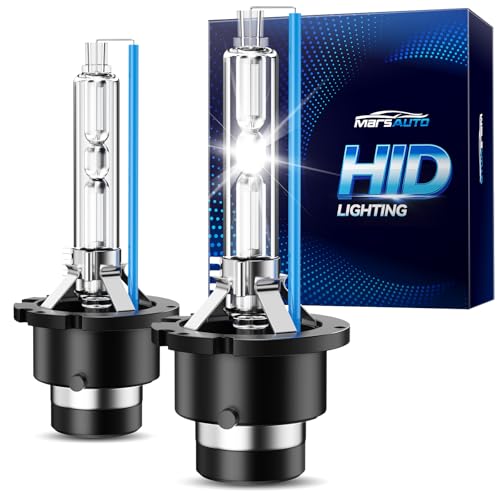
Marsauto D4S HID Bulbs, 66440 42402 42402WX (42402C1) for HID Assembly, 6000K Cold White 35W Bulb, Plug and Play, Pack of 2
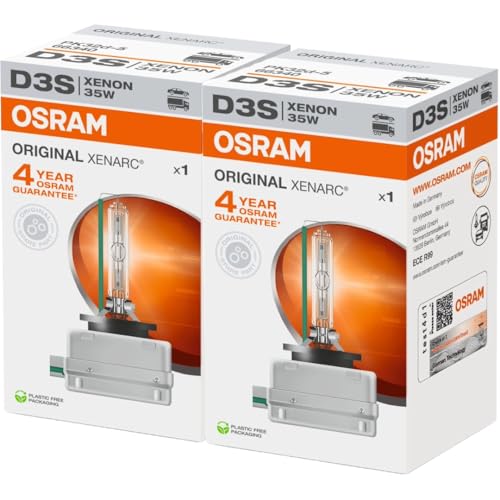
Osram 66340HBI Xenarc 35W D3S PK32D-5 4600K HID Xenon Light Bulb (2 Pack)

AUTOONE D3S Bulb, 10 Times Brighter D3S D3R Bulb, 3 Min Quick Install, 20 Years Lifespan, No Flicker

D2R HID Headlight Bulbs, 6000K 35W Xenon OEM Replacement 85126 66050 66250

Marsauto D1S HID Bulbs, 66144 66140 85140 85415 (85415C1) for HID Replace, 35W 6000K Cold White Xenon Bulb, Plug and Play, Pack of 2
Marsauto D2S HID Bulbs, 85122 66240 66040 66240CBI (85122C1) for HID Assembly, 6000K Cold White 35W Xenon Bulb, Pack of 2, Fit for RV light bulb
The D4S socket shows up in a long list of late-model Japanese vehicles, and this Marsauto pair slots in without rewiring. The 35W xenon capsule runs at 6000K, which lands in that crisp cold-white band most drivers picture when they think “modern luxury headlight.” For someone driving a Lexus IS, a Toyota Land Cruiser, or an Acura MDX with a fading factory beam, the swap is genuinely tool-light.
Compared to the Osram D3S option coming up next, this set trades a German OEM pedigree for a friendlier entry price and a broader fitment range. The trade-off shows up mostly in long-term consistency, where the Marsauto’s APL capsule design holds up well in projector housings but may shift color slightly as the bulb ages.
Everyday Wins
- Plug-and-play install means no ballast rewiring for most D4S vehicles
- 6000K cold-white tone reads as a modern OEM look on luxury sedans
- UV-resistant quartz glass helps protect headlight lenses from yellowing over time
- A two-pack format covers both sides at once and keeps a spare on hand
Things To Consider
- Color can drift slightly toward blue as the bulb racks up hours
- Not a fit for D2S or D3S vehicles, so double-check your socket type before ordering
- Avoid touching the glass during install; oils shorten xenon bulb life noticeably
Key Specs
Who It Suits Best
Owners of D4S-equipped Japanese luxury vehicles who want a straightforward swap that restores factory-style brightness on a reasonable budget.
Consider Something Else When
Drivers of D3S German vehicles should reach for the Osram 66340HBI Xenarc 35W D3S instead, since the OEM-grade Osram capsule is built for those specific sockets.
Osram sits in a category of its own here. The Xenarc 66340HBI ships as original equipment on a long list of European cars, which tells you most of what you need to know about build consistency. Its 4600K color temperature leans warmer than the Marsauto options, but it tracks closer to natural daylight than standard halogen, so eyes stay fresher on long drives.
Where the Marsauto D4S earlier targets Japanese luxury drivers, this pair covers BMW, Audi, Mercedes, and other D3S-platform vehicles that came from the factory with xenon lighting. The honest read is that you’re paying for the OEM pedigree, and the price reflects that. For drivers who never want to wonder whether their headlight bulb is “as good as the original,” this is the one.
Strengths Worth Knowing
- OEM-grade construction backed by Osram’s automotive lighting pedigree
- 4600K output reads as natural daylight rather than a stylized blue-white
- Trusted fitment for D3S PK32D-5 sockets on European vehicles
Honest Caveats
- The 4600K tone won’t satisfy drivers chasing a colder, bluer look
- Sits at a higher cost tier than most aftermarket D3S alternatives
- Like all xenon bulbs, the glass should not be touched bare-handed during install
Feature Snapshot
Built With In Mind
Drivers of European vehicles with factory D3S xenon headlights who value OEM-grade reliability over flashy color tones.
Skip It When
Anyone shopping for D4S or D2S sockets should consider the Marsauto D4S or Marsauto D2S HID Bulbs, since this Osram bulb only fits D3S housings.
AUTOONE takes a different angle entirely. Rather than mimicking factory output, this D3S/D3R bulb aims at raw lumen count, with a claimed 40,000-lumen figure that puts it well above what a stock xenon capsule delivers. A built-in Canbus decoder (a small circuit that prevents dashboard error codes and radio static) keeps the bulb from triggering flickering or “bulb out” warnings on cars that monitor headlight current.
The “3-minute install” claim is aggressive marketing, but the basic idea is fair: most D3S swaps do go quickly once you reach the bulb cap. Compared to the Osram option above, AUTOONE sacrifices OEM pedigree for much higher brightness and a longer claimed service life, which can matter for drivers who log heavy night miles.
A Few Highlights
- 40,000-lumen output vastly exceeds typical factory xenon brightness
- Canbus-ready design avoids flicker and dashboard error codes on most vehicles
- Long claimed lifespan suits high-mileage commuters and rideshare drivers
- Targets both D3S and D3R socket types in a single bulb
Points To Keep In Mind
- Higher output means more heat, so housing ventilation matters more than usual
- Not an OEM-grade part, so longevity can vary unit to unit
- Brightness claims should be taken as a relative guide rather than a literal promise
Quick Facts
Right Fit For
Night-heavy commuters and rideshare operators who want maximum usable light from a D3S housing and don’t mind stepping outside the OEM ecosystem.
A Better Fit Elsewhere
Drivers who prefer factory-style color and OEM build quality should reach for the Osram 66340HBI Xenarc 35W D3S, which trades brightness for consistency.
The D2R socket is the older sibling to D2S, and it lives mostly inside reflector housings rather than projectors. This PARTSWAY pair targets exactly that niche, with an Xforce optical coating designed to filter UV rays (ultraviolet light that can yellow plastic lenses over time) while sharpening beam focus through a clear-center capsule.
Compared to the AUTOONE D3S covered above, this is a quieter, more lens-protective option. It runs at the same 6000K color temperature as the Marsauto D4S, but the D2R base means it fits a different generation of vehicles, often older Acura, Honda, and Lexus models with factory xenon reflectors.
What Helps Most
- Xforce optical coating reduces UV exposure to headlight lenses
- Clear-center capsule design sharpens beam focus in reflector housings
- 6000K output provides a clean, daylight-style tone
- OEM-replacement cross-reference covers common D2R part numbers
Trade Offs
- D2R is reflector-specific, so it won’t physically fit D2S projector housings
- Verify the bulb base matches your factory connector before ordering
- Quartz glass still requires clean handling during install
Best Suited To
Drivers of older D2R-equipped vehicles with reflector-style xenon headlights who want a beam that stays focused and a lens that stays clear longer.
Another Choice May Suit
Anyone running D2S projector housings should look at the Marsauto D2S HID Bulbs instead, since the D2R capsule geometry will not seat correctly in a D2S projector.
D1S is the integrated-style xenon bulb, meaning the igniter and ballast connection live inside the bulb base rather than on a separate lead. That makes D1S swaps a little fussier, but it also explains why RV and motorhome owners gravitate toward this Marsauto pair: it’s a known fitment in many Class A and Class C headlight assemblies, where the original bulb is harder to source locally.
The 6000K cold-white tone matches the Marsauto D4S covered earlier, so anyone standardizing a fleet of vehicles on one color profile can keep things visually consistent. Compared to the AUTOONE D3S, this is a calmer, OEM-leaning choice with a focus on longevity rather than raw brightness.
Noteworthy Benefits
- Plug-and-play design simplifies a socket type that’s normally more involved
- Quartz glass construction with airtight seals helps prevent early failures
- Cross-reference covers several factory D1S part numbers for easier fitment checks
- Two-pack format keeps a spare bulb on hand for road trips
A Few Limitations
- D1S bulbs with integrated igniters cost more per unit than D2S or D3S options
- Not interchangeable with D2S, D3S, or D4S sockets, so verify before ordering
- RV installations can require partial headlight housing removal
Technical Reference
Whose Shelf It Belongs On
RV owners, motorhome drivers, and anyone running D1S projector headlights who wants a bulb that’s easy to source and behaves like the original.
Where A Sibling Pick Shines
Drivers of D2S vehicles looking for the same Marsauto build at a friendlier price point should consider the Marsauto D2S HID Bulbs covered next.
The D2S socket is the most common xenon projector fitment on older European and Japanese luxury vehicles, which is why this Marsauto pair earns the value-friendly slot. The same APL capsule and quartz glass construction carries over from the D4S and D1S options earlier in this list, so the brand’s house style stays consistent across the lineup.
For RV owners with D2S projector headlights, this bulb can pull double duty as a road vehicle or coach replacement. Compared to the PARTSWAY D2R covered above, the Marsauto D2S targets projector housings rather than reflectors, so beam cutoff stays crisp where it matters.
A Strong Showing
- Covers a wide D2S cross-reference range, simplifying the fitment check
- 6000K cold-white tone matches the rest of the Marsauto family
- Quartz glass and airtight seals support long service life
- Two-pack format works well for swapping both headlights at once
Worth Noting
- Not a fit for D2R reflector housings, despite the similar naming
- Color may shift slightly as the bulb accumulates hours of use
- Use gloves or a clean cloth during install to avoid glass contamination
Made For
Budget-minded owners of D2S projector headlights, including RV drivers, who want a clean OEM-style beam without stepping up to a premium brand.
Look Elsewhere When
Drivers running D2R reflector housings should pick the PARTSWAY D2R HID Headlight Bulbs instead, since the capsule geometry is built for reflector optics.
What Matters Most Before Choosing Hid Bulbs
Socket type is the single biggest filter. D1S, D2S, D2R, D3S, and D4S bulbs all look similar at a glance, but their bases, igniter layouts, and housing compatibility differ. A bulb that fits the connector can still perform poorly if it’s placed into the wrong housing style.
Color temperature shapes how the road actually looks. Lower Kelvin ratings (around 4300K to 4600K) read as natural white, while higher ratings (6000K and up) shift toward a cooler, bluish tint. For drivers who log a lot of highway time after dark, the warmer end tends to feel less fatiguing.
Brightness claims deserve scrutiny. Raw lumen numbers from aftermarket sources often exceed what a housing was designed to handle, which can produce glare for oncoming traffic without adding usable road illumination. OEM-style output tends to play nicely with stock projector and reflector geometry.
Build quality shows up in the materials. UV-resistant quartz glass, airtight seals, and heat-tolerant electrodes all extend real-world service life. These details rarely show up in marketing copy, but they explain why two similarly priced bulbs can perform very differently over time.
Mistakes Worth Dodging In The Hid Bulbs Aisle
Buying By Wattage Alone
Higher wattage doesn’t automatically mean better visibility, and pushing more power than the stock ballast supports can shorten bulb life or stress the wiring. Match the original wattage rating first, then judge by color and beam pattern.
Skipping The Socket Verification
A wrong-socket bulb might still seem to fit during install, but it won’t seat against the housing correctly. Always cross-reference the factory part number printed on the old bulb against the listing before clicking through.
What The Higher Tier Buys In Hid Bulbs
Premium bulbs like the Osram Xenarc pair earn their keep through OEM-grade consistency and tighter color tolerances. The upgrade pays off most on vehicles where the headlight housing was engineered around a specific capsule geometry, since the premium bulb maintains the beam pattern the housing was designed for. For daily drivers on tight budgets, the aftermarket options still deliver, just with a wider spread of unit-to-unit variance.
Frequently Asked Questions
How do I know which HID bulb my car needs?
Check the factory bulb’s part number printed on the base, or look up your vehicle’s headlight specification by year and trim. The five common sockets are D1S, D2S, D2R, D3S, and D4S.
Can I upgrade from halogen to HID using these bulbs?
Only if your vehicle already has the wiring, ballast, and housing designed for HID. Swapping halogen bulbs into HID capsules, or vice versa, won’t produce a safe beam pattern and can damage components.
Why does my new HID bulb flicker on startup?
A short warm-up flicker is normal as the bulb reaches full operating temperature. Persistent flickering usually points to a failing ballast, weak wiring, or a Canbus compatibility issue.
Are higher Kelvin ratings always brighter?
Not necessarily. Brightness depends on the bulb’s lumen output, while Kelvin only describes the color temperature. A 6000K bulb can produce fewer lumens than a 4300K bulb from the same family.
How long do HID bulbs typically last?
Quality xenon bulbs generally last between 2,000 and 3,000 hours of use. Shorter commutes extend that figure, while frequent night driving shortens it.
Bottom Line
The right HID bulb comes down to matching your socket, respecting your housing style, and choosing a color temperature that fits your driving. OEM-grade picks like the Osram Xenarc make sense for European vehicles where factory consistency matters, while the Marsauto family covers the rest of the common sockets at a friendlier price. Pick the socket first, the brand second, and you’ll avoid the most common regret on this aisle.