

When the night swallows a trailhead, a campsite, a parking lot, or a backyard at 2 AM, the difference between fumbling around and moving with confidence usually comes down to one tool. I spent time going through ten solid handheld and specialty flashlights to figure out which ones actually push usable light far enough to matter, which ones stay comfortable in the hand, and which ones earn their place on a utility shelf.
A few of these are workhorse white-light LEDs built for throwing a tight beam down a long driveway or across a construction site. A few are UV lights aimed at stain detection, mineral hunting, and forensic-style inspections where “distance” means a different kind of reach. You’ll see both flavors here, because the term “long distance” gets used loosely, and the right pick depends entirely on the job.
Whichever one you grab, the goal is the same: light that travels, in a body that doesn’t quit on you when the night gets long.
The Essentials At A Glance

DEWALT 20V MAX LED Work Light/Flashlight (DCL040)
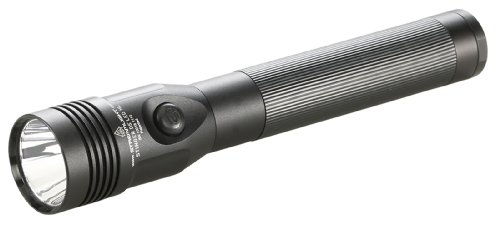
Streamlight 75458 Stinger DS LED HL Flashlight (Black)

Streamlight 90545 Survivor 175-Lumen Right-Angle Flashlight (Black)

uvBeast V3 385-395nm Black Light UV Flashlight
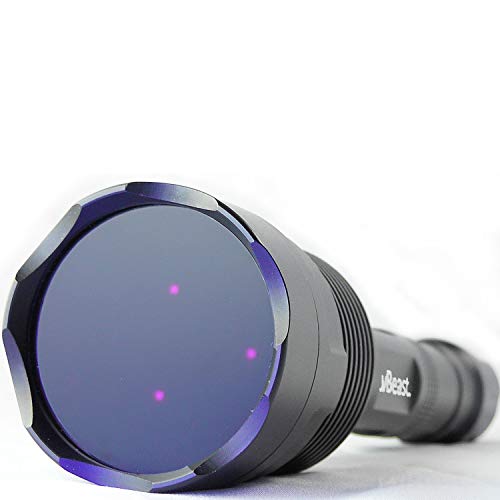
uvBeast V3 365nm Black Light UV Flashlight, High Power and Long Range

Brinyte A02 125 Lumens Rechargeable Key Chain Flashlight, EDC Pocket Light

TrixHub Rechargeable Flashlights 2 Pack Super Bright High Lumens Flashlight
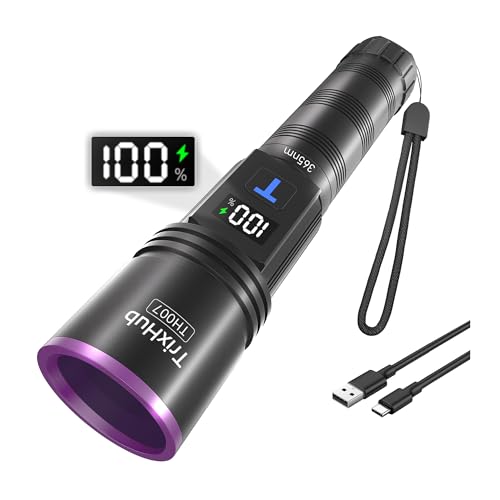
TrixHub 365nm Black Light UV Light Flashlight Rechargeable with LCD Display

TrixHub Rechargeable Flashlights High Lumens 2Pack with LCD Digital Display

uvBeast V3 385-395nm MINI Black Light UV Flashlight
The DEWALT DCL040 isn’t chasing lumen bragging rights; it’s chasing the kind of practical, hands-free reach that matters in a garage or crawlspace. It slips onto the same 20V battery platform many tradespeople already carry, which is half the appeal. Drop it on a 5Ah pack and the LED stays cool to the touch while still pushing usable light across a long basement or open jobsite floor.
The 120-degree rotating head is the unsung feature, because it lets me aim the beam where I’m working without tilting the whole body. Add the integral hook on top and you’ve got a serviceable area light for under-sink plumbing or attic work. Compared to the higher-output picks later in this list, this one is gentler on the eyes and far easier to keep pointed where it belongs.
A Few Highlights
- Head pivots 120 degrees, which makes under-cabinet and overhead tasks far easier
- Uses the same 20V MAX batteries as other DEWALT tools, simplifying a kit for tradespeople
- LED runs cooler than older xenon bulbs, so it’s more comfortable in tight, enclosed spaces
- Integral hook on top turns it into a quick-hang area light without extra accessories
Trade-Offs To Consider
- Output is modest at roughly 110 lumens, so long-distance throw isn’t its strength
- Battery and charger are sold separately, which adds to the real cost for someone starting fresh
Who It Suits Best
Anyone already running a 20V MAX tool system who wants a lightweight area and inspection light that pulls double duty.
Consider Something Else When
The Streamlight 75458 Stinger DS LED HL is the smarter grab for anyone who needs a tighter, brighter throw down a hallway or across a yard.
The Stinger DS LED HL is one of those flashlights that feels overbuilt in the hand, which is exactly the point. It’s a rechargeable, high-lumen unit aimed at law enforcement, security, and anyone who treats a flashlight like a working tool rather than a drawer novelty. The 800-lumen output is enough to throw a clean, wide beam across a parking structure or down a wooded trail.
Dual-switch technology is the real story here. The tail cap and the head switch operate independently, so I can program momentary or constant-on functions from either location depending on how I’m holding it. That kind of redundancy pays off in stress situations when muscle memory takes over. Compared with the DEWALT DCL040 I started with, this is a heavier, brighter, more purposeful tool.
Where It Delivers
- 800-lumen output covers a wide area while still throwing far enough to read a license plate at distance
- Two independent switches give flexibility for momentary, constant-on, or programmed modes
- Rechargeable battery pack cuts down on disposable cell cost over time
- Knurled aluminum body grips well with cold or wet hands, common in patrol and outdoor use
Honest Caveats
- Heavier and longer than casual EDC lights, so pocket carry gets uncomfortable fast
- Dedicated charging cradle takes up space and should be mounted somewhere practical
Quick Technical Notes
Made For
Patrol officers, security staff, and serious homeowners who want a rechargeable duty-style light with confident throw.
A Better Fit Elsewhere
Streamlight 90545 Survivor is the better match when the environment includes flammable vapors or hazardous locations, thanks to its intrinsically safe rating.
The Survivor is the flashlight I think of when somebody says “industrial rated.” Its right-angle body clips onto turnout gear or a belt loop and aims forward like a headlamp without strapping anything to your skull. The 175-lumen high setting pushes a tight beam out to roughly 405 meters, which is more throw than most people expect from a compact unit.
This is one of the few handheld lights on the market with a Class I, Division 1 intrinsically safe rating, meaning it’s designed not to ignite flammable vapors. The push button works with gloves, the nylon body shrugs off 2-meter drops, and the IPX4 rating handles rain and hose-down conditions. Compared with the brighter Stinger I just covered, this one trades raw output for certifications and survivability.
The Case For It
- Class I, Division 1 intrinsically safe for hazardous locations like refineries and chemical plants
- Right-angle body clips to turnout gear or MOLLE webbing, freeing both hands for work
- High mode throws roughly 405 meters, which is impressive for a compact right-angle body
- Runs about 13 hours on the low 60-lumen mode, helpful during long shifts
Points To Keep In Mind
- Output is lower than consumer-focused lights, so a wider flood beam is what you trade for safety certification
- Heavier than a plain handheld, by design, and a dedicated charger is part of the ownership equation
Best Suited To
Firefighters, hazmat technicians, plant operators, and miners who need a certified light for volatile environments.
Look Elsewhere When
The DEWALT DCL040 is friendlier for general home and workshop tasks where intrinsic safety ratings are not required.
The uvBeast V3 385-395nm is a different animal from the white-light flashlights earlier in this list. It uses three high-current UV LEDs to throw a violet beam more than 70 feet, which makes it useful for hunting dried pet stains on carpets at the far end of a long room or scanning yards for scorpions. The 385-395nm range is broader and a little more visible to the eye than pure 365nm.
For someone who already has a bright white-light thrower, this fills the inspection gap. The body is bulkier than a typical handheld because of the triple-LED head and the thermal demands of driving that much current. Compared with the smaller MINI version I’ll cover later, this is the more serious piece of UV gear.
The Good Stuff
- Triple high-current UV LEDs throw a usable beam past 70 feet for outdoor scanning
- 385-395nm range is more visible to the naked eye than pure 365nm, which helps with aiming
- Rechargeable design avoids disposable cell cost across years of use
- Bulkier head acts as a heatsink, helping the LEDs sustain output during long inspections
Some Limits To Know
- UV output is invisible enough that eye protection and dark conditions really do matter for accurate results
- Battery life varies widely with mode, and high-current draw is hard on cheaper cells
Who Should Grab It
Homeowners with big rooms, pet owners dealing with recurring stains, and outdoor types who want to scan driveways and patios.
Skip It When
The TrixHub 365nm UV Flashlight is a more practical choice for everyday indoor stain detection on carpets and rugs.
The 365nm sibling of the V3 is built for people who care about wavelength purity. It filters the UV output so what reaches the surface is closer to true 365nm, which is what causes minerals, certain inks, and biological stains to fluoresce most reliably. Throw distance is around 60 feet or more, which keeps it competitive for room-to-room scanning.
In real-world terms, this light tends to outperform cheaper unfiltered UV lights when the goal is forensic-style detection. I find it useful for counterfeit detection on currency or documents, and for finding leaks with UV-reactive dyes. Compared with the broader 385-395nm version I just covered, this one is dimmer to the eye but more accurate for inspection work.
Practical Advantages
- Filtered 365nm output produces cleaner fluorescence for mineralogy, currency, and leak detection
- Throws a useful beam past 60 feet, so it works in basements, attics, and long hallways
- Rechargeable battery keeps the unit ready without disposable cell swaps
- Higher purity UV means dim visible glow, which is actually a quality indicator
Factors To Consider
- Filtered output looks dim to the eye, which can fool first-time users into thinking the light is weak
- Long runtime sessions tax the battery, and a spare charged cell is useful for fieldwork
Whose Shelf It Belongs On
Geology hobbyists, HVAC techs using UV dyes, and anyone verifying documents or currency where wavelength matters.
Another Choice May Suit
The uvBeast V3 385-395nm is friendlier for general stain hunting where eye-visible beam feedback helps with aiming.
The Brinyte A02 is a tiny, USB-C rechargeable keychain light that fits on a keyring and disappears until you need it. Four modes (high, mid, low, strobe) cover most quick tasks, and the memory function brings back the last used mode instead of resetting to high every time. With 125 lumens on tap and a reach near 33 meters, it’s enough to find a dropped earring or check a dark path.
For everyday carry, this is the kind of light I forget I’m carrying until I need it. The side-mounted switch is easy to find without looking, and the Type-C port means I can top it up from the same cable as my phone. Compared with the larger TrixHub and Streamlight picks, this one is intentionally small, so don’t expect throw performance on the same scale.
What Works In Its Favor
- USB-C charging means one cable handles the phone and the light
- Memory function keeps the last-used mode ready, which avoids surprise full brightness in a dark room
- Four modes including strobe give flexibility without making the UI complicated
- Small enough to ride on a keychain without pulling the pocket down
Small Caveats
- Reach and output are modest compared with full-size lights, so it isn’t a yard-and-driveway tool
- Miniature switches and ports can wear faster under daily pocket abuse
Perfect Match For
Anyone who wants a barely-there backup light for keys, glove boxes, or evening dog walks.
Reach For A Different Pick When
The TrixHub Rechargeable Flashlights 2 Pack is the better fit when the goal is outfitting a whole home or vehicle with matching lights.
Buying one flashlight leaves gaps: a light stuck in a drawer while you need one in the garage. TrixHub sidesteps that by shipping two units in the box, so I can park one in the kitchen drawer and another in the car. The LCD real-time battery display is genuinely useful, because it tells me exactly how much runtime is left instead of guessing from a fading beam.
The upgraded long-beam LED chip puts a tighter spot than basic flashlights, which is what most people want for outdoor checks. The integrated fast-charge chip claims roughly twice the charging speed of older USB lights, and that lines up with how quickly the units top up from a typical wall adapter. Compared with the Streamlight Stinger, this set is a different value play.
Real Benefits
- Two units in the box cover the home and the car without buying a second light later
- LCD battery percentage takes the guesswork out of pre-trip charging
- Long-beam LED chip pushes a focused spot further than a basic flood flashlight
- Fast-charge input means short top-ups between uses are realistic
Where It Is Less Suited
- Build quality feels closer to a consumer light than a duty light, so heavy jobsite use may show wear
- Beam is tighter than flood lights, which can feel narrow for indoor room lighting
Feature Snapshot
Built With In Mind
Families and renters who want matching lights staged around the house for power outages and late-night dog walks.
Swap It Out When
The Streamlight 75458 Stinger is a smarter grab for daily professional use, where ruggedness matters more than quantity.
This TrixHub model is aimed squarely at the household stain-hunting crowd. It runs a 30W 365nm UV LED with an LCD readout, which together make it practical for scanning rugs and carpets for dried pet urine that the eye can’t catch. The light is genuinely intense, so the manufacturer warns against shining it directly at eyes, which is good advice I wouldn’t ignore.
The LCD battery percentage is a small but useful touch on a UV light, because UV beams don’t dim visibly the way white LEDs do. You know when to recharge without waiting for a surprise dead battery mid-scan. Compared with the uvBeast 365nm unit I covered earlier, this one is friendlier on price and a little more consumer-oriented in feel.
Useful Strengths
- 365nm wavelength is the right range for fluorescence-based stain detection on carpets
- LCD battery display removes the uncertainty common with UV lights that don’t visibly dim
- Rechargeable design means no specialty batteries to keep on hand
- Single focused beam works well for sweeping a room section by section
Worth Bearing In Mind
- High output requires care around eyes and skin, especially for curious kids and pets
- UV detection works best in a darkened room, so daytime scans mean closing blinds first
The Right Fit
Pet owners and renters trying to track down old accidents before cleaning or replacing carpets.
Where A Sibling Pick Shines
The uvBeast V3 365nm is the stronger choice for outdoor scanning and longer throw distances across a yard.
The five-mode TrixHub set is the more feature-heavy sibling of the earlier 2-pack. High, medium, low, strobe, and SOS give it range, and the adjustable focus lets me slide between a wide flood and a tighter beam. For home use that often means going from lighting up a hallway to poking a focused beam across a backyard in a single twist.
The LCD real-time battery display is the same trick as on its sibling pack, and it remains a quality-of-life upgrade I’d miss. The red fluorescent element inside the lamp head is a small safety touch for emergencies. Compared with the Streamlight Stinger, this set is more versatile around the house, though less rugged under hard professional use.
What Helps Most
- Five modes plus adjustable focus cover everything from flood lighting to focused throw
- LCD battery percentage gives a clear read of remaining runtime
- Two units in the box let me stage lights in different rooms or vehicles
- SOS and strobe modes add a layer of emergency signaling for roadside situations
Practical Considerations
- Adjustable focus mechanisms can loosen over time with heavy daily twisting
- Highest mode drains the battery quickly, so a charging routine matters
Who Will Love This
Households that want a versatile light for power outages, camping trips, and general home security without buying separate flashlights for each task.
Not Your Match When
The Streamlight 90545 Survivor makes more sense for hazardous-location or industrial work where certification matters.
The MINI takes the same UV LED that lives in the larger V3 385-395nm and stuffs it into a much smaller body. That’s the whole pitch: real uvBeast UV punch in a package that slips into a jacket pocket or glove box. For travelers, mobile techs, or anyone who wants UV on hand without hauling a full-size light, that’s a meaningful trade.
Reach and runtime are naturally shorter than the full-size V3, because the head and battery are smaller. The MINI is most at home doing room-by-room scans in a hotel, an Airbnb, or a small office, rather than sweeping a yard at distance. Compared with the TrixHub 365nm UV unit, this one offers broader wavelength output and easier eye-visible aiming.
Strengths Worth Knowing
- Same UV LED technology as the larger V3, shrunk into a portable body
- 385-395nm range gives more visible feedback while scanning, which helps with aiming
- Compact form slips into a glove box or carry-on without dedicated space
- Rechargeable design means it stays ready between trips
Less-Strong Areas
- Shorter throw and shorter runtime than the full-size V3, by design
- Small body runs warmer in the hand during extended scans
Feature Snapshot
The Right Fit
Travelers, mobile service techs, and renters who want portable UV detection on the go without a bulky tool.
Swap It Out When
The full-size uvBeast V3 385-395nm is the smarter grab for long-throw outdoor scanning where battery life matters.
What Separates A Thrower From A Flooder
The first question to answer is beam shape. Throwers use a narrow, focused beam to push light far downrange, which is what you want for scanning a long driveway, finding a trail marker, or reading something across a parking lot. Flooders spread light wide for close tasks like working under a sink. Many modern lights fall somewhere in between, but the beam shape still drives whether the light feels useful at distance.
For white-light throwers, lumen count gets talked about most, but candela (the measure of how concentrated the beam is) actually drives distance more directly. A 500-lumen flood and a 500-lumen thrower will read very differently on a long path. Look for candela figures when distance matters more than brightness across a room.
For UV lights, throw is a different conversation. A 385-395nm light has visible beam feedback that helps aiming but produces broader fluorescence. A 365nm light looks dim to the eye but causes cleaner fluorescence, which matters for inspection, leak detection, and mineral work.
Power Source And Run Time
Rechargeable batteries are now the default for serious lights, and they save real money over years of use. The honest trade is that they require a charging routine, and high-output modes can drain a pack quickly. Lights with an LCD battery readout remove the guesswork, which is a small but meaningful quality-of-life upgrade.
Disposable cells still make sense for emergency kits and lights that sit in a drawer for months between uses. For everyday carry and frequent use, rechargeable wins.
Body, Switches, And Grip
Knurled aluminum bodies grip well and survive drops. Nylon bodies (like the Survivor) trade some rigidity for lighter weight and impact absorption. Right-angle bodies clip onto gear for hands-free work; straight bodies aim more naturally when held.
Switches matter more than people think. Dual switches give flexibility under stress; single tail switches keep the UI simple. Gloved operation is a real concern for cold-weather or industrial use.
Intended Environment
Hazardous locations (refineries, mines, chemical plants) call for intrinsically safe rated lights like the Survivor. Wet environments need at least IPX4 water resistance. Outdoor night hiking benefits from a mix of throw and spill, while inspection work often wants pure 365nm UV.
Key Considerations Across These Picks
Mistakes Worth Dodging
The most common trap is chasing lumen numbers without checking beam shape. A 10,000-lumen flood light is dim at 100 feet, while a 500-lumen thrower can light up a tree line. The other classic slip is buying a UV light without paying attention to wavelength; cheap unfiltered UV looks bright to the eye but fluoresces poorly, which is the opposite of what you actually want.
Buyers also tend to forget about charging. A light that sits dead in a drawer is no help during a power outage. Either pick a light with a clear battery readout or build a charging routine you can stick to.
Where The Extra Money Goes
Higher-tier lights earn their price through certification, better switches, thermal management, and proven battery systems. A Streamlight Stinger costs more than a generic high-lumen light because it survives daily professional abuse, not because it pushes more lumens. Premium UV lights like the filtered 365nm models cost more because wavelength purity actually changes inspection results, not because the housing looks fancier.
When the upgrade is worth it: daily professional use, hazardous environments, or inspection work where accuracy matters. When it isn’t worth it: occasional household tasks, backup lights that rarely get used, or general outdoor use where any working light will do.
Frequently Asked Questions
What Does “Long Distance” Actually Mean For A Flashlight?
For white-light LEDs, it usually means a focused beam that reaches 100 meters or more. For UV lights, it means a beam useful past 50 or 60 feet. The exact number depends on the task, but throw distance is the real measure, not lumen count alone.
Is A Higher Lumen Rating Always Better?
Not necessarily. Higher lumens with a wide flood beam produce lots of light but limited reach. A lower-lumen thrower can actually perform better at distance because the beam is concentrated. Candela is the better number for throw performance.
Are UV Flashlights Safe To Use Around Pets And Kids?
UV light at the intensities these flashlights produce can irritate eyes and skin with direct exposure. Keep the beam pointed at the floor or surface being scanned, and don’t let kids or pets stare into the beam. Brief incidental exposure during normal scanning is generally fine.
How Often Do Rechargeable Flashlight Batteries Need Replacing?
Quality lithium packs typically last several years of regular use before capacity drops noticeably. Heavy daily professional use may shorten that window. Lights with replaceable battery packs let you swap in a fresh cell without buying a whole new flashlight.
Can One Flashlight Handle Both Home Use And Outdoor Trips?
Many mid-size rechargeable lights do double duty reasonably well, especially adjustable-focus models with multiple modes. Dedicated specialty lights (hazardous-location, pure 365nm UV, ultra-long-throw) still outperform generalists in their niche, which is why households often end up with two or three different lights for different jobs.
Wrap Up
The right flashlight for distance depends on whether you need throw in white light or reach in UV. White-light throwers like the Streamlight Stinger and the DEWALT DCL040 cover the everyday side of the question, while UV lights from uvBeast and TrixHub extend the same idea into inspection work. Pick the one that matches the job you actually do, and add a second light for the gaps the first one leaves behind.