

Picking a ceiling occupancy sensor feels easy until you stand in the lighting aisle staring at six nearly identical boxes. I get it. The category mixes residential switches, low-voltage ceiling units, and high-bay fixtures, and the wrong tech in the wrong room means lights that flicker off mid-task or stay on all night. This list sorts ten real options into the spaces they actually fit, so the install goes smoothly.
A Fast Comparison Of The Options

Wattstopper LMDC-100 Dual Technology Ceiling Occupancy Sensor (White)
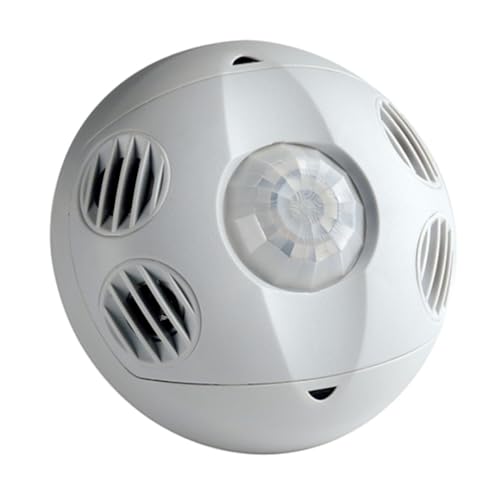
Leviton OSC20-M0W Multi-Tech Ceiling Occupancy Sensor (White)

Leviton ODS10-IDE Multi-Tech Ceiling Occupancy Sensor (Black)

Maxxima 360° PIR Ceiling Mount Occupancy Sensor

RAYZEEK 360° Microwave Ceiling Occupancy Sensor

ELEGRP Matte White Occupancy Motion Sensor Light Switch

RAYZEEK DC 12/24V Low Voltage Ceiling PIR Sensor

Maxxima Occupancy Vacancy PIR Wall Switch 3-Way

Maxxima High Bay Fixture Mount 360° PIR Occupancy Sensor

Leviton OSC15-I0W Ceiling PIR Occupancy Sensor (White)
The Picks, Examined More Closely
The Wattstopper LMDC-100 is a dual-technology ceiling sensor, meaning it blends PIR (passive infrared, which detects body heat movement) with ultrasonic sensing (sound waves that catch smaller motion). That pairing matters in real rooms because PIR alone misses the person typing quietly at a keyboard, while ultrasonic alone can drift false-on from HVAC vents.
Rated for roughly 1000 square feet of coverage at 24V DC, it slots into a Wattstopper DLM (Digital Lighting Management) system rather than running on ordinary house wiring. For a private office, a small classroom, or a conference room where the lights sometimes flicker off mid-meeting, that combination tends to solve the problem cleanly.
Useful Strengths
- Dual-tech sensing keeps lights on during low-motion activities like reading or note-taking.
- 1000 sq ft rating covers most mid-size offices from a single ceiling mount.
- Integrates with DLM systems, which central managers often prefer for building-wide control.
- Low-voltage 24V DC operation simplifies running cable through drop ceilings.
Trade Offs To Consider
- Requires a compatible DLM system, so it’s not a plug-and-play swap for a residential switch.
- Low-voltage ceiling units typically need an electrician for the first install.
Quick Facts
Best Suited To
Facility managers running a DLM lighting network in offices or classrooms where quiet occupants keep getting ignored by single-tech sensors.
Swap It Out When
The Maxxima 360° PIR Ceiling Mount Occupancy Sensor is a better fit for homeowners who don’t want to integrate a full DLM system.
The Leviton OSC20-M0W stretches coverage to roughly 2000 square feet, which puts it in big-room territory. It uses the same multi-tech pairing as Item 1 (PIR plus ultrasonic), so it tolerates partitions, tall ceilings, and the kind of low-activity work that confuses cheaper PIR-only units. For a large conference room or a small open-plan office wing, that’s a useful safety margin.
It draws just 35 mA at 24V DC, so it doesn’t load down shared control panels. The twist-lock sensor head also rotates 360 degrees after the base is wired in, which makes fine-tuning coverage during commissioning less of a guessing game.
The Helpful Details
- ~2000 sq ft footprint handles large rooms from a single ceiling mount.
- Twist-lock head rotates 360° for tweaking coverage direction post-install.
- Low 35 mA draw leaves headroom on shared power supplies.
- Multi-tech design reduces false-offs in rooms with partitions.
Points To Note
- Low-voltage 24V DC, so it needs a Levier control panel or compatible power pack to operate.
- Bigger coverage area can mean more sensitivity in hallways if placement is too central.
Feature Snapshot
Made For
Project managers wiring up larger commercial rooms who want fewer sensors per square foot without losing reliability.
Look Elsewhere When
The Wattstopper LMDC-100 is the cleaner choice for smaller DLM-integrated rooms where 2000 sq ft of coverage would be overkill.
The Leviton ODS10-IDE looks almost identical to Item 2 on paper, but it covers roughly half the area (~1000 sq ft) and ships in a matte black housing. That black finish sounds trivial until you mount a bright white sensor against an exposed dark ceiling or a charcoal feature panel. It blends in instead of announcing itself.
It’s still a 24V DC, 35 mA unit, so it slots into the same control infrastructure as the OSC20-M0W. For rooms where aesthetics matter as much as detection, that’s a meaningful difference.
Key Advantages
- Black housing disappears against dark ceilings and feature walls.
- Same low-voltage spec as the OSC20 for stocking simplicity.
- Multi-tech detection handles quiet occupants reliably.
Small Caveats
- Coverage area is roughly half of the OSC20-M0W, so it suits smaller rooms only.
- Still requires a Leviton-compatible 24V control system to function.
Who Will Love This
Design-conscious installers specifying dark ceilings, theater rooms, or modern conference spaces where a white puck would clash.
A Better Fit Elsewhere
The Leviton OSC20-M0W Multi-Tech Ceiling Sensor suits projects that need broader area coverage with the same low-voltage ecosystem.
The Maxxima 360° PIR is where the list shifts from commercial low-voltage gear to something a homeowner can actually wire in. It runs on 120-277V AC at 60 Hz, which matches the standard house circuit, and it handles up to 800W at 120V or 1200W at 277V with no minimum load. That last bit matters because LED fixtures often confuse sensors that need a minimum wattage to function.
It’s a PIR-only ceiling unit, mountable up to roughly 15 feet high, and it’s compatible with LED, CFL, MLV (magnetic low-voltage), and ELV (electronic low-voltage) lighting. For a laundry room, a basement rec room, or a garage where the ceiling is standard height, it does the job without a separate control panel.
What Earns Its Place
- No minimum load requirement works with low-wattage LED retrofits.
- 120-277V compatibility suits both residential and light commercial circuits.
- Mountable up to 15 ft, fitting typical 8-10 ft ceilings comfortably.
- Broad load handling (LED, CFL, MLV, ELV) simplifies fixture matching.
Practical Considerations
- PIR-only tech can miss very still occupants, like someone reading at a desk for hours.
- Hardwired install requires basic electrical comfort or a short electrician visit.
Feature Card
Right Fit For
Homeowners retrofitting a basement, laundry room, or garage who want line-voltage ceiling sensing without a separate control panel.
Where A Sibling Pick Shines
The Maxxima High Bay Fixture Mount Occupancy Sensor handles warehouse ceilings above 15 ft that this PIR can’t reach.
The RAYZEEK microwave sensor trades PIR for microwave Doppler radar (a wave-based sensing method that reads motion via frequency shifts), and the trade shows up in what it can see through. PIR needs a clear line of sight to body heat. Microwave radar picks up subtle motion even through thin glass, plastic partitions, or partial walls. For open-plan offices with frosted dividers or retail spaces with display cases breaking up the sight lines, that difference is real.
It still requires a neutral wire (the white return conductor that many older switch loops lack), so it isn’t a direct swap in homes wired before the mid-2010s.
Positive Takeaways
- Microwave sensing catches motion behind partial barriers other than direct sight lines.
- Upgraded chip extends detection range compared to basic microwave sensors.
- 360° ceiling coverage suits single-mount room layouts.
Things To Weigh
- Neutral-wire requirement rules out older switch-loop wiring.
- Higher sensitivity means placement too close to a hallway may trigger false-ons.
Perfect Match For
Spaces with glass partitions, slatwall displays, or shelving that breaks up the sight lines where PIR would normally go blind.
Reach For A Different Pick When
The Maxxima 360° PIR Ceiling Mount Occupancy Sensor is a simpler choice for plain rectangular rooms without visual obstructions.
The ELEGRP isn’t a ceiling sensor in the strict sense. It’s a wall switch with a 120° PIR cone aimed outward from the wall. I’m including it because, in practice, plenty of homeowners shopping for ceiling occupancy sensors are actually trying to solve the same problem with the right tool. For bathrooms, hallways, and walk-in closets, a wall switch is often the easier path.
It needs a neutral wire, supports 200W LED/CFL and 500W incandescent or halogen, and handles a 1/6 HP fan. The matte frameless faceplate also looks at home in modern interiors.
Practical Pluses
- Replaces an existing wall switch without ceiling fishing or new cabling.
- Slim matte finish pairs well with contemporary wall plates.
- Handles both lighting and a small exhaust fan on the same circuit.
Honest Caveats
- 120° wall cone covers less room than a 360° ceiling mount.
- Neutral-wire requirement blocks installs in older switch loops lacking a white return conductor.
Whose Shelf It Belongs On
Homeowners tackling bathrooms, hallways, or utility closets where swapping a switch is faster than running new ceiling wire.
Not Your Match When
The Maxxima 360° PIR Ceiling Mount Occupancy Sensor is the better pick for open living areas where a single ceiling point beats a wall cone.
The RAYZEEK low-voltage ceiling sensor runs on 12V or 24V DC and handles up to 10A, which is the spec sheet most industrial control panels want to see. The cover twists off so the installer can adjust delay time and ambient light sensitivity with onboard buttons, instead of pulling the unit back down each time a setting needs tweaking.
It uses PIR with a microcontroller instead of older analog timing circuits, which generally gives more stable behavior across long runs of wire.
Points In Its Favor
- Twist-off cover exposes onboard dials for delay and lux without unmounting.
- PIR plus microcontroller design tends to hold calibration across long wire runs.
- Dual 12V/24V DC compatibility broadens power-supply options.
Some Limits To Know
- PIR-only detection can drop sensitivity toward very still occupants over long sessions.
- Adjustments require opening the cover, which is a small extra step during commissioning.
Built With In Mind
Low-voltage installers building out commercial control panels who want a tunable PIR sensor that fits standard DIN-friendly power supplies.
Where A Sibling Pick Shines
The Leviton OSC20-M0W Multi-Tech Ceiling Sensor is the better choice for rooms where dual-tech reliability matters more than onboard adjustment.
The Maxxima wall switch is the only item on this list with a true occupancy and vacancy mode toggle under the faceplate. Occupancy mode turns lights on automatically when someone enters; vacancy mode requires a manual press to turn lights on but still turns them off automatically. Bedrooms and home offices usually want vacancy mode, because no one wants the lights blasting on during a midnight bathroom trip.
It supports both single-pole and 3-way wiring, includes a green LED backlight, and ships with a wall plate and wire nuts in the box.
Why It Works Well
- Toggle between occupancy and vacancy modes without buying a second switch.
- 3-way compatibility lets it control lights from two switch locations, like a hallway or staircase.
- Adjustable time delay and sensitivity dial in the right behavior for the space.
Worth Noting
- Wall-mount PIR cone covers less area than a 360° ceiling sensor.
- 3-way installs need a compatible companion switch at the other location, which adds a step.
Who Should Grab It
Homeowners wiring bedrooms or home offices who prefer manual-on, automatic-off behavior instead of motion-triggered lights.
Consider Something Else When
The RAYZEEK 360° Microwave Ceiling Sensor is a better choice for open rooms where a ceiling point beats a wall switch.
The Maxxima high-bay sensor is the same electrical family as Item 4 but engineered for taller ceilings. It mounts up to 30 feet high and works at 120-277V AC, with the same 800W/120V and 1200W/277V load ratings and no minimum load. For warehouses, gymnasiums, and big garage workshops, that ceiling reach matters because a standard PIR pointed down from 25 feet sees almost nothing.
The fixture-mount design also means it integrates with the high-bay light itself, which keeps wiring tidy in industrial settings.
Strong Points
- 30 ft mounting height reaches warehouse and gym ceilings standard sensors miss.
- No minimum load handles low-wattage LED high-bays cleanly.
- 360° PIR pattern matches the wide throw of high-bay fixtures.
A Few Limitations
- PIR-only detection can miss very small motion at distance, like a forklift operator glancing at paperwork.
- Fixture-mount form factor assumes the light is the integration point, not a standalone ceiling puck.
Who It Suits Best
Warehouse and facility managers retrofitting LED high-bay fixtures who want motion control without rewiring for low-voltage systems.
Skip It When
The Maxxima 360° PIR Ceiling Mount Occupancy Sensor is the better choice for residential ceilings where 30 ft of reach is wasted.
The Leviton OSC15-I0W lands between the OSC20-M0W and the smaller residential options, with roughly 1500 sq ft of coverage and the same low-voltage ceiling-mount style. It runs on 24V DC and uses PIR only, but the integrated photocell (a small light meter that tells the sensor how much daylight is in the room) keeps the lights off when natural light is already doing the job. For a sunlit conference room or a classroom with skylights, that daylight gate prevents the lights from fighting the sun.
The internal microprocessor also self-adjusts sensitivity over time, which trims down false-on triggers from HVAC cycles.
Where It Delivers
- Photocell override keeps lights off when daylight is sufficient.
- ~1500 sq ft coverage slots between small and large commercial rooms.
- Self-adjusting microprocessor trims false-ons from HVAC vents.
- Twist-lock head for 360° coverage tuning, like the OSC20.
A Few Things To Weigh
- PIR-only tech still misses very still occupants in long meetings.
- Requires a 24V DC power pack or Leviton control system.
Feature Rundown
The Right Fit
Facility managers wiring daylit classrooms or skylit conference rooms where photocell override alone can pay back the install in saved energy.
Reach For A Different Pick When
The Leviton OSC20-M0W Multi-Tech Sensor is the smarter choice when quiet occupants make single-tech PIR coverage feel risky.
Choosing A Ceiling Occupancy Sensor That Actually Fits The Room
Picking the right ceiling occupancy sensor starts with three honest questions about the space: ceiling height, the wiring already in the walls, and how still the occupants tend to be. A PIR-only unit on a low residential ceiling works fine for kitchens and laundry rooms. A warehouse at 25 feet needs a high-bay fixture mount. A private office with someone typing quietly for hours is where dual-tech earns its keep.
The next decision is electrical. Low-voltage 24V DC sensors like the Wattstopper LMDC-100 or the Leviton OSC series need a control panel or power pack. Line-voltage 120-277V units like the Maxxima 360° PIR wire straight into a branch circuit, which keeps residential retrofits simple. Microwave sensors see through glass and plastic partitions, but they need a neutral wire that older switch loops often lack.
Match The Sensor Tech To The Activity
PIR reads body heat movement. It ignores still occupants, which is why dense meetings sometimes lose the lights. Ultrasonic reads sound-wave disruption, catching small movements that PIR misses. Multi-tech units combine both, at the cost of higher complexity. A photocell, like the one in the Leviton OSC15-I0W, stops the sensor from fighting daylight.
Ceiling Height Changes The Whole Sensor Family
Standard residential ceilings land around 8 to 10 feet, which is why the Maxxima 360° PIR’s 15-foot rating is generous. Ceilings above 15 feet start losing PIR coverage, and high-bay ceilings above 20 feet need purpose-built units like the Maxxima High Bay Fixture Mount. Mounting a residential-grade sensor too high is the most common reason a “broken” sensor actually just can’t see that far.
Line-Voltage Versus Low-Voltage Install Paths
Line-voltage units replace a fixture or junction box with no extra hardware. Low-voltage units need a power pack or control panel, which adds install steps but centralizes management for whole buildings. If the project is one room, line-voltage is faster. If the project is a floor or a whole building, low-voltage panels earn their keep.
Key Considerations Across These Picks
Mistakes Worth Dodging
The most frequent mistake is matching a sensor’s coverage to room square footage without checking mounting height. A 1000 sq ft rating means little if the ceiling is taller than the sensor’s reach. Another common slip is buying a PIR-only unit for offices where the occupants sit still through long calls, then wondering why the lights keep turning off. Neutral-wire mismatches also catch homeowners off guard in older switch loops.
What Separates Premium From Basic
Higher-tier sensors in this list earn their place with dual-tech detection, photocell overrides, and self-adjusting microprocessors that trim false-ons over time. Basic units do one thing well in one kind of room. Premium units handle mixed-use spaces, daylight transitions, and quirky layouts without constant re-tuning. The upgrade usually pays off in fewer service calls and fewer “the lights went off again” complaints.
Frequently Asked Questions
How Does A Ceiling Occupancy Sensor Differ From A Wall Switch Sensor?
A ceiling occupancy sensor mounts overhead and uses a 360° lens to cover a whole room from one point. A wall switch sensor aims a narrower cone outward from the wall. Ceiling units tend to fit larger spaces and open layouts better.
Will A Ceiling Occupancy Sensor Work With LED Bulbs?
Most modern sensors, including all the units on this list, handle LED, CFL, and incandescent loads. The detail that matters is whether the sensor requires a minimum load. Units like the Maxxima 360° PIR list no minimum load, which keeps them happy with low-wattage LEDs.
Do These Sensors Need A Neutral Wire?
It depends on the model. Microwave and many residential line-voltage units, including the RAYZEEK microwave sensor and the ELEGRP wall switch, need a neutral wire. Low-voltage ceiling sensors draw power from a separate 24V DC supply rather than the branch circuit, so the neutral question shifts to the control panel.
Can I Install A Ceiling Occupancy Sensor Myself?
Homeowners comfortable with basic electrical work can usually handle line-voltage ceiling units like the Maxxima 360° PIR. Low-voltage commercial sensors and high-bay fixtures are usually better left to an electrician, since they tie into a control panel or a fixture-specific wiring harness.
How Long Do Ceiling Occupancy Sensors Typically Last?
Solid-state sensors like these have no moving parts, so lifespan is usually dictated by the electronics and the operating environment. In climate-controlled offices, multi-decade service is common. In warehouses with temperature swings and dust, periodic cleaning of the lens extends life noticeably.
Final Verdict
A reliable ceiling occupancy sensor comes down to matching the tech to the room: dual-tech for quiet offices, PIR for active spaces, high-bay mounts for tall ceilings, and photocells where daylight matters. Walk through ceiling height, wiring, and occupant behavior before choosing, and the right pick usually stands out clearly from this list.