

A ceiling fan in the bedroom has to do more than spin. It needs to move air gently enough for sleep, look right against your bedding and wall color, and stay quiet enough that you stop noticing it’s there. I think of bedroom fan shopping as a small comfort project, and the six options below cover the main flavors: chandelier-style statement pieces, low-profile flush mounts for shorter ceilings, caged farmhouse looks, oversized workhorses for vaulted rooms, and a couple of reliable all-rounders for everyday bedrooms.
A Snapshot Of The Selections

JAYNLT 34″ Luxury Fandelier Ceiling Fan with Light

20″ Ceiling Fan with Light, Flush Mount

VEEJOOL Caged Ceiling Fan with Crystal Inlay

WINGBO 72″ Large Ceiling Fan with DC Motor
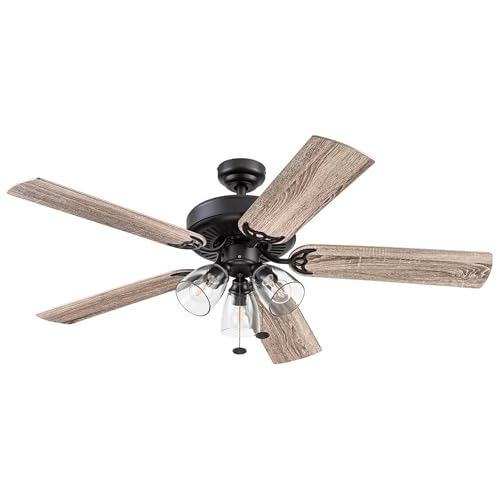
Prominence Home Saybrook 52″ Farmhouse LED Ceiling Fan

OPONL 52″ Low Profile Ceiling Fan with Remote
A Deeper Look At The Lineup
The JAYNLT 34″ Luxury Fandelier blurs the line between lighting and airflow, pairing a curved-arm chandelier silhouette with retractable blades that fold away when the fan is off. In a primary bedroom where the ceiling fixture is the visual anchor, that duality matters, because you’re choosing a piece that has to read as decor first and appliance second.
At a 34-inch span, it suits mid-size bedrooms rather than great rooms, and the frosted glass shades soften the integrated light. Unlike the flush-mount options below, this one needs adequate ceiling clearance to retract cleanly. For shoppers decorating around the fixture rather than around the room, this is the move.
What Stands Out
- Retractable blades keep the chandelier silhouette intact when idle, which matters in rooms where the light is the focal point
- Integrated lighting eliminates the need to choose between a separate fixture and a fan, simplifying ceiling wiring for most bedrooms
- Frosted glass shades diffuse the integrated bulbs evenly, avoiding the harsh spot effect common with exposed LED ceiling units
- 34-inch blade span is well matched to bedrooms roughly 120 to 200 square feet, where smaller fans struggle and larger ones overwhelm
Things To Consider
- Retractable mechanisms add moving parts that may need occasional cleaning and inspection to keep tracking smoothly
- Not the best match for ceilings under 8 feet, where the chandelier body crowds headspace even with blades tucked
Whose Bedroom It Belongs In
Bedrooms where the ceiling fixture is doing visual heavy lifting, and the homeowner wants one statement piece rather than a separate light and fan.
Where Another Pick Suits Better
Bedrooms with low ceilings or strict flush-mount needs will be happier with the OPONL 52″ Low Profile Ceiling Fan, which hugs the ceiling and skips the chandelier profile.
The Coralov 20-inch flush-mount ceiling fan is built for tight ceilings where a traditional hanging fan would crowd the bed. Its 20-inch blade span is on the compact side, so I think of it as a guest-room or small-primary pick rather than something for a sprawling master suite.
The integrated light and remote control cover two needs at once, and the black finish reads clean against white ceilings. Compare that to the JAYNLT fandelier above, which prioritizes decor over footprint, and the Coralov flips the priority, sacrificing visual drama for ceiling clearance.
Practical Advantages
- Flush-mount design fits ceilings down to about 7.5 feet, where downrod fans would feel intrusive
- Combined light and fan removes the need for a separate ceiling box and an extra fixture, which simplifies installation in older homes
- Remote operation means no wall switch hunt for people who already use their phone or nightstand for everything else
- Compact 20-inch footprint suits nurseries, guest bedrooms, and home offices where a 52-inch fan would look oversized
Honest Caveats
- A 20-inch blade span moves less air than 52-inch picks, so larger bedrooms may feel under-circulated on low speed
- Compact housings tend to trap dust on the top of the blades, so periodic wipe-downs keep noise from building over time
Built With In Mind
Bedrooms under 120 square feet, especially rentals, guest rooms, and nurseries where ceiling clearance matters more than raw airflow.
Skip It When
Rooms over about 150 square feet will move more air and feel more comfortable with the Prominence Home Saybrook 52″ Farmhouse LED, which has a much larger blade sweep.
The VEEJOOL caged ceiling fan leans into farmhouse-crystal styling with an 18-inch caged frame and recessed scroll-pattern details. At 18 inches, it sits at the small end of the lineup, so the appeal here is mood and texture more than room-shaking airflow.
I see this working best in bedrooms with shiplap, linen curtains, or warm wood furniture where the cage frame picks up the same handcrafted notes. Compared to the JAYNLT fandelier’s curved elegance, this one trades polish for a more rustic, lived-in look. It also runs six speeds through a remote, so you can dial down to a near-silent setting at night.
Features That Help
- Hand-painted finish gives each fan slight variation, which suits farmhouse and transitional rooms that already mix materials
- Six-speed range lets you drop to a near-silent night setting and climb back up to circulating speed in warmer months
- Caged frame protects the bulbs and blades in low-ceiling rooms where accidental bumps are more common
- Crystal inlays add subtle sparkle without the full chandelier effect, reading as detail rather than focal point
Points To Note
- An 18-inch span is best for rooms under about 100 square feet, where larger options would feel like overkill
- Open cage designs collect dust on inner surfaces, so a soft brush is the practical cleaning tool rather than a cloth
Quick Facts
Right Fit For
Bedrooms styled in farmhouse, rustic, or transitional looks where the ceiling fixture should feel handcrafted rather than modern.
Look Elsewhere When
People decorating in modern or minimalist bedrooms will find the cage framing visually busy, and the WINGBO 72″ Large Ceiling Fan offers a cleaner, sleeker profile.
The WINGBO 72″ ceiling fan is the heavyweight of the lineup, a 72-inch blade span paired with a reversible DC motor for year-round use. It also skips the integrated light, which sounds like a downgrade but actually means shoppers can pair it with any ceiling fixture they like. That flexibility is the real draw.
For vaulted primary bedrooms, large master suites, or covered patios where the room itself is the project, this much airflow is genuinely useful. Compare that to the JAYNLT fandelier above, which centers on aesthetics in a smaller room, and the WINGBO inverts the priorities: power and reach first, visual flourish second.
A Favorable Mix
- Reversible DC motor handles both summer downdraft and winter updraft, which can help with heating efficiency in rooms with tall ceilings
- 72-inch blade span moves serious air, so the fan can actually keep up with great-room-scale bedrooms rather than spinning weakly
- No integrated light means the ceiling box is free for the lighting design the homeowner already wants, avoiding compromise
- Six-speed remote lets you drop to a near-silent night setting while still having strong daytime airflow available
Practical Considerations
- 72-inch fans require careful mounting into a fan-rated electrical box, so older homes may need a retrofit before installation
- Gold and walnut blade finishes are bold, and may not blend with every bedroom palette without intentional styling
Best Suited To
Vaulted primary bedrooms, large master suites, and covered outdoor rooms where airflow volume matters more than integrated lighting.
Swap It Out When
Standard 8 to 9-foot ceilings will look visually swallowed by a 72-inch blade span, and the Prominence Home Saybrook 52″ is a better-scaled pick for typical bedrooms.
The Prominence Home Saybrook is the kind of fan I recommend when someone says “I just want a normal ceiling fan that works.” It is a 52-inch, five-blade indoor fan with a reversible motor and dual-finish blades, sized for typical bedrooms up to about 400 square feet.
The pull-chain control keeps things simple, which is honestly a feature for anyone who doesn’t want to babysit a remote. Where the VEEJOOL caged fan leans into texture, this one leans into reliability. The bronze finish and farmhouse lines feel familiar in a guest room or a rental, and the reversible motor helps push warm air back down in winter.
Where It Excels
- 52-inch blade span hits the sweet spot for most bedrooms between about 144 and 400 square feet, which covers a huge chunk of real homes
- Dual-finish blades let the homeowner flip the look without buying a second fan, refreshing the room on a budget
- Reversible motor supports year-round use, helping with both summer cooling and winter heating efficiency
- Pull-chain control sidesteps the lost-remote problem entirely, which matters in rentals and shared households
Small Caveats
- Pull-chain control requires reaching the fan from bed, which is less convenient than wall or remote operation for taller ceilings
- Pull-chain fans usually need a slightly longer downrod in vaulted rooms to keep the blades at safe height, adding to install time
Feature Snapshot
Made For
Standard bedrooms, rentals, and guest rooms where reliability and simple pull-chain operation matter more than remote-driven features.
Consider Something Else When
People who want statement styling should look at the JAYNLT 34″ Luxury Fandelier, which puts visual design at the front of the experience.
The OPONL 52″ low-profile ceiling fan pulls together the parts of this list that matter most to everyday shoppers: a 52-inch blade span, a flush-mount body for shorter ceilings, an integrated light, and a remote for speed and timing control. It is the most balanced pick on the lineup.
Unlike the WINGBO above, which skips lighting in favor of airflow scale, the OPONL keeps both functions and saves ceiling height. And unlike the Coralov 20-inch compact fan, it scales up to a full bedroom rather than a guest nook. For families who want one fan that handles light, airflow, and ceiling-clearance issues at once, this is the practical center of the lineup.
What Works In Its Favor
- Low-profile flush mount keeps the body close to the ceiling, which suits the 8-foot ceilings found in many older homes and rentals
- Remote-controlled speed and timing settings mean the fan can shut off automatically after falling asleep, which saves energy overnight
- 52-inch blade span delivers full-bedroom airflow for rooms between about 144 and 400 square feet without overpowering smaller spaces
- Combined light and fan removes the need to choose a separate fixture, simplifying ceiling-box planning for first-time installers
Points To Keep In Mind
- Low-profile designs trap more dust on the top of the blades since the housing sits closer to the ceiling, so annual cleaning matters more here
- All-in-one fixtures lock in the bulb type and brightness, so replacing the integrated light later usually means replacing the whole fixture
Perfect Match For
Family bedrooms on practical budgets, where one fan needs to handle light, airflow, and ceiling-clearance concerns in a single install.
Reach For A Different Pick When
Bedrooms with vaulted ceilings will get more usable airflow from the WINGBO 72″ Large Ceiling Fan, which is built for taller spaces and higher volume.
What Matters Most Before Choosing Ceiling Fans For Bedrooms
Room Size And Blade Span
The single biggest decision is matching blade span to square footage. Compact picks like the Coralov 20-inch and VEEJOOL 18-inch suit rooms under about 120 square feet, while 52-inch fans handle the typical 144 to 400 square foot range that covers most primary bedrooms. Anything larger, especially the WINGBO 72-inch, makes sense in vaulted rooms where air has to travel further. Picking too small means the fan works hard without moving enough air, and picking too large means wasted energy and a room that always feels breezy.
Ceiling Height And Mount Type
Flush-mount fans sit close to the ceiling and work down to about 7.5 feet, which is critical for older homes, basements converted into bedrooms, and rentals. Downrod-mounted fans need at least 8 feet of clearance to keep blades safely above head height. The OPONL 52-inch and Coralov 20-inch both use flush-mount designs, while larger chandelier-style and oversized picks generally need more vertical room. The honest read is that ceiling height is often the silent constraint shoppers forget about.
Noise And Motor Type
Bedroom fans live or die on quiet operation. DC motors tend to run smoother and sip less energy, while reversible motors add winter value by pushing warm air back down from the ceiling. Six-speed fans, including the VEEJOOL caged fan and the OPONL 52-inch, give finer control at the low end, which matters because sleep-friendly airflow usually lives at speed one or two.
Integrated Light Versus Separate Fixture
Some fans carry the lighting too, like the JAYNLT fandelier and OPONL 52-inch, while others skip the light and let the homeowner choose a separate fixture, like the WINGBO 72-inch. Shoppers decorating around an existing light plan should know which type they need before browsing, because returning a fan because the light was in the wrong spot is a real hassle.
Key Considerations Across These Picks
Pitfalls Shoppers Hit
The most common bedroom fan mistake is matching blade span to the room’s visual size rather than its square footage, which leads to undersized airflow in larger rooms and oversized hardware in smaller ones. Another trap is forgetting ceiling height: a downrod fan in an 8-foot bedroom will visually crowd the bed and may not meet safe mounting clearances. Finally, skipping the noise check is a frequent miss, and the difference between a 3-speed and 6-speed fan shows up most clearly at night.
Where The Extra Money Goes
Higher-tier picks like the JAYNLT fandelier and WINGBO 72-inch cost more because of materials, motor quality, and integrated features that budget fans skip. Retractable blade mechanisms, reversible DC motors, and hand-finished surfaces each add to the price, and the upgrade pays off most in primary bedrooms where the fan runs nightly for years. For a guest room used a few weekends a year, the OPONL 52-inch or Prominence Home Saybrook cover the same functional ground at a more approachable cost.
Frequently Asked Questions
What Size Ceiling Fan Do I Need For A Bedroom?
A 52-inch fan suits most bedrooms between roughly 144 and 400 square feet, while compact 18 to 20-inch fans work better in guest rooms, nurseries, or smaller bedrooms under about 120 square feet. Oversized 72-inch fans belong in vaulted rooms or large primary suites where extra reach matters.
Are Flush Mount Ceiling Fans Good For Low Ceilings?
Flush-mount ceiling fans hug the ceiling and work safely down to about 7.5 feet, which makes them the right pick for many older homes and basements. Hanging fans and chandelier-style picks need at least 8 feet of clearance to keep blades safely above head height.
How Many Speeds Should A Bedroom Ceiling Fan Have?
Six-speed fans give finer control at the low end, which matters most at night when airflow should feel like a gentle drift rather than a steady breeze. Three-speed fans still work, but the jump between settings is more noticeable and may make the lowest setting too weak or the next step up too strong.
Do Ceiling Fans With Built-In Lights Save Energy?
Combined light and fan fixtures reduce the number of separate electrical boxes and bulbs in a room, but the energy savings mostly come from replacing older bulbs with efficient LEDs rather than from the fan itself. The convenience factor is real, though, because one fixture handles two jobs.
Can A Ceiling Fan Help In Winter?
Fans with reversible motors can run clockwise at low speed to push warm air back down from the ceiling, which helps with heating efficiency in rooms with tall ceilings. The effect is subtle in flat-ceiling bedrooms but noticeable in vaulted spaces where heat otherwise pools out of reach.
Closing Remarks
The right ceiling fan for a bedroom is the one that matches your square footage, clears your ceiling height, and stays quiet enough that you forget it’s running. Decorative fans like the JAYNLT fandelier make the ceiling fixture part of the design, while workhorses like the WINGBO 72-inch handle vaulted rooms where airflow volume is the priority. For most bedrooms, a 52-inch pick in either flush-mount or farmhouse styling will cover the comfort basics without overcomplicating the room. Trust your ceiling height and your square footage first, then let the styling catch up to the rest of the room.