

Steam, lint, and stray gusts of wind all hit the same weak spot on a house: the vent cover on the side wall. The right one keeps moisture moving out, blocks pests and backdrafts, and quiets things down so the bathroom fan or dryer doesn’t whistle every time it kicks on. I’ve pulled together ten solid options across sizes, materials, and setups, from simple hooded caps to a full ceiling fan retrofit.
The Choices Worth Comparing
The Choices Worth Comparing

Solarisync 6 Inch Galvanized Steel Hooded Wall Vent Cover

Solarisync 6 Inch Hooded Wall Vent Cover for Dryer Vent

Gisafai 4 Pcs Round Soffit Vent Cover 4 Inch
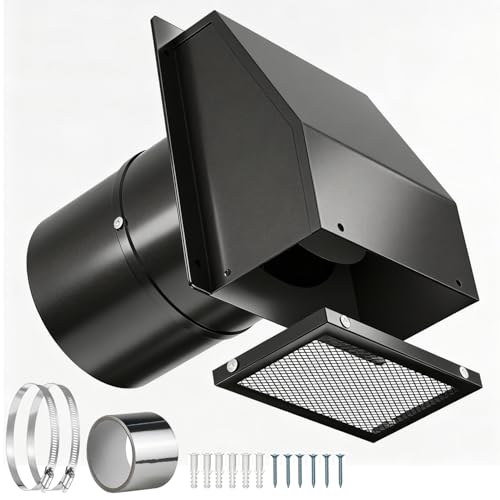
YigoEce 5 Inch Hooded Wall Vent Black
Solarisync 8 Inch Galvanized Steel Hooded Wall Vent Cover
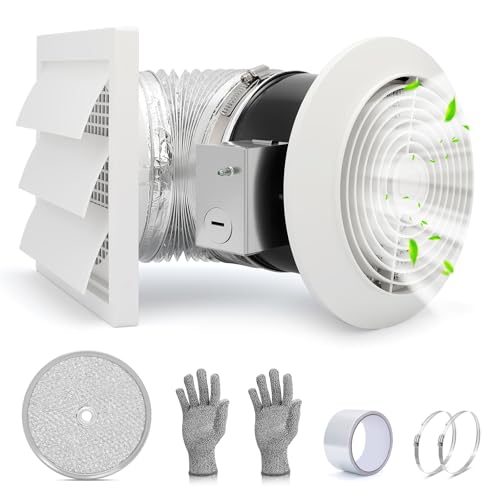
EJVFN 512M 6 Inch Wall Mounted Exhaust Fan

YigoEce 4 Inch Hooded Wall Vent White
YigoEce 4 Inch Hooded Wall Vent Black
YigoEce 5 Inch Hooded Wall Vent White

Panasonic WhisperFit Ceiling Mount Bathroom Exhaust Fan FV-0511VFL1
The Picks, Examined More Closely
Most homes route either the bathroom fan or the dryer through a 6-inch wall port, so this Solarisync cap lands right in the middle of the action. The hooded profile throws rain away from the duct opening, and the galvanized body shrugs off the kind of damp coastal air that turns plain steel orange in a season. For anyone retrofitting an older home, the 8-1/4 inch pipe section leaves enough room to splice into either rigid metal or flexible ducting without forcing a full rebuild.
Owners with a vent tucked into a busy exterior wall appreciate that the spring-loaded damper snaps shut on its own when the fan stops, so cold hallway air doesn’t sneak back indoors. It’s a step up from the bare-bones flapper caps you often see on builder-grade installs, and it comes with foil tape and clamps in the box so the install doesn’t turn into a second trip to the hardware store.
Benefits That Matter
- Galvanized steel body resists rust in wet or coastal climates.
- Hooded design sheds rain away from the duct mouth.
- Spring damper with foam gasket blocks backdrafts and softens noise.
- Bird-proof steel mesh keeps nests and pests out of the line.
- Includes foil tape and clamps for a sealed fit on day one.
Things To Consider
- The 6-inch size is specific; measure your duct before ordering since 4- and 5-inch versions look nearly identical at a glance.
- Galvanized steel can scuff paint if you tighten the wall screws too aggressively during install.
Feature Snapshot
Who It Suits Best
Homeowners with a standard 6-inch bath fan or dryer vent on an exterior wall, especially in regions with steady rain or coastal humidity.
Consider Something Else When
Pick the EJVFN 512M 6 Inch Wall Mounted Exhaust Fan instead if the existing fan unit itself is failing and you want an all-in-one replacement rather than just a new exterior cap.
This second Solarisync entry shares the same 6-inch galvanized steel shell as the first, but its 8-inch pipe length makes it a slightly better match for tight dryer runs where the duct already lands close to the wall surface. The hooded shape works the same job, throwing wind and water away from the opening so lint stays dry inside the duct. For a laundry room where moisture and heat get pushed out in long, steady blasts, that hood profile earns its keep over a flat louvered grille.
If your dryer is venting through an older flexible hose that wiggles every time the drum spins, the included clamps and foil tape give you a tidy way to seal the new cap to the existing line. Where the previous Solarisync leans toward broader bath-fan use, this one is tuned for the dryer crowd, and the slightly shorter pipe length keeps the assembly snug against the siding.
What Stands Out
- Galvanized steel handles the heat load of a dryer exhaust run.
- Hood blocks rain so lint stays dry inside the duct.
- Includes clamps to seal the connection without a second parts run.
Points To Note
- Lint builds up on the screen faster with dryer exhaust than with a bath fan, so plan a seasonal cleaning pass.
- Some owners find the 8-inch pipe length tight against thicker stucco or brick walls.
Made For
Anyone rerouting a dryer vent on an exterior wall and wanting a low-profile, weather-shedding cap that ships with the seal hardware.
Look Elsewhere When
The Solarisync 6 Inch Galvanized Steel Hooded Wall Vent Cover is the smarter call if your duct extends further from the wall and you need the longer 8-1/4 inch pipe length.
Round soffit covers are a different beast from hooded wall caps. They sit flush against the underside of an eave or soffit panel and rely on a louvered grille to keep weather and critters out while letting air move. This Gisafai pack ships four covers plus screws, which makes it the most efficient option when a home has multiple intake or exhaust points that need refreshing at once. The black stainless finish looks tidy against darker trim and tends to fade less under UV than painted plastic grilles.
Anyone working on an older home with a half-dozen tired plastic vents can swap them all out in one afternoon. The louvered design pulls air in or pushes it out, depending on which way the duct is routed, so the same cover handles both intake and exhaust roles across different rooms.
Well-Handled Touches
- Four-pack format trims the per-unit cost for whole-home refreshes.
- Stainless steel build outlasts plastic grilles in sun-exposed soffits.
- Screws included so install only needs a driver.
Worth Noting
- Round soffit covers don’t shed rain the way a hooded wall cap does, so they’re better matched to intake vents than downward-facing exhaust runs.
- The 4-inch opening is narrow; it won’t cover a 6-inch duct opening without trimming back the drywall or soffit panel.
Best Suited To
Owners refreshing multiple soffit vents at once who want matching grilles and a metal finish that won’t yellow over time.
Not Your Match When
The Solarisync 6 Inch Galvanized Steel Hooded Wall Vent Cover is the better fit if you need a wall-mounted cap that sheds rain off a sideways-facing duct.
The first thing you notice about this YigoEce cap is the foam gasket around the damper. That small piece of dense foam cushions the spring-loaded flapper as it closes, which is the difference between a soft click and the kind of metallic rattle that wakes up a light sleeper on the other side of the wall. In a home where the bathroom fan runs on a humidity sensor overnight, that foam seal keeps things quiet without choking the airflow.
Beyond the noise angle, this is a straightforward galvanized steel hooded cap built for 5-inch ducts, which is the size you find on a lot of mid-size bathroom fans and some smaller range hoods. The black finish blends into darker siding or stone veneer, and the hood profile keeps direct rain off the duct opening in any climate short of horizontal monsoon weather.
The Value In It
- Foam gasket on the damper cuts flap rattle noticeably.
- Galvanized steel body handles long-term outdoor exposure.
- Hood profile keeps water out of the duct opening.
- Works with bath fans, range hoods, and similar 5-inch runs.
Honest Caveats
- The black finish shows dust and water spots more than lighter colors.
- 5-inch ducts are mid-range; verify your duct diameter before ordering.
Key Specs
Perfect Match For
Anyone with a vent on a wall shared with a bedroom or nursery, where damper rattle would otherwise carry through the framing.
Skip It When
The YigoEce 5 Inch Hooded Wall Vent White is the cleaner choice if the cap needs to disappear against light-painted siding rather than stand out.
Eight-inch ducts aren’t everyday residential hardware. They show up on whole-house ventilation systems, larger commercial dryers, and HVAC fresh-air intakes that move serious volume. This Solarisync cap handles that scale with the same hooded, galvanized steel approach as its smaller siblings, scaled up to fit the wider pipe. Anyone replacing a rusted-out 8-inch cap on a workshop or in-law unit will appreciate the heavier gauge and the long 8-1/4 inch pipe that lands cleanly against the siding.
For a basement workshop or a garage with a high-CFM exhaust, the spring damper and bird-proof screen keep leaves, rodents, and backdrafts out of a longer duct run. The included foil tape and clamps mean a sealed install even on a flex line, and the hood profile means you don’t have to fabricate a custom rain shield out of sheet metal.
A Few Strong Suits
- Handles larger 8-inch ducts that smaller caps can’t fit.
- Galvanized steel takes the volume and velocity of heavy exhaust streams.
- Bird-proof screen protects longer duct runs from nesting.
- Hooded design sheds rain without a custom shield.
Trade Offs
- Larger opening passes more air, which means a stronger gust can rattle the damper harder in exposed locations.
- 8-inch ducting is uncommon in standard homes, so this is a specialty pick rather than an everyday cap.
Right Fit For
Owners of workshops, basement gyms, or accessory dwellings with 8-inch HVAC or exhaust runs that need a real hooded termination.
A Better Fit Elsewhere
The Solarisync 6 Inch Galvanized Steel Hooded Wall Vent Cover is the everyday residential choice if your duct is the more common 6-inch size.
This one breaks the pattern. Rather than a cover that goes on the outside of an existing duct, the EJVFN is a complete wall-mounted exhaust fan, including the grille, the motor, and a 15-inch retractable duct that telescopes to fit different wall thicknesses. For a basement bathroom with no existing ceiling fan, or a kitchen with no overhead hood venting, this lets you add real ventilation by cutting a single hole through the exterior wall.
The 80 CFM airflow handles spaces up to around 75 square feet, which covers a small bathroom or a compact kitchen. The retractable duct fits wall thicknesses from roughly 5-1/4 to 20 inches, so it works on standard wood framing as well as thicker masonry walls. CFM, short for cubic feet per minute, is the standard way to rate how much air a fan moves.
Positive Points
- All-in-one fan unit, no separate motor or duct purchase required.
- Retractable duct adapts to a wide range of wall thicknesses.
- 80 CFM rating suits small bathrooms and compact kitchens.
Points To Keep In Mind
- Requires cutting a hole through the exterior wall, which is a bigger commitment than swapping a vent cap.
- Wall-mount fans sit lower than ceiling units, so placement matters for headroom and aesthetics.
Feature Rundown
Who Should Grab It
Owners adding ventilation to a finished basement, a converted garage, or any room where there’s no existing exhaust duct to work with.
Reach For A Different Pick When
The YigoEce 4 Inch Hooded Wall Vent White makes more sense if you just need to cap an existing 4-inch duct, not install a whole new fan.
Small bathrooms and half-baths often run on 4-inch ductwork because the fans are smaller and the air volume is lower. This YigoEce cap matches that scale with a hooded galvanized body, a spring damper with a foam gasket, and a white finish that disappears against most painted siding. If you’ve ever stared at a rust-streaked brown vent on a white wall and wished it would just blend in, this is the kind of cap that solves that minor daily annoyance.
The foam gasket around the damper is the quiet hero here. Smaller ducts move less air, but the flap can rattle just as loudly when wind catches the hood. The gasket cushions that closure and keeps the wall from humming when the fan cycles off.
Advantages To Know
- 4-inch fit matches smaller residential bath fans.
- Foam gasket quiets the damper on every cycle.
- White finish blends with most painted exteriors.
Some Limits To Know
- 4-inch ducts don’t move as much air as 6-inch versions, so this won’t work as a dryer vent.
- White finish can show dirt and mildew in shaded, humid spots.
Whose Shelf It Belongs On
Owners of smaller bathrooms or powder rooms with 4-inch ductwork who want a quieter, low-visibility cap.
Swap It Out When
The Solarisync 6 Inch Galvanized Steel Hooded Wall Vent Cover is the better match if your duct is the more common 6-inch size.
Same body as the white version, different finish. This black YigoEce cap fits the same 4-inch ducts with the same foam gasket on the spring damper, but the darker coating hides the kind of dust, mildew, and water staining that builds up on a north-facing wall over a few seasons. Anyone installing on a shaded exterior or a garage wall where the cap won’t get rinsed regularly will appreciate not having to wipe it down every spring.
For utility spaces where appearance matters less than function, this is the more forgiving color choice. The galvanized steel and hood profile handle weather the same way the white sibling does, so the only real trade-off is aesthetic.
Everyday Advantages
- Black finish hides dust and mildew between cleanings.
- Foam gasket on the damper keeps the closure quiet.
- Galvanized body holds up under outdoor exposure.
Practical Considerations
- Black shows water spots and soap residue more visibly on close inspection.
- Limited to 4-inch duct runs, which rules it out for most dryer vents.
Built With In Mind
Garages, basements, and shaded exterior walls where the cap will collect dust or pollen between seasonal cleanings.
Where A Sibling Pick Shines
The YigoEce 4 Inch Hooded Wall Vent White is the cleaner-looking choice on bright painted siding where a dark cap would stick out.
This is the white-finish version of the 5-inch YigoEce cap, and on light-painted siding it virtually disappears. For a homeowner focused on curb appeal rather than utility-room function, this delivers the same foam-gasketed damper and galvanized steel hood as the black version, just in a color that fades into a beige, cream, or white exterior.
For most folks installing on a typical residential exterior, white is the path of least resistance. You don’t have to think about whether the dark cap clashes with the trim, and a quick rinse once a year keeps it looking new.
Real-World Strengths
- White finish blends with light-colored siding.
- Foam-gasketed damper keeps the closure quiet on every cycle.
- 5-inch size fits many mid-size bath fan and range hood ducts.
Where It May Fall Short
- White paint can yellow over years of UV exposure, depending on the coating quality.
- Visible against darker exteriors, which may matter for some facades.
The Right Fit
Anyone matching the cap to white, cream, or pale-painted siding and prioritizing a clean, low-profile look over color flexibility.
Another Choice May Suit
The YigoEce 5 Inch Hooded Wall Vent Black handles shaded or soffit-mounted installs where the cap would disappear into darker trim anyway.
The Panasonic WhisperFit is in a different category from the rest of this list. It’s not an exterior cap; it’s a complete ceiling-mounted exhaust fan with a built-in dimmable LED light, designed to retrofit into an existing ceiling housing. For a bathroom where the original fan is loud, underpowered, or just plain tired, swapping the whole unit delivers the kind of airflow upgrade no exterior cap can match.
The standout feature is the selectable CFM, short for cubic feet per minute, which lets you dial in 50, 80, or 110 CFM depending on the size of the bathroom and the length of the duct run. A smaller half-bath doesn’t need the same airflow as a primary suite, and being able to tune the fan on the fly avoids the noisy over-airflow problem that comes with oversizing the unit. The integrated dimmable LED adds warm light plus a low-power night-light mode, which is a meaningful bonus for late-night bathroom trips.
Standout Benefits
- Selectable 50/80/110 CFM matches airflow to room size.
- Integrated dimmable LED light with night-light mode.
- DC motor keeps the unit quiet enough for adjacent rooms.
Factors To Consider
- Requires opening the ceiling and wiring the unit, so it’s a bigger project than a cover swap.
- Costs notably more than any cap on this list, which makes sense only when the existing fan is being replaced.
Quick Facts
Best Suited To
Anyone replacing a tired or noisy ceiling fan in a bathroom and wanting adjustable airflow plus integrated lighting in a single retrofit.
Where Another Pick Suits Better
The Solarisync 6 Inch Galvanized Steel Hooded Wall Vent Cover is the right call if the existing fan still works fine and you just need a fresh exterior cap.
Factors To Consider When Choosing Bathroom Exhaust Fan Cover
Measure the duct diameter first. Most residential bath fans run on 4-inch or 6-inch ductwork, while dryers almost always use 4-inch ducts, and larger HVAC and commercial runs step up to 8 inches. A cap that’s even a half-size off won’t seat properly against the pipe and will leak air, which defeats the point of installing one.
Hooded wall caps versus flat louvered covers is the next decision. Hooded caps shed rain and block wind-driven backdrafts, which matters on walls that face the prevailing weather. Louvered covers are cheaper and disappear against siding, but they let more weather in and don’t seal as tightly when the fan isn’t running.
Material matters more than people expect. Galvanized steel handles most climates for years, while plain steel rusts within a season on a north-facing wall. Stainless steel costs more but is the right call in coastal or high-humidity regions where even galvanized finishes eventually pit.
A spring-loaded damper with a foam gasket is worth a small premium on any wall shared with a quiet room. The foam cushions the closure, so the flap doesn’t rattle each time the fan cycles off. A bare metal-on-metal damper is louder than most people realize until they replace it.
For owners replacing an entire fan rather than just a cap, look for selectable CFM and a DC motor. Adjustable airflow matches the fan to the room size, and DC motors run quieter and use less power than older AC units. A unit with an integrated dimmable LED adds functional light without a second fixture to wire.
Key Considerations Across These Picks
Common Shopping Slip Ups
The most frequent mistake is ordering the wrong duct size. A 6-inch cap doesn’t press-fit onto a 4-inch duct, and a too-large cap leaves a gap that lets in water and pests no matter how tightly you cinch the clamps. Pull the existing cap off and measure the bare pipe before you order, or at least confirm the diameter in the product listing.
Another trap is choosing a flat louvered cover where a hooded cap is needed. Louvered covers look clean on a catalog page, but on a windward side of the house they let rain blow straight into the duct. For any vent that faces weather head-on, a hooded profile earns its keep within the first storm.
Why Top Tier Costs More
The premium on higher-tier covers mostly buys three things: galvanized or stainless steel bodies instead of plain painted steel, foam-gasketed dampers instead of bare flappers, and tighter manufacturing tolerances that keep the cap seated firmly against the duct. Each of those upgrades shows up over years of use, not in the first week, which is why budget caps look fine on day one and fail within a season.
For a vent on a quiet wall or in a corrosive coastal climate, paying a bit more up front usually means the cap is the last thing you’ll think about for the next decade.
Frequently Asked Questions
What size cover do I need for a standard bathroom exhaust fan?
Most residential bathroom fans use either a 4-inch or 6-inch duct. Measure the bare duct at the wall before ordering, since the grille measurement on the old cap doesn’t always match the duct underneath. A 4-inch duct is typical for smaller half-baths, while 6-inch ducts show up on larger primary bathrooms and many mid-size range hoods.
Can I use the same cover for a dryer vent and a bathroom fan?
A 4-inch dryer-rated cap technically fits on a 4-inch bath fan duct, but the air volumes and temperatures are different. Dryer exhaust carries lint that clogs screens faster, so dryer-rated caps usually have wider mesh and stronger dampers. For longest life, pick the cap designed for the appliance it’s venting.
How often should I clean the vent cover screen?
Plan on a quick visual check every few months and a thorough cleaning at least once a year. Lint, pollen, and dust build up faster on a dryer vent, while a bath fan cap in a humid climate may collect mildew. A Phillips screwdriver and a brush handle most cleanings without removing the whole cap.
Do foam-gasketed dampers really make a difference?
Yes, especially on a wall shared with a bedroom or nursery. The foam cushions the metal flapper when it closes, so you get a soft click instead of a sharp rattle. On a quiet duct with low airflow, the difference is the gap between barely noticeable and genuinely annoying.
Should I replace just the cap or the whole fan?
Replace just the cap if the existing fan still moves air and runs quietly. The cap fails long before the fan motor does, because it’s exposed to weather and UV. If the fan itself is loud, weak, or rattles, then a full unit like the Panasonic WhisperFit makes more sense than another cap swap.
Closing Remarks
The right bathroom exhaust fan cover comes down to duct size, wall orientation, and how much noise you can tolerate on the other side of the wall. Measure twice, match the cap to the duct, and don’t undersell a foam gasket on a quiet wall. Any of these ten will do the job when the fit is right.