

That low strip of light tucked along the floor where the wall meets the trim can quietly change how a room feels. I’ve spent enough time staring at dark corners and half-lit hallways to know that the right baseboard glow makes a hallway feel safer at night, a media room feel cinematic, and a basement rec space feel finished. The trouble is figuring out which channel, strip, and fixture combination actually delivers clean, even light without turning the project into a weekend of drywall dust.
I pulled together ten options spanning aluminum channels, COB strips, plug-in under-cabinet bars, and battery-powered pucks, so anyone from a first-time DIYer to a seasoned renovator can find a fit. Channels give the strips a finished look. Strips provide the actual illumination. Fixtures bundle both into one ready-to-mount package. Most homes need a mix.
An Overview Of The Picks
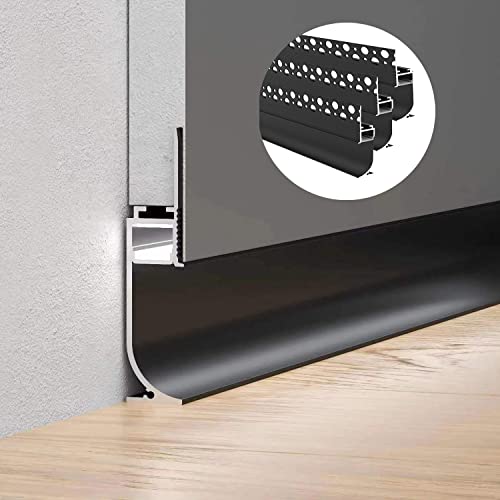
Besseto Black Baseboard LED Aluminum Channel 3-Pack

EMITEVER 24V COB LED Strip Light 4000K 32.8ft

TORCHSTAR 4-Pack 12 Inch 5CCT Under Cabinet Light

TORCHSTAR 4-Pack 22 Inch 5CCT Under Cabinet Light

Besseto Plaster-in LED Aluminum Channel 6-Pack

Reoshine Motion Sensor LED Puck Light 3-Pack

BTF-LIGHTING COB LED Strip Light 3000K 16.4ft

Besseto Plaster LED Channel Trim Edge 6x2m

TORCHSTAR Ultra-Slim LED Under Cabinet Light 36″
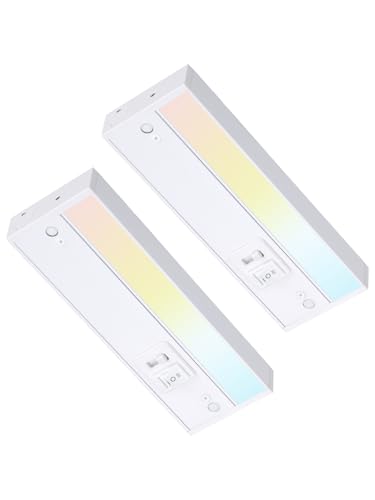
TORCHSTAR 2-Pack 8 Inch 5CCT Under Cabinet Light
Why These Options Stand Out
The Besseto black surface-mount channel solves the most common baseboard complaint: visible LED dots. Three 2-meter aluminum tracks ship with a milky diffuser, twelve end caps (six with cable holes, six without), screws, and a joiner for spanning longer runs. For a homeowner retrofitting a hallway where the existing trim stays put, this kit lays flat against the wall and reads as a slim architectural detail rather than tacked-on lighting.
Cutting the channel to length is straightforward with a hacksaw or miter saw, and the diffuser snaps in without tools once the strip is laid inside. For anyone nervous about a full drywall remodel, this is a sensible starting point that still delivers a clean, finished appearance.
Features That Help
- Milky diffuser softens individual diode dots into one continuous wash of light
- Black aluminum body blends into dark baseboards or creates contrast on white walls
- Included joiner lets two pieces meet cleanly for runs over six feet
- Cuts with standard tools, so odd-length walls are no problem
- End caps with and without holes give flexibility for wiring entry points
Things To Consider
- Strips and a driver are sold separately, so the channel alone won’t light up
- Surface-mount means the channel sits proud of the wall, which some renovators dislike
Whose Shelf It Belongs On
DIYers who want a clean baseboard glow without opening up drywall and don’t mind sourcing their own strip and driver.
Skip It When
Anyone seeking a finished, trimless look should reach for the Besseto Plaster-in LED Aluminum Channel instead, since it recesses into the wall.
COB (Chip-on-Board) technology packs hundreds of diodes per meter so closely that the strip reads as a solid line of light rather than a dotted ribbon. The EMITEVER 24V roll stretches 32.8 feet with 4800 LEDs, runs at a neutral 4000K, and carries UL listing for residential circuits. Pairing this with the Besseto black channel from item one gives a homeowner the dotless glow that ordinary 5050 strips can’t match.
The 24V system requires a compatible DC driver, sold separately, which is a small planning step but pays back in longer continuous runs without voltage drop. For long hallways, stair runs, or full-perimeter basement baseboards, this strip is the engine that does the heavy lifting.
Real Benefits
- Dense diode layout eliminates spotting, even in shallow channels
- 32.8-foot roll covers most residential baseboard runs without splices
- UL listing adds a layer of confidence for in-wall residential wiring
- Neutral 4000K reads as clean white without feeling clinical
- 24V architecture handles longer wire runs with less brightness loss
Worth Noting
- Requires a separate 24V DC power supply matched to the load
- Cutting and soldering at corners takes planning for clean terminations
Key Specs
Who Will Love This
Homeowners planning long, continuous baseboard runs who want dotless output and don’t mind ordering a matching 24V driver.
Where Another Pick Suits Better
For plug-and-play simplicity without driver math, the TORCHSTAR 22-inch 5CCT bars from item four are a friendlier starting point.
Short 12-inch bars are the unsung heroes of baseboard lighting, especially in toe-kick applications under cabinets or around short wall segments. This TORCHSTAR 4-pack ships aluminum-bodied fixtures with selectable 5CCT (Correlated Color Temperature, meaning five switchable white tones from warm to cool) tuning and a CRI90 rating (Color Rendering Index, where 90+ means colors look close to natural daylight). The CRI90 matters when the baseboard glow hits a colorful rug or wood floor, since lower-CRI strips wash out finishes.
Linking bars together with the included connectors means no ROMEX (the standard indoor electrical wiring cable) runs for many layouts. For tight spaces where a 22-inch bar won’t fit, this pack covers the gap.
A Favorable Mix
- Five selectable color temperatures cover warm to cool in one fixture
- CRI90 renders wood tones and fabrics with realistic color
- Linkable connectors avoid hardwiring between adjacent bars
- Aluminum housing manages heat for longer LED life
Points To Note
- Four-pack quantity may overshoot a single small project
- 12-inch length means more connection points for longer runs
Built With In Mind
Homeowners targeting short toe-kick segments or display niches where tunable color temperature is a must.
Not Your Match When
For continuous dotless strip applications, the EMITEVER 24V COB strip from item two is the better engine.
The 22-inch version of the TORCHSTAR 5CCT series is the sweet spot for standard 24-inch cabinet runs. Four aluminum bars offer the same tunable white, linkable design as the 12-inch pack, but each bar covers more ground per fixture. Installation accepts both hardwired and plug-in setups, so renters and owners alike can find a route to power.
Where the shorter pack from item three covers awkward gaps, this set handles the bulk of a baseboard layout with fewer connection points. Pair it with the Besseto surface channel if you want a continuous look, or run it bare under a cabinet lip.
The Case For It
- Mid-length bar reduces connection count for whole-room layouts
- Hardwired and plug-in options suit different skill levels
- Accessory compatibility with the rest of the TORCHSTAR classic series simplifies future expansion
- 5CCT dial-in lets a room shift from warm evening to cool task lighting
Honest Caveats
- Not dimmable through a standard wall dimmer without specific compatible hardware
- Four-pack count leaves leftovers for small projects
Key Specs
Right Fit For
Anyone retrofitting a kitchen, bar, or media room baseboard who wants tunable white without soldering strips.
A Better Fit Elsewhere
For purely ambient baseboard glow with no driver math, the Reoshine battery pucks in item six are simpler still.
The Besseto plaster-in channel is the trimless recessed option for renovations where the drywall is open or being replaced. Six 1-meter lengths accept LED strips under 12 mm wide and disappear into a plastered seam so the finished ceiling or wall shows only a soft glow, no visible track. The milky diffuser keeps the strip looking like one continuous line.
Compared to the surface-mount Besseto from item one, this version requires planning at the drywall stage. In return, the result looks architectural rather than retrofitted, which is the point.
Everyday Perks
- Trimless profile reads as a built-in lighting feature, not an add-on
- Accepts most flexible and rigid strips under 12 mm wide
- Milky cover hides diode hotspots for smooth light output
- Cuts to length for custom layouts around corners and odd spans
Trade Offs
- Best installed during drywall work, not after walls are closed up
- LED strip and driver must be sourced separately
Who Should Grab It
Remodelers and builders who want a seamless, recessed baseboard or cove detail and can plan the channel into the drywall phase.
Look Elsewhere When
Anyone working with finished walls should reach for the surface-mount Besseto channel from item one instead.
The Reoshine pucks are the no-tools, no-wiring escape hatch in this roundup. Each puck runs on AA batteries, sticks to metal or any surface with the included magnetic plate, and switches on with motion. Four operating modes (continuous on, auto night, auto day and night, off) handle stair safety, closet use, and baseboard accent duty equally well.
For renters who can’t drill, or homeowners who want light along a dark hallway without an electrician, this is the lightest-commitment option on the list. The trade-off is brightness, since each puck tops out around 150 lumens, enough for accent glow, not primary illumination.
Benefits That Matter
- Zero wiring or drilling suits rental properties and quick installs
- Magnetic mount repositions easily as needs change
- Motion sensor cuts down on battery waste in stair runs
- Dimmable output adjusts to ambient or task needs
Points To Keep In Mind
- AA batteries need periodic replacement in high-traffic spots
- Single-puck output suits accent duty, not whole-room lighting
Made For
Renters, dorm rooms, and stair or closet safety upgrades where drilling and wiring are off the table.
Swap It Out When
For permanent, even baseboard illumination, the TORCHSTAR 22-inch bars in item four deliver far more light per linear foot.
BTF-LIGHTING’s COB (Chip-on-Board) strip leans into warm 3000K output at a hefty 596 lumens per foot. That’s substantially brighter than the typical 5050 strip, which is meaningful when the baseboard glow has to read from across a room. The 16.4-foot reel is half the length of the EMITEVER roll but trades run length for output density.
The warm 3000K tone suits living areas, bedrooms, and any space where a clinical white baseboard would feel out of place. Owners who have used the EMITEVER strip from item two will recognize the dotless COB behavior here, just with a different color personality.
The Good Stuff
- 596 lumens per foot is high-output for demanding ambient applications
- Warm 3000K pairs well with wood floors and traditional interiors
- FCOB (Flip Chip-on-Board) layout delivers soft, even light without hotspots
- Dense LED count makes the strip forgiving in shallow aluminum channels
A Few Limitations
- Half the run length of comparable 24V COB strips
- Requires a separately purchased 24V DC driver sized to the load
Key Specs
Best Suited To
Anyone targeting cozy living spaces, bedrooms, or media rooms where a warm, high-output baseboard glow is the goal.
Consider Something Else When
For longer continuous runs without splicing, the 32.8-foot EMITEVER strip from item two covers more ground.
The trim-edge Besseto variant sits between the surface-mount and full plaster-in options. Six 2-meter channels with a milky diffuser are designed to integrate cleanly where tile meets drywall, leaving a hairline seam rather than a visible track. For bathroom or kitchen baseboard runs where tile is part of the picture, the result is a tidy reveal at the floor line.
Like the other Besseto channels, the strip and driver are not included, so plan to pair this with a strip like the BTF-LIGHTING reel from item seven. Installation is friendlier than full plaster-in but still cleaner than surface-mount.
Strong Points
- Trim-edge profile handles tile-to-drywall transitions neatly
- Milky diffuser smooths the strip into continuous-looking light
- Cuts to fit custom wall lengths with standard tools
- Adhesive-backed strips mount inside without extra fasteners
Softer Spots
- Strip and driver sold separately, adding to total project cost
- Best paired with a planned remodel rather than a quick refresh
Perfect Match For
Tilers and bathroom or kitchen remodelers who want a clean baseboard reveal where tile meets the wall.
Reach For A Different Pick When
For a no-dust retrofit on finished walls, the surface-mount Besseto channel from item one installs without drywall work.
The TORCHSTAR ultra-slim uses a side-emitting structure, where LEDs fire sideways into a diffuser panel rather than straight down, to eliminate glare on countertops and floors. The 2.8-inch wide panel and 120-degree beam angle spread light evenly across the surface below, which is meaningful under baseboards that frame a kitchen prep zone or a display shelf.
At 36 inches, this bar covers the longest single span among the TORCHSTAR bars in this roundup. Owners who prefer fewer fixtures and cleaner sightlines get a panel that nearly disappears when mounted.
A Few Highlights
- Side-emitting design removes harsh hotspots under cabinet lips
- Wide 120-degree beam fills a 36-inch span without dim edges
- Slim profile tucks into shallow baseboard reveals
- Even light distribution suits reading and food prep tasks
Possible Compromises
- Longer bar limits placement in short wall segments
- Hardwired install may need an electrician for some households
Who It Suits Best
Homeowners outfitting long countertop or baseboard spans who want glare-free, even task lighting in one fixture.
Where A Sibling Pick Shines
For shorter spans under 24 inches, the TORCHSTAR 22-inch bars from item four fit tighter layouts.
The 8-inch TORCHSTAR pair handles the smallest baseboard details. Two aluminum bars with 5CCT tuning cover step risers, narrow wall nooks, and short gaps between doors where longer bars from items three or four don’t fit. It’s also the lowest-quantity option in the TORCHSTAR 5CCT family, useful for filling in leftover zones after a larger install.
CRI90 color rendering still applies here, so the same natural color reproduction that benefits the longer bars carries through. For accent duty or stair lighting where the goal is a small touch of baseboard glow, this pack punches above its size.
The Upside
- Compact 8-inch length fits tight gaps and step risers
- 5CCT tuning matches the longer TORCHSTAR bars for visual consistency
- Two-pack quantity suits small fill-in projects
- CRI90 keeps color rendering faithful to finishes nearby
Factors To Consider
- Two-pack may not cover a full baseboard layout alone
- Multiple short bars mean more visible connection points in long runs
The Right Fit
Anyone finishing a baseboard layout with leftover short spans, or anyone upgrading step lighting for safety.
Not Your Match When
For full-perimeter baseboard glow, the EMITEVER 32.8-foot strip from item two covers more ground with one continuous run.
Picking The Right Baseboard Lighting Setup
Baseboard LED projects break into three layers that don’t always ship together. Channels shape the look and hold the strip. Strips produce the light. Drivers and fixtures supply power. Skipping the planning step on any layer usually means returning a box later, so think through all three before buying.
The biggest decision is whether the channel sits on the wall or inside it. Surface-mount channels from Besseto retrofit cleanly onto finished trim, while plaster-in channels require open drywall but disappear into the wall for an architectural look. Tile-edge channels land in between, perfect for bathrooms where tile and drywall meet at the floor line.
Color temperature matters more than people expect. Warm 2700K to 3000K feels residential and cozy, while 4000K reads as cleaner and more modern. Tunable 5CCT bars like the TORCHSTAR family let a single fixture shift between tones, which is helpful when a room serves multiple moods. CRI90 or higher keeps wood floors and fabrics from looking washed out under the glow.
For runtime and brightness, COB strips win on dotless appearance but need a matched 24V driver. Standard 5050 strips cost less but show individual diodes unless paired with a deep diffuser. Lithium and alkaline battery pucks trade brightness for installation simplicity, ideal in rentals or stair safety applications.
Finally, plan the wiring path before ordering. Plug-in drivers simplify DIY work. Hardwired runs hide the cable but may require an electrician depending on local rules. Either way, measure twice, cut once, and leave a service loop at every connection so future swaps don’t mean opening the wall again.
Common Shopping Slip Ups
The first trap is buying a channel and strip from different brands without checking internal width. A 10 mm strip in an 8 mm channel simply won’t seat. The Besseto plaster-in lines take most strips under 12 mm wide, but it’s worth a tape measure before clicking through.
The second slip is mismatched voltage. A 24V strip on a 12V driver glows faintly, while a 12V strip on a 24V driver is a paperweight. COB strips like the EMITEVER and BTF-LIGHTING runs need 24V DC supplies specifically, and the supply must be sized for the load in watts, not just the voltage.
The third miss is forgetting the diffuser depth. A shallow diffuser on a sparse-dot strip shows every diode. COB strips are forgiving here, but standard strips paired with low-profile channels look like a string of pearls rather than a smooth glow.
What The Higher Tier Buys
Premium COB strips cost more because the chip density is dramatically higher, sometimes 480 LEDs per meter compared to 60 on a basic 5050 strip. That density is what kills the dotted look in shallow channels. Side-emitting panels like the TORCHSTAR ultra-slim add another layer of refinement by directing light sideways into a diffuser, eliminating glare on the surface below.
Higher-tier channels use thicker aluminum for better heat dissipation, which extends LED life. Trimless plaster-in profiles also include better-formed flanges that take joint compound cleanly, so the seam disappears in the finished wall. None of this matters on a single short run, but on a whole-home baseboard project, the upgrades pay back in finish quality and longevity.
Frequently Asked Questions
What’s the difference between COB and standard LED strips? COB (Chip-on-Board) strips pack hundreds of tiny diodes per meter, producing a smooth, dotless line of light. Standard 5050 strips use fewer, larger diodes that show as individual points unless paired with a deep diffuser.
Do baseboard LED channels need a separate driver? Yes, channels are passive housings. The LED strip inside requires a matched driver (24V DC for most COB strips), which is sold separately in most cases.
Can I install baseboard LED channels without opening the drywall? Surface-mount channels like the Besseto black profile sit on top of the finished wall. Plaster-in or trimless channels require open or replaced drywall for a seamless look.
What’s CRI90, and why does it matter? CRI (Color Rendering Index) measures how accurately a light source reveals colors compared to natural daylight. CRI90 or higher keeps wood tones, fabrics, and skin looking natural under the glow, which matters in living spaces.
How long do COB LED strips typically last? Quality COB strips in well-ventilated aluminum channels commonly run 30,000 to 50,000 hours, which for a few hours of evening use per day translates into well over a decade of service before noticeable dimming.
Closing Remarks
Baseboard LED lighting rewards planning more than spending. Pick the channel style that fits the wall, the strip that fits the channel, and the driver that matches the strip. From there, color temperature and CRI decide whether the room feels cozy or clinical. The picks above cover the most common combinations, and any one of them gets a baseboard glowing the same week it arrives.