

I spent years buying whatever bulbs were cheapest, then watching half of them flicker out within a year. The right pick actually depends on what the bulb is supposed to do, whether that’s mood-setting in a living room, lighting a porch until sunrise, or replacing a single dead lamp without overspending. I put together seven options that cover the common scenarios I keep hearing about from friends and family, mixing smart, vintage, dusk-to-dawn, and basic LED replacements.
A Side-By-Side Look

Philips Hue Smart 60W A19 LED Bulb (2 Pack)

dalattin 24 Pack LED Bulbs Daylight White 5000K A19

dalattin A19 Dusk to Dawn Light Bulbs (4 Pack)
Philips Hue Smart 40W B39 Candle Bulb (E12)

Brightever A19 LED Edison Light Bulb Dimmable

dalattin 12 Pack Vintage LED Edison Bulbs Dimmable
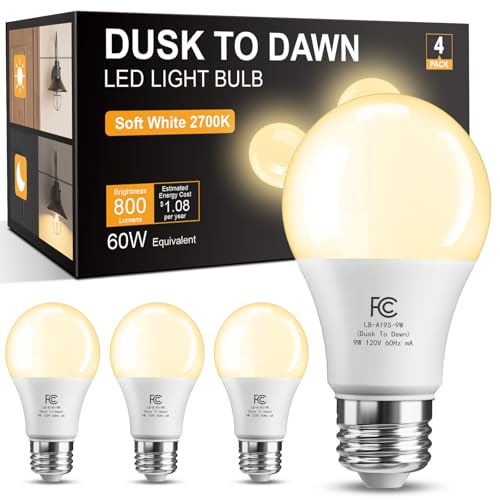
TJOY Dusk to Dawn Light Bulb Outdoor 2700K
The Picks, Examined More Closely
This A19 from Philips Hue sits in the middle of the smart-bulb conversation for a reason. The standard E26 base drops into most table lamps and ceiling fixtures, and the 800 lumen output roughly matches a 60W incandescent, which matters when you’re swapping warm bulbs in a reading lamp.
Bluetooth control works straight out of the package for one room, so newcomers don’t need a hub on day one. Add a Hue Bridge later and the bulbs unlock automations, away-from-home control, and stable connections across larger spaces.
Useful Highlights
- Color and tunable white across millions of shades for movie nights or morning routines
- Works with Alexa, Google Assistant, and Apple HomeKit through the app or voice
- Bluetooth quick start avoids buying a hub just to try a couple of bulbs
- Two-pack pricing makes sense for a living room setup
Trade Offs
- Without a Hue Bridge, you give up remote access and most automations
- Wi-Fi consumption can climb in large homes with many bulbs on the same bridge
Feature Snapshot
Who It Suits Best
Beginners building a smart-home lighting system around voice assistants and apps.
Look Elsewhere When
You only need a simple daylight replacement, in which case the dalattin 24 Pack is a more practical fit.
When a friend asked me to refresh every fixture in a recently purchased condo, this 24-pack from dalattin was what I reached for. The 5000K daylight tone reads as crisp and clinical, which is exactly what most garages, offices, and kitchens want.
Each bulb draws 9 watts while putting out 800 lumens, replacing a 60W incandescent without changing the look of the room. The 80+ CRI rating means colors under the bulb still look natural, so wood cabinets and food on the counter don’t go flat.
Everyday Advantages
- Twenty-four bulbs cover a whole-home swap in a single order
- Daylight 5000K keeps task spaces focused in home offices and kitchens
- UL listing gives confidence for permanent fixture installations
- Standard E26 base fits anything already accepting a 60W bulb
Worth Noting
- Non-dimmable, so pairing with old dimmer switches causes flicker
- 5000K can feel harsh in a bedroom or media room
Made For
Anyone replacing an entire household of aging incandescent bulbs on a tight budget.
Consider Something Else When
You want warm, decorative light, since the dalattin 12 Pack Vintage LED Edison Bulbs suits that style better.
Porch lights left on all day drive me crazy, and the dalattin dusk-to-dawn bulb solves that with a built-in photocell sensor. The sensor only reacts to natural sunlight, so the bulb behaves correctly even when it sits near another outdoor fixture.
At 9W it puts out the same brightness as a 60W incandescent, and the 5000K daylight tone keeps walkways and entryways visible from the street. Owners commonly report the 15,000-hour lifespan lasting several years of typical porch duty.
Benefits That Matter
- Automatic on at dusk, off at dawn with no apps or timers to manage
- Photocell ignores neighboring fixtures, reducing false triggers
- Daylight 5000K output works well for security and path lighting
- Four-pack covers front, side, and back entries
Some Limits To Know
- Daylight color feels stark compared to warm porch bulbs like the TJOY
- The sensor needs the bulb mounted where it can actually see the sky
Quick Facts
Right Fit For
Homeowners who want hands-off security and entryway lighting without touching a timer.
A Better Fit Elsewhere
You prefer a warmer welcome glow, in which case the TJOY Dusk to Dawn bulb at 2700K is a more inviting choice.
Chandeliers and candelabra sconces call for the smaller B39 candle shape with an E12 base, and this Hue version handles both decorative fixtures and modern smart setups. The 450 lumen output reads as the equivalent of a 40W incandescent, which is plenty for a dining chandelier.
Like the A19 Hue earlier in this list, it works over Bluetooth for simple on-off and dimming, with a Hue Bridge unlocking full color scenes. The narrow form slips into fixtures where a standard A19 simply does not fit.
Practical Advantages
- Candle shape fits chandeliers, sconces, and decorative fixtures
- Color and tunable white for dinner scenes and holidays
- Matter support keeps it compatible with future smart-home hubs
- E12 base matches the older candelabra sockets in many homes
Honest Caveats
- Single-pack pricing makes multi-fixture rooms more expensive
- Lower lumen output means dim hallways if used as the only light source
Best Suited To
Anyone with decorative fixtures who also wants full smart-bulb control.
Swap It Out When
You need a brighter workhorse bulb, since the dalattin 24 Pack is the more practical everyday option.
There’s a reason vintage filament bulbs keep coming back. The Brightever A19 LED leans into that exposed-filament look while staying efficient at 8 watts, paired with a clear glass shade that shows off the warm glow.
The 360-degree beam angle fills a room from most directions, so a single bulb in a pendant lamp reads as evenly lit from floor to ceiling. Dimmable compatibility lets you tune the mood for movie nights without swapping fixtures.
Positive Takeaways
- Exposed filament design doubles as decor, not just lighting
- 360-degree output lights up pendant fixtures evenly
- Dimmable for relaxed evenings and accent scenes
- Standard E26 base works in lamps, pendants, and sconces
Factors To Consider
- Clear glass exposes dust on the filaments, so periodic cleaning helps
- Filament look is a style choice and not for every modern room
Key Product Details
Whose Shelf It Belongs On
Anyone styling a reading nook, dining area, or coffee bar with warm accent lighting.
Reach For A Different Pick When
You want a soft white vintage look across many fixtures, since the dalattin 12 Pack Vintage LED covers that more affordably.
The dalattin 12-pack is what I point people toward when they want vintage filament style without paying per bulb. The 2700K soft white reads warm and amber, which works in living rooms and bedrooms where a colder tone feels out of place.
Each bulb draws 8 watts and produces 800 lumens, replacing a 60W incandescent in standard E26 fixtures. Smooth dimming from 10 to 100 percent avoids the flicker that cheap dimmable LEDs sometimes show on older switches.
The Helpful Details
- Twelve bulbs let a whole dining area or open-plan space match in one order
- 2700K soft white flatters wood tones and skin
- 80+ CRI keeps wall colors and food looking accurate
- Clear glass filament look works in pendants and wall sconces
Small Caveats
- Not for fully enclosed fixtures without ventilation, since LED heat still matters
- Vintage filament style reads as decorative rather than clinical task lighting
Perfect Match For
Hosts and renters outfitting multiple fixtures with a consistent warm look.
Not Your Match When
You want smart color control, which the Philips Hue A19 covers instead.
Front porches often call for a warmer light than security floods provide, and the TJOY dusk-to-dawn bulb fills that role with a 2700K tone. The photocell sensor reads only natural sunlight, so the bulb ignores streetlights and porch floods from the neighbor.
At 9 watts it puts out the same light as a 60W incandescent, and the automatic on/off behavior means nobody has to remember to flip the switch. Owners commonly leave it in a fixture for several seasons before thinking about a replacement.
Strong Points
- Warm 2700K output feels inviting on entryways and patios
- Photocell ignores nearby artificial light sources
- 9W draw keeps outdoor lighting costs low
- Set-and-forget behavior for guests, deliveries, and late returns
Practical Considerations
- Sensor needs a fixture location that can see open sky
- Not for users who want a brighter, daylight-style porch
Who Should Grab It
Households that want a warm, automatic welcome light without extra wiring or timers.
Where A Sibling Pick Shines
You prefer a brighter daylight tone for security, since the dalattin Dusk to Dawn 5000K bulb is the stronger fit.
What Matters Most When Choosing Awesome Light Bulbs
Brightness, color temperature, and bulb shape do more work than brand name. Lumens measure visible brightness, so swapping from a 60W incandescent to a 9W LED at 800 lumens keeps the room reading the same. Color temperature, expressed in Kelvin, runs from warm 2700K (yellowish, cozy) to cool 5000K (crisp, daylight), and matching the temperature to the room avoids the harsh-office vibe in a bedroom or the drowsy yellow in a kitchen.
Base type matters more than people expect. Standard E26 sockets handle most lamps and ceiling fixtures, while E12 candelabra bases fit chandeliers and sconces. Picking the wrong base sends bulbs back in the box, and a quick check at the fixture saves the trip.
Connectivity changes the cost picture. Smart bulbs like the Philips Hue pair with apps and voice assistants, but a Hue Bridge unlocks full features. Plain LED replacements like the dalattin 24 Pack skip connectivity entirely and spend the savings on efficiency. For outdoor fixtures, a built-in photocell turns the bulb into a set-and-forget device, removing timers and smart switches from the equation.
Key Considerations Across These Picks
Wrong Turns To Avoid
Color temperature mismatch is the most common slip up. Bulbs in the same room with different Kelvin ratings read as obviously uneven, especially under bare fixtures. Mixing 2700K and 5000K in one room almost always looks like a mistake. Buying a matching pack, like the dalattin 24 Pack or 12 Pack, sidesteps the problem entirely.
Another trap involves pairing dimmable LED bulbs with old rotary dimmer switches. Many LEDs flicker or hum under legacy dimmers because the switches were designed for incandescent loads. Confirming dimmer compatibility before adding a smart or vintage bulb saves hours of troubleshooting later.
When Paying More Pays Off
Spending more on smart bulbs earns its place when voice control, scheduling, or away-from-home automation actually matters in the home. The Philips Hue A19 and B39 candle earn their price through app control and long-term software support, while a plain LED replacement like the dalattin daylight pack wins on raw efficiency.
Premium vintage filaments also cost more, but the upgraded glass clarity and smoother dimming curve make the difference visible at a glance. For most people, a mid-range vintage 12-pack delivers the look without paying per bulb.
Frequently Asked Questions
What is the difference between lumens and watts?
Lumens measure the actual brightness of a bulb, while watts measure how much energy it uses. Modern LEDs put out more lumens per watt, so a 9W LED can match a 60W incandescent at 800 lumens.
Are smart bulbs worth it for a small apartment?
For renters with a single Echo or Google speaker, smart bulbs like the Philips Hue A19 pair easily through Bluetooth without rewiring. Adding automations helps most in homes where schedules change daily.
Do dusk-to-dawn bulbs work inside enclosed fixtures?
They can, but the photocell needs to detect natural light. Glass globes and covered porch fixtures can block enough light to confuse the sensor, so test placement before assuming it will trigger reliably.
Can I mix vintage filament bulbs with modern LEDs?
Yes, as long as the bases and color temperatures match. A 2700K vintage LED reads warmer than a 5000K daylight LED, even at the same lumen rating, so consistency matters more than brand.
How long do LED bulbs typically last?
Most LEDs in this category carry 15,000-hour ratings or higher, which works out to roughly a decade at three hours of daily use. Heat and frequent on/off cycles shorten that estimate, so enclosed fixtures may show shorter real lifespans.
Final Verdict
The right bulb depends on what each room actually needs. Smart control points toward the Philips Hue A19, whole-home replacements lean on the dalattin 24 Pack, and outdoor entries come alive with the TJOY or dalattin dusk-to-dawn bulbs. Vintage lovers land on the Brightever or dalattin filament options, and decorative fixtures call for the Hue B39 candle. Pick by room, match the Kelvin across fixtures, and the rest falls into place.