

A remodeled kitchen, a basement that finally feels finished, a hallway that lost its gloomy cast: the right 4-inch recessed lighting pulls weight in ways most people underestimate. The category has matured into something genuinely helpful, with canless wafer designs, selectable color temperatures, and night-light trim glows that solve real problems. I put together this list of eight solid 4 Led Recessed Lightings to help you sort through the noise and land on a set that fits your ceiling, your dimmer, and your taste.
A Snapshot Of The Selections
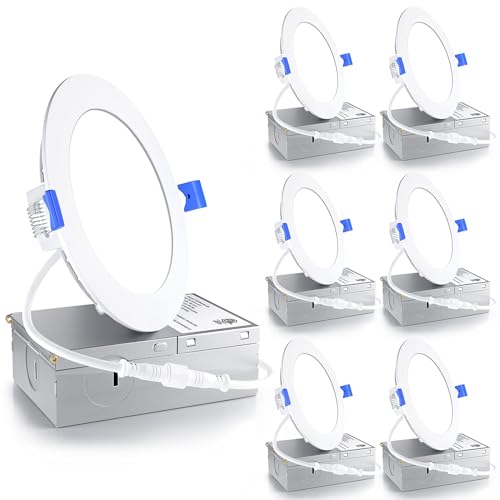
Ensenior 6 Pack 4 Inch 5000K Dimmable Canless Wafer LED Recessed Light

Ensenior 12 Pack 4 Inch LED Recessed Ceiling Light, 5CCT

VOLISUN 24 Pack 4 Inch 5CCT Recessed Light with Night Light

Meconard 12 Pack 4 Inch 5CCT LED Recessed Lighting with Night Light

ZYC 4-inch Square Recessed Lighting Ultra Thin Dimmable, 5CCT

CycevSun 4 Inch 6 Pack LED Recessed Lighting with Night Light

Lithonia Lighting WF4 LED Wafer Downlight, 4-Inch, Matte White

TORCHSTAR 16-Pack 5CCT 4 Inch Ultra-Thin LED Recessed Light
More On The Choices That Made The List
This Ensenior set lands in that no-nonsense zone where you just want crisp, cool light in a workspace without fussing over color choices. The 5000K daylight tone suits task-driven rooms where color accuracy matters less than visibility, and the canless wafer body (an ultra-thin integrated fixture that replaces a traditional recessed housing can) keeps the ceiling profile clean. Owners working in basements or home shops tend to appreciate that the fixture slips into a standard 4-inch cutout with spring-clip retention.
Each unit draws 9 watts while putting out roughly 750 lumens, and dimming is supported down to about 5%. The trade-off is that this set is fixed at 5000K, so there’s no warm-light option for living areas later.
Positive Points
- Crisp 5000K daylight that makes tool benches and craft tables easier to read.
- Canless wafer design removes the need for a separate housing can above the drywall.
- Smooth 5%–100% dimming range on most standard wall dimmers.
- 9W consumption keeps operating costs down compared to older incandescent cans.
Things To Consider
- 5000K is the only color option, so a warm-toned living room may feel clinical.
- No night-light mode, unlike the VOLISUN and Meconard sets further down.
Key Specs
Who Should Grab It
DIYers finishing a basement, garage, or workshop who want bright daylight with the simplest possible install.
Swap It Out When
The Ensenior 12 Pack 5CCT model is a better fit if you’d rather pick a different color temperature after the drywall is closed up.
The first Ensenior on this list locks you into a single tone, but this 12-pack solves that problem before installation even starts. A small dip switch on the junction box (the metal enclosure where the fixture’s wiring connects to household power) lets you toggle between 2700K, 3000K, 3500K, 4000K, and 5000K. People who get nervous about guessing the right color for an open floor plan tend to land on this set for exactly that reason.
Output holds at 750 lumens per fixture at 9 watts, and the canless wafer body keeps ceiling clearance demands modest. Twelve units also cover a wide room or a multi-room reno without needing a second order.
Useful Touches
- Five selectable color temperatures on the junction box, switchable before install.
- Twelve fixtures cover an open-concept living area in one purchase.
- Same dimming range and 9W draw as the smaller Ensenior set, keeping the family consistent.
- Removes the classic risk of returning a whole batch for being too warm or too cool.
Trade Offs
- All twelve units ship at one chosen color temperature; mixing zones means rewiring later.
- No amber night-light glow like the VOLISUN or CycevSun options below.
Right Fit For
Homeowners mid-renovation who want one bulk order that adapts to different rooms, from cozy bedrooms to bright kitchens.
Reach For A Different Pick When
The VOLISUN 24-pack is worth a look if hallways or stairs also need a built-in night-light mode.
What makes the VOLISUN stand out is the secondary mode: a soft amber 2000K glow around the trim that turns on with a wall switch, no extra wiring needed. For homes with small kids, aging parents, or anyone who makes nighttime trips to the kitchen, that gentle ring of light is genuinely useful rather than gimmicky.
The 810-lumen output per fixture is the highest in this lineup, and the same five-temperature dip switch on the junction box lets you fine-tune the main downlight color before snapping the fixture into the ceiling. A synchronization reset function recovers all units to the same mode after a power blip.
What Helps Most
- Built-in amber night-light mode is genuinely helpful for late-night navigation.
- 24 fixtures suit a whole-home install or a large addition in a single order.
- 810 lumens per fixture adds a touch more brightness than most 4-inch peers.
- Synchronization reset clears mismatched modes across multi-fixture runs.
Points To Keep In Mind
- Night-light mode requires a compatible dimmer or wall switch to toggle it.
- 24 fixtures is more than many single-room projects actually need.
Feature Snapshot
Whose Shelf It Belongs On
Families outfitting a multi-room renovation who value the night-light trim for hallways, bathrooms, and bedrooms.
Skip It When
The Meconard 12-pack is a sensible alternative for smaller projects where you still want night-light but don’t need 24 units.
The Meconard set borrows the night-light idea from the VOLISUN and trims the order down to a more approachable 12-pack. The amber 2000K trim glow still appears with a quick power cycle on the wall switch, no extra controller or smart hub required. For a single bedroom or a couple of hallways, this size hits the sweet spot.
The IC-rated housing (insulation-contact rated, meaning the fixture can sit directly against ceiling insulation without overheating) gives installers a little more flexibility in tight attic cavities, and a synchronization reset returns all fixtures to the same mode if power is interrupted.
Useful Highlights
- Same amber night-light trim mode as the larger VOLISUN, in a friendlier 12-pack size.
- IC-rated construction supports direct contact with ceiling insulation.
- Reset function recovers all fixtures to a consistent mode after power interruptions.
- Five color temperatures selectable from the junction box before mounting.
Honest Caveats
- Switching modes via power cycling can confuse first-time installers.
- Not as bright per fixture as the VOLISUN, so larger rooms may need more spacing.
Quick Facts
Who Will Love This
Anyone outfitting one or two bedrooms with a built-in night-light feature and a manageable order size.
Consider Something Else When
The Lithonia Lighting WF4 is a cleaner choice for kitchens where truer color rendering matters more than night-light functionality.
Square trims break the visual rhythm of a sea of round cans, and the ZYC brings that option without sacrificing modern features. The fixture cuts a round ceiling hole (easier to template than a true square cutout) but presents a square trim face on the room side, which gives a slightly more architectural look than most recessed lighting.
Output sits at 800 lumens at 9 watts, with a CRI of 80+ (Color Rendering Index, a measure of how accurately a light reveals true colors compared to natural daylight; 80+ is the typical baseline for good residential lighting). Flicker-free driver electronics keep the light steady on dimmed levels, which matters more than people expect for eye comfort over long evenings.
The Case For It
- Square trim breaks the all-rounds look for more visual variety.
- Flicker-free dimming stays comfortable during long evenings at lower settings.
- Five selectable color temperatures support different rooms from a single SKU.
A Few Limitations
- Square look only suits certain décor styles; it can clash with traditional interiors.
- Six-pack size means multi-room projects need more than one order.
- CRI 80+ is good but not exceptional, so kitchens needing premium color may look elsewhere.
Spec Overview
Best Suited To
Homeowners leaning modern or transitional who want a square detail on the ceiling without giving up selectable color temps.
A Better Fit Elsewhere
The Ensenior 12-pack 5CCT is a better choice when square trims feel too design-forward for the room.
The CycevSun set keeps the night-light theme compact: six fixtures, two operating modes, and the same 2000K amber trim glow that warms a dark room without waking anyone up. For a nursery, a guest bath, or a single hallway, six units cover most layouts without ordering excess inventory.
Switching between full downlight and night-light mode happens through the wall switch, and a synchronization reset keeps everything aligned after a power interruption. The 4-inch form factor matches the rest of this list.
Everyday Perks
- Soft 2000K amber night-light mode is genuinely useful for late-night trips.
- Six-pack size is friendly for a single-room or starter project.
- Reset function clears mismatched modes after power interruptions.
Points To Note
- Smaller pack than the VOLISUN, so multi-room projects need extra orders.
- Mode switching through power cycling may take a beat to learn.
Made For
Nurseries, guest bathrooms, and single hallways where a gentle night-light trim is more important than high lumen output.
Look Elsewhere When
The VOLISUN 24-pack is the better pick for whole-home installs where the same night-light feature is wanted at much greater scale.
Lithonia Lighting is a familiar name in commercial fixtures, and the WF4 brings that pedigree to residential kitchens and dining areas. The headline spec is the 90 CRI rating, which is meaningfully better than the 80+ CRI that most of this list offers: food, skin tones, and wood finishes read more naturally under this light.
The wafer-slim design fits shallow ceilings, and the matte white trim disappears into most ceiling colors. Three color temperatures (3000K, 4000K, and 5000K) cover the main residential moods without overcomplicating the choice.
Strong Points
- 90 CRI delivers more accurate color rendering for kitchens and dining areas.
- Wafer-slim body suits shallow ceiling cavities where bulkier cans would not fit.
- Matte white trim blends cleanly with most ceiling finishes.
- Energy-efficient operation typical of quality LED wafer fixtures.
Possible Compromises
- Only three color temperatures, fewer than the 5CCT models elsewhere on the list.
- No night-light mode, unlike the VOLISUN or Meconard sets.
- Single-fixture retail packaging means multi-room projects add up quickly.
Perfect Match For
Home cooks and hosts who care how food and faces look under the light more than they care about night-light features.
Not Your Match When
The Ensenior 12-pack 5CCT is a smarter pick for whole-home projects needing more flexibility in tone and pack size.
The TORCHSTAR stands apart for two reasons: the aluminum body and the 2-inch clearance requirement. Most wafer fixtures need 3 to 4 inches of plenum space (the cavity above the drywall where the housing and wiring live), so a fixture that asks for just 2 inches is the answer for older homes with shallow attics or tightly packed ceiling joists.
The aluminum housing helps dissipate heat, which generally supports a longer LED service life in enclosed ceiling cavities. Five selectable color temperatures and a 16-pack size round out the package for a mid-size home project.
Notable Gains
- Just 2 inches of plenum clearance needed, ideal for tight or older ceiling cavities.
- Aluminum housing helps dissipate heat for a potentially longer service life.
- 16 fixtures cover a mid-size home or large addition in a single order.
- 5 selectable color temperatures offer flexibility across rooms.
Small Caveats
- 10W draw is slightly higher than the 9W peers, though output scales accordingly.
- 16-pack may be more than a single-room job requires.
- No night-light mode, unlike several alternatives above.
Feature Rundown
Who It Suits Best
Older homes and additions where shallow ceiling cavities rule out bulkier recessed fixtures.
Where A Sibling Pick Shines
The VOLISUN 24-pack is worth considering instead when night-light features matter more than clearance demands.
What To Weigh Before Picking 4 Led Recessed Lightings
Lumens And Wattage In Plain English
Lumens measure how much light a fixture puts out, while watts measure how much energy it draws. For 4-inch residential recessed lighting, something in the 700–850 lumen range per fixture is the comfortable baseline for general room lighting. Bathrooms and kitchens tend to want the higher end of that range, while bedrooms can sit comfortably at the lower end.
Color Temperature And The Mood It Sets
Color temperature, expressed in Kelvin (K), describes how warm or cool the light appears. Numbers around 2700K–3000K feel like the classic incandescent glow, suitable for living rooms and bedrooms. Mid-range tones around 3500K–4000K land well in kitchens and dining areas. Anything near 5000K reads as cool daylight and suits work zones, garages, and craft rooms. The 5CCT fixtures on this list let you pick the tone after the wiring is done, which removes one of the most common regrets in a lighting project.
Canless Wafer Vs. Traditional Housings
Canless wafer fixtures combine the housing and the trim into a single thin unit, which fits shallow ceilings and simplifies new installs. Traditional recessed setups use a separate housing can (a metal enclosure installed above the drywall that holds the bulb and wiring). For most modern remodels, canless is the cleaner path. The trade-off is that some wafer fixtures run hotter, so aluminum-bodied models like the TORCHSTAR can help with long-term reliability.
Dimmer Compatibility And Night-Light Modes
Not every LED plays nicely with every dimmer, so checking the dimmer list before buying saves a frustrating install. If you want a night-light glow built into the trim, look for models like the VOLISUN, Meconard, or CycevSun. If color accuracy matters more than night features, the Lithonia WF4’s 90 CRI is the standout spec in this group.
Smart Considerations Before You Commit
Where Shoppers Go Wrong
The most common slip-up is choosing a fixture before checking the ceiling depth, since shallow joist cavities rule out bulkier cans. Picking one color temperature and then regretting it after the drywall closes up is the other classic regret, which is why the 5CCT switches on the Ensenior, VOLISUN, Meconard, ZYC, and TORCHSTAR sets are genuinely useful. Forgetting to confirm dimmer compatibility leaves some shoppers with flickering or buzzing fixtures that technically work but feel wrong.
What The Higher Tier Buys
Stepping up in this category typically means more fixtures per pack, selectable color temperatures, IC-rated construction, and night-light trim modes. The premium Lithonia WF4 trades volume for color accuracy with its 90 CRI, which matters more in kitchens than in bedrooms. The honest read is that mid-tier 5CCT packs handle most residential projects well, and the upgrade pays off when a specific feature (night-light, color rendering, or shallow clearance) aligns with a specific room.
Frequently Asked Questions
How many 4-inch recessed lights do I need per room?
A common starting point is one fixture for every 4 to 6 square feet of ceiling, depending on how bright you want the room. Kitchens and workspaces usually want the denser spacing, while bedrooms can sit at the wider end.
Can I install canless wafer lights where an old can fixture already exists?
Yes, most canless wafer fixtures are designed to fit a standard 4-inch cutout. The old housing can usually stays in place or is removed depending on the new fixture’s clearance needs.
What does 5CCT actually mean?
5CCT means the fixture lets you select between five color temperatures, usually from warm 2700K up to cool 5000K. The selection typically happens via a small dip switch on the junction box before the trim snaps into place.
Do these fixtures work with my existing dimmer switch?
Most do, but LED compatibility varies by dimmer brand and model. Checking the manufacturer’s dimmer compatibility list before purchase avoids flicker or buzzing on lower settings.
Are night-light trim modes worth the extra cost?
For hallways, bathrooms, and bedrooms used at night, the soft amber trim glow is genuinely helpful and can replace plug-in nightlights. For living rooms or kitchens used mostly in the daytime, the feature adds cost without daily benefit.
The Takeaway
The right 4 Led Recessed Lightings come down to three honest questions: what ceiling depth are you working with, what mood do you want in the room, and whether a night-light glow would actually get used. Match those answers to the strengths above and the rest of the decision usually sorts itself out.