

A 24-inch fan is one of those quietly useful upgrades for rooms that fight back against small desk fans. I see the same shoppers landing on this size for three reasons: a bedroom or living room that just won’t cool evenly, a garage or workshop where a wimpy fan is laughable, or an outdoor patio that needs real airflow. The trick is matching the fan type to the job, because a 24-inch drum fan and a 24-inch ceiling fan are solving completely different problems.
The Main Contenders
The Main Contenders

addlon 24″ Ceiling Fans with Lights and Remote, Low Profile Fandelier
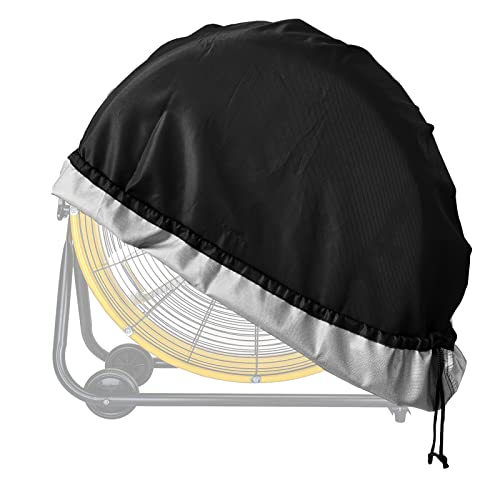
Bitubi Industrial Drum Fan Cover, Waterproof Outdoor Cover, 24 Inch

Tornado 24 Inch High Velocity Heavy Duty Tilt Metal Drum Fan

addlon 20″ Ceiling Fans with Lights and Remote, Low Profile Fandelier

addlon 24″ Low Profile Fandelier, White, DC Motor, App Control
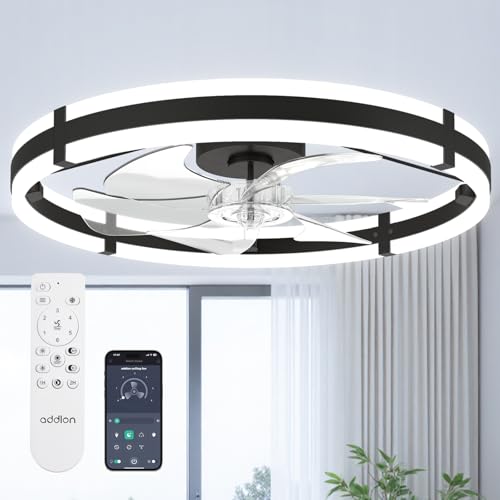
addlon 24″ Low Profile Fandelier Ceiling Fan, Black

addlon 24″ Low Profile Fandelier Ceiling Fan, White
A Closer Look At Each Pick
The 24-inch addlon fandelier is the pick I’d point most people toward first, simply because it solves two problems at once: ceiling airflow and overhead lighting in a single low-profile fixture. Where smaller ceiling fans struggle to push air across a queen bed or a sectional, this one widens its reach noticeably, making it sensible for medium-sized bedrooms and living rooms. The integrated LED panel handles general room lighting without needing a separate fixture, which is a real win in apartments with crowded ceilings.
For anyone finishing a basement bonus room, a home office without overhead wiring, or a rental where they can’t install recessed cans, this kind of combined unit pays off fast. The remote eliminates the awkward stretch-pull chain, and the fan runs quietly enough for a TV-watching setup.
Positive Takeaways
- Wider airflow than the 20-inch addlon, useful for rooms around 130 to 200 square feet.
- Combined fan and light means one fixture, one switch loop, one install.
- Remote control is genuinely convenient at bedtime.
- Low-profile housing fits ceilings under eight feet without crowding the room.
- Reversible motor direction supports winter air circulation from the ceiling.
Worth Noting
- Light output is functional rather than dramatic; very bright rooms may want a supplemental lamp.
- Remote-only operation; no wall control option for those who prefer a hardwired switch.
- Flush-mount form factor is harder to clean on top once installed.
Feature Snapshot
Best Suited To
Renters and homeowners outfitting a medium bedroom or living room who want one fixture to handle both airflow and overhead light.
Reach For A Different Pick When
Smart-home shoppers wanting app and voice control should look at the addlon 24″ Low Profile Fandelier in white with the DC motor instead.
The Bitubi cover isn’t a fan at all, and that’s exactly why it’s on this list. A 24-inch metal drum fan left outside through one winter starts to corrode at the motor housing and grilles, even if it lives under an eave. This 600D polyester cover with a PVC waterproof backing (PVC is the same plastic-based coating used on many weather-resistant tarps) is sized for typical 24-inch drum housings and includes a drawstring-style storage bag. For anyone who actually uses a high-velocity drum fan on a patio, in a barn, or in a garage that isn’t climate-controlled, the cover is the cheapest insurance against rust and dust.
What I like is that it’s sold specifically as a fan accessory, so the dimensions target the drum shape rather than guessing with a generic tarp.
What Pays Off
- PVC-coated 600D fabric shrugs off rain, dust, and UV exposure.
- Cut to the cylindrical drum shape, so it doesn’t pool water on top.
- Includes a storage pouch for when the cover itself is off the fan.
- Lightweight enough to throw over the fan in under a minute.
Trade Offs
- Only fits drum-style fans, not pedestal or tower fans of the same nominal size.
- The fabric is waterproof but not puncture-proof; sharp garage edges may nick it over time.
- Black color absorbs heat in direct summer sun, so the fan underneath warms up before you remove the cover.
Whose Shelf It Belongs On
Anyone who already owns a 24-inch metal drum fan and stores it outdoors, in a barn, or in an unheated shop.
Consider Something Else When
Shoppers who don’t yet own a drum fan should jump straight to the Tornado 24 Inch High Velocity drum fan reviewed next.
The Tornado drum fan is what I think of when someone says they want real airflow, not a polite breeze. Rated at 7700 CFM (cubic feet per minute, the standard way to measure how much air a fan moves), it moves a serious volume through a workshop, a garage gym, or a paint-booth space. The 1/3 horsepower motor runs on a standard 120V outlet and reaches through an 8-foot cord, so placement around a workbench or a parked car is straightforward. The tilt head lets you aim the air up at a ceiling or down at a floor without moving the whole unit.
Where the addlon ceiling fans target indoor comfort, this one targets utility. It’s louder, heavier, and built for jobs where airflow actually solves a problem like drying a floor or venting fumes.
What Helps Most
- 7700 CFM output handles garages and barns that smaller fans can’t touch.
- Three-speed control lets you dial down for general circulation or up for serious drying.
- Tilt head directs airflow up, down, or horizontally without repositioning.
- All-metal construction holds up to job-site bumps better than plastic housings.
- 8-foot cord reaches across most single-car garages from a wall outlet.
Honest Caveats
- Noise level is high enough that it’s not suited to living spaces or bedrooms.
- At roughly 25 pounds, moving it between rooms is a two-handed job.
- No remote; speed changes require walking to the unit.
Quick Facts
Built With In Mind
DIYers, home mechanics, and small-shop owners who need real ventilation rather than gentle circulation.
Look Elsewhere When
Anyone wanting a quiet bedroom fan should stay with the addlon 24″ Low Profile Fandelier, which runs at a fraction of the noise.
I included the 20-inch addlon on a list of 24-inch fans on purpose, because not every “I need a ceiling fan” shopper actually needs 24 inches. Smaller bedrooms, nursery rooms, and home offices under about 120 square feet are usually better served by a 20-inch fandelier that’s less visually heavy and circulates a tighter bubble of air. The dimmable LED, the low-profile mount, and the remote carry over directly from the 24-inch version, so you don’t sacrifice convenience.
For a small bonus room above a garage or a converted guest bedroom, the 20-inch simply looks more proportional to the ceiling.
Useful Touches
- Compact 20-inch blade span suits rooms under 120 square feet without overpowering them.
- Dimmable LED panel handles ambient lighting without a second fixture.
- Same remote and low-profile design as the 24-inch sibling for a consistent install.
- Reversible motor for off-season air circulation from the ceiling.
Points To Keep In Mind
- Less airflow coverage than the 24-inch models, so open floor plans will outgrow it.
- Same flush-mount cleaning limitation as the larger fandeliers in this list.
Feature Card
Made For
Nursery rooms, small home offices, and compact guest bedrooms where a 24-inch fixture would feel oversized.
Swap It Out When
Anyone measuring a room longer than about 14 feet will get better airflow from the 24″ addlon fandelier reviewed in pick one.
This is the fandelier I’d recommend to anyone who has already committed to a smart-home setup and wants the fan to behave like another device rather than an appliance. The DC (direct current) motor is more efficient than the older AC (alternating current) motors in budget fans, and it unlocks six speeds instead of the typical three, which matters more than people expect for sleep comfort. The app control pairs with the included remote, so traditionalists in the household still have a clicker option. The 3000K to 6000K LED range covers warm movie-night tones to cooler daylight for working from home.
For a primary bedroom where the fan runs every night, the efficiency and the finer speed control earn their keep.
Strong Points
- DC motor draws less power than AC equivalents on the same speed setting.
- Six speeds instead of three, which helps during sleep versus daytime circulation.
- 3000K to 6000K color temperature range adapts from cozy to task-bright.
- App and remote dual control fits households with mixed preferences.
- Memory function recalls the last speed and light setting after a power interruption.
Softer Spots
- App setup adds a step that non-tech households may find unnecessary.
- Slightly more complex remote with extra buttons takes a learning pass.
Spec Overview
Right Fit For
Smart-home households and primary-bedroom dwellers who run their fan nightly and want fine-grained speed and lighting control.
A Better Fit Elsewhere
Shoppers who just want a quiet, no-fuss fan without pairing an app should consider the standard addlon 24″ fandelier from pick one.
Most fandeliers in this size ship in white or brushed nickel, which makes the black housing on this addlon model genuinely useful for interiors with dark fixtures, matte hardware, or a moodier color palette. The airflow footprint and the integrated LED carry over from the standard 24-inch addlon reviewed earlier, so you’re picking this for the finish rather than for performance differences.
For a media room with a dark ceiling, a loft with black window frames, or a bedroom with a moody accent wall, the black housing disappears into the ceiling instead of standing out.
Benefits That Matter
- Black housing blends into dark ceilings and modern interiors.
- Same wider airflow as the other 24-inch addlon fandeliers.
- Integrated dimmable LED handles general room lighting.
- Remote control eliminates the pull chain.
Small Caveats
- Black finish shows dust on the housing more visibly than white or nickel.
- Same flush-mount cleaning constraint as the other fandeliers.
Perfect Match For
Design-focused shoppers matching dark ceiling fans to media rooms, lofts, or bedrooms with a moodier palette.
Another Choice May Suit
Anyone prioritizing smart-home features should choose the addlon 24″ fandelier with the DC motor and app control instead.
This white 24-inch addlon fandelier is the safe, broadly compatible pick on the list. White housing works with virtually any ceiling color and disappears into most rooms, which makes it the default choice for a whole-house refresh or a rental property. It shares the wider airflow, the integrated dimmable LED, and the remote with the other 24-inch addlon models covered earlier, so the difference is purely cosmetic.
For anyone outfitting a guest room, a starter apartment, or a home they’re preparing to sell, neutral white is the path of least regret.
Where It Excels
- Neutral white finish works with most ceiling and wall palettes.
- Wider 24-inch airflow suits medium bedrooms and living rooms.
- Integrated dimmable LED handles general room lighting.
- Remote control included for convenience.
Minor Gripes
- No app or smart-home integration; remote-only operation.
- Same flush-mount cleaning limitation as the other fandeliers on this list.
Feature Rundown
Who Should Grab It
Homeowners and landlords outfitting a neutral room who want a broadly compatible, no-fuss fandelier.
Skip It When
Anyone building toward a smart-home ecosystem will find the addlon 24″ DC motor fandelier a better long-term fit.
What Matters Most Before Choosing 24 Inch Fans
Match The Fan Type To The Room
The single biggest decision in this category isn’t brand, it’s type. A 24-inch ceiling fan lives on the ceiling, runs quietly, and moves air across a wide, gentle arc. A 24-inch drum fan sits on the floor, runs loudly, and pushes a focused column of air. Trying to use one for the other’s job usually ends with disappointment: ceiling fans in a garage feel weak, drum fans in a bedroom feel jet-engine loud. Buyers should start by naming the room, then the type.
Read The Airflow Number, Not The Diameter
Two 24-inch fans can move very different amounts of air. Ceiling fans rarely publish CFM, but drum fans almost always do, and the difference between 3000 and 7700 CFM is dramatic. For workshops, garages, and outdoor patios, the higher CFM rating matters far more than the color of the housing. For bedrooms and living rooms, the wider blade sweep and the reversible motor direction matter more than raw CFM because comfort is about coverage, not volume.
Mind The Mounting Constraints
Flush-mount fandeliers need a junction box rated for the weight, and most rentals won’t accept anything but a simple swap. Drum fans need floor space with stable footing and at least a few feet of clearance from walls. Buyers in older homes with plaster ceilings or unusual wiring should confirm the electrical box before committing to a heavier fandelier. Skipping that step usually means a return trip or a last-minute electrician visit.
Think About Control And Noise
A remote is convenient in a bedroom, where getting up to change a fan speed is annoying. A wall control or pull chain is fine in a workshop, where you’re already moving around. Noise tolerance varies just as much: the Tornado drum fan listed here is built for serious airflow and is loud by design, while the addlon fandeliers prioritize quiet operation for living spaces. Buyers should be honest about where the fan will live before chasing the highest output number.
Key Considerations Across These Picks
Pitfalls Shoppers Hit
The most common mistake I see is buying a drum fan for a bedroom because the CFM number looked impressive, then discovering the noise is intolerable at night. The reverse mistake is buying a quiet ceiling fandelier for a two-car garage and wondering why it barely moves the air. The second common trap is ignoring ceiling height: a low-profile fandelier only works on ceilings under about nine feet, and a downrod model is required for vaulted spaces. Buyers should also check return windows before installing anything heavy, because a fandelier that has been mounted cannot be resold as new.
Where The Extra Money Goes
Stepping up from a basic fandelier to a DC-motor model with app control buys three things: better energy efficiency on long-running fans, finer speed control for sleep comfort, and integration with the rest of a smart-home setup. For a guest room that runs a few hours a week, the upgrade rarely justifies itself. For a primary bedroom where the fan runs every night for years, the efficiency and finer speed steps tend to pay back the price difference over time through quieter nights and a lower utility bill.
Frequently Asked Questions
Are 24 inch fans big enough for a living room?
For most living rooms between roughly 130 and 250 square feet, a 24-inch ceiling fan provides enough airflow for everyday comfort, especially when paired with the wider coverage found in the addlon fandeliers in this list. Larger open-concept rooms may want two fans or a larger blade span.
Can a 24 inch drum fan be used outdoors?
Yes, most metal drum fans in this size are designed for jobs-site and outdoor use, though they should be protected from rain when not running to prevent motor corrosion. A waterproof cover like the Bitubi option in this list extends the lifespan of any outdoor drum fan significantly.
How loud are 24 inch ceiling fans?
Modern low-profile fandeliers in this size typically run quieter than a soft conversation, which makes them suitable for bedrooms and TV rooms. Drum fans in the same diameter are much louder by design and are better matched to workshops and garages.
Do 24 inch ceiling fans need a special electrical box?
Most fandeliers in this category require a fan-rated junction box that can support the unit’s weight and handle the vibration of a rotating motor. Standard light-fixture boxes are usually not rated for fan use and should be replaced before installation.
Is a reversible motor worth it on a ceiling fan?
A reversible motor lets the fan pull air up toward the ceiling in winter, which redistributes trapped warm air and reduces heating costs in rooms with high ceilings. For year-round use, the feature earns its place; for seasonal-only use, it is a nice-to-have rather than essential.
Wrap Up
A 24-inch fan is one of those purchases that quietly improves daily life once it’s matched to the right room. Shoppers outfitting a bedroom or living room should start with the addlon fandeliers, choosing between standard, smart, white, or black depending on the household. Buyers tackling a workshop or garage should anchor on the Tornado drum fan and add the Bitubi cover for outdoor storage. Picking the right type first usually makes the rest of the decision much easier.