

Swapping out old incandescents for a 100W LED equivalent is one of those small home upgrades that quietly pays off for years. I put together this list because the category is deceptively crowded: same wattage label, totally different color temperatures, dimming behavior, and base types. Whether you’re outfitting a kitchen, a home office, or a ceiling fan, the right bulb comes down to matching the fixture, the mood, and how much light you actually want.
The Main Contenders

TJOY 12 Pack LED Light Bulbs 100W Equivalent A19 Daylight 5000K

Brightever A19 Dimmable LED Bulbs 100W Equivalent 12W 2700K

Brightever A19 Dimmable LED Bulb 60W Equivalent 9W 2700K

Brightever A19 LED Bulb 60W Equivalent Dimmable 2700K 8-Pack

TJOY LED Light Bulbs 100W Equivalent A19 Daylight 5000K

KOR PAR38 LED Flood Light Bulbs 100W Equivalent Dimmable 3000K
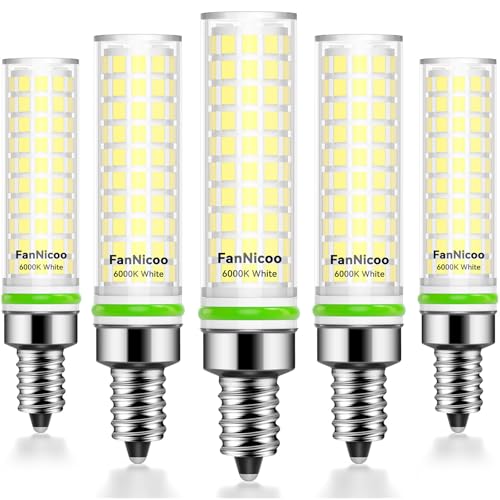
FanNicoo E12 LED Candelabra Bulb 100W Equivalent 6000K

Sylvania Double Life A19 LED Bulb Dimmable 100W 4-Pack
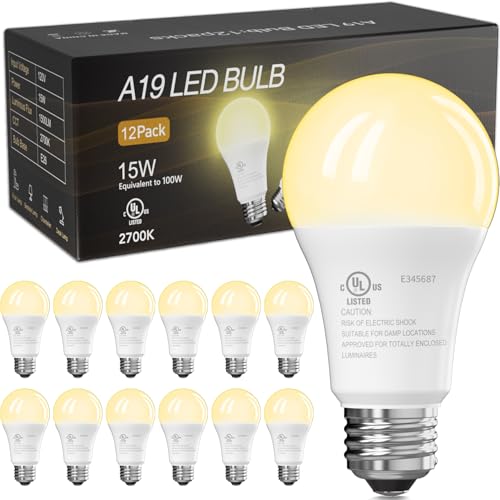
TJOY LED Light Bulbs 100W Equivalent A19 Soft Warm 2700K
Inside Each Recommended Option
For a whole-home sweep, buying bulbs one at a time gets old fast. This 12-pack from TJOY lands at the daylight end of the spectrum (5000K, the cooler, bluer-white tone that mimics midday sun), which makes it well suited to basements, laundry rooms, and anywhere you want crisp, alert lighting.
It’s a straightforward A19 shape with a standard E26 base, so it drops into the same sockets your old incandescents left behind. Compared to the dimmable Brightever options coming up next, this one is non-dimmable, which is a real consideration if your fixtures run through a dimmer switch.
Everyday Advantages
- Twelve bulbs cover a typical three-bedroom home in one order, no extra trips.
- 5000K daylight reads as bright and clean, which helps in task-heavy spaces like kitchens and garages.
- The A19 shape and E26 base fit the vast majority of table lamps, ceiling fixtures, and sconces.
- LED efficiency means a real cut to electricity draw versus the 100W incandescents these are designed to replace.
Things To Consider
- 5000K can feel harsh in a cozy bedroom, where most people prefer warmer tones.
- Non-dimmable, so it won’t behave on a dimmer switch, just stays at full output.
- Daylight bulbs sometimes read as “sterile” to anyone expecting the soft yellow of an old incandescent.
Feature Snapshot
Who It Suits Best
Shoppers outfitting an entire home or a rental property in one go will appreciate the volume and the consistent daylight tone.
Where Another Pick Suits Better
For warm, dimmable bedroom lighting, the Brightever A19 100W equivalent 4-pack is a better match.
This is the warm-white, dimmable counterpart to the TJOY pack above, and it’s the one I’d point most living rooms toward. The 2700K color temperature is the classic incandescent warmth, so the room still feels like a room rather than a clinic.
The bulb pulls just 12W to produce light equivalent to an older 100W incandescent, which translates to a meaningful drop on monthly electricity costs. Dimmability is the real headline here, since it lets a single fixture handle everything from dinner-party glow to full reading brightness on the same switch.
The Good Stuff
- True 2700K warmth reads as cozy without going yellow.
- Dimmable down to low levels, so a single fixture covers more moods.
- Standard E26 base fits the same sockets as older bulbs.
- Strong lumen output suits medium to large rooms.
Worth Noting
- Requires a compatible LED dimmer for smooth, flicker-free dimming.
- Only four bulbs in the pack, so larger homes need multiple orders.
At A Glance
Made For
Anyone outfitting a primary living space with a dimmer switch who wants classic warm-white light.
Consider Something Else When
If you need daylight 5000K for a workshop or office, the TJOY A19 100W equivalent 5000K is a better fit.
Not every socket needs a 100W replacement. This Brightever option delivers the same warm-white tone as its 100W sibling, but at a 60W equivalent output, which is the right level for bedside lamps, hallway sconces, and reading nooks where blinding brightness actually works against you.
It still pulls just 9W, runs dimmable, and uses the standard E26 base. For rooms where the previous 100W equivalent felt like overkill, this is the calmer cousin I’d reach for first.
Positive Takeaways
- 2700K warmth keeps lamp-lit spaces inviting, not clinical.
- Dimmable for bedside use without harsh full-output glare.
- 9W draw means very low operating cost for daily-use lamps.
Honest Caveats
- 60W equivalent isn’t enough for large kitchens or open living areas.
- Lower lumen output may disappoint anyone expecting true 100W replacement brightness.
Best Suited To
Anyone replacing bulbs in smaller lamps or accent fixtures where a softer, dimmable output is preferred.
A Better Fit Elsewhere
For whole-room 100W replacement brightness, the Brightever A19 Dimmable 100W Equivalent 4-Pack is the more capable pick.
Same 60W equivalent Brightever as above, just doubled up into an 8-pack for bigger upgrades. If you’re walking through a home with eight lamp-and-hallway sockets that all need warm dimmable light, this lands in one order and saves the back-and-forth.
The 2700K tone and E26 base stay consistent across the line, so a multi-room upgrade looks visually uniform. For homes where every socket gets the same warm treatment, that consistency matters more than people expect.
Real-World Strengths
- Eight bulbs cover multiple rooms or a long hallway without repeat orders.
- Dimmable warm-white output keeps the home feeling consistent room to room.
- Lower 9W draw means modest running costs even with eight bulbs in daily rotation.
Small Limitations
- Same 60W equivalent ceiling, so it won’t satisfy anyone chasing true 100W brightness.
- Overkill for anyone who only needs to swap a couple of bulbs.
Key Product Details
Who Will Love This
Homeowners replacing warm-white bulbs across several rooms in a single coordinated upgrade.
Look Elsewhere When
Bright task lighting is the goal, in which case the Sylvania Double Life A19 Dimmable 100W 4-Pack is a stronger match.
The single-pack (or smaller-count) sibling of the TJOY 12-pack, with the same 5000K daylight tone. For shoppers who only need to brighten a home office, garage bay, or hobby bench, a smaller order is the smarter move.
It carries the same A19 shape and E26 base, so it lands in standard fixtures without surprise. The crisp daylight output is what makes it shine (literally) for task-heavy spaces where color accuracy and alertness matter.
The Upside
- 5000K daylight output sharpens focus in office and workshop settings.
- 100W equivalent brightness covers large rooms without dim corners.
- Drop-in E26 base for standard lamps and ceiling mounts.
Some Limits To Know
- Cool tone can feel sterile in living areas meant for relaxation.
- Non-dimmable, so it can’t adapt to evening moods.
Perfect Match For
People building a brighter home office, garage workshop, or craft area where clarity matters more than warmth.
Skip It When
For warm evening ambiance, the TJOY 100W Equivalent A19 Soft Warm White 2700K makes more sense.
Every other pick on this list is an A19, the classic bulb shape. This KOR is a PAR38, a wider, reflector-style flood built for recessed cans, track lighting, and outdoor fixtures where you want light aimed in a direction rather than scattered.
The 3000K warm white sits between soft white and daylight, giving a friendly glow without going blue. Dimmability adds flexibility in dining nooks and recessed kitchen lighting.
Useful Strengths
- Flood beam shape directs light exactly where recessed cans need it.
- 3000K strikes a comfortable middle ground between warm and cool.
- Dimmable for layered lighting scenes in kitchens and dining rooms.
Practical Considerations
- PAR38 shape won’t fit a standard table lamp, so it’s fixture-specific.
- Only two bulbs per pack, which adds up on whole-home recessed upgrades.
Feature Rundown
Built With In Mind
Homeowners with recessed ceiling cans, track lights, or outdoor flood fixtures needing directional 100W equivalent light.
Another Choice May Suit
For a standard lamp or sconce, an A19 bulb like the Brightever 100W equivalent 4-Pack fits much more easily.
Chandeliers and ceiling fans almost never use the same E26 base as a table lamp. This FanNicoo candelabra bulb runs the smaller E12 base, which is the narrow-thread socket found in decorative fixtures, pendant lights, and many ceiling fan light kits.
The 6000K color is on the cooler end, so it leans modern and crisp rather than cozy. For salt lamps, ceiling fan retrofits, and tight chandelier sockets, the small T6/C7 form factor matters more than the raw color temperature.
What Works In Its Favor
- E12 candelabra base fits fixtures that other picks on this list simply can’t.
- Cool daylight output reads clean in modern or task-oriented ceiling fans.
- Compact bulb size suits tight chandelier and pendant housings.
Points To Keep In Mind
- Non-dimmable, which limits ceiling fan light kit flexibility.
- 6000K leans very cool, so it won’t suit anyone wanting warm chandelier glow.
The Right Fit
Anyone replacing bulbs in chandeliers, pendant fixtures, or ceiling fan light kits with E12 sockets.
Reach For A Different Pick When
For standard E26 table lamps or overhead fixtures, the Brightever A19 Dimmable 100W equivalent 4-Pack is the easier match.
Sylvania’s Double Life line is the standout in this list for color quality. The 90+ CRI rating (CRI, or Color Rendering Index, measures how accurately a light shows the true color of objects compared to natural daylight) means the bulb renders reds, blues, and skin tones more faithfully than a standard LED.
At 5000K daylight with 1600 lumens and full dimming support, this is the bulb I’d put above a kitchen island, in a craft room, or anywhere color matters. For casual table lamp use, the upgrade may not be visible, but for cooking and detail work, it really is.
Everyday Wins
- High CRI rating reveals true color in kitchens and craft spaces.
- 1600 lumen output outpaces most 100W equivalents in this category.
- Dimmable and rated for enclosed fixtures and damp locations.
Worth Bearing In Mind
- Higher-tier positioning means a higher per-bulb cost than the bulk packs.
- 5000K daylight can feel too cool for cozy living spaces.
Feature Breakdown
Whose Shelf It Belongs On
Homeowners who want high color accuracy for kitchens, craft rooms, or any task where appearance matters.
Swap It Out When
For budget bulk replacement, the TJOY 12-pack Daylight 5000K offers similar tone at a friendlier per-bulb cost.
The warm-white counterpart to the TJOY daylight 12-pack. Same A19 shape, same E26 base, same dependable build, but tuned to 2700K so the light feels like the soft incandescents most people grew up with.
For bedrooms, dining rooms, and any space where comfort matters more than alertness, this is the easier recommendation. Compared to the Brightever warm-white 4-pack above, this one trades dimmability for a smaller pack count at a friendlier entry point.
What Earns Its Place
- 2700K warmth creates the classic cozy bulb glow.
- 100W equivalent brightness suits medium to large rooms.
- Standard E26 base drops into typical household fixtures.
A Few Limitations
- Non-dimmable, so it’s a fixed-output bulb only.
- Warm tone won’t suit task-heavy workshops or offices.
Who Should Grab It
Anyone outfitting bedrooms, dining rooms, or living spaces with classic warm-white light and no dimmer switches in play.
Where A Sibling Pick Shines
For dimmable warm-white lighting on a dimmer switch, the Brightever A19 Dimmable 100W equivalent 4-Pack is the better choice.
Choosing The Right 100W LED Bulb For Your Space
Color temperature does most of the heavy lifting in how a room feels. Anything from 2700K to 3000K reads warm and inviting, which is what most living rooms, bedrooms, and dining areas want. Daylight tones around 5000K sit closer to midday sun, which makes them sharp and energizing for kitchens, home offices, and workshops. Mid-range tones around 3500K to 4100K are a friendly middle ground for spaces that need clarity without feeling clinical, like bathrooms and craft rooms.
Base type is the spec people forget to check. Standard table lamps, ceiling fixtures, and sconces almost always use E26, the medium screw base. Chandeliers, ceiling fan light kits, and some decorative pendants use E12, the smaller candelabra base. The KOR PAR38 picks also use E26, but the wider flood shape means they only fit recessed cans and track fixtures, not every socket.
Wattage equivalence tells you brightness relative to old incandescents. A 100W equivalent typically puts out between 1500 and 1600 lumens, while a 60W equivalent lands around 800 lumens. Bigger rooms benefit from higher lumens, while smaller lamps and bedside fixtures usually feel better at the 60W equivalent level.
Dimming compatibility matters if you have dimmer switches. Not every LED bulb dims smoothly on every dimmer, and pairing a non-dimmable bulb with a dimmer switch can cause flicker or buzzing. For dimmable bulbs, look for one that explicitly lists compatibility with standard LED dimmers.
CRI, or Color Rendering Index, matters more in kitchens, bathrooms, and craft rooms. A higher CRI rating (above 80 is standard, above 90 is excellent) means colors look closer to how they appear in natural daylight. For most living areas, this is a minor detail, but for makeup mirrors, art studios, or anywhere color accuracy matters, it’s worth prioritizing.
Finally, fixture rating matters for outdoor and enclosed fixtures. Some bulbs are rated for damp locations (bathrooms, covered porches) or enclosed fixtures (recessed cans with no airflow). For outdoor flood lights or fully enclosed ceiling mounts, check that the bulb is rated for that use before installing.
Worth Knowing Before You Buy
Where Shoppers Go Wrong
The most common slip-up is treating wattage equivalence as a brightness promise without checking lumens. Two “100W equivalent” bulbs can produce noticeably different light levels depending on the manufacturer, so the lumen rating is the real number to compare.
Another trap is buying a daylight bulb for a cozy space because the price was appealing, then realizing 5000K feels like a flashlight in the bedroom. Color temperature belongs to the room, not the wallet.
When Paying More Pays Off
Spending more usually buys two things: better color rendering (higher CRI) and longer rated lifespans. For kitchens, craft rooms, and home offices where you’re staring at things under the light for hours, a higher CRI bulb like the Sylvania Double Life is a real upgrade over a budget bulb.
Premium picks also tend to handle dimming more gracefully. Budget dimmable LEDs can flicker, buzz, or step down unevenly, while higher-tier options hold a smooth dim curve down to very low levels. For dining rooms and bedrooms with dimmer switches, that smoother performance is where the extra money actually goes.