

I move through my house at odd hours, and the dark hallway between the kitchen and bedroom used to be a real trip hazard. That’s the kind of everyday situation motion sensor lighting solves best: lights popping on only when you need them, then quietly turning off behind you. Whether you’re upgrading a porch, retrofitting a closet, or building a smarter indoor setup, the right pick depends on where it’ll live and how bright you want it to get.
The Picks In Brief
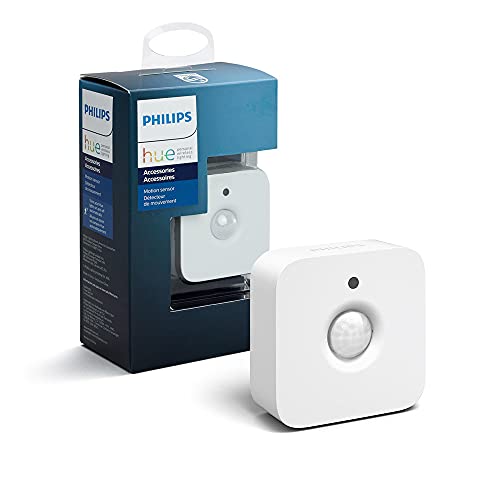
Philips Hue Indoor Motion Sensor (Hue Hub Required)

Lanyue 5″/6″ Motion Sensor Retrofit Downlight (2-Pack)
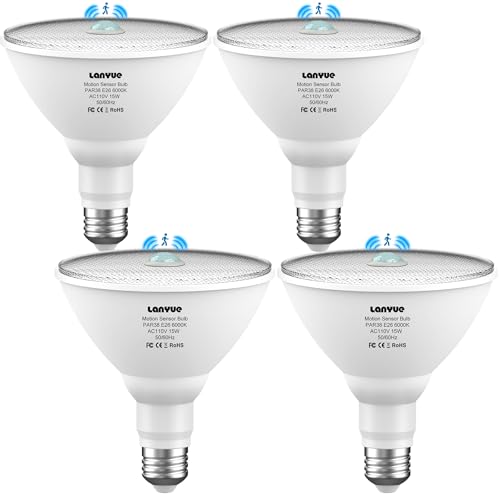
Lanyue PAR38 Dusk to Dawn Motion Flood (4-Pack)

Leviton 6527-W Decora LED Full Guide Light
Sunco PAR38 Dusk to Dawn Flood Bulb (2-Pack)

Lanyue BR30 Motion Detector Bulb (4-Pack)

Lanyue 13W Dusk to Dawn Bulb (6-Pack)
Inside Each Recommended Option
If you already own Philips Hue bulbs, this battery-powered motion sensor is the missing piece that ties the system together. It pairs with the Hue Bridge, which then talks to every Hue fixture in the house, so a single trigger in a hallway can light a path through three rooms at once. Daylight sensing keeps the lights off when the sun is doing the work for you.
Installation is genuinely tool-free: stick it on a shelf, mount it with the included screws, or leave it on a side table while you decide. The smart night mode drops brightness to a warm, low setting for late bathroom trips. For renters and homeowners alike, the wireless design means no rewiring and no patching.
The Value In It
- Whole-home automation through the Hue Bridge, controlling up to 50 lights
- Battery-powered and completely wireless, so placement is flexible
- Built-in light sensor prevents daytime activation, trimming wasted energy
- Gentle warm night mode for hallway navigation without ruining sleep
- App-based scheduling lets you fine-tune which scenes trigger per room
Honest Caveats
- Requires the Hue Bridge; not useful without an existing Hue ecosystem
- Batteries need replacement periodically, depending on traffic volume
- Sensor-only design means it pairs with Hue bulbs, not generic fixtures
Whose Shelf It Belongs On
Hue households who want app-controlled, scene-based motion lighting across multiple rooms.
Reach For A Different Pick When
Shoppers without Hue hardware should consider the Lanyue 13W Dusk to Dawn Bulb (6-Pack) for a simpler, hub-free setup.
For homeowners with existing 5-inch or 6-inch can lights, this retrofit motion downlight drops in without rewiring. At 15 watts it pushes out 1200 lumens of crisp 6000K daylight, plenty for laundry rooms, mudrooms, and basements where you want instant, no-fuss illumination. The PIR infrared sensor (passive infrared, meaning it reads body heat to detect movement) wakes the fixture when someone walks within range in the dark.
Two-pack sizing suits a small room or a paired hallway run, and the plug-and-play format beats swapping a whole fixture. Compared to the Philips Hue sensor above, this is a far more hands-off, no-app solution. Where the Hue shines is whole-home scene control; where this downlight shines is set-it-and-forget-it simplicity in one room.
Bright Spots
- Drop-in fit for standard 5″/6″ recessed cans, no rewiring required
- 1200-lumen output handles utility spaces and dim corners
- PIR motion detection means reliable activation without extra apps
- Two-pack covers a small hallway or back-to-back rooms
Points To Keep In Mind
- 6000K daylight tone runs cool, which feels clinical in living areas
- Sizing is fixed at 5″/6″, so it won’t fit non-standard housings
- Motion-only activation means no manual override during long tasks
Key Attributes
Who Should Grab It
Homeowners with existing recessed cans who want motion lighting without rewiring or app setup.
A Better Fit Elsewhere
For an outdoor-rated option, the Sunco PAR38 Dusk to Dawn Flood Bulb (2-Pack) handles porch and driveway duty better.
Standard E26 socket, weather-rated construction, and a 16-26 foot detection range make this PAR38 flood a strong pick for porches, side yards, and detached garages. The dusk-to-dawn photocell (a light-sensing component that tells the bulb whether it’s dark outside) keeps the bulb dormant during daylight, then flips to motion-detection mode only when ambient light drops below roughly 10 lux (a unit of light intensity; lower numbers mean darker conditions). That means no wasted runtime on sunny afternoons.
It throws 1200 lumens at 6000K, which is bright enough to wash a small driveway or the back of a house. The 4-pack format is genuinely useful: cover the front porch, garage sconce, side path, and back patio in one go. Where the retrofit downlight earlier handles indoor cans, this one’s built for fixtures already pointed outdoors.
Where It Excels
- Built-in dusk-to-dawn sensor prevents daytime triggering
- PIR detection range of 16-26 feet covers typical yard depth
- E26 socket compatibility fits most outdoor floodlight fixtures
- 4-pack bundles front, side, and rear coverage in one purchase
Room For Improvement
- Detection range varies with mounting height and angle
- No dusk-to-dawn override; the photocell decides when motion mode activates
Best Suited To
Homeowners outfitting multiple outdoor flood fixtures who want hands-off nighttime security lighting.
Consider Something Else When
Anyone wanting higher lumen output should look at the Sunco PAR38 Dusk to Dawn Flood Bulb (2-Pack) for stronger driveway coverage.
The Leviton 6527-W is a different animal from the rest of this list: not a bulb, but a low-profile wall-mounted guide light that fits a standard electrical box. Three long-life LEDs deliver a soft glow along hallways, stairs, and bathrooms without lighting up the whole room. The integrated light sensor turns the fixture on automatically when the space darkens and off again at dawn.
Its impact-resistant thermoplastic face shrugs off the occasional bump from a vacuum or a stroller, and there’s no bulb to ever replace. Compared to the Lanyue PAR38 flood above, this is the right scale for indoor transitional spaces where you want light at floor level rather than ceiling fill. In most homes, one fixture per hallway plus one at the base of each stairwell covers the night-trip problem.
The Practical Payoff
- Standard wall-box install fits existing wiring locations
- Three long-life LEDs eliminate bulb replacements
- Built-in light sensor handles dusk-to-dawn duty automatically
- Low-profile Decora styling blends with modern switch plates
Things To Weigh
- Output is gentle, not enough as a primary room light
- Hardwired install needs basic electrical comfort or a professional
Feature Snapshot
Right Fit For
Apartment dwellers and homeowners wanting a permanent, low-brightness night path without depending on a portable plug-in.
Skip It When
Anyone avoiding hardwiring should pick the Lanyue BR30 Motion Detector Bulb (4-Pack) instead, since it screws into any standard socket.
The Sunco PAR38 leans into raw output. At 1800 lumens and a 5000K daylight color temperature, it pushes noticeably more light than the Lanyue PAR38 flood reviewed earlier, making it well suited to wider driveways, taller facades, and detached outbuildings. Like that Lanyue option, the dusk-to-dawn photocell keeps the bulb dormant during daylight hours, so runtime stays low.
The standard E26 base means it drops into most outdoor-rated floodlight fixtures without adapter fuss. A 2-pack is enough for a garage-and-entry pairing, leaving room to add more later. In our view, this is the better pick when an existing Lanyue 4-pack leaves a corner feeling underlit.
The Upside
- 1800-lumen output washes wide areas and tall exterior walls
- 5000K daylight tone reads neutral rather than blue-tinted
- Photocell-controlled dusk-to-dawn switching reduces wasted runtime
- Standard E26 base fits typical floodlight fixtures
Trade-Offs To Consider
- Higher output may feel harsh on close-quarter porches
- 2-pack size covers fewer fixtures than the Lanyue 4-pack
Quick Facts
Made For
Homeowners with wide driveways or two-story entryways who need strong, neutral floodlight output after dark.
Look Elsewhere When
Anyone outfitting four or more outdoor fixtures should grab the Lanyue PAR38 Dusk to Dawn Motion Flood (4-Pack) for better coverage per purchase.
BR30 shape, E26 base, and a 12-watt draw make this a clean swap into recessed kitchen cans, bathroom vanity fixtures, and finished basements. Output lands at 1000 lumens of 6000K daylight, which is a touch cooler than the Sunco flood above but well matched to task-oriented indoor spaces.
The PIR sensor reads motion within 16 to 26 feet and shuts off roughly 30 seconds after the room empties. A 4-pack is plenty for a single open-plan space or a kitchen-plus-bath pairing. In most kitchens, two fixtures running this bulb provide coverage that feels automatic without ever touching a switch.
Benefits That Matter
- BR30 form factor suits most recessed kitchen and bath fixtures
- 1000 lumens of daylight output brightens task-oriented rooms
- 30-second auto-off delay prevents flicker during short exits
- 4-pack covers a kitchen or open-plan living area
A Few Limitations
- Cool 6000K tone reads cold in living rooms and bedrooms
- Detection may need occasional re-aiming of the fixture itself
Perfect Match For
Kitchens, laundry rooms, and finished basements where you want hands-free lighting without app control.
Not Your Match When
Shoppers wanting a warmer living-room glow should pivot to the Philips Hue Indoor Motion Sensor for full color-temperature control.
Six bulbs in one box covers a whole-house retrofit without needing to place a second order. At 13 watts and 1000 lumens per bulb, this A19-shaped option drops into any standard lamp, sconce, or ceiling fixture with an E26 base. The same PIR and dusk-to-dawn pairing found on the BR30 above shows up here, so activation logic is identical across rooms.
For homeowners outfitting multiple fixtures at once, the 6-pack format spreads cost across the home. Where the BR30 leans into recessed cans, this A19-style bulb fits table lamps and open fixtures better. In our view, mixing the BR30 in the kitchen with this A19 in hallways and bedrooms is a sensible whole-home approach.
Everyday Wins
- 6-pack sizing suits whole-home retrofits in a single purchase
- A19 shape fits table lamps, sconces, and open ceiling fixtures
- Dusk-to-dawn photocell prevents daytime triggering
- PIR detection range of 16-26 feet handles typical room depth
Practical Considerations
- Cool 6000K tone limits use in warm-toned living spaces
- Bulbs can’t be dimmed through standard dimmer switches
Spec Overview
Who It Suits Best
Whole-home retrofitters outfitting six or more fixtures who want a single bulk purchase covering every room.
Swap It Out When
Anyone preferring recessed-specific sizing should grab the Lanyue BR30 Motion Detector Bulb (4-Pack) for can-light compatibility.
Choosing Motion Sensor Lighting For The Way You Actually Live
Picking the right motion sensor setup starts with where it’ll live. Indoor transitional spaces like hallways and stairwells benefit from low-output, always-on guide lights such as the Leviton 6527-W, which won’t blast a sleeping household awake at 3 a.m. Higher-traffic rooms like kitchens and baths need stronger output, where the Lanyue BR30 handles the job without rewiring. Outdoor placement changes the equation entirely: a weather-rated PAR38 with a dusk-to-dawn photocell is the practical baseline for porches and driveways.
Detection range matters more than people expect. A 16-26 foot range covers most room depths, but longer driveways and tall ceilings benefit from fixtures that mount higher and reach further. Sensor placement, whether it’s the bulb itself or a wall-mounted unit, determines how reliably the trigger fires, so aim it across natural walking paths rather than toward windows or heat sources that may cause false positives.
Color temperature shapes the feel of the light more than raw brightness does. Cool 6000K reads clinical in a bedroom but sharp and awake in a workspace. Warmer tones (around 3000K to 4000K) suit living areas but are less common in motion-sensor bulbs, which is why the picks here lean toward the cooler side. Existing fixture compatibility, meaning whether the bulb shape fits your cans, sconces, or floods, is the simplest gate: E26 bases cover most US homes, but recessed fixtures often need BR30 or PAR38 shapes to seat properly.
Finally, hub-based systems like the Philips Hue sensor trade simplicity for control. App-driven scheduling, scene coordination, and whole-home automation come at the cost of higher setup effort and ongoing accessory purchases. Hub-free PIR bulbs sacrifice that flexibility in exchange for true plug-and-play operation, which suits renters and anyone avoiding extra equipment.
Picking The Right Form Factor And Sensor Type
Bulb-shaped motion lights like the Lanyue BR30 and 13W 6-pack suit existing fixtures without rewiring. Downlights like the Lanyue retrofit option replace a whole recessed can, which is right when older fixtures need refreshing anyway. Wall-mounted guide lights like the Leviton 6527-W become part of the home’s wiring, the most permanent option. Sensor type affects reliability: PIR infrared reads body heat and works well indoors, while some outdoor photocell-only designs respond purely to ambient light without checking for movement, a real distinction worth noting before buying.
Common Pitfalls Shoppers Hit
The most frequent mistake is grabbing a cool 6000K bulb for a warm living space, then wondering why the room feels sterile after dark. Matching color temperature to the room’s purpose avoids that regret. Another common slip: assuming any “motion sensor bulb” works outdoors. Indoor bulbs may lack weatherproofing, and outdoor fixtures often need PAR38 shapes specifically.
Buyers also overlook sensor range. A bulb rated for 16-26 feet in a wide garage may leave the far wall dark. Mounting height, angle, and the direction the fixture points all change real-world coverage more than the spec sheet implies.
Why Higher-Tier Lighting Costs More
Spending up usually buys either smarter integration or stronger output. Hub-driven systems add app control, scene coordination, and the ability to chain multiple fixtures together. Higher-output floods trade energy draw for better coverage, which matters in tall exterior spaces where a cheaper bulb simply can’t reach.
The honest case for paying up: if you want one bulb to coordinate lighting across three rooms, a smart sensor system earns its place. If you want a single fixture to wash a long driveway in clean light, a higher-lumen flood earns its place. For everything in between, mid-tier options cover the need without overspending.
Frequently Asked Questions
Do motion sensor light bulbs work during the day?
Most include a dusk-to-dawn photocell that prevents daytime activation. The bulb stays dormant when ambient light is above roughly 10 lux and only switches to motion-detection mode in low-light conditions. That makes them genuinely hands-off regardless of the time of day.
How far can motion sensor bulbs detect movement?
Detection range varies by product, with most PIR bulbs rated between 16 and 26 feet. Real-world range depends on mounting height, angle, and ambient temperature. Aim the fixture across a natural walking path rather than toward windows for the most reliable trigger.
Can I use motion sensor bulbs outdoors?
Some bulbs are rated for outdoor use, including the Lanyue PAR38 flood and Sunco PAR38 options reviewed here. Indoor-only bulbs may lack weather sealing and can fail when exposed to moisture. Always check the product listing for outdoor suitability before installing in an exposed fixture.
Do motion sensor bulbs work with dimmer switches?
Generally no. The internal sensor and driver circuitry conflict with standard dimmers, and using one can cause flicker or damage. If dimming is essential, look for a sensor-and-dimmer combo, or plan on leaving the bulb at full output.
How long do motion sensor light bulbs last?
LED motion sensor bulbs commonly last several years under typical household use, though the exact lifespan depends on activation frequency and runtime. PIR sensors and photocells tend to outlast the LEDs themselves in most products on the market.
Bottom Line
The right motion sensor setup depends on where you need it and how much control you want. Hub-driven options like the Philips Hue sensor suit smart-home households, while plug-and-play picks like the Lanyue 13W 6-pack handle whole-home retrofits without apps. Pick the form factor that matches your fixtures, match the color temperature to the room’s purpose, and you’ll likely stop thinking about the hallway light entirely.