

Picking the right tiny torch sounds trivial until I’m standing in a dark stairwell, fumbling for a key. A good miniature flashlight slips into a pocket or onto a keychain, fires up instantly, and disappears until I need it. Across this list I’ve grouped compact options by use case: daily pocket carry, bulk value packs, emergency-grade beams, and a few specialty picks that solve very specific problems.
A Side-By-Side Look

Streamlight Wedge + Nano Light II Bundle

PROLOSO 50PCS Small Flashlights with Lanyard

Energizer R-300 LED Emergency Flashlight

EverBrite 6-Pack Mini 9-LED Flashlights
Energizer Vision PRO 1000+ Lumen Flashlight

Energizer S-600 Solar and AA Flashlight

Lepro 365nm UV Flashlight Black Light
More Details On Our Top Picks
This Streamlight pairing is built around a useful contradiction: I want a pocket flashlight that disappears, and I also want one that can punch through a dark parking lot. The Wedge answers the second half with a slim, flat aluminum body that sits flush in a front pocket, while the Nano Light II rides on a keychain as the always-there backup. Compare that to the bulkier EverBrite pack I’ll cover later, which favors coverage over refinement.
The Wedge runs 300 lumens on constant output with a 69-meter beam reach and adds a THRO burst mode (a short, regulated brightness spike) rated up to 1,000 lumens when I need a quick blast. The Nano II is the opposite end: a 2.2-inch, 20-lumen keychain light that’s easy to operate one-handed. For commuters, dog-walkers, and anyone who wants a primary plus a fail-safe, the combo covers most ground.
Noteworthy Benefits
- Deep-carry pocket clip mounts on either side, so left- and right-handed users both get a comfortable draw.
- Dual-output setup (steady 300 lumens, burst up to 1,000) handles doorways and longer paths from one body.
- The 20-lumen Nano II adds a genuine backup that fits on keys without adding noticeable weight.
- Snap-hook keyring design keeps the Nano accessible one-handed while the Wedge handles main illumination.
Things To Consider
- Two devices means two sets of batteries to track, which can be a small hassle over months of use.
- The THRO burst is brief by design, so anyone expecting sustained high output will notice it drop quickly.
Key Specs
Whose Shelf It Belongs On
Daily-carry commuters and homeowners who want one strong pocket light and one keychain backup will get the most out of this pairing.
Look Elsewhere When
Someone preparing an emergency kit for a whole family should consider the EverBrite 6-Pack Mini 9-LED Flashlights instead, which spreads lights across multiple drawers and vehicles.
I’m including this PROLOSO pack for the situations where quantity matters more than refinement. Fifty pocket-sized torches, each about 1 by 1 by 3.1 inches, with a simple on-off twist and a lanyard already attached. It’s a different mindset than the Streamlight Wedge above: no burst modes, no metal body, just bright plastic units that ship in two packs of 25.
Each light measures roughly 2.5 by 2.5 by 8 centimeters, which means it slips into a small purse or backpack pocket without protest. The glow-in-the-dark housing helps me find them at night, and the assortment of colors reads as fun rather than tactical. For party hosts, classroom teachers, and parents stockpiling stocking stuffers, the math favors bulk.
A Strong Showing
- Fifty units cover a scout troop, a classroom, or a holiday party without rationing.
- Glow-in-the-dark shells make the lights easy to locate when the power goes out.
- Lanyards come pre-attached, so they’re ready to hand out as favors or prizes.
- Compact 3.1-inch body fits small hands, including younger kids learning to use a flashlight.
Room For Improvement
- Plastic construction won’t survive rough treatment the way a metal-bodied light like the Energizer Vision PRO would.
- Brightness and beam consistency can vary across the pack, which is common in bulk mini lights.
- Battery life per unit is short compared to a single high-output torch, so spares matter.
Built With In Mind
Event organizers, teachers, and parents who want a fun grab-bag of small lights for kids and groups will find this pack fits the brief.
Skip It When
Someone who needs one dependable daily-carry light should reach for the Streamlight Wedge + Nano Light II Bundle, which prioritizes build quality over quantity.
The Energizer R-300 earns its spot because storm seasons don’t wait for me to find batteries. The body is built around an emergency mindset: four lighting modes (High, Low, Strobe, and Red Strobe) and a beam rated to reach up to 555 feet ahead. That’s a serious throw distance for a handheld unit, and the IPX4 water-resistance rating means rain splashes and brief dunks won’t end the run.
Where the PROLOSO pack and EverBrite bundle lean toward fun and casual use, this one is a working tool. I picture it clipped into a hallway drawer near a fuse box, packed into a car glove box, or sitting next to a camping stove. Batteries ship in the box, which removes a step I’d otherwise forget during a hurried prep phase.
Strong Points
- Red strobe mode preserves night vision and works as a signaling tool during roadside stops.
- 555-foot reach helps me check a long driveway or a wooded trail without stepping forward.
- IPX4 splash resistance handles storms and accidental drops in puddles.
- Mode variety covers daily use, signaling, and emergency visibility from one device.
Points To Note
- Larger than a pocket EDC, so it lives best in a drawer, bag, or glove box rather than a front pocket.
- Run time at peak brightness is shorter than at low mode, which is worth knowing during extended outages.
Right Fit For
Preppers, storm-prone households, and anyone building a dedicated emergency kit will appreciate the beam reach and signaling modes.
Consider Something Else When
Daily pocket carry calls for the Streamlight Wedge + Nano Light II Bundle, which is smaller, lighter, and easier to live with every day.
This EverBrite pack sits in the middle of my list for a simple reason: most homes need more than one flashlight, and buying them one at a time adds up. Six mini 9-LED lights come with eighteen AAA batteries, three per unit, so the box is a working starter kit rather than a parts pile. Compared to the PROLOSO 50-pack above, this is the right scale for a family or small office.
Each light is pocket-sized and lightweight, which means I can drop one into a glove box, a junk drawer, a backpack, and a bedside table without thinking about it. The aluminum body is a small step up in feel from a basic plastic torch, and owners commonly report the units feel solid for the size. For dog walking, camping, and everyday around-the-house use, it’s a comfortable fit.
Key Advantages
- Six units and eighteen batteries ship together, so lights are usable on day one.
- 9-LED array gives a wider, more even flood than a single-LED mini torch.
- Pocket-sized body works in backpacks, glove boxes, and emergency kits without rearranging.
- Aluminum shell handles bumps better than the plastic shells in party-pack sets.
Small Caveats
- Beam throw is shorter than the Energizer R-300’s, so it isn’t the right tool for far-distance checks.
- AAA batteries will eventually need replacing, and stockpiling spares is a good habit.
Who Will Love This
Families, hosts, and gift-givers who want to spread working flashlights across multiple rooms and vehicles without shopping one by one.
Reach For A Different Pick When
Someone whose priority is a single high-output light for outdoor use should consider the Energizer Vision PRO, which trades quantity for a much stronger beam.
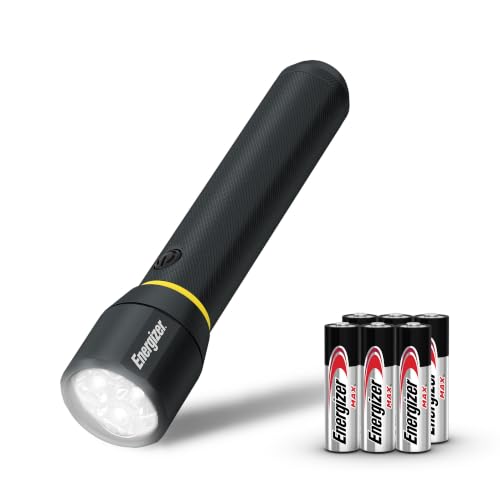
The Vision PRO is what I reach for when a pocket light won’t cut it. The aircraft-grade aluminum body feels closer to a professional tool than a household torch, and the 1000+ lumen output pushes well past anything in the EverBrite pack or the PROLOSO party bundle. Digital Focus narrows the beam at the press of a switch, so I can swap between a wide flood and a tight spotlight without swapping devices.
Batteries ship in the box (six AA cells), which removes the first hurdle of ownership. The IPX4 water-resistance rating covers rain and brief splashes, and the MAXVIZ technology targets a daylight-style color beam. This is the pick for someone who actually walks the dog after dark on a long path, inspects a crawlspace, or works outdoors regularly.
Everyday Perks
- Digital Focus adjusts beam width on the fly, useful when alternating between path and detail work.
- Aircraft-grade aluminum shell shrugs off drops better than plastic-bodied mini lights.
- Six AA batteries ship with the unit, so it’s ready to use on day one.
- IPX4 rating handles rain, sleet, and brief splashes during outdoor use.
A Few Limitations
- Larger and heavier than pocket EDC lights, so it lives best in a bag or tool drawer.
- Six AA batteries add weight and cost over time versus a rechargeable setup like the Energizer S-600.
Feature Snapshot
Best Suited To
Outdoor hobbyists, DIY homeowners, and anyone who needs a long-throw, weather-tolerant light for serious nighttime use.
A Better Fit Elsewhere
Someone prioritizing daily pocket comfort should choose the Streamlight Wedge + Nano Light II Bundle, which trades raw power for compactness.
The S-600 takes a different angle on preparedness: it runs on either a rechargeable lithium-ion battery (charged by the built-in solar panel or USB) or two AA batteries when I’m out of juice. That kind of redundancy is the reason I’d toss it into a camping bag or a roadside emergency pouch. The IPX4 rating handles rain, and the body reads as durable without being oversized.
Where the Energizer R-300 leans on raw output and the Vision PRO leans on long throw, the S-600 leans on flexibility. Charging indicators tell me when the cell is topped off, and the dual-power design means I’m not stuck if the sun disappears for a week. For campers, road-trippers, and anyone who values redundancy, the S-600 solves the “dead battery” problem in a way a single-power torch can’t.
Practical Pluses
- Hybrid power (solar, USB, or AA backup) removes the single point of failure that plagues most flashlights.
- Solar panel trickle-charges the internal battery during daylight, helpful on long trips.
- IPX4 splash resistance handles rain and accidental splashes.
- On-board charging indicators show progress at a glance.
Less Ideal Details
- Solar charging is slower than a wall outlet, so I plan ahead for cloudy stretches.
- AA backup mode adds weight I may not want for daily pocket carry.
Quick Facts
Who Should Grab It
Campers, overlanders, and preppers who want a single light that doesn’t depend on any one power source.
Swap It Out When
Someone focused on emergency-grade signaling modes should choose the Energizer R-300, which adds strobe and red-strobe patterns the S-600 doesn’t match.
The Lepro UV light earns its place by solving a different problem entirely. A 365nm UV beam reveals things a regular torch can’t: pet urine spots on carpet, hidden ink on greeting cards, scorpions on a trail, and mineral inclusions in rocks. That makes it a specialty tool rather than an everyday carry, but for the right user it’s indispensable. AAA batteries come in the box, which removes the usual first-day delay.
The pocket-size body means I can take it room to room while hunting for stains, or toss it in a bag for a night hike. IPX4 splash resistance covers the occasional wet surface, and the small form factor doesn’t crowd a glove box. Compared to the broader EverBrite and PROLOSO packs above, this isn’t a household generalist. It’s a focused diagnostic tool.
The Practical Payoff
- 365nm wavelength targets pet stains, invisible ink, and mineral fluorescence more effectively than 395nm budget lights.
- Pocket-size body is comfortable to drag across a carpet while scanning.
- AAA batteries ship in the box, so it’s usable immediately.
- IPX4 rating handles splashes from cleaning products or outdoor moisture.
Things To Weigh
- UV output is not a replacement for general illumination, so it pairs with a regular light rather than replacing one.
- Beam reach is short compared to white-light flashlights, since UV falls off quickly with distance.
Feature Card
Made For
Pet owners, mineral hobbyists, and parents who want to detect stains, hidden ink, or scorpions without calling in a specialist.
Where Another Pick Suits Better
Someone whose main need is reliable emergency illumination should pick the Energizer R-300 instead, since UV output won’t help during a power outage the way white light will.
Choosing The Right Miniature Flashlight For Your Day
Picking a tiny light works best when I match the tool to the routine, not the spec sheet. A keychain backup that lives on a ring sees different action than a bedside drawer light or a glove box torch. Start by deciding where the light will live most of the time, because that answer drives size, body material, and beam reach.
Lumens tell me how bright a light is at its peak output, but real usefulness comes from beam shape and throw distance. A wide flood helps around a campsite, while a tight spotlight helps me check a long driveway or a wooded path. For most daily tasks, somewhere between 20 and 300 lumens covers the routine, with a burst mode for surprise moments. Higher-output tools like the Vision PRO are worth it when I regularly step outside at night, but they overdeliver for a quick door-lock check.
Durability matters more than people expect. IPX4 water resistance (splash-proof from any direction) is a reasonable minimum for any light that might see rain or a spill. Aircraft-grade aluminum handles drops better than plastic, which matters for kids’ party packs or jobsite storage. Power source is the other big call: rechargeable and hybrid lights like the S-600 trade convenience for redundancy, while AA and AAA lights keep things simple but require spare batteries on hand.
Finally, decide between quantity and quality. A six-pack of EverBrites spreads working light across a household. A single Wedge plus Nano II bundle concentrates that value in one polished EDC setup. Both are valid answers depending on whether the goal is coverage or refinement.
Key Considerations Across These Picks
Where Shoppers Go Wrong
Treating lumens like the only spec leads to overbuying. A 1000-lumen floodlight in a tight apartment hallway creates glare, not help. Match beam pattern to room size and outdoor setting instead. Another trap is skipping battery planning: lights that ship with cells are great, but I always check what the replacement cost looks like and whether the device uses common battery sizes I can stockpile.
What Separates Premium From Basic
Higher-tier models justify their cost through build quality, beam control, and mode variety. A focusable lens, regulated output, and a metal body add up to a tool that lasts years instead of seasons. For someone who reaches for a flashlight once a week or less, a budget pack makes sense. For daily carriers, the upgrade to a refined EDC pays back in comfort and reliability.