

Fishing before sunrise, navigating back to the dock after sundown, or just trying to find the cooler without tripping on a cleat. The right lighting changes a boat from a dark maze into a functional space, and choosing poorly means corroded fixtures, dim spread, or wiring headaches. I put together this list of six solid marine LED options covering dockside floodlighting, interior courtesy glow, control switches, search-and-spot tasks, and proper nav-light compliance for small craft.
The Shortlist At A Glance

Shangyuan Pontoon Boat Docking Headlights (2-Pack)

Shangyuan 6-Piece Waterproof LED Interior Lights
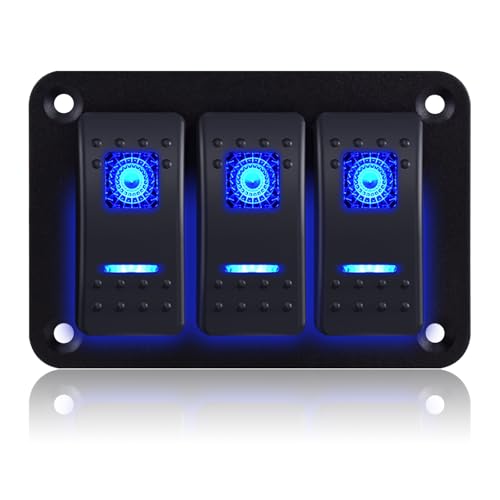
GGTA 3-Gang Aluminum Waterproof Rocker Switch Panel

WFPOWER LED Boat Spotlight with Clip Clamp

BIGLION.X Marine LED Light Bar
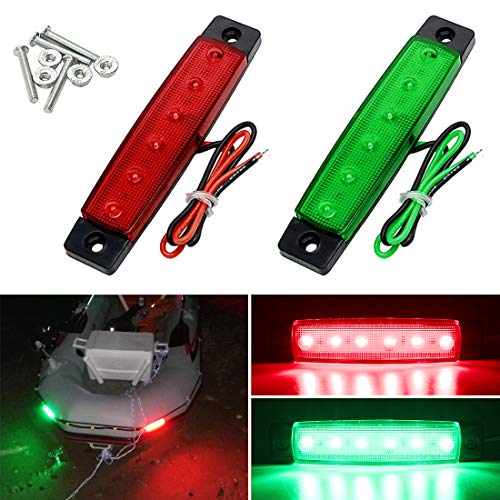
Shangyuan Red and Green LED Bow Navigation Lights
The Strengths Of Each Pick
Pulling up to an unlit dock at midnight is where floodlights earn their keep, and this Shangyuan pair is built around that exact moment. Each fixture draws 18W from a wide 10 to 35V range, meaning the same housing works on both 12V and 24V electrical systems without rewiring. The body is a die-cast aluminum shell with an IP67 sealed housing, which is the marine-grade rating that keeps out dust and survives temporary dunking.
Versatility is the real story here. The two-pack can split duty as bow spreader lights, stern lights, anchor markers, or trailer illumination, and the mounting footprint is compact enough for pontoon railings or a T-top arch. Anglers running night bass trips get useful deck wash, while pontoon owners gain a clear view of the dock ladder and cleats during tie-up.
What Helps Most
- Wide 10 to 35V input range accepts 12V and 24V marine systems without adapters
- IP67 sealed housing shrugs off rain, splash, and brief submersion
- Die-cast aluminum body dissipates heat well for long run-times
- Two-pack design lets you run matching port and starboard spreaders or split lights fore and aft
- Compact footprint fits railings, T-tops, and trailer frames where bigger bars won’t sit
Trade Offs
- 18W per fixture is modest for owners wanting stadium-level brightness on larger boats
- Wiring pigtails are short, so plan on adding marine-grade extensions for clean routing
Key Specs
Made For Pontoon Owners
Pontoon and bass boat owners running standard 12V setups who want a durable dock-approach and deck-wash light without complicated installation.
Look Elsewhere When
Kayakers needing a proper red and green nav-light pair should grab the Shangyuan Bow Navigation Lights instead, since those meet the basic side-light signaling that flood fixtures don’t provide.
Stepping around the cabin or cockpit in the dark is where most boating injuries happen, and a soft blue glow solves it without ruining night vision. This Shangyuan set ships six waterproof LED courtesy lights designed for cabins, steps, storage areas, and walkways on 12V marine systems. Compared to the spreader pair in pick one, these aren’t for spotting the dock; they’re for finding your footing.
Six units is enough to outfit multiple zones at once, which matters because piecing together single fixtures tends to leave color and brightness mismatches across the boat. Mounting on a pontoon console, bass boat cockpit, or sailboat cabin keeps the deck readable after sunset without the harsh wash of a flood beam.
The Practical Payoff
- Soft blue output preserves night vision better than white deck lights
- Six-pack covers an entire boat in one purchase, avoiding mismatched fixtures
- Waterproof housing holds up in splash-prone step and cockpit areas
- Compact size fits under gunwales, inside hatches, and on stair risers
- Low current draw means six units can run off a standard 12V circuit without taxing the battery
Things To Consider
- Blue light isn’t ideal for anglers needing true color rendering to sort tackle
- Six units may be more than smaller jon boats or single-seat kayaks require
Whose Boat It Belongs On
Yacht, pontoon, and sailboat owners outfitting cabin and step areas for safe nighttime movement who value a uniform, dim-friendly glow.
Swap It Out When
Kayakers wanting forward-facing illumination should pair these with the WFPOWER LED Boat Spotlight from pick four, since a clamp-mounted beam is more useful than cabin courtesy lights for small craft navigation.
Adding marine LED headlights and accessory lights usually means a rats’ nest of inline switches, and this GGTA panel is the tidy answer. It’s a three-gang aluminum rocker switch panel pre-wired for 12V and 24V systems, with blue backlit indicators showing which circuit is live. Think of it as the dashboard for the spreader lights, nav lights, and pumps you already plan to install.
The aluminum housing adds rigidity in a marine environment where vibration and corrosion chew through plastic panels. Where the spreader pair in pick one lights up the deck, this panel makes operating that lighting and other accessories feel deliberate rather than improvised. It suits both new builds and refits where owners want a clean helm station.
Useful Strengths
- Pre-wired design cuts installation time versus sourcing separate switches, fuses, and bus bars
- Dual LED indicator lights confirm circuit status at a glance, even in daylight
- Aluminum body resists corrosion better than typical plastic panels in saltwater use
- Wide 12V and 24V compatibility covers nearly every marine and RV setup
Honest Caveats
- Only three circuits, so larger helm setups with many accessories may need a second panel
- Blue backlighting can clash with owners wanting red or amber night-vision-friendly indicators
Best Suited To
Boat owners running multiple LED circuits who want a single, clean switching point without fabricating their own fuse and switch bracket.
Reach For A Different Pick When
Kayak and small jon boat operators who only need a single nav light will find the Shangyuan Red and Green Bow Navigation Lights from pick six simpler, with no switch panel required.
Sometimes you don’t want a permanent fixture bolted to the boat; you want a beam you can swing toward a channel marker, a buoy line, or something brushing alongside the hull. The WFPOWER LED Boat Spotlight is built around that scenario with a clamp-mount design and an aluminum housing meant for above-water marine use. It threads onto any rail, T-top, or gunwale edge without drilling.
Compared to the fixed spreader pair in pick one, this is a task light. Anglers checking lines at 3 a.m., skippers reading a distant nav aid, or anyone scanning a dark anchorage get a directed beam on demand. The portable nature also means it pulls double duty as a campsite or dock-shed light once the boat is tied up.
Everyday Advantages
- Clamp mount means no permanent holes, screws, or wiring modifications
- Directional beam reaches distant markers better than wide spreader floods
- Aluminum housing handles marine spray and the inevitable bumps of life on the water
- Portable design doubles as a shoreside or workspace light when off the boat
Softer Spots
- Clamp grip depends on rail diameter; oversized T-tops may need an adapter
- Spotlights leave shadows, so it complements rather than replaces spreader or bar lighting
Who Should Grab It
Boat owners who want a flexible, removable searchlight for reading markers, scanning shorelines, or working on deck tasks after dark.
Not Your Match When
Owners outfitting a bay boat for serious offshore night running should look at the BIGLION.X Marine LED Light Bar from pick five, since a fixed wide-beam bar handles open water better than a portable spot.
Wider hulls and longer night runs demand more than a couple of spreader floods, and a light bar delivers the broad, far-reaching coverage that offshore skippers need. The BIGLION.X Marine LED Light Bar uses a combo beam pattern that mixes spot and flood elements, so close-in deck wash and distant horizon visibility come from the same fixture. The aluminum body and marine-rated testing (high and low temperature, icing conditions) aim at year-round reliability.
Where the WFPOWER clamp light in pick four is a directed task tool, this is a primary night-running fixture. Bay boats, center consoles, and small commercial vessels benefit from the wide throw, especially when navigating unlit inlets or working nearshore structure after dark.
Why It Works Well
- Combo beam pattern blends flood and spot for both deck illumination and distance visibility
- Marine testing across temperature and icing conditions suggests solid environmental resilience
- Aluminum housing manages heat during long run-times at cruising speed
- Wide coverage suits larger boats where two small spreader fixtures leave dark gaps
Less Ideal Details
- Larger physical footprint requires solid T-top or arch mounting, which smaller craft lack
- Higher output means more amp draw, so battery and alternator sizing matter
Who It Suits Best
Owners of bay boats, center consoles, and similar vessels running offshore at night who want broad horizon visibility from a fixed mount.
Skip It When
Kayak or jon boat users will find the Shangyuan Pontoon Docking Headlights from pick one more proportional to their hull size, since a full light bar is overkill on small craft.
Side-light navigation isn’t optional, and small craft often lack proper red port and green starboard fixtures. This Shangyuan set ships one of each in a two-pack, each housing six LEDs behind a colored lens designed for low-light visibility. Unlike the white spreader pair in pick one, these exist specifically to signal heading to other vessels, which is the basic language of night boating.
The compact form fits kayaks, jon boats, and small pontoons where bow space is tight. With a 12V rating and waterproof construction, owners can wire them straight off an existing battery without adding converters, and the focused color output cuts through background deck lighting to register clearly with oncoming traffic.
A Few Strong Suits
- Matched red and green pair covers port and starboard signaling in one purchase
- Six LEDs per fixture throw enough light to be visible at reasonable distance
- Compact size mounts on narrow kayak and jon boat bows where larger fixtures won’t fit
- Standard 12V operation wires directly into most small craft battery systems
Points To Note
- Wiring routing through a small hull requires careful sealing to prevent water intrusion at the entry point
- Six LEDs per side won’t match the brightness of higher-output nav lights on larger vessels
Perfect Match For
Kayak, jon boat, and small fishing boat owners who need proper port and starboard signaling without oversized hardware.
Consider Something Else When
Anyone needing helm-side switching for multiple lights will benefit from adding the GGTA 3-Gang Rocker Switch Panel from pick three, since nav lights alone aren’t enough for a full electrical refit.
Picking The Right Fit For Your Boat
Brightness claims mean little without context. Lumens measure total light output, while beam pattern (spot, flood, or combo) determines how that light spreads. A 3,000-lumen flood washes a deck nicely but dies at 50 yards, while a 3,000-lumen spot reaches far but leaves shadows close in.
Voltage matters more than most shoppers expect. Most recreational craft run 12V, but larger yachts and commercial boats use 24V systems. Choosing a fixture rated for the wrong voltage leads to dim output, flicker, or early failure. Several picks here, including the Shangyuan spreader pair and the GGTA switch panel, accept a wide 10 to 35V input that handles both.
Mounting style drives real-world usefulness. Fixed spreader lights work great on T-tops and arches, but kayaks and jon boats need compact fixtures or clamp mounts. The WFPOWER clamp spotlight in pick four exists precisely for boats without permanent mounting options.
Finally, ingress rating (the IP code) tells you how well a fixture resists water and dust. IP67, common across the picks here, handles splash and brief submersion. Anything lower risks corrosion and LED failure after a season of saltwater use.
Key Considerations Across These Picks
Pitfalls Shoppers Hit
The most common mistake is confusing deck-flood brightness with proper navigation compliance. A pair of bright white spreaders won’t satisfy the red port and green starboard requirement that small craft need at night, and skipping the Shangyuan Bow Navigation Lights from pick six to save cost creates a safety gap. Another trap is assuming any LED rated “marine” survives saltwater equally well. IP ratings vary, and lower-rated fixtures corrode at the seams within a season on coastal boats.
Where The Extra Money Goes
Stepping up to combo-beam bars like the BIGLION.X from pick five buys broader coverage and longer throw, which matters on offshore night runs where flood-only fixtures leave the horizon dark. The aluminum-bodied GGTA switch panel in pick three costs more than a plastic equivalent because corrosion resistance and switch longevity improve noticeably in saltwater use. Premium tiers generally buy better thermal management, stronger seals, and beam patterns tuned for marine distances, all of which pay off when the lights have to work in rough conditions for years.
Frequently Asked Questions
What does IP67 actually mean for a marine light?
IP67 means the fixture is fully dust-tight and can survive temporary immersion in up to one meter of water. For most recreational boating, that’s the practical sweet spot between cost and protection.
Do I need separate red and green navigation lights if I already have deck floods?
Yes. White deck floods cannot substitute for red port and green starboard lights, since other vessels rely on those colors to determine your heading at night.
Can I wire 12V marine lights to a 24V system?
Not directly, since overvoltage burns out LEDs quickly. Several fixtures in this roundup, including the Shangyuan spreader pair and the GGTA switch panel, accept a wide voltage range that covers both 12V and 24V systems without damage.
How many lumens do I need for pontoon deck lighting?
Most pontoon owners find 1,500 to 3,000 lumens of flood coverage comfortable for deck wash and docking. Anything brighter tends to create harsh glare that bounces back off the water.
Is a portable spotlight a substitute for fixed marine LED headlights?
A clamp spotlight handles targeted tasks like reading markers, but it doesn’t replace fixed spreader or bar lighting for general night navigation. The two work best together rather than as alternatives.
Closing Thoughts
The right lighting setup depends on hull size, typical cruising hours, and whether you need compliance lighting or just functional visibility. Match beam pattern and voltage to your boat first, then decide between portable and fixed mounting. Any of these six picks handles its lane well, so the choice comes down to which scenario matches your time on the water.