

Good lighting transforms a flat, grainy recording into something that looks intentional, even when the camera and the room are both entry-level. I pulled together this shortlist for creators, remote workers, and anyone tired of looking washed out on video calls. The seven picks cover everything from compact ring lights for a desk to a larger octagonal softbox for portrait and interview setups, so you can match the gear to how and where you actually record.
The Shortlist At A Glance

NEEWER 35″/90cm Octagonal Softbox NS35P

Desk Ring Light with Stand for Computer
Desk Ring Light with Stand for Computer, Zoom Lighting

2 Packs Desk Ring Light with Stand for Video Conference
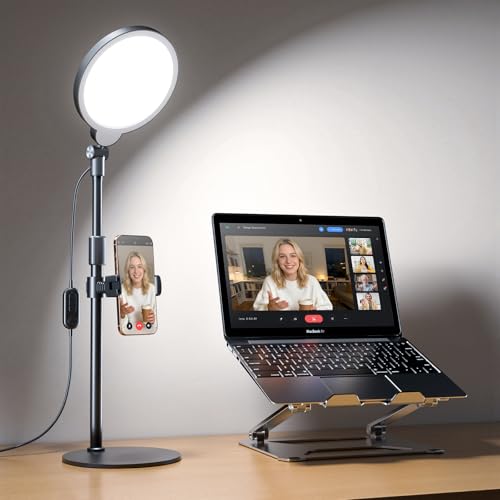
Desk Ring Light with Stand, 30 Modes Video Conference Lighting

Upgrade 10.5″ Ring Light for Desk with Magnetic Phone Holder

7″ Ring Light with Stand for Desk, 30 Modes
The Details Behind The Selections
This is the only traditional studio modifier in the roundup, and it earns its place by doing something the ring lights below can’t: sculpt a wide, wraparound key light that flatters skin and softens background detail. The 35-inch (about 90 cm) octagonal head throws a broad beam, which means softer shadow transitions across the face, a more even wrap from cheekbone to jaw, and a signature rounded catchlight in the eyes that reads as polished.
For anyone recording sit-down interviews, YouTube talking heads, or styled portrait sessions, that single modifier replaces the need for two or three smaller panels. Note that you’ll still need a Bowens-mount strobe or continuous LED to drive it, since the softbox is just the shape-maker attached to a light source. Treat it as a step up in complexity from the desk-friendly picks below, but a real upgrade in image quality.
Notable Upsides
- Octagonal shape creates the coveted round catchlight that pros chase for portrait work.
- Large 90 cm surface diffuses light gently, so even one source can look like soft window light.
- Quick-release Bowens mount makes setup and breakdown faster than older screw-ring designs.
- Silver interior boosts output without harsh hotspots on the subject’s skin.
- Includes a grid and diffusers so you can switch from soft beauty light to more directional, contrasty light on demand.
Things To Consider
- Requires a separate Bowens-mount strobe or LED light, which adds to total cost and gear bag weight.
- Far less convenient for laptop-only creators working from a small desk or shared apartment.
- Diffuser fabric tends to attract dust over time, so occasional gentle cleaning keeps output even.
Made For
Creators filming interviews, portrait sessions, or styled YouTube content where image quality matters more than desk convenience.
Swap It Out When
For everyday Zoom calls from a small desk, the Yarrashop Desk Ring Light with Stand is a more desk-friendly pick with less setup overhead.
Most clip-on ring lights flatten out at the edges, but this one leans into a curved 10.5-inch lamp head with 120 LEDs behind a thicker, upgraded coating. That deeper curve is the trick: it spreads light across a wider arc before it reaches your face, so shadows under the chin and nose soften up compared to flat-panel alternatives.
Where the NEEWER softbox above demands a full studio setup, this ring light slips onto a desk and clips behind a laptop in minutes. For remote workers logging daily calls or new creators learning framing, it hits a friendly middle ground between cheap clip-ons and professional softboxes.
What Helps Most
- Curved lamp face softens light more evenly than typical flat ring designs.
- 120-LED array delivers enough brightness for most home offices without washing out the subject.
- Stand and clip-on mounting make it work for both laptops and freestanding desk setups.
- Compact enough to stow in a drawer when the workday ends.
Worth Noting
- Single color temperature, so warmer or cooler skin tones may need camera-side correction.
- Light output can feel limited in a sunlit room without curtains.
At A Glance
Whose Shelf It Belongs On
Remote workers and beginner streamers who want a noticeable upgrade over their built-in webcam lighting without managing a softbox setup.
Reach For A Different Pick When
Creators who film for hours at a stretch and want softer eye comfort should look at the Yarrashop Ring Nano Diffuse Cover model for a gentler, longer-session experience.
Eye fatigue is the silent killer of back-to-back virtual meetings, and this Yarrashop model addresses it directly. The build pairs a Ring Nano Diffuse Cover with 120 high-reflection LED beads, which together break up the harsh pinpoint glare that makes a face look shiny and leaves your eyes tired by the third call.
It’s a slightly different take on the previous ring light, trading the deeper curve for a flatter profile with extra diffusion. For teachers, support agents, or anyone staring at the camera four hours a day, that softening adds up. The trade-off shows up when you want maximum brightness in a bright room.
Notable Gains
- Ring Nano Diffuse Cover keeps light gentle on the eyes during long sessions.
- Eliminates facial shadows that cheap overhead room lighting usually leaves behind.
- Sturdy enough to remain stable when nudged on a busy desk.
- Useful for online teaching, late-night gaming capture, and extended calls alike.
Points To Note
- Not as bright as some competitors in well-lit rooms during daytime hours.
- Limited adjustability for very tall users working at a standing desk.
Right Fit For
Anyone logging multiple consecutive hours on Zoom, Teams, or teaching platforms who values eye comfort over maximum punch.
A Better Fit Elsewhere
Creators chasing a wider feature set with 30 lighting modes should consider the Yarrashop 30 Modes Video Conference model for more tonal flexibility.
Most lighting kits assume one person in front of one camera, but households with two remote workers know the real story. This two-pack solves that directly with a matched pair of edge-lit ring lights built around a full LED panel rather than individual beads. The result is more uniform output with fewer visible artifacts.
The CRI 97.8 rating matters here: CRI (Color Rendering Index) measures how accurately a light reveals true colors, and anything above 95 keeps skin tones from drifting orange or green on camera. For couples, roommates, or parent-and-kid setups, two evenly matched lights frame both faces consistently, which is hard to replicate with mismatched single units.
What Earns Its Place
- Matched pair removes the guesswork of balancing two different lights manually.
- High CRI 97.8 keeps skin tones looking natural across different camera models.
- Edge-lit design reduces glare compared to bead-style alternatives.
- Each light adjusts independently, so two people can fine-tune to their own preference.
Honest Caveats
- Two lights mean two cables and two power supplies to manage around the desk.
- Overkill for solo creators working from a single chair.
Feature Snapshot
Best Suited To
Two-person households where both partners log frequent video calls and want matching, flattering light from different angles.
Consider Something Else When
Solo creators wanting tone presets should look at the Yarrashop 30 Modes Video Conference Lighting for fewer physical units but more built-in looks.
Some creators like to dial in a specific look: warmer for evening vlogs, cooler for skincare reviews, neutral for product photography. This Yarrashop model packs 30 preset modes built from a combination of color temperatures and brightness levels, which removes the slow hunt-and-tweak cycle from every recording session.
Same edge-lit technology as the dual-pack above, so the light output itself stays even and gentle on the eyes. Where this one pulls ahead is in creative flexibility for solo creators who change tone depending on the project. The honest read is that 30 modes is more than most people need, but having presets beats hunting for the right setting mid-call.
The Upside
- 30 preset modes cover warm, cool, and bright variations without manual color tweaking.
- Edge-lit LED keeps output smooth with reduced eye strain.
- CRI 97.8 keeps skin tones natural across camera apps and platforms.
- Adjustable brightness lets one light handle everything from a dim podcast to a bright product demo.
Some Limits To Know
- More modes can mean a slightly steeper learning curve for non-technical users.
- Preset names may not always match the exact look you had in mind, requiring a small amount of experimentation.
Quick Facts
Who Will Love This
Solo creators who switch between content types and want quick tonal changes without rebuilding their lighting setup each time.
Look Elsewhere When
Two-person households should consider the Yarrashop 2-Pack Desk Ring Light for matched lighting across two workstations.
Most ring lights assume you’re recording with a laptop webcam, but more creators are switching between phone and computer depending on the platform. This model solves that with a magnetic phone holder built into the light head, so you can snap a MagSafe-compatible phone on or off without fumbling with clamps. It’s a small detail that saves real time when bouncing between a MacBook and an iPhone mid-day.
The 10.5-inch head delivers three color temperatures and ten brightness levels, which is fewer presets than the 30-mode model above but more than enough for daily calls and occasional reels. The stand extends from roughly 23 to 31 inches, so it works whether you sit low at a desk or stand at a taller workspace.
Advantages To Know
- Magnetic phone holder keeps MagSafe-compatible devices locked in place without clamps.
- Three color temperatures cover warm, neutral, and cool looks for varied content.
- Ten brightness levels give finer control than typical on/off-only desk lights.
- 180-degree tilt lets you angle the light from above the screen or from the side for dramatic effect.
Points To Keep In Mind
- Magnetic holder works best with MagSafe-style cases or phones; older devices may need an adapter ring.
- Three color temperatures feel limiting compared to the 30-mode option for very specific brand-color matching.
Who Should Grab It
Hybrid creators who record on both phone and laptop throughout the week and want one light that supports both without swapping mounts.
Skip It When
Studio-focused creators filming interviews or portraits will find the NEEWER Octagonal Softbox a more flattering, professional-grade option.
Tight desk? Hot desk? Shared kitchen table that’s also your recording booth? The 7-inch head on this Yarrashop model is the smallest in the roundup, and that small footprint is genuinely useful when the alternative is a 10-inch light that crowds your laptop and notebook.
It keeps the same edge-lit panel and CRI 97.8 accuracy as the larger 30-mode model above, just compressed into a smaller form factor. The trade-off shows up in maximum brightness: a smaller surface area can’t throw quite as much light as the bigger cousins. For close-range laptop framing, that barely registers.
Everyday Perks
- Compact 7-inch head fits on cluttered desks where bigger lights won’t.
- 30 lighting modes give the same tonal flexibility as larger Yarrashop models.
- Edge-lit panel keeps light even across the face with reduced hotspots.
- CRI 97.8 keeps skin tones accurate even at the smaller scale.
- Pops into a backpack easily for creators working from coffee shops or co-working spaces.
Practical Considerations
- Less maximum brightness than the 10.5-inch picks, so daytime rooms with bright windows may still need curtains.
- Smaller catchlight in the eyes compared to larger ring lights, which matters for beauty or fashion content.
Spec Overview
Perfect Match For
Creators working from small desks, hot desks, or shared spaces where a larger light would feel intrusive or wouldn’t fit.
Where A Sibling Pick Shines
For podcast-style seated recordings needing a softer, wider wrap, the 10.5″ Yarrashop Ring Light delivers a bigger catchlight and brighter output.
What Matters Most Before Choosing Lightings For Video Recording
Pick The Form Factor That Matches Your Space
A 35-inch octagonal softbox delivers beautiful light, but it dominates a room and demands a dedicated corner. For most laptop-first creators, a clip-on or stand-mounted ring light between 7 and 10.5 inches hits the right balance of size and output. Match the light’s footprint to the surface area you actually have, not to a dream studio you haven’t built yet.
Color Rendering Matters More Than Raw Brightness
CRI (Color Rendering Index) tells you how accurately a light reveals true colors, on a scale of 0 to 100. Anything above 95 reads as natural skin tones on camera, while lower values can make faces look slightly orange or green without you noticing why. Several Yarrashop models in this roundup carry a CRI of 97.8, which is the kind of detail that separates flattering light from harsh light.
Decide Between Versatility And Specialization
Lights with multiple color temperatures and brightness presets give you more flexibility across different content types, but each preset you add adds complexity to your setup. A single-temperature light is simpler but locks you into one look. Think about how often you actually switch styles: a tutor on the same platform every day needs fewer options than a creator posting varied content across channels.
Match Mounting To Your Workflow
Clip-on lights work well for laptop setups that travel, while freestanding desk lights give more stable, taller positioning. Magnetic phone holders, like the one on the Yarrashop 10.5″ upgrade model, streamline phone-and-laptop hybrid workflows. Choosing the wrong mount creates daily friction that adds up fast over months of recording.
Pitfalls Worth Dodging Before You Buy
Buying The Brightest Light You Can Find
Raw lumens matter less than even, accurate output at a comfortable distance. A blinding light three feet from your face produces glare, eye strain, and hot reflections in glasses. Look for soft, diffused output and a CRI rating above 95 first, then worry about absolute brightness for your specific room size.
Ignoring Cable And Power Management
Each desk light typically adds one cable and one power brick to your workspace. A two-pack doubles that count, and a softbox setup with a separate LED panel adds even more. Plan for cable routing and outlet availability before ordering, especially if you work from a small or shared desk.
Where The Extra Money Goes In Premium Picks
Higher CRI Means Better Color Without Filters
Premium lights tend to ship with CRI ratings in the 95 to 98 range, which translates directly into more natural-looking skin on camera. Basic lights often land in the 80s, which looks fine in person but introduces subtle color shifts that video compression amplifies. For content where skin tone matters, that upgrade is visible.
Edge-Lit Panels Vs Bead-Style LEDs
The construction difference between edge-lit panels (light injected from the side and spread across a diffuser) and exposed LED beads (individual diodes you can see) is what separates softer, more even output from a slightly bumpy light pattern. Premium picks lean toward edge-lit designs because the result reads as more flattering on camera, even at similar wattage.
Frequently Asked Questions
What Size Ring Light Works Best For Laptop Calls?
A 7 to 10.5 inch ring light usually frames head-and-shoulders shots well at typical laptop distances, with the 7-inch being friendlier to cramped desks. Anything much larger tends to dominate the workspace and may cast unflattering shadows on nearby walls.
Is A Higher CRI Rating Always Better For Video Recording?
Above 95 is generally considered excellent for skin tones, and above 97 is closer to reference-quality light. The jump from 80 to 95 is far more noticeable on camera than the jump from 95 to 98, so prioritize getting above 95 first before paying more for marginal gains.
Do I Need A Softbox If I Already Own A Ring Light?
A softbox produces a wider, more directional key light with a different shadow pattern than a ring light’s wraparound effect. For interviews, portraits, or styled videos, a softbox adds a more cinematic look, while ring lights remain the better choice for close-range webcam framing and quick setup.
How Many Color Temperatures Should I Look For?
Three (warm, neutral, cool) covers most creators’ needs, while 30 preset modes help if you switch between very specific looks often. More presets add flexibility but also complexity, so match the count to how often you actually change tone.
Can One Light Handle Both Streaming And Regular Video Calls?
Yes, especially with adjustable brightness and color temperature. Most ring lights in this roundup can dim down for casual calls and brighten up for content creation, making a single light genuinely versatile across use cases.
Closing Remarks
Start with where you actually record, then pick the light that fits that space rather than the largest one in the catalog. A well-matched ring light on a tidy desk will outperform a premium softbox squeezed into a corner. Whichever pick from this list fits your workflow, a small upgrade in lighting tends to make a much bigger visual difference than a similar investment in cameras or microphones.