

Spending weekends hunting for tools in dim corners wears on anyone fast. I’ve watched hobbyists squint over workbenches and miss obvious details because their ceiling fixtures were aging fluorescents or a single bare bulb. A solid lighting layout transforms a garage from a storage afterthought into a workshop you actually want to spend time in, and picking the right fixture depends on ceiling height, square footage, and how often you tackle detailed projects.
A Side-By-Side Look

ELEKICO 350W UFO LED High Bay Light 56000LM 5000K

ELEKICO 60W LED Shop Lights 4FT 10-Pack Linkable

ELEKICO 50W V-Shape 4ft LED Shop Light

ELEKICO 60W 4ft LED Shop Lights 10-Pack 9000LM

ELEKICO 2ft LED Shop Lights 4-Pack 40W

ELEKICO 60W 4ft LED Shop Lights 6-Pack 9000LM
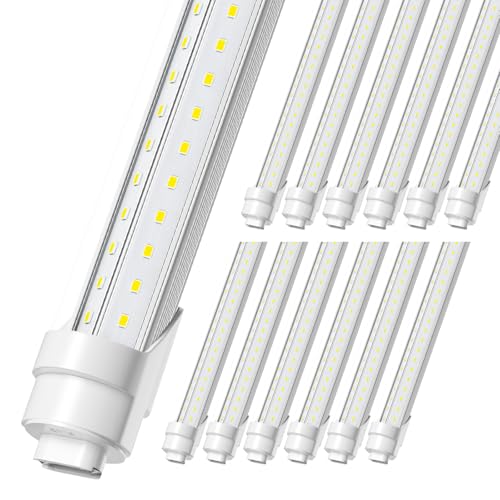
ELEKICO 8FT V-Shape LED Tube Light 75W
A Breakdown Of The Leading Choices
High bay fixtures, those UFO-shaped units meant for ceilings over 15 feet, solve a problem most 4-foot shop lights can’t touch. This ELEKICO model pushes 350 watts and roughly 56,000 lumens at a 5000K color temperature, which is daylight-neutral and easy on the eyes during long sessions. Where the 4-foot options below spread light across a single-car garage, this one dominates a two- or three-bay space without leaving pockets of shadow near the corners.
For owners running lathes, CNC machines, or paint booths, that kind of overhead throw matters. The mounting pattern recommended for a 20-by-40 shop calls for about three of these units, and the same logic scales up or down depending on square footage. Most people wiring these into an existing shop circuit will want an electrician to confirm the breaker and wire gauge can carry the load, since 350 watts per fixture adds up fast on a multi-unit layout.
Key Advantages
- Massive light output handles tall ceilings and wide floor plans that 4-foot tubes can’t cover evenly
- 5000K color temperature mimics daylight, so color matching on automotive or woodworking projects reads accurately
- Single-fixture coverage reduces the number of mounting points and electrical runs
- Long-life LED driver keeps replacement cycles low, even in shops running 8 to 10 hours daily
Things To Consider
- 350 watts per fixture means a heavier draw; older garage circuits may need an upgrade before installing multiples
- Overkill for single-car garages with 8-foot ceilings where the 4-foot options give better coverage per watt
- Hanging hardware and a high-ceiling-safe install ladder or lift add practical steps the smaller fixtures skip
Feature Snapshot
Whose Shop It Belongs On
Owners with ceilings above 15 feet, wide floor plans, or commercial-scale projects who want one fixture per zone instead of a grid of tubes.
Where Another Pick Suits Better
Shoppers working with a standard 8-foot ceiling and a single-car footprint will get more useful coverage per dollar from the ELEKICO 60W 4ft LED Shop Lights 10-Pack.
When the goal is wiping out every shadow across a full garage, ten 4-foot fixtures deliver something a single high bay can’t, even if each one is far weaker. This ELEKICO set runs 60 watts per tube at 5000K, linkable end to end so the install feels closer to one long fixture than ten separate lights. The 768 LEDs per housing spread evenly without the bright-center, dim-edge pattern that plagues cheaper strips.
Homeowners finishing a full garage conversion tend to land here, because ten tubes let you space fixtures across two parallel runs and hit every workbench and parking bay. The linkable design also means fewer outlets needed along the ceiling, which keeps the wiring tidy. People who prefer surface-mounting over hanging chains can use the included hardware and skip the rafter-fishing step entirely.
The Upside
- Ten-pack quantity covers a typical two-car garage with fixtures to spare for expansion later
- Linkable wiring reduces the number of outlets and switch legs needed across the ceiling
- 5000K tone keeps the room bright without the yellow cast older fluorescent tubes leave behind
Worth Noting
- Ten fixtures take time to mount, even with linkable hardware and basic hand tools
- More tubes means more points that could fail years down the road compared to fewer high-output units
- Bulk packaging is heavier and bulkier to store before install than smaller-count sets
Built With In Mind
Anyone rebuilding lighting from scratch across a full garage and wanting uniform coverage without running separate circuits for every fixture.
Skip It When
A small one-car shop or storage corner is better served by the ELEKICO 2ft LED Shop Lights 4-Pack, which fits shorter ceilings without overkill.
The V-shape on this 4-foot tube isn’t decorative. It angles the LEDs outward at roughly 270 degrees, which throws light sideways into the corners rather than letting half of it bounce uselessly against the ceiling. At 50 watts and 7,200 lumens per fixture, each one handles a single workbench zone comfortably without needing a full ten-pack grid.
Most hobbyists with one car bay and a defined bench area find two or three of these fixtures cover the whole space. The integrated T8 design means the bulb and housing ship as one piece, so there’s no separate ballast to wire or retrofit. Plug-and-play cabling with the included snap joints makes a weekend install realistic for someone who’s never hung shop lighting before.
Where It Excels
- V-shape geometry spreads light into corners and side walls, not just straight down
- 50,000-hour rated lifespan means years of use before the LEDs start dimming noticeably
- Plug-in power cable and on/off switch remove the need for a hardwired switch leg at every fixture
Points To Keep In Mind
- Single-fixture lumen output means you’ll need several units to fully light a two-car garage
- The on-cord switch is handy but lives at the fixture, so remote wall-switch control needs extra wiring
Who It Suits Best
First-time installers working on a single workbench zone who want a clean install without hiring an electrician.
Not Your Match When
Anyone lighting a wide two-bay shop will find the ELEKICO 60W 4ft LED Shop Lights 10-Pack delivers more even room coverage in fewer planning steps.
Stepping up from 7,200 to 9,000 lumens per tube sounds small on paper, but across ten fixtures that’s the difference between a garage that feels bright and one that feels daylight-flat. This 60W set carries a 5000K color temperature and the same linkable hardware pattern as the entry-level option, so planning an install layout carries over.
For people who do finish work, auto detailing, or video projects in the garage, the extra output cuts down on shadows under the hood and on close-up bench surfaces. The 59-inch power cord included with each fixture gives reasonable reach to the nearest outlet, and the linkable end connectors let multiple fixtures share a single power run.
Notable Gains
- 9,000-lumen output per tube gives detail work and hobby projects cleaner illumination
- Ten-pack quantity lets you stage fixtures across two parallel ceiling runs in larger garages
- Plug-and-play setup keeps install time reasonable for anyone comfortable with basic wiring
Trade Offs
- Higher per-fixture draw means total wattage climbs quickly across a ten-unit install
- Brighter output is wasted if your garage doesn’t actually need task-level lighting
Feature Snapshot
Made For
Hobbyists and part-time pros running detailed projects like woodworking, automotive repair, or model building across a mid-to-large garage.
Look Elsewhere When
A single workbench in a tight space is more practically covered by the ELEKICO 50W V-Shape 4ft LED Shop Light at lower total output.
Not every garage stretches out into a wide bay. Detached single bays, basement workshops, and attic workspaces often run 10 to 14 feet across, where a 4-foot tube overpowers the room and leaves fixtures sticking out past the workbench. This 2-foot, 40W set from ELEKICO solves that geometry problem by halving the length while keeping the linkable convenience intact.
The 6000K color temperature skews slightly cooler and whiter than the 5000K options, which helps when a small room needs every photon it can get. Owners using one over a workbench and one over a parts shelf tend to find two units cover a tight space cleanly. The four-pack leaves extras for adding a third zone later or replacing a damaged fixture without reordering.
Real-World Strengths
- Shorter housing fits narrow ceilings and tight spaces where 4-foot tubes dominate the room
- Cool 6000K tone feels brighter to the eye in smaller rooms, which need that extra perceived punch
- Four-pack quantity leaves room to expand or hold a spare for the inevitable dropped-fixture accident
Less Ideal Details
- Per-fixture output won’t match the 4-foot options, so larger rooms need many more units
- Cool-white tone can feel sterile in workshop spaces where people spend hours at a stretch
Right Fit For
Single-car garages, basement corners, and shed workspaces where 4-foot tubes look oversized and throw light where it’s not needed.
A Better Fit Elsewhere
Anyone outfitting a two-car bay with multiple work zones will want the wider coverage of the ELEKICO 60W 4ft LED Shop Lights 10-Pack instead.
Ten fixtures feels excessive for a one-car shop, but four feels thin across a two-car layout. The six-pack hits the middle ground, which is exactly where most everyday garage projects land. Each tube carries the same 60W and 9,000-lumen output as the larger ten-pack set, so per-fixture brightness doesn’t drop just because the count is smaller.
Homeowners with one parking bay and a defined workbench tend to run three fixtures: two down the centerline and one over the bench. That leaves three extras to extend coverage into a back corner, replace a damaged unit, or donate to a friend who inevitably needs shop lighting the moment they see yours. The 5000K tone keeps the room reading as clean white rather than warm yellow.
Useful Highlights
- Six-pack quantity matches the most common single- and small two-car garage layouts
- 9,000-lumen output per fixture keeps the room genuinely bright rather than just functional
- Same linkable hardware as larger sets, so expanding later doesn’t require a different fixture line
Honest Caveats
- Six units won’t cover a true two-car shop evenly without adding more fixtures down the road
- Higher per-fixture wattage adds up across the pack, so older garage circuits may feel the load
Best Suited To
One-car or small two-car garages where the project zone and parking area both need reliable illumination without excess fixtures left over.
Consider Something Else When
Anyone lighting a wider shop with multiple work zones will be better served by the ELEKICO 60W 4ft LED Shop Lights 10-Pack for full room coverage.
Older garages built before the LED transition often came with 8-foot fluorescent tubes, and replacing those one-for-one saves the cost of rewiring the entire ceiling. This ELEKICO 12-pack swaps in 75W V-shape tubes that output 9,500 lumens each at 6000K, with dual-end power and a ballast-bypass design. The V-shape angles the LEDs so light spreads sideways instead of pooling in a narrow strip down the center.
Owners upgrading legacy fixtures want the simplest install, and a direct tube swap accomplishes that. The ballast bypass means a small wiring change at each fixture end, which most homeowners comfortable with basic electrical work handle in an afternoon per fixture. The 270-degree throw covers the side wall reflections that standard flat tubes miss.
Advantages To Know
- Direct-fit replacement for 8-foot fluorescent tubes keeps existing fixtures in service
- 270-degree V-shape throw reduces the dim side-wall effect common with flat LED tubes
- Pack of twelve covers a whole shop at once and leaves spares for future swaps
Possible Compromises
- Ballast bypass requires rewiring each fixture end, so a complete novice may need an electrician for the first one
- 6000K tone is cooler than 5000K options and can feel clinical in wood-shop environments
Feature Snapshot
Who Should Grab It
Anyone with existing 8-foot fluorescent fixtures who wants brighter light and lower draw without rebuilding the ceiling layout.
Reach For A Different Pick When
Garages with no existing 8-foot fixtures will get cleaner results from the ELEKICO 60W 4ft LED Shop Lights 6-Pack and a fresh ceiling layout.
What Matters Most Before Choosing Lightings For Garage Shop
Match Output To Ceiling Height
A 4-foot tube throws useful light to about 8 to 10 feet, but past 12 feet the beam spreads thin and shadows creep back in. Garages with vaulted or industrial ceilings above 15 feet genuinely need UFO-style high bays, while standard residential ceilings do fine with the 4-foot options. Mismatching fixture to ceiling height is the single most common reason new shop lighting disappoints owners.
Plan Layout Before Buying
Counting fixtures by square footage beats guessing. A rough rule is one 4-foot tube per 4 to 6 feet of ceiling run, staggered in two parallel rows for even coverage. For high bays, two or three units typically cover a 1,500-square-foot shop, depending on task intensity. Sketching the ceiling first prevents the classic mistake of buying a ten-pack for a room that needs six or vice versa.
Decide Between 5000K and 6000K
Color temperature affects how a workspace feels even when the lumen count is identical. 5000K reads as clean daylight-neutral, which most people find comfortable for long sessions. 6000K skews cooler and brighter to the eye, which helps small rooms feel bigger but can feel clinical in wood-heavy shops where warmer tones flatter the material.
Think About Controls Early
Plug-in fixtures with on-cord switches are easy to install but force you to reach the fixture to control it. Hardwiring through a wall switch adds a step at install but pays off every time you walk into the shop. Plan the switch locations alongside the fixture layout, especially in a garage where the panel may already be full and a small subpanel could be the smartest add-on.
Key Considerations Across These Picks
Where Shoppers Go Wrong
A common trap is buying a high-output single fixture and expecting it to cover a wide shop. The UFO high bay in this list throws a cone of light downward, which leaves the perimeter dim. The better approach for most home garages is multiple lower-output fixtures spread across the ceiling, even though it feels like buying more gear. Equally common is ignoring color temperature until the lights are already hung, then discovering the room feels either too warm or too sterile for the work being done.
Where The Extra Money Goes
Higher-tier LED fixtures earn their cost through longer rated lifespans, more consistent color rendering, and driver components that handle heat better. In a shop that runs eight or more hours a day, the difference between a 25,000-hour and a 50,000-hour LED adds up across just a few years of use. The upgrade also tends to mean better warranty support and more uniform light output, so the room doesn’t develop uneven brightness as the fixtures age.
Frequently Asked Questions
How Many LED Shop Lights Do I Need For A Two-Car Garage?
A typical two-car garage runs about 400 to 500 square feet, which most homeowners cover with six to eight 4-foot LED tubes spaced evenly across two ceiling runs. For wider workshops or detailed task work, plan on the higher end of that range.
Can I Install LED Shop Lights Myself?
Most plug-and-play 4-foot fixtures install with basic hand tools and a standard outlet, which puts them within reach of confident DIYers. Hardwired installs, high bay units, and ballast-bypass retrofits generally call for an electrician, especially on older garage circuits.
What’s The Difference Between 5000K And 6000K For A Garage?
5000K reads as clean daylight-neutral and works well for general use. 6000K skews cooler and feels brighter in small rooms, which helps visibility but can feel clinical in wood-working shops. Both are functional, so the choice usually comes down to personal preference.
Are LED Shop Lights Worth The Upgrade Over Fluorescent?
LEDs draw noticeably less power for the same lumen output, run cooler, and last longer without the flicker or hum common with aging fluorescent ballasts. For a garage used regularly, the upgrade pays back through lower electric bills and fewer replacement cycles.
How Long Do LED Shop Lights Typically Last?
Most quality LED shop lights carry rated lifespans between 25,000 and 50,000 hours, which translates to roughly 10 to 20 years of normal hobby-shop use. Actual lifespan depends on heat management, fixture quality, and how many hours per day the lights stay on.
Final Takeaway
Pick the fixture shape that matches your ceiling, then size the count to your actual square footage. Most home garages do well with six to ten 4-foot tubes spread across two runs, while taller ceilings earn the upgrade to a UFO high bay. The right setup makes the difference between a garage you tolerate and one you actually use.