

A kitchen ceiling pulls a lot of weight. It sets the mood during a quick weekday breakfast, it has to play nice with steam from the stovetop, and it shapes how food looks while you chop and plate. I notice the difference between a flat, yellow wash and a crisp, even glow the moment I walk in.
Picking the right bulb matters more than most people expect. The wrong color temperature makes a clean kitchen feel like a breakroom, and a mismatched beam angle leaves dark patches above the sink. I put together this list for folks who want better light without the trial-and-error, whether you’re swapping out old incandescens or finally trying a smart bulb.
The Picks In Brief

TJOY 12 Pack BR30 Flood Light Bulb Indoor, Soft White Recessed Light Bulbs

Brightown 4Pack Edison Light Bulbs, E26 Base 2700K Warm White, Non-Dimmable
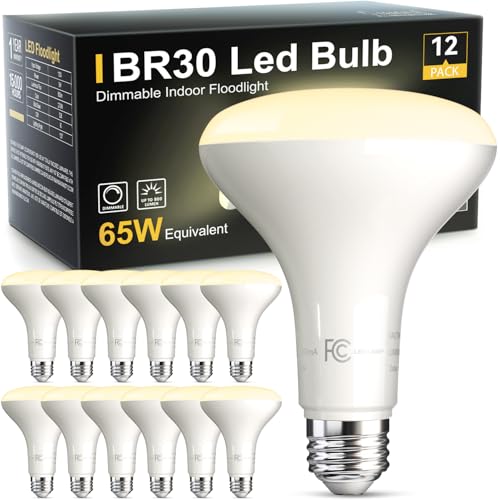
TJOY 12 Pack BR30 Flood Light Bulb Indoor, Warm White Recessed Light Bulbs
Philips Hue Smart B39 Candle-Shaped LED Bulb, Color-Changing, E12, 1 Pack

TJOY 12 Pack BR30 Flood Light Bulb Indoor, Daylight Recessed Light Bulbs

Legental GU24 LED Puck Light Bulb 2 Prong, 10W 5000K Cool White, 2 Pack

Sigalux 6 Pack BR30 LED Recessed Can Light Bulbs, 7.5W Equivalent 65W, 2700K Soft White, Dimmable
The Strengths Of Each Pick
The TJOY BR30 Soft White 12-pack is the one I think of first when someone wants a simple recessed overhaul. The bulbs run at a 2700K tone, which sits in that warm-but-not-yellow sweet spot most kitchens handle well, and the wide BR30 shape throws light evenly across a 6-inch can. For homes that already have recessed housings throughout the kitchen, this pack covers the whole ceiling without leaving a few lonely spares.
It plays nicely with standard dimmer switches, so the same fixture can handle bright task work in the morning and a softer glow over dinner. Compared with the Brightown Edison set later in this list, this is the more practical, no-fuss option for everyday recessed ceilings.
The Case For It
- Smooth 10–100% dimming for everything from chopping to candlelight dinners.
- Twelve bulbs in one box covers most average kitchen ceilings without leftovers.
- 2700K soft white flatters wood cabinets and warm paint colors without washing them out.
- Wide flood beam fills 6-inch recessed cans evenly, cutting down on dark patches.
- FCC listed build suggests the no-blue-light claim was actually tested for flicker and output.
Points To Note
- Not for vintage pendants or exposed fixtures where you want to see the bulb itself.
- Soft white reads slightly yellow in kitchens with cool gray cabinets or stainless surfaces.
- Confirmed only for recessed use, so it won’t help with standard lamp sockets elsewhere.
Key Attributes
Right Fit For
Homeowners with a full grid of recessed kitchen cans who want warm, dimmable light and value getting everything in one box.
Look Elsewhere When
You have a fixture where the bulb itself is the design statement, in which case the Brightown 4Pack Edison Light Bulbs reads as a more atmospheric choice.
The Brightown Edison set is less about flooding a ceiling and more about letting the bulb be seen. With a visible LED filament and a familiar E26 base, this is the right shape for the kitchen where you’ve installed a pair of pendants over the island or a single bare socket above the sink. It runs at 2700K, so the warm cast matches the recessed options above without clashing.
The 6W draw replaces a 60W incandescent, which matters for kitchens where the pendants stay on for hours during the evening. It doesn’t dim, though, so anyone who likes to fade the lights down for dinner will feel limited.
Good Reasons To Consider
- Edison filament style adds visual character to pendants and exposed socket fixtures.
- 6W replaces 60W, cutting energy use dramatically in fixtures that run all evening.
- Standard E26 base fits most common pendant and ceiling sockets without an adapter.
- Around 20,000-hour lifespan means years of use before a swap-out.
Worth Bearing In Mind
- Not dimmable, so it won’t shift down for late-night kitchen trips or dinner scenes.
- Only four bulbs per pack, which feels short for whole-room retrofits.
- Style-driven choice; in a plain recessed can it wastes the visible filament design.
Made For
Renters and homeowners with industrial pendants or cage fixtures who want the bulb to do some of the decorating.
A Better Fit Elsewhere
You want broad recessed coverage for the whole ceiling; the TJOY BR30 Soft White 12-pack handles that job more efficiently.
The 3000K version of the TJOY BR30 sits in a useful middle ground. It moves just enough away from soft yellow to read cleaner on white countertops and stainless steel, while still feeling like a home kitchen and not a clinic. The 120-degree beam angle spreads light wall-to-wall across a standard 6-inch can, which matters for galley kitchens where two parallel rows of recessed lights do most of the work.
Like the 2700K sibling, this 12-pack is built for dimmer switches, which I find is the single biggest quality-of-life upgrade for a kitchen ceiling. For open-plan layouts that flow into a living room, the warmer 3000K tends to blend better with adjacent wood floors and furniture than a cooler tone.
Everyday Advantages
- 3000K reads slightly cleaner on countertops than the 2700K version, while staying warm.
- 120-degree beam fills 6-inch recessed cans edge-to-edge without spotlighting.
- Smooth dimming works with most LED-compatible wall dimmers.
- Twelve-bulk pack handles a kitchen plus an adjacent dining nook in one buy.
- FCC listed for flicker and electrical safety, useful for anyone sensitive to buzzing.
Honest Caveats
- Slightly cooler cast may still feel warm next to pure 4000K office lighting.
- Recessed-only design, so it doesn’t double as a pendant upgrade.
- Dimmer compatibility depends on the switch model, so older dimmers may need a swap.
Feature Rundown
Right Fit For
Open-plan kitchens with white or gray cabinets, stainless appliances, or quartz countertops that wash out under pure yellow light.
Swap It Out When
Your prep work demands sharper detail lighting; the TJOY BR30 Daylight 5000K pack reads as the task-ready option in this list.
The Philips Hue B39 candle bulb belongs to a different crowd. The narrow E12 candelabra base and candle shape put this squarely in chandelier, sconce, and small pendant territory, and the color-changing feature means the same fixture can shift from warm dinner lighting to a soft accent hue for hosting. For kitchens with a small chandelier over a breakfast table, this is the kind of upgrade that quietly changes how the room feels.
The catch is that it only works well inside the Hue system. The bulb itself runs on Bluetooth, but unlocking automations and away-from-home control requires a Hue Bridge, which is a separate purchase. Compared with the plug-and-play TJOY recessed picks, this is more of an investment than a swap.
Well-Handled Touches
- Color-changing capability adds real atmosphere for hosting and holidays.
- Bluetooth control works out of the box for quick on/off and dimming.
- E12 candelabra base fits chandeliers and decorative sconces many kitchens already have.
- Compatible with major voice assistants once the system is set up.
- 450-lumen output reads bright enough for small fixtures over a table.
Some Limits To Know
- Single-bulb pack, so a chandelier with five sockets adds up fast.
- Full smart features require a separate Hue Bridge purchase.
- Not the right beam or shape for recessed kitchen ceilings.
Feature Snapshot
Made For
Smart-home households with a decorative kitchen fixture who want tunable scenes and voice control without rewiring.
Reach For A Different Pick When
You just want cleaner recessed light, in which case the Sigalux BR30 6-pack covers a whole ceiling for less.
The 5000K daylight version of the TJOY BR30 hits the brightest, coolest tone in the lineup. I’d reach for this in a kitchen where someone does serious cooking, reads recipes on a tablet, or sorts bills at the island. The cooler cast sharpens detail on cutting boards and makes ingredient colors read more accurately, which is genuinely helpful for portioning or following plating videos.
It still uses the same BR30 flood shape and dimmer compatibility as the warmer siblings, so there’s no learning curve. The honest trade-off is that 5000K can read harsh in the evening, especially if the kitchen opens into a wood-floored living room.
Key Advantages
- 5000K daylight tone sharpens detail for cooking, reading recipes, and close-up tasks.
- Full 10–100% dimming lets the same ceiling double as evening ambient light.
- Twelve bulbs cover a large kitchen plus a hallway or laundry entry.
- CRI 80+ keeps food colors honest under the bright tone.
- Same FCC listed build as the warmer TJOY siblings for consistent quality.
Where It May Fall Short
- 5000K can feel sterile at dinner time, especially next to warm living spaces.
- Overkill for kitchens that already get strong natural light from large windows.
- Recessed shape means it won’t help with a fixture where the bulb is visible.
Key Product Details
Built With In Mind
Home cooks and bakers who want crisp, almost-daylight visibility over the counters and stovetop during meal prep.
Skip It When
Your kitchen doubles as the evening hangout space; the TJOY BR30 Warm White 3000K pack feels softer at the same dimmed level.
The Legental puck bulb solves a very specific problem. GU24 is the twist-and-lock two-prong base that turned up in a lot of tract homes and apartments through the 2000s, and a standard E26 LED won’t fit those fixtures. This puck-shaped LED drops right into the existing socket, which is a relief when the old CFL finally gives up and you don’t want to swap the whole fixture.
It runs at 5000K cool white with around 1000 lumens per bulb, which is genuinely bright for a single puck. For most kitchens, two of these in a flush-mount ceiling fixture is more than enough, and the wider 120–277V compatibility helps in homes with non-standard circuits.
Practical Advantages
- GU24 twist-lock base fits fixtures that reject standard screw-in LEDs.
- About 1000 lumens per bulb replaces an 18W CFL with similar output.
- 120–277V compatibility covers most residential circuits without fuss.
- Rated around 25,000 hours, so replacements are rare in everyday use.
Where It Is Less Suited
- Two-bulb pack won’t cover a whole grid of puck fixtures.
- Puck shape doesn’t fit recessed cans or pendants.
- Cool 5000K tone feels harsh in evening-heavy kitchens.
Made For
Homeowners with older GU24 flush-mount kitchen fixtures who want a brighter, longer-lasting CFL replacement.
Not Your Match When
Your kitchen runs on standard E26 screw-in sockets, where the TJOY BR30 12-pack fits without adapters.
The Sigalux 6-pack rounds out the list for anyone focused on energy use. At 7.5W, it claims the output of a 65W incandescent, which is a meaningful drop for kitchens with several cans running through long evenings. The 2700K soft white keeps the tone warm, the 110-degree beam covers a standard recessed can well, and it dims smoothly with most LED dimmers.
A six-bulb pack lands in a useful middle zone for a smaller kitchen or a single room, and the BR30 form matches the same 6-inch cans the TJOY picks target. For a homeowner comparing apples to apples, the trade-off here is fewer bulbs per box for a similar spec sheet.
Strong Points
- 7.5W draw replaces 65W, useful for kitchens with many cans running daily.
- Smooth 10–100% dimming with most modern LED dimmer switches.
- 2700K soft white flatters wood floors and warm-tone paint schemes.
- 110-degree beam handles 6-inch recessed cans without dark edges.
- CRI 80 keeps food and skin tones honest at warm color temperatures.
Trade Offs
- Six-bulb pack runs short for a full grid of 8–12 recessed cans.
- No cooler color option in the same line for kitchens wanting daylight tone.
- Recessed-only build doesn’t cross over to pendant fixtures.
Best Suited To
Smaller kitchens or single-room retrofits where six recessed cans is the right count, and energy draw matters to the household budget.
Consider Something Else When
You have a larger grid of recessed cans, in which case the TJOY BR30 Soft White 12-pack delivers the same warm tone in a single buy.
Picking The Right Bulb For Your Ceiling
The right kitchen bulb starts with three honest questions: what base does the fixture take, how bright does the room actually need to be, and what color temperature fits the cabinet and countertop palette. Most recessed kitchen cans use a standard E26 screw base or a GU24 twist-lock, so checking the socket before clicking through to a product page saves a return. Brightness, measured in lumens, matters more than the old wattage numbers, and a recessed kitchen ceiling usually wants around 700 lumens per can for everyday comfort.
Color temperature, expressed in Kelvin, decides whether a kitchen feels cozy or clinical. 2700K soft white flatters warm wood and traditional cabinetry, 3000K balances warm tones with crisp surfaces like quartz and stainless, and 5000K daylight sharpens detail for serious meal prep. Dimming compatibility is the underrated detail. Mixing LED bulbs with an older dimmer switch can cause flicker or buzz, and pairing the two matters more than picking the most expensive bulb on the shelf.
Beam angle and CRI round out the practical side. A 110 to 120 degree flood beam fills recessed cans evenly, and a CRI (Color Rendering Index) of 80 or higher keeps food colors and skin tones looking honest under artificial light. For households with chandeliers or pendants, the bulb becomes part of the visual design, so a visible filament like the Brightown Edison adds something the recessed picks simply can’t.
Key Considerations Across These Picks
Where Shoppers Go Wrong
The most common slip is matching a bulb’s base to the fixture without checking the dimmer switch. LEDs and older dimmers often disagree, leading to flicker or limited dimming range that isn’t the bulb’s fault at all. Another miss is overestimating how bright 5000K daylight feels at dinner time; cool light reads great during prep but can wash out a kitchen once the sun goes down. Finally, assuming any recessed BR30 fits every can leads to frustration with shallow housings that need a smaller form factor.
Where The Extra Money Goes
Paying more in this category usually buys better dimmer compatibility, a higher CRI for truer color, or a longer rated lifespan. Smart features like the Philips Hue B39 candle bulb add app control, color scenes, and voice integration, but the price reflects the wireless hardware inside, not just the light output. For most households, the meaningful upgrades are smooth dimming, a CRI of 80+, and a warm tone that holds up over the long evenings when the kitchen becomes the heart of the home.
Frequently Asked Questions
What color temperature works best for a kitchen ceiling? Most kitchens handle 2700K to 3000K well, since that range flatters food and skin while staying warm enough for evenings. Cool 5000K reads sharper for recipe work but can feel sterile at dinner.
How many lumens per recessed can do I need? Around 700 lumens per can suits everyday cooking and cleanup. Larger kitchens or ceilings higher than nine feet benefit from closer to 900 lumens to keep the room evenly lit.
Do LED bulbs work with older dimmer switches? Sometimes, but not always. Older dimmers were built for incandescent loads and may flicker or buzz with LEDs, so an LED-compatible dimmer switch is a worthwhile upgrade.
Can I mix color temperatures in the same kitchen? Yes, and it often helps. Warm 2700K pendants over an island combined with 3000K recessed cans across the ceiling keep the room balanced without feeling flat.
What is CRI and why does it matter for kitchens? CRI, or Color Rendering Index, measures how accurately a bulb shows colors compared to natural light. A CRI of 80 or higher keeps food, skin, and cabinet finishes looking honest under artificial light.
Wrap Up
The right kitchen ceiling bulb turns the busiest room in the house into a place that feels right at any hour. Warm tones flatter the everyday, daylight tones sharpen the serious prep work, and a smart bulb can stretch the same fixture into different moods. Pick the base that fits, match the color temperature to the cabinets, and don’t skip the dimmer check. Small decisions in the bulb aisle end up shaping the kitchen for years.