

A kitchen lives or dies by its lighting, and the wrong bulb turns even a great meal prep into guesswork. I pulled together seven solid options that cover the spots most homes forget about, from range hoods to refrigerator interiors. Whether you hang pendants over an island or just want the inside of the fridge to stop looking like a cave, the list below has a real answer.
A Fast Comparison Of The Options

Vinaco PAR20 50W Halogen Bulb Dimmable 120V 3000K Warm White

Vinaco 9PCS Eco Halogen 39W PAR20 Warm White Dimmable

Brightown 6Pack Edison Light Bulbs E26 2700K Warm White

Vinaco PAR20 Halogen Bulb 50W Dimmable 120V Warm White

Megereet E17 LED Refrigerator Bulb 5000K Daylight White
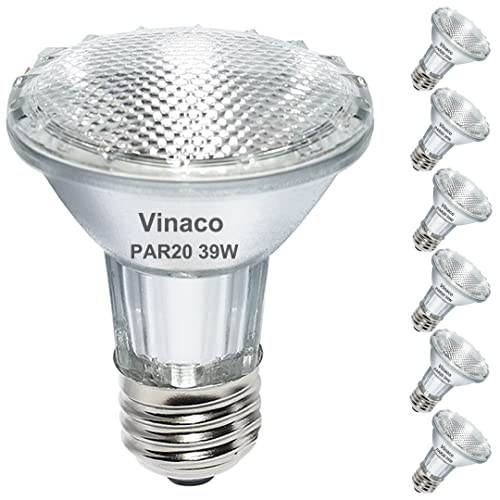
Vinaco PAR20 Halogen Bulb 39W Dimmable 3000K Warm White

Legental GU24 LED Puck Light Bulb 10W 5000K Cool White
A Closer Look At Each Pick
I keep coming back to halogen for range hoods because the light lands where you’re cooking, not somewhere above your head. The Vinaco PAR20 50W pushes out around 700 lumens at a 3000K warm white, which reads as soft and golden rather than blue or clinical. The beam angle suits the tight housing under a hood, so the light pools right on the stovetop instead of washing out the rest of the kitchen.
Compared with the LED filament Edison bulb later on this list, this halogen kicks on instantly at full brightness, which matters when the hood fan roars and you need to see what’s browning. Dimming compatibility lets you drop the level during late-night snacking. For most cooks using a standard E26 socket hood, this is the easy swap.
What Helps Most
- Around 700 lumens at 3000K warm white gives a clear view of food without harsh blue tones.
- Compatible with standard dimmers, so you can drop the output for ambient evenings.
- PAR20 shape fits common range hood and recessed housings without modification.
- Tungsten filament reaches full brightness the moment you flip the switch.
Trade Offs
- Halogen runs hotter than LED, so the surrounding housing and lens can feel warm after long cooking sessions.
- Reported lifespan lands in the low thousands of hours, meaning more frequent swaps than LED alternatives.
Feature Snapshot
Who Should Grab It
Home cooks with a dim range hood who want brighter, warmer task light over a gas or electric cooktop.
Look Elsewhere When
The Vinaco 9PCS Eco Halogen 39W PAR20 suits anyone re-lamping the whole kitchen from one box instead of just the hood.
Most kitchens don’t run one fixture, they run half a dozen, and the 9-pack from Vinaco acknowledges that reality. Each bulb is a 39W PAR20 at 3000K, putting out around 480 lumens with a 40-degree flood beam angle. The E26 medium base fits standard track heads, recessed cans, and many range hoods, so a single pack can refresh the whole main level.
The trade-off shows up in output: 480 lumens is dimmer than the 700-lumen 50W sibling earlier in this list. For ambient or task lights that share the room with overhead ambient fixtures, that lower output feels intentional rather than weak. Eco-halogen construction uses slightly less energy per bulb, which helps when you’re running nine of them.
Points In Its Favor
- 39W draws less power than older 50W halogens while staying warm and dimmable.
- 40-degree flood beam covers recessed cans and track heads comfortably.
- Standard E26 base removes the guesswork around fitting oddball sockets.
- Multi-pack format keeps spare bulbs on hand for the next swap.
Honest Caveats
- Lower lumen output means it can feel underpowered in oversized or vaulted kitchens.
- Halogen heat output still trumps LED, so enclosed fixtures can run warm.
- Glass bulbs ship with care, and a few owners mention cracked units on arrival.
Right Fit For
Anyone re-lamping an entire kitchen with recessed cans or track heads who values a consistent warm look across fixtures.
Swap It Out When
The Brightown 6Pack Edison LED Bulbs makes more sense for open-cage pendants where the filament becomes part of the decor.
The Brightown set changes the whole mood of the room. These are 6W LED filament bulbs in a 2700K warm white, the color temperature that flatters wood cabinets and brass fixtures. The exposed LED strands inside the clear glass mimic the look of an old-school Edison bulb, which matters when the fixture is a cage pendant or a bare socket over the island.
Each bulb pushes around 750 lumens, replacing a 60W incandescent while sipping a fraction of the power. The catch is dimmability: the listing is non-dimmable, so pairing these with an old rotary dimmer can produce flicker. For most kitchens with simple on/off switches, that’s not a problem.
Reasons It Performs
- 6W LED draws a small fraction of the energy a 60W incandescent uses.
- 2700K warm white flatters wood tones, brass, and natural stone counters.
- Exposed filament design adds visible character inside clear pendants.
- E26 base slides into the standard sockets most homes already have.
Points To Note
- Non-dimmable rating means pairing with a dimmer switch can cause flicker.
- Filament look only shines in clear or open fixtures, not frosted shades.
Best Suited To
Design-focused kitchens where pendants or cage fixtures show off the bulb itself.
A Better Fit Elsewhere
The Vinaco PAR20 50W Halogen Bulb suits task-focused cooks who prioritize bright stovetop lighting over decorative filament style.
Track lighting turns a kitchen into a flexible workspace, and the bulb has to keep up. The Vinaco PAR20 50W halogen is tuned for that job, pushing roughly 700 lumens at 3000K with a high CRI close to 100, which means the colors of food, tile, and wood read true. CRI (Color Rendering Index) measures how accurately a light source reveals colors compared to natural daylight; higher numbers mean closer to sunlight.
This model steps up the durability story. The manufacturer cites a lifespan above 3000 hours and on/off cycles up to 15,000, which matters in kitchens where the lights flip on and off dozens of times a day. The PAR20 shape works in standard track heads, so swap-in is straightforward.
The Practical Payoff
- High CRI near 100 keeps the color of produce, meat, and tile looking natural.
- Rated for 15,000 on/off cycles, suitable for high-traffic kitchens.
- 700-lumen output stays bright enough for chopping, reading recipes, and plating.
- Compatible with standard dimmers for layered lighting scenes.
Worth Noting
- 50W halogen heat output runs noticeably warm in enclosed track heads.
- Beam is more focused than flood, so bare spots can appear between fixtures on long runs.
Whose Shelf It Belongs On
Cooks who run a track layout above an island or prep zone and want warm, accurate light for plating and chopping.
Reach For A Different Pick When
The Legental GU24 LED Puck Light Bulb makes more sense for under-cabinet setups where a twist-lock base and cooler output fit the application better.
Most kitchen lighting guides forget the inside of the fridge, which is exactly where a dim or dead bulb makes finding leftovers a chore. The Megereet E17 LED targets that specific job with a 5000K daylight white output and roughly 800 lumens. The E17 base (a smaller 17mm screw base than the standard E26) fits many Frigidaire, Kenmore, and Electrolux refrigerator and freezer sockets.
It runs cool, which matters inside a closed appliance, and the daylight color temperature reveals food colors accurately. The wide voltage range (100-265V) means it tolerates the surges from a compressor cycling on and off. For shoppers whose fridge bulb burned out months ago and they’ve been living with it, this is a clean swap.
A Few Highlights
- 5000K daylight white reveals true food colors inside the fridge.
- Cool-running LED suits the enclosed refrigerator interior.
- Wide 100-265V range tolerates compressor-related voltage variation.
- E17 base replaces bulbs in several Frigidaire, Kenmore, and Electrolux models.
Things To Consider
- Daylight white can feel stark compared with the warm tones of a kitchen ceiling.
- Single-pack quantity means fridge and freezer swaps need a separate purchase.
Key Product Details
Who Will Love This
Anyone with a Frigidaire, Kenmore, or Electrolux fridge whose original bulb has dimmed or failed and wants a quick LED swap.
Not Your Match When
The Vinaco 9PCS Eco Halogen 39W PAR20 fits a shopper focused on the main kitchen ceiling rather than the inside of the fridge.
Some range hoods are picky about wattage, either because of a smaller housing, a tighter lens, or a dimmer switch that complains at higher loads. The Vinaco PAR20 39W solves that gap. It delivers the same 3000K warm white and around 480 lumens as its 9-pack sibling earlier in this list, but with single-bulb packaging for one-off replacements.
Halogen at 39W is a smart middle ground for households watching energy use. The light still reads warm and reaches full brightness instantly, with the same 10-100% dimming range as the larger 50W version. For most homeowners replacing a single burned-out hood bulb, this is the lower-watt answer that still feels bright.
What Works In Its Favor
- 39W draw reduces energy use compared with older 50W halogens.
- 3000K warm white keeps the cooking surface looking natural, not bluish.
- Compatible with 10-100% dimmers for flexible mood control.
- PAR20 shape fits common range hood and recessed fixtures.
Possible Compromises
- 480 lumens can read dim in larger hoods with wider lenses.
- Halogen heat output remains higher than LED alternatives like the Brightown Edison later in this list.
The Right Fit
Homeowners with a single burned-out hood bulb or a fixture rated for lower wattage who want a quick halogen replacement.
Where Another Pick Suits Better
The Vinaco PAR20 50W Halogen Bulb makes more sense for hoods that need the full 700-lumen output and can handle the higher draw.
Under-cabinet puck lights are often the unsung heroes of a working kitchen, and the Legental GU24 LED is built for them. The 2.99-inch form factor slots into standard twist-and-lock GU24 sockets (a two-prong connector that twists to lock in place), and the 10W LED pushes roughly 1000 lumens at a cool 5000K. That is enough light to chase shadows off the countertop while you chop.
The wide voltage range of 120-277V makes it forgiving in older homes or commercial-style kitchen remodels. Cool white helps spot detail work, though it can read sterile compared with the warmer tones earlier in this list. For task-driven cooks who use their counters for hours each day, the output earns its place.
Noteworthy Benefits
- ~1000 lumens per bulb brightens full counter runs without dark spots.
- 5000K cool white reveals detail for chopping and reading recipes.
- Twist-and-lock GU24 base installs in seconds with no tools.
- 120-277V range handles a wide variety of kitchen circuits.
Where It May Fall Short
- Cool white can feel clinical next to warm-toned pendants or cabinets.
- 2-pack quantity may not be enough for larger kitchens with multiple runs of pucks.
Core Features
Made For
Cooks with GU24 puck lights under their cabinets who want brighter, cooler task light on the work surface.
Consider Something Else When
The Brightown 6Pack Edison LED Bulbs suits open-cage pendants over an island where a warm filament look sets the mood.
What Matters Most Before Choosing Light Bulbs For Kitchen
Match The Base And Socket First
Before worrying about color or wattage, confirm the socket type. Most kitchens use the standard E26 medium screw base, but range hoods, refrigerators, and puck lights often run smaller E17 or twist-lock GU24 bases. The wrong base means the bulb simply will not seat, and you’ll end up making a second trip. Check the old bulb or the fixture label before you order.
Think About Color Temperature
Color temperature, measured in Kelvin (K), shapes the entire mood of the room. Lower numbers (2700K) read warm and cozy, flattering wood and brass. Higher numbers (5000K) read cool and crisp, which suits task zones and refrigerator interiors. Most kitchens feel best with a layered approach: warm ambient light overhead and cooler task light at the counter.
Balance Brightness With Fixture Size
Lumens tell you how much light a bulb emits, but the fixture matters as much as the number. A 50W halogen in a tight range hood lens can read blinding, while the same bulb in an open pendant feels modest. In most kitchens, 450 to 800 lumens per fixture works well for ambient light, while 800 to 1000 lumens suits task zones.
Plan For Heat And Lifespan
Halogen bulbs run hot and have shorter lifespans, while LED runs cool and lasts years longer. In enclosed fixtures like range hoods, heat becomes a real concern. In open pendants or wall sconces, either technology works comfortably, and the choice often comes down to the look you want and how often you’re willing to swap bulbs.
Key Considerations Across These Picks
Common Shopping Slip Ups
One mistake I see all the time is buying the right shape but the wrong base. PAR20 refers to the bulb’s reflector shape, while E26 or GU24 refers to the connector. Match both before you order. Another slip is choosing a beautiful warm bulb for a refrigerator, then wondering why leftovers look gray. Fridge interiors do best with daylight tones around 5000K, which is why the Megereet E17 LED earns its spot in this list.
Where The Extra Money Goes
Spending more on a kitchen bulb usually buys longer life, better color accuracy, or a higher CRI. Premium halogen options add longer-rated filament life, while premium LED options add higher CRI and consistent dimming. For most kitchens, the upgrade makes sense at task zones where you chop and plate every day, since the extra clarity reduces eye strain over time.
Frequently Asked Questions
What color temperature works best for kitchen lighting?
A 3000K warm white handles most overhead and range hood lighting without feeling harsh. For under-cabinet task zones and refrigerator interiors, 4000K to 5000K reveals detail more clearly. Many cooks combine both: warm above, cool at the counter.
Are halogen bulbs safe to use in enclosed range hoods?
Halogen bulbs run hot, so enclosed housings can feel warm after long cooking sessions. They remain safe when the fixture is rated for the wattage and has proper ventilation. For tighter housings, the lower-wattage 39W option reduces heat buildup compared with a 50W bulb.
How many lumens do I need for kitchen task lighting?
Most cooks find 800 to 1000 lumens per fixture comfortable for under-cabinet and range hood task zones. For general ambient light in a medium kitchen, 450 to 700 lumens per bulb covers the space without glare.
Can I use a dimmer with any kitchen bulb?
Not always. LED bulbs need to be marked dimmable, and pairing a non-dimmable LED with an old dimmer switch often produces flicker. Halogen bulbs generally dim smoothly across the full 10-100% range with standard dimmers.
How long do kitchen light bulbs typically last?
Halogen bulbs typically last 2,000 to 3,000 hours, while LED bulbs often reach 15,000 to 25,000 hours. In a high-traffic kitchen with frequent on/off cycles, LED generally outlasts halogen by several years before needing replacement.
Closing Thoughts
A kitchen is one of the hardest-working rooms in the house, and the right bulb makes every task easier, from chopping to plating to finding leftovers at the back of the fridge. Pick the socket, match the color temperature to the zone, and choose a wattage that fits the fixture. With those basics handled, any of the seven picks above will earn its keep.