

The right LED spotlight can change how a space feels, whether I’m washing warm light across a stone facade, lighting a backyard path, or pinning a single beam on a kitchen backsplash. I’ve pulled together five solid options that span outdoor landscapes, professional stage work, and accent lighting at home. Each one solves a different problem, so the short list below should make the choice a little easier.
A Quick View Of The Lineup
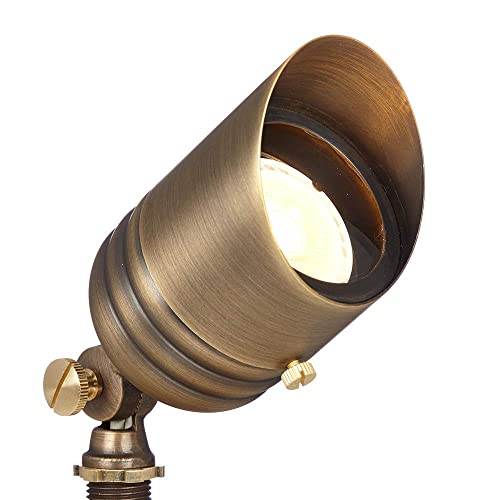
VOLT 12V Fat Boy Outdoor Spotlight (Bronze)

SUNVIE 6W LED Low Voltage Landscape Lighting Kit

SHEHDS Par Lights IP65 Outdoor LED 18x12W Uplights

Rayovac Virtually Indestructible 750 Lumen Flashlight
AISILAN 12W COB LED Indoor Ceiling Spotlight
The Strengths Of Each Pick
The Fat Boy lands in the landscape category as a fixture built to take a beating. Unlike the SUNVIE kit covered later, which arrives as a multi-piece bundle, this is a single heavy-duty bronze spotlight with a low-voltage MR16 LED already included. The solid brass body means I don’t have to worry about paint flaking off after two seasons the way I’d expect from cheaper aluminum fixtures.
Most homeowners setting up a permanent uplighting system benefit from this kind of build. The bronze finish blends into garden beds and ages naturally, and the bundled 5W 2700K bulb gives a warm tone that flatters stone and bark.
Strengths Worth Knowing
- Solid brass body means no powder coating to peel or fade after a few seasons outdoors
- Includes a 5W 2700K MR16 LED, so I don’t have to source a bulb separately
- UL listing adds a layer of safety review that many landscape lights skip
- Low-voltage 12V design works with standard landscape transformers for safer DIY wiring
Things To Consider
- The price per fixture is higher than multi-light kits, which adds up over a full yard
- Requires a separate low-voltage transformer and wiring, not included here
Feature Snapshot
Whose Yard It Belongs On
Homeowners investing in a permanent uplighting system on a single mature tree, statue, or stone feature.
Skip It When
The SUNVIE 8-piece kit suits you better if you’re lighting an entire walkway on a tighter budget.
SUNVIE’s eight-piece kit solves the “I want to light everything this weekend” problem. Everything I need is in the box: a 60W light-sensing transformer, 100 feet of landscape wire, eight 6W anti-glare spotlights, and the fast-lock connectors to tie it all together. Compared to the VOLT Fat Boy covered earlier, this is the all-in-one route.
Dusk-to-dawn operation means I don’t have to remember to flip anything on or off. The 3000K warm-white tone sits close enough to the Fat Boy’s 2700K to feel consistent across both fixtures in mixed installations, though the SUNVIE spotlights lean a touch cooler.
The Value In It
- Eight fixtures plus transformer and wire ship together, which removes the guesswork of matching components
- Light-sensing transformer turns the system on at dusk automatically
- Anti-glare shield design keeps light aimed at the target instead of blasting into eyes
- Fast-lock connectors speed up wiring for first-time installers
Trade Offs
- Plastic and aluminum construction won’t outlast the VOLT Fat Boy’s solid brass body
- Eight fixtures may be too many for very small yards and too few for larger properties
Feature Snapshot
Right Fit For
First-time installers lighting a walkway, driveway edge, or a row of shrubs without sourcing parts piecemeal.
Reach For A Different Pick When
The VOLT Fat Boy is a better call if you’re highlighting one feature with a premium fixture that should last decades.
These are party lights, not landscape lights. The 18x12W RGBWA+UV array gives me red, green, blue, white, amber, and ultraviolet color mixing in a single IP65-rated fixture (IP65 means protected against dust and low-pressure water jets, fine for covered outdoor stages). Unlike the SUNVIE kit’s static warm-white wash, this is for moments where I want to throw color across a DJ booth or a backyard wedding arch.
The cast aluminum shell and improved heat dissipation suggest these can run for hours without thermal throttling, which matters for anyone running a multi-hour event outdoors. For most casual homeowners, this is overkill; for mobile entertainers and small venues, it’s the right tool.
The Case For It
- RGBWA+UV chip mix opens up a wider color palette than the static beams on landscape kits
- IP65 rating handles rain and splashes on covered stages
- Cast aluminum housing with a stronger heat sink supports long event runs
- Touchscreen menu simplifies color selection without scrolling through a tiny LCD
Worth Noting
- Not designed for permanent outdoor landscape mounting; needs a stand or truss setup
- Requires DMX or standalone control knowledge to use beyond the most basic settings
Best Suited To
Mobile DJs, small venue operators, and homeowners throwing occasional large outdoor events with a sound system.
Look Elsewhere When
The AISILAN ceiling spotlight is a better choice if you need crisp indoor accent lighting rather than colored stage beams.
Rayovac’s handheld flashlight is the most portable option on this list and the only one that fits in a glove box. The 750-lumen high mode throws a beam a reported 1443 feet, which sounds dramatic but is genuinely useful for spotting trail markers or a lost dog at the edge of a property. Three output modes let me step down to a softer beam for close-up tasks.
For campers, homeowners in storm-prone regions, and anyone keeping an emergency kit, the waterproof and drop-rated housing is the selling point. This is the spotlight I keep by the back door, not the one I bury in a garden bed.
Practical Advantages
- 750-lumen high mode reaches a long beam distance for outdoor searches
- Three brightness modes let me trade runtime for output as needed
- Waterproof and drop-resistant housing holds up to rough handling
- Energy-saver mode extends runtime for multi-day emergency use
Small Caveats
- Handheld form factor means no hands-free lighting like the landscape or ceiling picks
- Battery runtime at full 750 lumens drops faster than mid or low modes
Feature Snapshot
Who Should Grab It
Campers, homeowners in rural areas, and anyone assembling a go-bag or emergency kit.
A Better Fit Elsewhere
The SHEHDS Par uplights are worth considering if you need stationary color lighting for events instead of a portable beam.
This is the only ceiling-mounted pick on the list, and it leans into artwork and retail display work. The COB LED (Chip On Board, where multiple LED diodes are packed into a single module for a denser, more uniform beam) paired with a 97+ CRI rating (CRI, or Color Rendering Index, measures how accurately a light shows true colors compared to daylight; 97+ is near-perfect) means colors stay honest under the beam. The 10-55 degree adjustable beam angle lets me swing from a tight accent on a single frame to a wider wash across a wall.
For galleries, retail stores, and homeowners with a piece they want to feature, this is a meaningful step up from a generic ceiling can. The flicker-free driver is a quiet detail that matters in video and photography setups.
Where It Excels
- 97+ CRI rating renders artwork and fabrics with near-daylight accuracy
- 10 to 55 degree adjustable beam covers accent and wash tasks from one fixture
- Flicker-free driver suits on-camera use and sensitive eyes
Points To Note
- Sold as a single fixture, so a full room retrofit adds up fast
- Designed for indoor ceiling mounting; not weather-rated for outdoor use
Made For
Homeowners highlighting a single piece of art or a feature wall, and small retail or studio spaces needing high color accuracy.
Consider Something Else When
The VOLT Fat Boy is the better outdoor call if you want a fixture that can survive years in the weather.
Choosing Led Spotlights Without Regret
Match The Fixture To The Job
The biggest split in this category is between permanent installations and portable or event lighting. Landscape lights like the VOLT Fat Boy and the SUNVIE kit are designed to be wired in and left alone. Stage lights like the SHEHDS Par are meant to be set up, used, and packed away. Handheld flashlights like the Rayovac belong in a drawer or a glove box, not on a stake.
Picking the wrong category is the most common mistake. I’ve seen people try to light a garden path with a flashlight or wash a wall with a stage par. Decide first whether you need stationary, portable, or accent lighting, and the rest of the decision gets easier.
Understand Color Temperature And CRI
Color temperature, measured in Kelvin (K), tells you how warm or cool the light looks. Most outdoor landscape lights land between 2700K and 3000K, which reads as warm and inviting. CRI, or Color Rendering Index, measures how accurately a light reveals true colors compared to daylight; values above 90 are considered very good.
The AISILAN ceiling spotlight earns its place on indoor accent tasks specifically because of its 97+ CRI. For a path of light across gravel, color accuracy matters far less, and a standard 80+ CRI bulb will look identical to my eye.
Build Material Sets The Lifespan
Solid brass, like the VOLT Fat Boy uses, outlasts aluminum and plastic fixtures in soil and weather. Aluminum fixtures cost less up front but commonly show corrosion or finish wear after a few seasons in wet climates. Plastic housings on multi-light kits like the SUNVIE set tend to last five to seven years before UV damage shows up.
For a single statement fixture I’d like to last decades, brass is worth the premium. For a multi-light path I’ll likely reconfigure as plantings mature, a kit-grade material is the practical call.
Plan For Power And Control
Low-voltage landscape lights need a transformer, and many kits include one. If I’m buying fixtures individually, I have to size the transformer myself and add up the total wattage. Dusk-to-dawn sensors, like the one built into the SUNVIE transformer, save the daily habit of turning the system on and off manually.
What The Upgrade Actually Buys
Where Shoppers Go Wrong
Underestimating wiring distance is the slip-up I see most often. Low-voltage lighting loses brightness over long wire runs, so a 100-foot cable to the back of the yard may leave the last fixtures noticeably dim. Buying a transformer with extra wattage headroom helps, but the cleaner fix is to plan the layout before any trenching starts.
Another common miss is buying a “warm white” bulb at 4000K and wondering why the yard looks blue at night. Always check the Kelvin number, not just the label. For residential exteriors, anything from 2700K to 3000K usually reads as comfortable.
When Paying More Pays Off
The jump from a multi-light kit to a premium fixture like the VOLT Fat Boy buys two things: material longevity and color quality. Brass outlasts aluminum by years, and tighter binning on the LED gives a more consistent beam color across the property. For a single feature I want to look right for the next decade, that upgrade is worth it.
For whole-yard coverage, the kit route is the smarter spend. Trying to premium-out every fixture on a walkway is the kind of decision that quietly doubles the project budget without changing how the path looks at night.
Frequently Asked Questions
What is the difference between an LED spotlight and a flood light?
An LED spotlight produces a narrow, focused beam meant to highlight a single object. A flood light spreads a wider beam meant to illuminate a broad area, like a wall or driveway.
How long do LED spotlights typically last?
Most LED bulbs and fixtures in this category are rated for 25,000 to 50,000 hours of use. In real terms, that means many years of nightly yard lighting before any noticeable drop in output.
Can I use indoor LED spotlights outside?
Most indoor fixtures, including the AISILAN ceiling spotlight, are not sealed against moisture and should stay indoors. Outdoor-rated fixtures carry an IP rating, like the IP65 on the SHEHDS Par light, that confirms water resistance.
Do I need a transformer for low-voltage LED spotlights?
Yes. Low-voltage landscape systems run on 12V power and require a transformer to step down from household current. Many kits, like the SUNVIE set, include one; individual fixtures like the VOLT Fat Boy do not.
What does CRI mean for LED lighting?
CRI, or Color Rendering Index, measures how accurately a light source shows the true colors of objects compared to natural daylight. A CRI of 90 or above is generally considered excellent for residential and display use.
The Takeaway
Choosing an LED spotlight comes down to where the light is going and how long I want it to last. A premium brass fixture makes sense for a single feature, a kit covers a whole yard affordably, and portable or color-mixing lights solve their own specific problems. Match the tool to the task, and the rest of the decision tends to fall into place.