

A good flashlight is one of those things you don’t think about until you really need it: a power outage at midnight, a blown fuse in the basement, a trail that turns out darker than expected. I’ve spent enough evenings fumbling under sinks and crawling through crawlspaces to know that “bright enough” is a moving target. The seven lights below cover very different jobs, from a job-site workhorse to a rechargeable emergency backup, and each one earns its slot for a specific reason.
A Quick View Of The Lineup

DEWALT DCL040 20V MAX LED Work Light/Flashlight
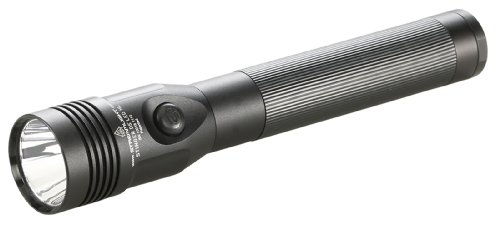
Streamlight 75458 Stinger DS LED HL Flashlight (Black)

Streamlight 74348 Strion LED Flashlight (Purple)

Energizer R-300 LED Emergency Flashlight (IPX4)

Makita DML801 18V LXT 12-LED Flashlight (Black)
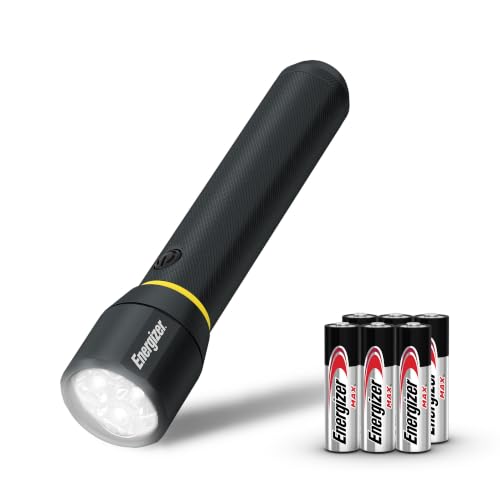
Energizer Vision PRO LED Flashlight (1000+ Lumens)

Energizer S-600 Solar/AA Hybrid LED Flashlight
More On The Choices That Made The List
Anyone already running a stack of DEWALT 20V batteries gets the appeal instantly: the DCL040 drops onto the same platform you already own, so there’s no new charger, no new battery ecosystem, no extra clutter in the toolbox. The light puts out a rated 110 lumens from its LED bulb, which is modest compared with the Streamlights further down this list, but the trade-off is real-world efficiency and run time rather than raw output.
The rotating head and integral hook are the practical details that matter day to day. You can hang it inside a sink cabinet, clip it under a car hood, or aim it across a joist while keeping both hands free. For a job-site user, those small touches outweigh a higher lumen number on paper.
A Few Highlights
- Runs on any DEWALT 20V battery you already own, no second charging system
- Rotating head plus built-in hook let you position light exactly where you need it
- LED bulb runs cooler than older Xenon work lights and stretches battery life
- Compact body that clips into a tool bag without taking up much space
Things To Consider
- Output of 110 lumens is on the low side compared with dedicated high-performance flashlights
- Battery and charger are sold separately, which matters for first-time DEWALT shoppers
Who It Suits Best
Tradespeople and serious DIYers who already own DEWALT 20V batteries and want a work light that fits the same platform.
Consider Something Else When
For sheer brightness in a pocketable body, the Streamlight 74348 Strion LED is the better fit for users who don’t need a job-site work light.
Where the DEWALT is a thoughtful tool-shop pick, the Streamlight Stinger DS LED HL is a step into genuinely professional-grade lighting. The 800-lumen wide-beam flood fills a room or a backyard in a way smaller handheld lights can’t match, and the dual-switch layout means a thumb can find the right control without looking.
It’s a rechargeable unit, so the ownership loop is straightforward: drop it on its charging cradle after a shift, and it’s topped off and ready. For patrol officers, security teams, mechanics working on a dim engine bay, or anyone who leans on a flashlight nightly, the runtime and beam shape justify the jump up from a casual light.
What Stands Out
- Rated 800-lumen wide-beam output that genuinely lights up a full work area
- Dual Switch Technology keeps tail-cap and body switches independently usable
- Rechargeable battery and cradle simplify the daily ownership cycle
- Aluminum housing is built to take regular drops in working environments
Worth Noting
- Bigger and heavier than pocketable options like the Strion, so belt carry is more realistic than pocket carry
- Rechargeable-only design means a dead battery requires the cradle, not a quick AA swap
Key Specs
Made For
First responders, security staff, and professionals who rely on a flashlight every shift and want floodlight-level brightness.
Look Elsewhere When
For an emergency-storm kit where AA backup matters, the Energizer R-300 LED Emergency Flashlight is a more practical pick.
The Strion is the Streamlight for people who find the Stinger too big to live with. It still ships as a light-only unit, so the battery and charger decision is yours, but in return you get a compact, machined-aluminum body that fits a duty belt or a jacket pocket without bulging.
Run times range from about two hours on high to roughly seven and a half on low, and a strobe mode rounds out the feature set. The C4 LED is rated for a 50,000-hour life and is shock-resistant, which is the kind of detail that matters for everyday carry.
Reasons It Performs
- Compact aluminum body that survives daily carry and the occasional drop
- Three brightness levels plus strobe cover most real-world scenarios
- C4 LED rated for a 50,000-hour service life and built to resist shock
- Recharges in about three hours, which is workable for a working week
Points To Note
- Light only, so a Streamlight rechargeable battery and charger are required separately
- Purple finish is distinctive but won’t blend in with utility gear
Whose Shelf It Belongs On
Patrol officers and EDC users who want a pocketable, rechargeable workhorse and already plan to buy a Streamlight battery kit.
Skip It When
For a casual home flashlight that doesn’t need a specialty charging system, the Energizer Vision PRO LED Flashlight is easier to live with day to day.
The R-300 sits in a category of its own on this list. It’s designed for the moment the power goes out and stays out, and the four-mode setup (high, low, strobe, red strobe) reflects that: the red strobe is meant for preserving night vision or signaling without dazzling everyone in the room.
IPX4 water resistance means rain and splash aren’t a problem, and the projected beam reaches up to 555 feet, which is plenty for searching a yard or a dark driveway. Batteries ship included, so it’s a true grab-and-go option.
A Favorable Mix
- Beam reaches up to 555 feet, useful for outdoor checks during an outage
- Four lighting modes including red strobe for night-vision-friendly signaling
- IPX4 water resistance handles rain and accidental splashes
- Batteries included so it works straight out of the package
Honest Caveats
- Not rechargeable, so for a true long-term kit you’ll want to store spare batteries
- Larger than a pocket EDC light, so it’s more of a “grab from the drawer” tool
Best Suited To
Anyone building a hurricane or storm kit, and households that want a single reliable backup light for unexpected outages.
A Better Fit Elsewhere
For camping where solar recharging matters, the Energizer S-600 Solar/AA Hybrid LED Flashlight is the stronger pick.
Makita’s DML801 is the cousin of the DEWALT DCL040, but with a different shape. Instead of a rotating flashlight head, it uses a folding head with seven positive stops and side-to-side rotation, which lets you angle the panel of 12 LEDs almost anywhere. At full brightness the output is around 240 lumens.
The 360-degree swivel hook is a quiet but useful upgrade: it tucks out of the way when you don’t need it and pivots into position when you do. For shop owners or finish carpenters, those geometry choices add up over a long work day.
Strengths Worth Knowing
- Twelve-LED panel with 240-lumen output for broad, even task lighting
- Folding head with seven stops plus left-right rotation for precise aiming
- 360-degree swivel hook folds away cleanly when not in use
- Two-mode switch lets you toggle brightness to stretch battery life
Smaller Limits To Know
- Light only, so a Makita 18V battery and charger must be sourced separately
- Panel-style design is bulkier than a traditional flashlight tube
Quick Facts
Perfect Match For
Makita 18V tool owners who want a panel-style shop light that drops onto their existing batteries.
Reach For A Different Pick When
For a focused handheld beam in the same voltage ecosystem, the DEWALT DCL040 is the simpler tool-shaped alternative.
The Vision PRO is the bright, general-purpose light most households are actually shopping for. The advertised 1000+ lumen output, paired with digital focus technology that narrows or widens the beam at the press of a button, gives it a versatility that cheaper AA lights can’t match.
The aircraft-grade aluminum body and IPX4 water rating are the reassuring touches. Drops on a concrete patio, a splash from a wet glove, a toss into a glove box: all of these happen in real ownership, and the build is meant to absorb them.
A Strong Showing
- 1000+ lumen ceiling output for genuine long-range illumination
- Digital Focus adjusts beam shape from wide flood to tight spot on demand
- Aircraft-grade aluminum housing for impact resistance in everyday use
- IPX4 water resistance handles rain and accidental splashes
Less Ideal Details
- Six AA batteries add ongoing cost versus a rechargeable platform
- Larger than a single-cell EDC, so it’s a glove-box light, not a keychain light
Feature Card
Who Will Love This
Outdoor enthusiasts and homeowners who want one bright, durable flashlight that covers both wide yard checks and focused path lighting.
Not Your Match When
For patrol work where a rechargeable cradle is standard, the Streamlight 75458 Stinger DS LED HL is the more professional fit.
The S-600 closes the list with the most flexibility. Its hybrid power setup runs on a built-in rechargeable lithium-ion battery that can be topped up via the solar panel or USB, and falls back to two AA batteries when neither option is available. For camping, off-grid cabins, or any kit that might sit unused for months, that fallback matters.
IPX4 water resistance, clear charging indicator lights, and a noticeably bright beam for the size round out the package. It’s the kind of light I’d point a friend toward for a car glove box or a remote property.
Everyday Perks
- Hybrid power runs on rechargeable lithium-ion, USB/solar charging, or AA backup
- Easy-to-read charging indicators take the guesswork out of the power level
- IPX4 water resistance handles weather and rough field use
- Solid brightness for the size, well beyond basic plastic-body lights
Practical Considerations
- Solar charging is a slow trickle and works best as a top-up, not a full recharge
- Heavier than a single-AA pocket light because of the dual power system
Feature Snapshot
Who Should Grab It
Campers, cabin owners, and preppers who want one light that can recharge in the field or fall back to AAs when it can’t.
Swap It Out When
For a bright, plain rechargeable household light without the hybrid complexity, the Energizer Vision PRO LED Flashlight is the simpler buy.
How To Pick The Right Led Flashlight For Your Situation
Start with the use case, not the lumen number. A homeowner checking a tripped breaker needs a different tool than a mechanic under a hood or a backpacker reading a map by moonlight. Once the scenario is clear, the other specs fall into place.
Lumens vs. beam shape
Lumens measure total light output, but beam shape decides how that light lands. A flood beam spreads soft light across a wide area, which is what you want for a room or a campsite. A spot beam pushes a tight column far downrange, which is what you want for searching a dark driveway or a trail. Many of the lights above, including the Streamlight Stinger and Energizer Vision PRO, give you both, but at different price points.
Power source and runtime
Rechargeable lithium-ion platforms, like the Streamlight Stinger and Strion, are cheaper to run long term but tie you to a charging cradle. AA-powered lights are easy to resupply anywhere but cost more over years of use. Hybrid options like the Energizer S-600 sit in the middle: recharge when you can, swap AAs when you can’t.
Durability and water resistance
Look for an IPX4 rating if the light will ever see rain or splash. Aluminum housings, like the aircraft-grade body on the Vision PRO or the machined bodies on the Streamlights, generally outlast plastic when a flashlight actually hits the floor.
Size, weight, and carry style
A glove-box light can be larger and heavier than something you’d clip to a belt every day. Match the form to the carry plan, not just the output. The Makita DML801 and DEWALT DCL040 make more sense as shop lights than pocket lights, while the Strion is built to ride on a duty belt.
Key Considerations Across These Picks
Where Shoppers Go Wrong
The most common mistake is buying on lumen count alone. A 1000-lumen light with a tightly focused beam and a short battery life can be less useful in a real power outage than a 300-lumen flood that runs for hours. Equally common is ignoring the power ecosystem: a rechargeable light is a poor gift for someone who won’t keep a charging cradle on the counter.
When Paying More Pays Off
Higher-tier models on this list, like the Streamlight Stinger DS LED HL or the Energizer Vision PRO, tend to add meaningful features: better beam control, stronger housings, longer run times, and more reliable switches. The upgrade is worth it for daily users; for occasional duty, a mid-range light will serve most households just as well.
Frequently Asked Questions
How many lumens do I really need in a flashlight?
For most household tasks, 200 to 500 lumens is plenty. Outdoor search and professional use push that number well above 800.
Are rechargeable LED flashlights better than battery-powered ones?
Rechargeables cost less to run long term and tend to deliver higher output, but battery-powered lights are easier to keep in a drawer and replace when the power is out for days.
What does IPX4 water resistance actually mean?
IPX4 means the light can handle splashes and rain from any direction, but it isn’t built to be submerged. It’s the right rating for everyday outdoor and emergency use.
How long should an LED flashlight last on a single charge?
Run time varies widely by mode. High-output settings on bright lights may last only a couple of hours, while lower modes on the same flashlight can stretch to seven or more.
Is a higher lumen number always better?
Not always. Beam shape, run time, and build quality all matter just as much as raw output. A balanced mid-range light often beats a high-lumen budget pick in real-world use.
Final Take
The right flashlight is the one that fits the moment you’ll actually use it. Match the body to the job, the power source to your routine, and the beam shape to the scenario, and any of these seven will serve you well.