

Finding the right bulb for a porch, garage sconce, or garden fixture used to mean picking whatever shape fit the socket. The shift to LED changed the game, and now there’s a wider world of options than ever, from bulbs that switch themselves on at sunset to dimmable vintage filaments that turn a string of patio lights into something special. I put together this shortlist for anyone tired of guessing which bulb actually belongs in that damp fixture by the front door.
A Snapshot Of The Selections
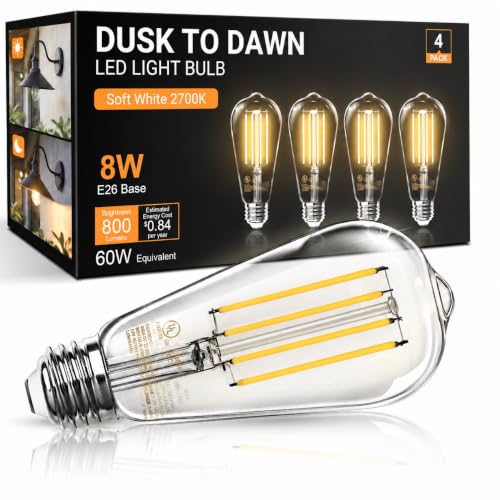
TJOY 4 Pack Dusk to Dawn ST58 Outdoor Edison Bulbs 2700K

TJOY 2 Pack Dusk to Dawn ST58 Outdoor Edison Bulbs 3000K

TJOY 4 Pack Dusk to Dawn ST58 Outdoor Edison Bulbs 5000K

Philips Hue Smart 60W A19 Color Bulb 2-Pack

Duoled T10 4W E26 Dimmable Tubular Bulb 2700K
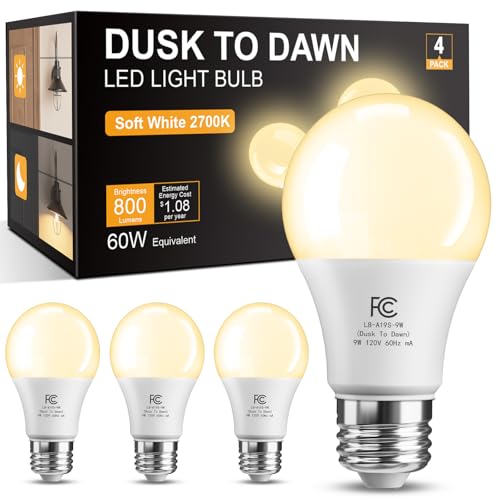
TJOY Dusk to Dawn A19 Outdoor Bulb 2700K
A Breakdown Of The Leading Choices
The TJOY ST58 pack is the kind of set most people with a string-light patio or vintage-cage porch sconce end up reaching for. Each bulb carries a small built-in photocell, the tiny light sensor that decides when it’s dark enough to switch on, so it ignores timers and apps entirely.
Because the sensor reads only sunlight, the bulbs behave well even when tucked inside glass fixtures or mounted near another lamp. For a four-pack priced for the casual DIYer, the 2700K warm-white tone plays nicely with exposed filaments and warm wood tones.
Bright Spots
- Auto on/off sensor means no rewiring or smart hub required for basic dusk operation
- ST58 Edison silhouette looks the part in open cages and exposed-socket pendants
- Sensor ignores neighboring fixtures, which matters for covered porches with multiple lights
- Four-bulb pack covers a whole patio run without leaving a fixture on the wrong color temperature
Points To Note
- Sensor housing on the bulb base means it needs some clearance from a fully enclosed globe
- 2700K runs warmer than some buyers expect from an Edison shape, so swapping in a 3000K version may suit neutral-toned homes better
Who It Suits Best
Homeowners with multiple exposed-socket fixtures who want consistent warm lighting with zero wiring changes.
Look Elsewhere When
You need bright task lighting on a driveway; the TJOY 5000K four-pack handles that much better.
This two-pack from TJOY sits in the middle of the warm-to-cool spectrum with a 3000K output. That puts it just past candlelight but well short of daylight, which usually reads as a friendly “soft white” on most exterior walls.
Compared to the 2700K four-pack above, this set trims down to a two-bulb count and nudges the tone a touch cooler. It’s a sensible match for modern farmhouse siding, light-colored stone, or any facade where a yellow-leaning bulb would look too dim by comparison.
What Earns Its Place
- 3000K tone bridges the gap between warm and neutral, suiting mixed exterior palettes
- Photocell sensor still ignores nearby lamps, so clusters of fixtures won’t fool each other
- Two-bulb count keeps cost down for a single entryway swap
Trade Offs
- Only two bulbs means a four-sconce porch requires buying two packs
- Sensor base can still be partially blocked by deep lamp shades, so fixture depth matters at install
- No cool-daylight option in this size, so security-focused shoppers will want the 5000K sibling
Made For
Someone refreshing a single pair of porch sconces who wants a tone that flatters most exterior paint colors.
Swap It Out When
You’re installing four or more matching fixtures; the four-pack editions in 2700K or 5000K are the more efficient pick.
Same shape and same sensor as the warmer TJOY packs, but the 5000K rating pushes the output into honest daylight territory. On a dark driveway or beside a back gate, that crisp tone reveals edges, steps, and the corners of a yard far better than warm bulbs.
For homeowners who want the look of an Edison filament without sacrificing visibility, this is a useful middle ground. The filaments still glow visibly through the glass, but the surrounding light reads bright and clean.
Practical Pluses
- 5000K daylight output improves visibility around steps, paths, and side gates
- Photocell sensor behavior matches the warmer TJOY siblings, so installation feels familiar
- Four-pack suits long runs of bistro lights along a deck or fence line
- Daylight tone hides the yellow cast that bugs some shoppers about warm outdoor bulbs
Less Ideal Details
- Cool tone can read harsh against warm wood decking or rustic stonework
- Not the right pick for a cozy seating area where softer light sets the mood
Feature Snapshot
Best Suited To
Households prioritizing safety and visibility over mood lighting on driveways, side yards, or service areas.
Where Another Pick Suits Better
Cozy patio evenings call for the TJOY 2700K four-pack instead, which leans warmer and gentler.
The Philips Hue A19 moves the conversation from “set it and forget it” into “tell it what to do.” This two-pack runs from the standard Bluetooth app for a quick start and then expands into the wider Hue ecosystem once a hub joins the picture.
The bulb shape itself is the familiar A19, which means it slips into most enclosed porch fixtures where an Edison-style tube wouldn’t fit. Owners can shift the color temperature, dim the output, or run scenes straight from a phone.
Good Reasons To Consider
- Full color and white ambiance range for parties, holidays, or quiet evenings
- Voice control via common assistants once paired through the Hue app
- Bluetooth control works without a hub, so beginners can test the system on one fixture
- Standard A19 shape fits enclosed fixtures where decorative bulbs won’t sit
Worth Noting
- Full feature set typically requires a separate Hue Bridge, which adds to the setup
- Premium positioning costs more than a basic dusk-to-dawn bulb, so the math only works for users who will actually use the smart features
- Outdoor use generally requires the bulb to sit inside a covered, enclosed fixture rated for the conditions
Quick Facts
Who Will Love This
Smart-home enthusiasts who want programmable outdoor lighting and already lean on voice assistants for the rest of the house.
Reach For A Different Pick When
All you want is a no-fuss porch bulb; the TJOY A19 dusk-to-dawn bulb delivers that without the app.
The Duoled T10 tubular bulb is for the fixture that needs a slim profile. Long pendant lanterns, narrow wall sconces, and rustic chandeliers usually call for a tube shape, and this 4W version slots into a standard E26 medium socket.
It also dims smoothly with compatible dimmers, which makes it a strong pick for a dining pergola where the light level matters as much as the look. The 2700K warm-white reading lines up with the candle-and-honey glow most decorators want outdoors.
What It Does Well
- Slim T10 tube fits pendant fixtures that won’t accept a globe or Edison shape
- Dimmable output lets owners tune the mood from dinner-bright to after-dinner low
- 4W draw produces modest heat, which is friendly for enclosed glass lanterns
- Universal E26 base matches the same socket type used across most U.S. homes
Soft Spots
- No built-in dusk-to-dawn sensor, so the bulb relies on a switch or external timer for automatic control
- Lower lumen count means very large yards may need multiple bulbs for useful coverage
Feature Card
The Right Fit
Design-focused homeowners with narrow pendants or wall sconces who care about the shape of the bulb as much as its glow.
Not Your Match When
You need hands-free on and off without a timer; the TJOY dusk-to-dawn options handle that requirement better.
The single-bulb TJOY A19 is the sensible choice when a porch or garage fixture still calls for a standard household shape. The dome profile sits flush inside enclosed lanterns and basic jelly-jar lights without looking out of place.
It runs the same dusk-to-dawn photocell as the Edison-shaped siblings above, which means a single swap turns a “leave it on all night” fixture into one that handles itself. For most everyday porches, that’s exactly the upgrade people want.
Standout Benefits
- Classic A19 shape drops into enclosed porch and garage fixtures without clearance issues
- 2700K warm-white output reads gentle against most siding colors
- Photocell sensor reads sunlight only, so neighboring lights don’t cause flicker
- Single-bulb format suits owners replacing one burnt-out porch bulb at a time
Honest Caveats
- Lower output than some larger outdoor fixtures may need, so very dark carports might want a higher-lumen option
- Photocell works best when the bulb sits where daylight can reach the sensor
Key Attributes
Whose Shelf It Belongs On
Anyone wanting a no-fuss, no-app replacement for a tired porch or garage bulb that turns itself on and off.
Consider Something Else When
Smart control and color scenes matter to you; the Philips Hue A19 serves that crowd better.
What Matters Most Before Choosing Led Bulbs For Outdoor Fixtures
Match the bulb shape to the fixture, not the other way around. A jelly-jar garage light wants an A19. A string-light patio wants an ST58 Edison tube. A narrow wall sconce wants a T10. Measure the fixture opening before falling for a vintage shape, because a beautiful bulb sitting in a box because it won’t fit teaches nothing.
Pay attention to color temperature, because outdoor paint colors shift the read. 2700K leans candlelight and flatters wood and brick, 3000K sits in the middle for mixed palettes, and 5000K reads as clean daylight that hides imperfections on dark siding. For most porches, 2700K or 3000K plays nicely with neighbors.
Sensors and smart features solve different headaches. Photocell dusk-to-dawn sensors (the kind on the TJOY bulbs above) replace the “did I leave the porch light on?” problem for good. Smart bulbs solve the “I want to control the light from my phone” problem. Pick the one that matches your real complaint.
Check the fixture rating before assuming any bulb works outside. Covered porches usually accept standard LED bulbs. Exposed fixtures or wet-rated locations may call for a bulb specifically rated for damp or wet conditions.
Key Considerations Across These Picks
Mistakes Worth Dodging
The most common slip in this category is grabbing a bulb with a beautiful filament shape and discovering the fixture is fully enclosed, so the sensor never sees daylight and the bulb stays on. The fix is simple: look at the fixture before choosing between an Edison, an A19, and a tubular T10. Open cages welcome the vintage shapes. Jelly jars and domes need the A19.
Another trap is mixing color temperatures across one wall of fixtures. The eye picks up the difference faster than most shoppers expect, so match 2700K to 2700K across a single facade and resist the urge to combine a warm porch with a cool garage.
Where The Extra Money Goes
Smart bulbs cost more because the radio, the firmware, and the color-mixing diodes all live inside the glass. For someone already running a voice assistant or a smart-home hub, that upgrade pays back in convenience and scenes. For a basic porch swap, the extra spend goes unused, and a plain dusk-to-dawn bulb does the same job for less. The honest read is that higher-tier bulbs earn their place when the buyer will actually use what they unlock.
Frequently Asked Questions
Can I use any LED bulb in an outdoor fixture? Most enclosed or covered fixtures accept standard LED bulbs, but exposed or wet-rated locations need a bulb marked for damp or wet use. The rating sits on the packaging, not on the bulb itself.
What does color temperature actually mean for outdoor lighting? It’s the tone of the white light, measured in Kelvin. Lower numbers like 2700K read warm and yellow, mid-range like 3000K looks soft white, and 5000K and up reads cool and blue-white. The right choice depends on the mood and the surrounding colors.
Will a dusk-to-dawn sensor work inside a covered fixture? Usually yes, as long as some daylight reaches the sensor through the glass or opening. Fully sealed metal fixtures with no light leak can confuse the sensor, which is worth checking before installation.
Do smart bulbs need a hub to work? Some smart bulbs, including the Philips Hue, run over Bluetooth for basic control without a hub. The full feature set, including routines and remote access, typically needs a separate bridge or hub connected to the home network.
How long do outdoor LED bulbs usually last? Owners commonly report many years of service from quality outdoor LEDs, though exact lifespan depends on daily run time, fixture ventilation, and exposure to the elements. Heat trapped inside an enclosed fixture shortens life more than weather alone.
The Takeaway
The right LED for an outdoor fixture comes down to the shape that fits, the tone that flatters the wall behind it, and the kind of control that solves a real annoyance. Photocell bulbs like the TJOY sets trade features for hands-off simplicity, while the Philips Hue A19 trades simplicity for control and color. Pick the swap that matches the problem you actually want solved tonight, and the rest of the decision tends to take care of itself.