

When the grid goes dark at 2 a.m., the difference between a manageable inconvenience and a miserable night usually comes down to one piece of gear. I’ve talked with homeowners across storm country who learned the hard way that a flickering phone flashlight and a stubby candle do not actually count as a plan. A purpose-built blackout lantern changes the mood entirely. The four picks below cover different budgets, battery situations, and household sizes, so you can match a light to your specific risk rather than grabbing whatever’s left on the shelf.
How The Shortlist Stacks Up

LUXPRO Retro Outdoor Lantern 2 Pack (Beige)
Streamlight 44931 Siege Compact Lantern (Coyote)
EZORKAS Collapsible LED Camping Lantern (2 Pack)

Ropelux Rechargeable LED Lantern, 8 Modes
More On The Choices That Made The List
The LUXPRO Retro Outdoor Lantern (B0CXQXJHN4) feels designed for the living room rather than the deep woods. Its beige housing and round diffuser give it a tabletop-lamp vibe that most people won’t mind leaving out on a side table year-round. A rotary dimmer dial rotates smoothly between warm and white tones, so the same lantern can soften a dinner setting or flood a kitchen during a multi-hour outage.
Powered by four AA cells, this set ships as a two-pack, which means you can stage one in the kitchen and one in the hallway without buying twice. Compared with the Streamlight Siege reviewed below, the LUXPRO trades raw lumens for ambience and a friendlier interior look. For households that want blackout gear that doubles as décor, that trade usually feels like the right one.
Everyday Wins
- Smooth rotary dial blends warm and white output, useful for keeping a calm mood when the power’s been out for hours.
- Two-pack format gives instant coverage across rooms without buying a second bundle later.
- AA power means you can stockpile cheap cells in a drawer and swap them in seconds during a multi-day outage.
- Compact form factor travels well to a neighbor’s house or a relative’s apartment during regional blackouts.
Things To Consider
- AA batteries add to long-term ownership cost versus rechargeable alternatives, and dead cells go to landfill.
- Output tops out around 265 lumens, so very large living rooms may still feel dim at full power.
Who It Suits Best
Apartment dwellers and small households who want blackout gear that looks at home on a shelf and only needs AA batteries to keep running.
Consider Something Else When
Homeowners lighting a big open-plan basement or a workshop should look at the Streamlight 44931 Siege Compact Lantern instead, which delivers considerably more throw.
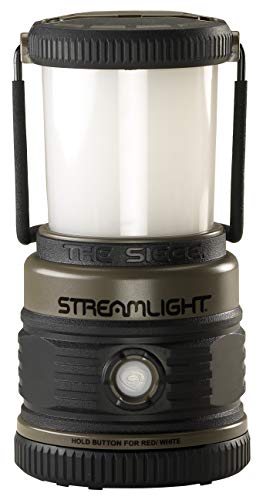
The Streamlight 44931 Siege Compact Lantern (B00DII7CTI) is the workhorse of the shortlist. Its coyote polymer body shrugs off drops, and the 360-degree lighting pattern throws useful light in every direction rather than just forward. On the high setting it pushes around 540 lumens, which in practical terms means a mid-sized living room stops feeling like a cave after one click.
Compared to the LUXPRO’s soft warm ambience, the Siege leans utility-first. A red LED mode helps preserve night vision when you’re checking on kids or fumbling for a fuse box, and an SOS flash adds a real safety signal during roadside emergencies. For preppers and homeowners with serious outage history, this is the lantern that earns its place in the closet.
Positive Points
- High, medium, and low white modes plus a red steady and SOS mode cover both household and roadside emergencies.
- Rugged polymer body is widely reported to handle garage and campsite drops better than glass-bodied lanterns.
- Wide 360-degree beam means a single unit can light a kitchen table, hallway, or tent without repositioning.
Points To Note
- Uses three D-cell batteries, which add weight and bulk in a go-bag but also stretch runtime.
- Industrial look won’t blend into a styled living room the way the LUXPRO Retro does.
- Red mode is great for preserving night vision, yet you may find the highest white setting almost too bright for bedtime reading.
Key Product Details
Made For
Homeowners in storm-prone regions and prepper households who want one serious lantern that can also handle a campsite or job site.
Skip It When
Style-conscious shoppers who want a softer look on the bookshelf should pick the LUXPRO Retro Outdoor Lantern 2 Pack instead.
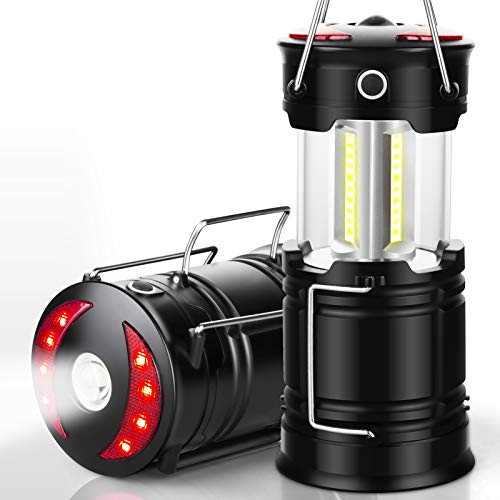
The EZORKAS Collapsible LED Camping Lantern (B07TM9CQ49) is the entry point on this list. Its collapsible shell shrinks down to roughly the size of a smartphone when packed, which is genuinely useful in apartments with limited drawer space. Pull the top up and the COB panels fan out into a surprisingly broad light source for the size.
Where the Streamlight leans rugged and the LUXPRO leans decorative, the EZORKAS leans practical and forgiving. It runs on either three AA batteries or a built-in rechargeable cell, so a renter can leave the included cable plugged in during normal weeks and switch to AA cells when the outlet is dead. For first-time preppers, that flexibility removes the usual chicken-and-egg problem of choosing between disposable and rechargeable.
The Value In It
- Dual power supply accepts AA batteries or the internal rechargeable cell, so a single unit handles both daily use and emergencies.
- Collapsible form factor tucks into a kitchen drawer or car glove box without dedicated storage space.
- Two-pack pricing undercuts most single-lantern competitors, ideal for splitting between home and office.
Honest Caveats
- Plastic hinges on collapsible lanterns take more wear than fixed-body units, so handle the collapsing motion gently over time.
- Light output varies more between modes than on the Streamlight, which may surprise households expecting steady brightness.
- Rechargeable cell longevity depends on charging habits; deep discharges during long outages can shorten its usable life.
Best Suited To
First-time preppers, renters, and college students who need a starter blackout kit without committing to a premium price.
Look Elsewhere When
Anyone needing a true multi-day storm lantern with heavy-duty output should grab the Ropelux Rechargeable LED Lantern instead.
The Ropelux Rechargeable LED Lantern (B09TB35SXQ) is the Swiss Army knife of the shortlist. A bright front beam doubles as a flashlight for the hallway, a tail light offers steady and red strobe options for roadside visibility, and side COB panels turn the whole unit into a 360-degree area lantern when collapsed flat. Eight total modes sound like overkill until you’re trying to read a circuit breaker label by red light at midnight.
Compared to the LUXPRO’s two-pack simplicity, the Ropelux concentrates capability into a single device. Rechargeable power and a roughly 12-hour standby window mean you can keep it on a shelf between outages and trust it to perform when the grid cuts. For households that have already weathered one too many multi-day blackouts, the flexibility pays off.
Where It Delivers
- Eight lighting modes combine a focused front beam, red emergency strobe, and side flood panels in one tool.
- Rechargeable battery removes ongoing AA or D-cell costs, a meaningful savings over years of ownership.
- Side panels deliver wide-area light comparable to the Streamlight, while the front beam handles corridor walks.
Where It May Fall Short
- More modes mean more buttons to learn, which can frustrate guests or kids during a stressful outage.
- Like most rechargeable units, runtime depends on which mode you choose, and the highest setting drains the cell fast.
- Plastic body is lighter than the Streamlight, so it may not feel as anchored on a windy porch during a storm.
Feature Snapshot
Who Will Love This
Storm-prone households and serious preppers who want one versatile unit that doubles as flashlight, area lantern, and roadside signal.
Reach For A Different Pick When
Casual shoppers wanting a softer, more decorative lantern for ambient blackout lighting will prefer the LUXPRO Retro Outdoor Lantern 2 Pack.
Picking A Blackout Lantern That Actually Fits Your Home
A good blackout lantern earns its place by being there when nothing else is. Before choosing, think about the realistic failure you’re prepping for, not the worst-case Hollywood version. A two-hour neighborhood flicker calls for something very different than a four-day utility shutdown after a hurricane. Matching the tool to the likely scenario saves money and closet space.
Match the light output to the room, not the spec sheet. Lumens tell you how bright a lantern can get, but what matters more is whether that brightness fills the room you actually live in. A 265-lumen dial lantern can feel generous in a small bedroom and underwhelming in a vaulted living room, while a 540-lumen workhorse covers most open-plan layouts without drama. Picture where you’d set the lantern during an outage, then size the output to that room rather than chasing the biggest number.
Decide between disposable and rechargeable power before you buy. AA and D-cell lanterns are easy to keep ready, since you can stockpile cells anywhere and swap them in seconds. Rechargeable units cost less to run long-term and skip the battery drawer, but they need a charging routine and a backup plan when the cell eventually ages out. Many households end up with one of each: a rechargeable daily-driver and an AA-powered emergency unit for backup. The LUXPRO and EZORKAS both lean on disposable cells, while the Streamlight and Ropelux offer D-cell and rechargeable options respectively.
Look for modes that match real outage behavior, not feature lists. A red mode preserves night vision when checking on sleeping kids or navigating to the breaker box. A low white mode keeps the room dim enough for conversation without blinding everyone. SOS or strobe functions matter more for roadside emergencies than for living-room outages, but they cost nothing to have. For most households, two or three useful modes beat eight confusing ones.
Plan for storage and grab-and-go reality. A lantern buried in a basement closet helps nobody during a fast-moving storm. The best blackout gear lives in a known spot, ideally near the kitchen or main hallway, so anyone in the household can find it without asking. Two-pack options like the LUXPRO and EZORKAS let you stage units in different rooms, which often matters more than absolute brightness.
Key Considerations Across These Picks
Pitfalls Shoppers Hit
The most common mistake I see is buying one bright lantern and assuming it covers the whole house. A single light in the kitchen leaves bedrooms, bathrooms, and hallways pitch black, and people end up stumbling with phone flashlights anyway. A two-pack or a multi-mode unit staged across rooms solves that without doubling the budget.
Another trap is ignoring battery shelf life. AA and D cells lose charge sitting in a drawer for two years, and many households discover their “emergency” lantern is dead right when the grid goes down. Either rotate fresh batteries through the unit every year or commit to a rechargeable model you keep topped off. Skipping that step turns any blackout lantern into expensive dead weight.
Where The Extra Money Goes
Spending more on a blackout lantern usually buys tougher materials, longer runtimes, and broader mode sets. The premium tier tends to mean a polymer or rubberized body that survives a drop onto concrete, plus circuitry that holds steady output as the battery drains. Whether that’s worth it depends on your outage history. Households that lose power a few times a year for an hour or two rarely need the upgrade, while anyone in storm country or fire-prone regions usually appreciates the durability the moment something actually goes wrong.
Frequently Asked Questions
How many lumens do I really need during a power outage? For a typical bedroom or small kitchen, somewhere between 200 and 400 lumens is plenty for general tasks, while a living room or basement usually benefits from 500 lumens or more for comfortable movement and reading.
Should I choose a rechargeable or battery-powered lantern? Rechargeable units cost less over time and stay topped off between outages, but they depend on a charging routine, while AA or D-cell lanterns are simpler to store long-term and easy to feed with stockpiled batteries.
How long do blackout lanterns typically run on a single set of batteries? Runtime varies widely by mode, but most quality lanterns run 8 to 30 hours on low, with significantly shorter runtimes at maximum brightness, which is why a low or medium setting is usually the right call during long outages.
Is a red light mode really useful at home? Yes, especially overnight, since red preserves night vision and won’t wake sleeping family members the way a white beam will when checking the breaker box or helping a child back to bed.
Where should I store my blackout lantern? Keep it somewhere obvious and reachable, like a kitchen drawer or hall closet shelf, since a lantern buried in a garage or basement rarely helps during a fast-moving storm.
Closing Remarks
A blackout lantern is one of those small purchases that quietly pays for itself the first time the lights go out and stay out. Match the output to your rooms, decide whether disposable or rechargeable power fits your routine, and stage the units where everyone in the house can actually find them. The four picks above cover most realistic scenarios, so the rest comes down to your home, your climate, and how often the grid has let you down in the past.