

A decent landscape lighting transformer is the kind of thing you forget about once it’s running. It sits by the house, hums quietly through the night, and keeps your path lights and accent fixtures glowing without complaint. Picking the wrong one, though, leaves you with flicker, premature bulb wear, or a control panel that fights you every evening. I put together this shortlist for homeowners wiring up a small to mid-sized yard, replacing a tired unit, or planning a multi-zone install.
An Overview Of The Picks

SUNVIE 200W Low Voltage Landscape Transformer with Timer and Photocell Sensor

VOLT 300W Slim Line Low Voltage Transformer (12V/15V) with Timer/Photocell

DEWENWILS 200W Low Voltage Landscape Transformer for LED Lighting

SUNVIE 300W Low Voltage Transformer with 3 Zones, Photocell Sensor & Timer
Tiffcofio 300W Outdoor Low Voltage Transformer with Dusk to Dawn Sensor
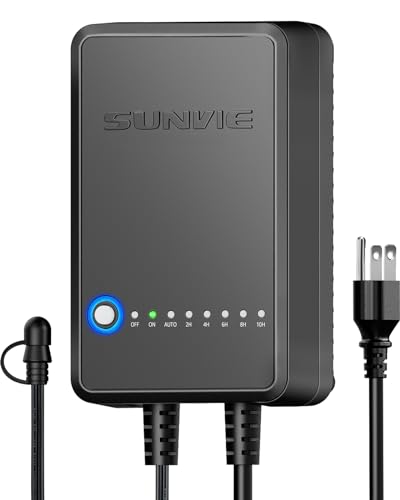
SUNVIE 60W Low Voltage Landscape Transformer with Timer and Photocell Sensor
Taking A Closer Look At The Options
For most homeowners replacing an aging transformer or wiring a fresh front yard, the SUNVIE 200W sits in a comfortable middle ground. It drops 120V household AC down to 12V or 14V AC, which is the safe range that low-voltage LED and halogen landscape fixtures expect. Two independent output channels let you run the path lights on a different schedule than the uplighting on the façade.
The photocell sensor ships with a roughly 6.8-foot UL listed cord, so you can mount the brain on a garage wall while pointing the sensor toward open sky. Compared with the DEWENWILS unit further down, this one is simpler in the mode department but pays you back with two clean zones instead of one.
Features That Help
- 200W capacity covers a typical mid-sized yard of path, spot, and accent fixtures without crowding the limit.
- Two independently controlled outputs mean the front walk and the back patio can run on different timers.
- External photocell with a long cord gives flexibility on where the sensor “sees” daylight.
- Weatherproof housing lets it live outside near the fixtures rather than inside a garage.
Trade Offs
- It runs on AC output, which works with most landscape LEDs but is not the right match for fixtures that specifically require DC.
- Owners commonly report the included timer controls take a season of fiddling before they feel intuitive.
Quick Facts
Best Suited To
Homeowners with a mid-sized yard who want two lighting groups on separate timers without overpaying for a multi-zone pro unit.
Look Elsewhere When
The SUNVIE 60W unit is the better fit for a small entryway or herb garden where 200W is overkill.
The VOLT 300W is the transformer I’d reach for on properties where wire runs stretch across a long driveway or wrap around a big patio. Magnetic core construction (the heavier, traditional transformer style that uses a laminated steel core and copper windings) handles sustained loads cooler than the lighter switch-mode designs common in budget units. The slim-line housing is the practical payoff, since it tucks against a foundation or behind a shrub without drawing the eye.
It drops 120V household AC to either 12V or 15V AC. That 15V tap is the trick most people miss: it compensates for voltage drop, which is the gradual loss of voltage that happens over long wire runs, keeping fixtures near the end of the line as bright as the ones close to the transformer.
Reasons It Performs
- Magnetic core design runs cooler and tends to last longer under continuous nighttime loads.
- 15V tap lets you correct voltage drop on long wire runs where fixtures would otherwise dim.
- Slim enclosure fits tight against a wall or inside a small mounting area.
- 300W capacity gives headroom for larger LED installs without maxing the unit out.
Where It May Fall Short
- It is heavier than plastic-cased 200W units, so pick the mounting spot before you lift it.
- Best reserved for systems where you’ll genuinely use the 15V tap; a small front path doesn’t need this much transformer.
Feature Snapshot
Made For
Landscape lighting pros and serious DIYers running long wire paths who need a magnetic core and the 15V tap to fight voltage drop.
Reach For A Different Pick When
The SUNVIE 300W three-zone unit fits better when you want separate schedules for the front, side, and back rather than one big circuit.
Schedulers and tinkering types will appreciate the DEWENWILS 200W more than the average homeowner. Where the SUNVIE 200W above keeps things to a basic dusk-to-dawn plus timer setup, this unit layers in five distinct operating modes. Manual on/off, dusk-to-dawn, dusk-on with a countdown shutoff (2, 3, 4, 6, or 8 hours), and a dual-clock timer are all on the dial. That’s the kind of flexibility that pays off when you want the patio lit for a dinner party but the path lights to call it earlier.
It also outputs 12V or 14V AC, the same safe range LED and halogen landscape fixtures expect, and pairs with a photocell for the dusk-based modes. If your weekends involve tweaking the lighting schedule, this is the brain you’ll grow into.
The Helpful Details
- Five operating modes cover almost any routine, from full manual control to dusk-to-dawn automation.
- Countdown shutoff at 2/3/4/6/8 hours lets you trim late-night energy use without losing the dusk start.
- 200W capacity suits a typical residential install with room for a few extra fixtures down the road.
Honest Caveats
- Single output channel, so two lighting groups still share the same mode and schedule.
- Mode-switching controls commonly take a careful read of the manual before the logic clicks.
Whose Shelf It Belongs On
Homeowners who like to tune their lighting schedule seasonally and want countdown or dual-clock timing beyond simple dusk-to-dawn.
Swap It Out When
The SUNVIE 200W two-zone model is the smarter pick if you want separate schedules for two fixture groups, not five modes on one circuit.
Larger properties with layered lighting plans benefit most from the SUNVIE 300W. Three independent output zones mean the front path, the backyard accent lights, and the driveway markers can each run on their own timer and brightness routine, which is something the two-zone SUNVIE above can’t quite do. Capacity-wise, the 300W rating leaves comfortable headroom for a full LED install.
The removable photocell sensor on a long UL listed cord stays consistent with the smaller SUNVIE 200W, so you can mount the housing on a garage wall and route the sensor to the brightest patch of sky. Output is 12V or 14V AC, friendly to the same LED and halogen landscape fixtures most people install.
Notable Upsides
- Three independent zones let you run the front, side, and rear of the property on completely different schedules.
- 300W rating gives headroom for a full LED install with future fixture additions.
- External photocell on a long cord gives you placement flexibility for accurate dusk detection.
Some Limits To Know
- More zones means more programming up front; first-time installers may need a weekend to label and configure each channel.
- It outputs AC, which is fine for most LEDs but not the right pick for fixtures requiring DC input.
Who Should Grab It
Homeowners with larger or layered properties who want three distinct lighting groups running on independent schedules from one box.
Consider Something Else When
The VOLT 300W Slim Line is the better fit when your priority is long wire runs with voltage drop compensation, not multi-zone scheduling.
The Tiffcofio 300W is the transformer for homeowners who want to wire it up once and then basically never think about it. There’s no menu tree to memorize. The built-in dusk-to-dawn photocell turns the lights on at sundown and off at sunrise, while two parallel outputs let you split the load across the front and side of the house without buying a second transformer.
It converts 120V AC down to 12V AC, the safe range for typical landscape fixtures, and carries an ETL safety listing. Weatherproofing is part of the design, so mounting it on an exterior wall next to the meter is fair game.
Benefits That Matter
- Built-in dusk-to-dawn photocell means no separate sensor to mount or wire.
- Two outputs let you split fixtures into two parallel groups from one transformer.
- 300W capacity supports a healthy residential install with room to grow.
- Weatherproof construction and ETL listing suit outdoor mounting.
Potential Drawbacks
- Single 12V AC output voltage, so it cannot compensate for voltage drop the way the VOLT unit’s 15V tap can on long runs.
- Lacks the countdown and dual-clock modes of the DEWENWILS for homeowners who want finer schedule control.
Right Fit For
Set-and-forget homeowners who want one transformer that turns the lights on at dusk and off at dawn, with two outputs to keep the wiring tidy.
Skip It When
The SUNVIE 200W unit makes more sense for a small yard where 300W of capacity is wasted on a handful of fixtures.
Small jobs call for small transformers, and the SUNVIE 60W fills that niche honestly. It is sized for an entryway path, a small herb garden, a single uplight on a specimen tree, or a string of deck lights. The 60W rating is a deliberate match for low-fixture-count installs; the manufacturer guidance is to keep the total fixture load at or below about 80 percent of that rating.
A key detail: this unit outputs 12V DC rather than 12V AC, which lines it up with many low-voltage LED landscape fixtures but rules it out for halogen. The weatherproof housing and external photocell sensor follow the same playbook as the larger SUNVIE units above, just in a more compact package.
The Upside
- Small footprint tucks behind a shrub or under an eave without dominating the wall.
- 12V DC output suits many dedicated LED landscape fixtures that prefer DC.
- Built-in timer plus photocell gives set-and-forget automation in a tiny package.
- Weatherproof housing tolerates outdoor mounting.
Worth Bearing In Mind
- Not compatible with halogen landscape fixtures, which need AC output.
- 60W capacity caps out at a handful of LED fixtures; expanding the system means stepping up to a larger transformer.
Perfect Match For
Apartment dwellers, condo owners, and small-yard homeowners powering a tight cluster of low-voltage LED path or accent lights.
A Better Fit Elsewhere
The SUNVIE 200W two-zone model is the upgrade path once you decide to expand beyond the front step into a full yard lighting plan.
Picking The Right Transformer For Your Yard
Wattage is the first filter. Add up the wattage of every fixture on the circuit and target a transformer rated for at least 25 percent more than that total, which keeps the unit from running at its ceiling every night. A modest four-fixture path install at around 40W total lands comfortably on a 60W transformer, while a layered yard with uplights, path lights, and deck lights generally wants 200W or more.
Output voltage and type matter more than most shoppers realize. Most landscape lighting systems use 12V AC, but longer wire runs suffer voltage drop, which dims the fixtures farthest from the transformer. A 15V tap, found on the VOLT unit above, lets you bump the supply voltage so the fixtures at the end of the run still get a full 12V. A handful of dedicated LED fixtures want DC rather than AC, so confirm what your lights need before matching transformers.
Zoning is the next decision. One output channel means every fixture on the system shares one schedule. Two zones, like on the SUNVIE 200W, separate the path from the accent lighting. Three zones on the SUNVIE 300W let the front, side, and back each run independently, which is genuinely useful on a corner lot or a property with a detached garage.
Sensor and timer style closes out the decision. A simple dusk-to-dawn photocell is the most hands-off option and works well for most homeowners. Countdown timers and dual-clock scheduling, like the modes on the DEWENWILS, suit people who want the lights off at a set bedtime rather than at sunrise. Weatherproofing matters for any unit mounted outside, and most modern transformers rate for outdoor installation, though sheltered mounting always extends service life.
Things Worth Knowing Before You Buy
Mistakes Worth Dodging
The most common slip-up is sizing the transformer too close to the actual fixture load. Running a transformer at 90 or 100 percent of its rating shortens its life and leaves no room for one more path light you decide to add next spring. Aim for that 80 percent ceiling as a working maximum, not a target.
The second trap is mixing AC and DC fixtures on the same transformer. Most low-voltage LEDs run on AC, but a small number of specialty LEDs want DC, and halogen fixtures require AC. Pairing the wrong fixture with the wrong transformer output can produce flicker, dimming, or premature failure.
Where The Extra Money Goes
Higher-tier transformers cost more for a handful of reasons that actually matter. Magnetic core designs, like the one inside the VOLT 300W, run cooler and tend to outlast the lighter switch-mode cores used in budget units. Multi-zone outputs, weatherproof construction, and longer photocell cords also add real-world convenience. The upgrade is worth it for larger yards and long wire runs; for a small entryway with a handful of LED fixtures, a compact 60W unit handles the job without overspending.
Frequently Asked Questions
What size landscape lighting transformer do I need?
Add up the wattage of every fixture you plan to install, then pick a transformer rated for at least 25 percent more than that total so the unit does not run at its ceiling.
Can one transformer run different lighting zones on different schedules?
Only if it has multiple outputs. Two-zone models like the SUNVIE 200W handle separate schedules for two groups, while three-zone models manage three.
What is voltage drop on a landscape lighting system?
Voltage drop is the gradual loss of voltage that happens as electricity travels along a long wire, which can leave fixtures at the far end of the run dimmer than the ones near the transformer. A 15V tap on transformers like the VOLT 300W compensates for this drop.
Are outdoor-mounted landscape transformers safe in rain?
Most modern landscape transformers carry weatherproof ratings and safety listings like ETL that suit outdoor mounting, though sheltered installation under an eave or against a wall typically extends service life.
Do LED landscape lights need AC or DC transformers?
Most low-voltage LED landscape fixtures run on 12V AC, but a small number of dedicated LED fixtures require DC. Always check the fixture specification before pairing it with a transformer.
Final Take
The honest read on landscape lighting transformers is that the right size and the right zone count matter far more than brand prestige. A 60W unit is plenty for a small entryway, a 200W two-zone model covers most residential yards, and a 300W three-zone transformer earns its keep on larger or layered properties. Match the transformer to the yard you have today, with a little headroom for the yard you’ll want next year.