

Working around flammable vapors, combustible dust, or confined-space gas calls for a flashlight that won’t ignite the atmosphere if something goes wrong internally. I’ve put together this lineup of seven intrinsically safe flashlights, a category defined by engineering that limits electrical and thermal energy so the device itself can’t become a spark source. From single-beam handhelds for plant technicians to dual-function headlamps for utility crews, each pick solves a specific lighting problem inside hazardous-location work.
A Fast Comparison Of The Options

Nightstick XPP-5420G Intrinsically Safe Permissible Flashlight (Green)

Streamlight 90545 Survivor 175-Lumen Right-Angle Flashlight (Black)

Streamlight 68750 Dualie 3AA 140-Lumen HAZ-LO Flashlight (Yellow)
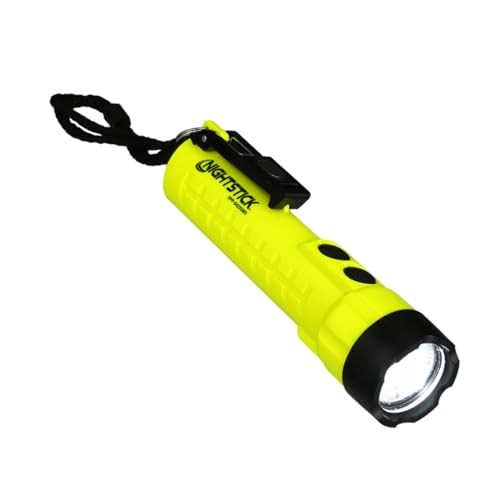
Nightstick XPP-5422GMX X-Series Intrinsically Safe Dual-Light Flashlight with Dual Magnets (Green/Black)

Nightstick XPP-5450G Intrinsically Safe Permissible Dual-Function Headlamp (Green 61mm)

Nightstick XPP-5422G 3 AA Intrinsically Safe Permissible Dual-Light Flashlight (Green)
Nightstick XPP-5452G Intrinsically Safe Permissible Dual-Function Headlamp (Green)
A Deeper Look At The Lineup
The Nightstick XPP-5420G is a stripped-down single-beam handheld built for workers who just need a reliable torch for plant walk-throughs and inspections. Where some of the later picks in this list double as dual-light tools, this one keeps things simple: one switch, one beam, one job. The green polymer body is light enough that it doesn’t drag on a belt clip during long shifts, and the IP-rated housing shrugs off the kind of splashing and grit you meet on a refinery catwalk.
It’s a good fit for refinery maintenance crews, wastewater technicians, and grain elevator staff who want a no-fuss hazardous-location light without paying for flood-beam extras. For someone upgrading from a non-rated flashlight to their first certified unit, the XPP-5420G is a sensible starting point.
Strong Points
- Single 140-lumen beam rated for hazardous atmospheres, simple enough that there’s almost nothing to misconfigure mid-shift.
- Engineered polymer housing keeps weight low, so it sits comfortably on a clip or lanyard during 10-plus-hour rotations.
- Runs on three AA cells, which most facilities already stock, so replacements don’t require a special battery order.
Things To Consider
- Batteries ship separately in some orders, so plan a small stockpile before the first shift.
- A single forward beam means no flood option for close-up paperwork or panel reading.
Feature Snapshot
Made For
Refinery and grain-handling crews who want a single-purpose hazardous-rated handheld and don’t need flood lighting.
Skip It When
The job calls for dual-beam output, in which case the Nightstick XPP-5422G covered later in this list is a closer match.
The Streamlight 90545 Survivor is a right-angle flashlight shaped to clip onto turnout gear, a harness, or the side of a helmet. Unlike the straight-barrel Nightstick XPP-5420G above, this one aims the beam forward when the body hangs vertically, which is how firefighters and hazmat technicians actually wear a light during an incident. The nylon body is lighter than aluminum and takes hard knocks without denting.
It suits career firefighters, industrial responders, and any crew that has standardized on right-angle hands-free carry. Compared with the Dualie below, it’s a more traditional shape with a longer beam, so it shines on search patterns rather than close-quarters work.
Bright Spots
- 175-lumen high mode pushes beam distance to about 405 meters, useful for sizing up a structure from outside.
- A low mode around 60 lumens stretches runtime to roughly 13 hours for long overhaul phases.
- Impact-tested to two meters and rated for water spray, so it survives the drop-and-crawl reality of a structure fire.
- Push-button operation stays usable through thick gloves, which matters when seconds are tight.
Worth Noting
- It costs more than the Nightstick XPP-5420G above, so it only makes sense if the right-angle shape actually fits your kit.
- Nylon housings can scuff and show wear faster than metal-bodied lights in daily truck-check use.
Best Suited To
Firefighters, hazmat technicians, and confined-space rescue teams who prefer a right-angle carry and need long beam reach.
Consider Something Else When
You mostly work at arm’s length and want a flood beam, in which case the Streamlight 68750 Dualie 3AA HAZ-LO reviewed next is a smarter shape for that job.
The Streamlight 68750 Dualie solves a problem the Survivor above doesn’t: lighting up whatever your hands are doing. Two independent LEDs throw a forward spot and a downward flood at the same time, so the work area in front of your feet stays shadow-free while you still see down the corridor. The yellow body is easy to spot if it gets dropped in a dusty or grassy environment.
It’s a strong match for inspectors, instrument technicians, and tank-entry teams who move between reading gauges at arm’s length and walking long pipe racks. Compared with the Nightstick XPP-5422GMX magnet model later in the lineup, this Dualie uses a body clip instead of magnets, so it works in environments where spark risk rules out magnetic mounts.
What Stands Out
- Spot beam rated for about 171 meters lets you flag hazards from a distance before stepping in.
- Flood beam lights the immediate work area, so reading gauges and connecting fittings doesn’t require a second light.
- Both beams can run together, which mimics a head-and-hand setup without wearing anything on your head.
- Yellow polymer body is highly visible in low-light and messy environments, so lost lights get recovered quickly.
Trade Offs
- Two beams at once drain cells faster than a single-beam light, so carry spare AAs on long jobs.
- It is more expensive than the basic Nightstick XPP-5420G, which only makes sense if you’ll actually use the flood function.
Quick Facts
Who It Suits Best
Confined-space inspectors and instrument techs who need both a long-throw beam and a close-up flood without switching lights.
A Better Fit Elsewhere
If your work involves metal surfaces and you want hands-free mounting without a clip, the Nightstick XPP-5422GMX with dual magnets is a more convenient shape.
The Nightstick XPP-5422GMX steps up from the basic XPP-5420G at the top of the list with two meaningful additions: a flood beam for close work, and dual magnets built into the body. Stick it to a fuel tank, a steel I-beam, or the side of a service truck, and both hands stay free for the actual job. The green-and-black polymer housing is the same tough construction as the rest of Nightstick’s X-series line.
It’s a natural fit for vehicle technicians, pipeline welders, and anyone working around ferrous metal surfaces where clipping a light to fabric or webbing isn’t an option. Against the Streamlight Dualie reviewed above, this Nightstick trades the second LED for magnets, so the beam profile is different but the hands-free concept is similar.
Everyday Wins
- Dual magnets let you mount the light vertically or sideways to metal, freeing both hands for wrenches or test leads.
- 235-lumen spotlight plus 130-lumen floodlight combine into a 300-lumen dual-light mode for the worst visibility moments.
- Engineered polymer body takes abuse in truck beds and tool bags without cracking.
- Beam reaches about 187 meters, slightly longer than the basic XPP-5420G for outdoor patrols.
Honest Caveats
- Magnets are useless on stainless or aluminum equipment, so this is a metal-dependent feature.
- It’s noticeably heavier than the Dualie above because of the magnet hardware.
The Right Fit
Heavy equipment techs and pipeline welders who frequently work on steel surfaces and need both hands for the actual task.
Look Elsewhere When
Most of your work happens on non-magnetic surfaces like fiberglass tanks or aluminum scaffolding, where the Streamlight 68750 Dualie’s clip and flood spot make more sense.
The Nightstick XPP-5450G shifts the format from handheld to headlamp, which is the right call when both hands are committed to tools and you still need directional lighting. Two output levels, 90 lumens on high and 50 on low, cover the typical close-to-mid-range work that miners, utility techs, and dock crews handle daily. The compact 61mm housing keeps the weight forward of the forehead strap balanced and unobtrusive.
It’s a sensible choice for workers who spend most of their shift with head-mounted lighting and don’t need throw beyond a few meters. Compared with the higher-output XPP-5452G reviewed last in this list, this model leans toward runtime over brightness, which matters on long underground rotations.
The Upside
- 50-lumen low mode stretches battery life significantly, useful for long shifts away from a charging station.
- Headlamp form factor keeps hands completely free, which handheld models like the XPP-5420G cannot.
- Certified for hazardous locations, so it carries the same safety credentials as the rest of the Nightstick lineup here.
- Light body reduces neck fatigue over multi-hour jobs.
Points To Note
- 90-lumen high output is modest by modern flashlight standards, so it’s not the right tool for long-throw spotting.
- Headlamps are easier to misplace than a clipped handheld, so facilities often buy spares.
Spec Overview
Who Should Grab It
Miners, utility techs, and dock workers who want long runtime in a headlamp form and don’t need extreme brightness.
Swap It Out When
You regularly work in larger spaces where a higher-output beam would help, in which case the Nightstick XPP-5452G covered below is a closer match.
The Nightstick XPP-5422G is essentially the basic XPP-5420G from the top of this list, but with a floodlight added. That second LED makes a real difference for technicians who bounce between reading a panel inches away and walking down a corridor. The 260-lumen dual-light mode fires both beams at once for those rare moments when nothing on the rig is visible enough.
It suits general facility maintenance, electrical contractors, and refinery turn-around crews who want one tool that adapts to mixed tasks. Compared with the Streamlight Dualie reviewed earlier, this Nightstick uses a more traditional straight-barrel body, which some users find easier to aim precisely.
Well-Handled Touches
- 160-lumen spotlight covers typical walking-and-inspecting distance without overdriving the safe-circuit design.
- 130-lumen floodlight handles paperwork, gauges, and close-range mechanical work in the same session.
- 260-lumen dual mode is a useful panic setting when visibility drops unexpectedly.
- Runs on three AA cells, the same common battery type used across most of this lineup.
Points To Keep In Mind
- No magnetic mount option, so users who want hands-free on steel should look at the XPP-5422GMX earlier instead.
- Batteries are not always included, so plan for a separate purchase before first use.
Whose Shelf It Belongs On
Multi-purpose facility crews who want one hazardous-rated flashlight that handles both spot and flood tasks in a single shift.
Reach For A Different Pick When
Your work is mostly hands-free on metal surfaces, where the Nightstick XPP-5422GMX with its built-in magnets is a more practical choice.
The Nightstick XPP-5452G is the brighter sibling to the XPP-5450G headlamp reviewed above, doubling the high-mode output to 180 lumens and bumping the low mode to 90. That extra brightness matters in larger spaces like turbine halls, warehouse aisles, and open-pit mining faces where a 90-lumen beam runs out of reach. The compact housing keeps the strap load balanced, so the additional power doesn’t translate into neck strain.
It fits mining crews, utility line workers, and emergency responders who want a hazardous-rated headlamp that punches above typical close-range output. Against the lower-output XPP-5450G, this is the pick for people who routinely push beyond arm’s length.
The Case For It
- 180-lumen high mode reaches further into plant rooms and engine bays than the 90-lumen XPP-5450G can manage.
- 90-lumen low mode still stretches runtime for tasks that don’t need the full output.
- Headlamp format keeps both hands free for climbing, hauling, or using test instruments.
- Hazardous-location certification makes it usable in the same environments as the rest of this lineup.
Where It May Fall Short
- Higher output drains AAA cells faster than the XPP-5450G, so pack spares on long shifts.
- It carries a price premium over the lower-output headlamp in this lineup, which only matters if you genuinely use the extra lumens.
Perfect Match For
Mining crews and utility line workers who need hazardous-rated headlamp output that reaches beyond arm’s length on a regular basis.
Not Your Match When
You mostly do close-range inspection under fixtures and want maximum runtime, in which case the Nightstick XPP-5450G earlier in this list is the better fit.
What To Weigh Before Picking A Hazardous-Rated Flashlight
The first thing to lock down is the actual hazardous classification of the worksite. Class I, Division 1 environments have flammable vapors or gases present under normal conditions, while Division 2 covers areas where those hazards only appear during spills or breakdowns. A flashlight certified for one may not satisfy the other, and using an under-rated unit in a Division 1 space is a real safety problem, not just a paperwork one.
Beam profile matters more than raw lumen count for daily use. A 175-lumen right-angle light like the Streamlight 90545 Survivor covers a longer throw, while a dual-beam model like the Streamlight 68750 Dualie or the Nightstick XPP-5422G trades some throw for useful flood lighting at the worker’s feet. For confined-space work, dual-beam designs usually pay for themselves in reduced eye strain.
Certifications That Actually Matter
Look for third-party marks like cETLus, ATEX, IECEx, or MSHA on the body or packaging. Each covers different jurisdictions: ATEX is the European standard, IECEx is international, MSHA covers U.S. mining, and cETLus is a North American electrical safety mark. A flashlight carrying several of these has typically been tested more rigorously than one carrying only a single mark.
Form Factor And Carry Method
Right-angle lights clip to turnout gear and harnesses, straight-barrel models ride in pockets or belt loops, and headlamps free both hands entirely. The right shape depends on whether the worker typically carries tools, climbs, or stays at a fixed station. Many crews end up standardizing on one form factor across the whole team to simplify training and spares.
Battery Type And Runtime
AA and AAA cells dominate this category because they’re universally available, even in remote field camps. Runtime varies sharply between high and low modes, so a light with a low-output setting often doubles its usable hours on the same batteries. For crews buying in volume, common battery types also reduce the cost of stocking spares.
Key Considerations Across These Picks
Common Buying Mistakes
The most frequent error is assuming any tough-looking flashlight is automatically safe for flammable atmospheres. A regular IP-rated LED light without intrinsic-safety certification can ignite a vapor cloud if its circuit faults, so the certification mark is non-negotiable. Another slip is choosing output over beam shape, only to discover the flood mode is missing when the actual job starts. Buyers should also confirm the batteries are included or factor a separate purchase into the budget, since several models in this category ship without cells.
Where The Extra Money Goes
Higher-priced units typically add a second beam, magnetic mounting, brighter LED, or extra certifications. For a firefighter who needs a right-angle carry, the Survivor justifies its cost with long throw and proven durability. For a crew that mostly does arm’s-length inspection, the Dualie’s spot-and-flood design pays off faster than raw brightness. Spending up only makes sense when the additional feature maps directly to the actual work pattern, not just to a higher number on the spec sheet.
Frequently Asked Questions
What does intrinsically safe mean for a flashlight?
It means the flashlight is engineered so that its electrical circuit and surface temperature cannot ignite flammable gases, vapors, or combustible dust under normal operation or fault conditions. The unit must carry a third-party certification mark, like cETLus or ATEX, for the specific hazardous location it will be used in.
Can I use a regular flashlight in a hazardous area?
No. Standard flashlights can produce sparks or heat capable of igniting flammable atmospheres, even if they look rugged. Only certified intrinsically safe flashlights should be used in areas where explosive gases or dusts may be present, and the certification must match the specific Class, Division, and Group of the location.
How many lumens do I actually need?
For walking and close inspection in hazardous areas, 100 to 175 lumens is usually enough. Higher output helps for long-throw spotting, but it also drains batteries faster. Look for a model with at least two brightness levels so runtime can be extended when maximum output is not needed.
Why are AA batteries so common in this category?
AA and AAA cells are widely available, inexpensive to stock, and easy to replace in the field without special tools. They also keep the flashlight’s intrinsic-safety circuit simple, which helps certification testing. Rechargeable options exist, but many safety officers still prefer primary cells for predictable runtime and storage behavior.
Do these flashlights work in dusty environments like grain elevators?
Yes, provided they carry a dust-group certification in addition to gas protection. Models rated for Class II or Class III hazardous locations are designed with dust ingress protection, so combustible dust cannot reach internal components. Always confirm the certification covers both gas and dust groups before using any unit in a grain or milling facility.
Closing Remarks
The right intrinsically safe flashlight comes down to matching the unit’s certifications and beam shape to the actual job, not just grabbing the brightest model on the shelf. For single-beam simplicity, the Nightstick XPP-5420G is a sensible baseline. For dual-beam versatility, the Streamlight Dualie or the Nightstick XPP-5422G covers most mixed tasks. For hands-free lighting, the XPP-5450G and XPP-5452G headlamps fill that role, and the Survivor handles right-angle carry for fire and rescue work.