

I still keep a small stash of incandescent bulbs in my hallway closet, because nothing else quite matches that familiar warm wash the moment I flip the switch. LED has taken over the shelf, but plenty of fixtures, from chandeliers to outdoor string lights, look and feel right with a classic filament inside. The trick is knowing which shape, base, and wattage actually fits the socket you have. I put this list together for homeowners, renters, and decorators who want dependable incandescent options for specific jobs, from vintage patio string lights to dimmable chandelier bulbs, without the trial-and-error of grabbing the wrong pack.
How The Shortlist Stacks Up

Brightown S14 Incandescent Light Bulbs, 30 Pack

DoRight Silicone Dipped Candle Light Bulbs 5W (12-Pack)

Rolay 11W Outdoor String Light Bulbs E26, 25 Pack
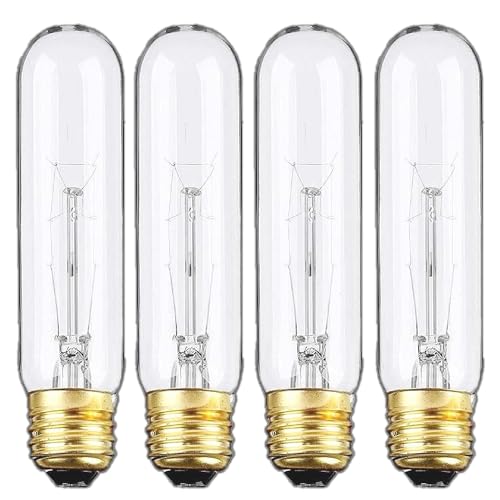
Weyolin T10 Edison Tubular Bulbs 25W, 4-Pack

Seentech 12-Pack 25W B10 CTC Candelabra Bulbs

Seentech 12-Pack 40W B10 CTC Candelabra Bulbs
Seentech 12-Pack 60W B10 CTC Candelabra Bulbs
A Breakdown Of The Leading Choices
Patio owners who just lost half their string lights to a storm know the pain of buying replacements three bulbs at a time. The Brightown S14 pack solves that with 30 count at once, sized in the standard 1.8″ S14 shape that drops straight into most E26 patio stringers. At 11W and 2200K, the warm white sits in that low, golden range I personally find easiest on the eyes at dusk, the kind of light that flatters wood decks and brick patios without going orange.
The nickel-plated aluminum base is the small detail that tends to matter after one bad winter. Unlike cheaper brass-style bases that stain sockets, this one resists rust in damp or coastal air. Compared to the candle-shaped picks later in the list, this one is purpose-built for outdoor string applications, not chandeliers.
Where It Helps
- 30-pack size means spares are always on hand after one bad storm.
- 2200K warm white creates the amber-tinted glow most patio setups are designed around.
- E26 standard base fits the common outdoor string light socket without adapters.
- Nickel-plated aluminum base resists rust in damp, snowy, or coastal conditions.
- 11W draw keeps most string light runs well under typical circuit limits.
Honest Caveats
- Glass body is not shatter-resistant, so plan ahead for overhead or exposed runs.
- 11W is the right range for mood lighting but feels dim if you read or eat under the string.
Feature Snapshot
Who It Suits Best
Homeowners running an outdoor patio string light setup who want one purchase to cover the whole run and a few seasons of replacements.
Look Elsewhere When
Someone decorating a chandelier or candelabra should reach for the Seentech B10 CTC bulbs further down, since those use the smaller E12 candelabra base.
Window candles are one of those holiday traditions that quietly require the right bulb, and the wrong one burns out mid-December. The DoRight silicone-dipped candle bulb is shaped like a C7 flame and uses the small E12 candelabra base that fits most electric window candles, chandeliers, and night lights. The silicone sleeve is the part I appreciate, because it cushions the glass from the usual bumps of seasonal setup and takedown.
Where the Brightown S14 is built for outdoor strings, this one is built for indoor and decor duty, especially around the holidays. The 5W draw keeps the bulbs cool enough for window candles that run for hours.
What It Does Well
- Silicone dipping adds real shatter resistance during annual setup and storage.
- Tail-mimicking flame shape reads as a candle even when the bulb is off.
- Low 5W draw stays cool in enclosed window candle fixtures.
- E12 base works across chandeliers, wall sconces, and night lights without adapters.
Trade Offs
- 5W is genuinely dim, so it works best in decorative clusters rather than as the room’s primary light.
- Slight silicone tint can shift the warm white a touch toward ivory compared to a clear glass bulb.
Made For
Anyone running electric window candles through the holiday season, or hosts who want a flame-shaped bulb that survives yearly handling.
Swap It Out When
A chandelier needs more than a soft 5W glow, in which case the Seentech 40W B10 CTC picks deliver real task-level brightness in the same E12 base.
The Rolay 25-pack sits in the same outdoor replacement category as the Brightown S14, but with a slightly different light character. The clear glass carries a subtle amber tint, which I find reads warmer and more candle-like against greenery and wood than a clean clear bulb. The S14 shape and E26 base match the same patio stringer sockets, so the swap is straightforward.
For someone re-skinning an entire string of 20 to 24 bulbs, the 25-pack is sized just right. Compared to the DoRight candle bulb from the previous entry, this is the outdoor, higher-wattage cousin built for string lights, not window candles.
Standout Benefits
- Amber-tinted clear glass delivers a richer, candle-like warm tone outdoors.
- 25-pack matches typical patio string lengths without leaving a dead socket.
- 11W draw sits in the sweet spot for ambient patio lighting.
- Standard E26 base means no rewiring or adapter fuss.
Points To Keep In Mind
- Amber tint can vary slightly between production batches, so replacing all bulbs at once keeps the look consistent.
- Clear glass body has no shatter protection, worth noting for covered patio runs.
Quick Facts
Best Suited To
People replacing an entire patio string of bulbs in one go and who want a slightly warmer, more candle-toned look than a standard clear bulb.
Not Your Match When
The fixtures call for the smaller E12 candelabra base, in which case the DoRight silicone candle bulb above is the better fit.
The T10 tubular shape is a different visual language from the round S14 or the candle-shaped picks, and that is exactly why it has its own crowd. The Weyolin 25W tubular bulb slips into a curio cabinet, a pendant fixture, or a wall-mounted showcase and looks intentional rather than borrowed. The slim tube puts the filament right at eye level when the fixture is at table height.
At 25W with full dimming support, the bulb behaves like a classic showcase piece: bright enough to highlight a collection, gentle enough on a dimmer for evening mood. Unlike the outdoor string picks earlier, this one is firmly an indoor design piece.
What Makes Sense
- T10 tubular profile reads as a deliberate design choice in display cabinets and pendants.
- Full-range dimming lets one fixture shift from showcase bright to evening mood.
- 25W is enough light to actually illuminate objects on a shelf.
- E26 base keeps it compatible with standard medium-base fixtures.
A Few Limitations
- 4-pack is sized for a single display or pendant, not a whole-room re-skin.
- 25W is on the higher end, so dimmer compatibility is worth confirming in older homes.
Core Details
Perfect Match For
Collectors lighting a curio cabinet, or anyone wanting a slim, vintage-look pendant bulb that doubles as a design element.
Reach For A Different Pick When
You need a candle-shape for a chandelier, in which case the Seentech B10 CTC options below are purpose-built for that role.
The Seentech 25W B10 candle bulb is the gentlest of the three Seentech wattages on the list, and the right starting point for low-output decorative fixtures. The B10 candle shape with the bent “CTC” tip mimics a small flame, which keeps the look consistent across chandeliers, ceiling fan lights, and wall sconces that share a similar E12 candelabra base.
At 25W, the bulb leans toward mood and accent lighting rather than reading brightness, which is what most multi-arm chandeliers actually need. Compared to the DoRight silicone candle earlier, this one is bare glass, so the filament stays visible, which matters for traditional fixtures.
Positive Takeaways
- Low 25W draw keeps multi-arm chandeliers from overloading the circuit.
- CTC bent tip gives an authentic candle-flame profile in clear glass.
- 2700K warm white reads as cozy without going amber.
- Dimmable for full control of dining and entryway mood.
Honest Caveats
- 25W is genuinely soft, so it suits accent fixtures more than a room’s only light source.
- Bare glass body needs a steady hand during installation and cleaning.
Key Product Details
Who Will Love This
Owners of small chandeliers, ceiling fan light kits, or sconces who want an authentic candle look without the higher wattage.
Where Another Pick Suits Better
The Seentech 40W version is the better match for a dining room chandelier that needs enough light to read menus by.
The 40W Seentech sits in the comfortable middle of the B10 candle line, and that is exactly the point. Where the 25W version leans moody, the 40W version delivers enough usable light to read at a dining table while keeping that candle-flame profile intact. It is the version I tend to recommend to friends who own a dining room chandelier and want one purchase that just works.
The same E12 candelabra base, the same dimmable behavior, and the same 2700K warm white tone carry over from the 25W sibling. The trade-off is wattage, not shape or fit.
A Favorable Mix
- 40W is the practical sweet spot for dining chandeliers and entryway fixtures.
- Same B10 CTC profile as the lower-wattage version for visual consistency.
- Full dimming support keeps the same fixture usable for dinners and ambient evenings.
- 2700K color sits in the warm white range most homes are designed around.
Potential Compromises
- Higher wattage means more heat, so enclosed fixtures and ceiling fan glass shades deserve a quick ventilation check.
- Twelve bulbs covers most chandeliers, but larger fixtures may need a second pack.
Built With In Mind
Households that want a chandelier bright enough for everyday use but still warm enough for dinner, all in a candle profile.
Consider Something Else When
A showcase or pendant needs a more architectural bulb, which is where the Weyolin T10 tubular pick above fits the bill.
The 60W Seentech rounds out the B10 line as the highest output option, and it earns its place in tall entryways, two-story foyers, and large dining rooms where a 25W or 40W candle bulb would feel swallowed by the space. The candle silhouette stays the same across all three Seentech wattages, which keeps a multi-room renovation visually consistent.
The honest read is that 60W candelabra bulbs run warmer to the touch, and any enclosed glass shade around the bulb should be confirmed as heat-tolerant. Where the 40W version is a comfortable all-rounder, this one is a deliberate step up for volume.
Useful Strengths
- 60W output fills tall foyers and large dining rooms with a single fixture.
- Matches the 25W and 40W siblings in shape and color for whole-home consistency.
- Dimmable, so brightness can scale down for evening settings.
- CTC tip keeps the candle-flame look even at the higher output.
Worth Bearing In Mind
- Runs noticeably warmer than the 25W and 40W versions, so enclosed shades need a quick heat check.
- Higher draw per socket, worth keeping in mind on multi-arm fixtures on older dimmers.
The Right Fit
Homeowners with tall ceilings or large rooms where a standard candelabra bulb would not carry the space.
A Better Fit Elsewhere
A small bedroom ceiling fan with a tight glass shade will run cooler and more comfortably with the Seentech 25W B10 pick.
Picking The Right Incandescent Light Bulb For Your Fixture
Base type comes first, because the wrong base simply will not fit. The two bases covered in this list are E26 (the standard medium base used in most lamps and outdoor stringers) and E12 (the smaller candelabra base found in chandeliers, ceiling fan light kits, and window candles). Confirming base size before counting wattage saves a return trip.
Wattage and color temperature are the next decision. Color temperature, measured in Kelvin, tells you how warm or cool the light reads, with lower numbers looking more golden and higher numbers looking crisper. Most of the bulbs in this list live in the warm 2200K to 2700K range, which is the familiar incandescent look. Wattage then decides how bright the room actually feels. For candle-style fixtures, 25W is mood, 40W is the everyday middle, and 60W is for larger volumes. For outdoor strings, 11W is the standard patio ambient level.
Use case shapes the rest. Outdoor string lights need S14-style replacement bulbs with E26 bases and a base finish that resists rust. Window candles need silicone-dipped or otherwise shatter-tolerant E12 candle bulbs. Showcases and pendants benefit from tubular T10 profiles that put the filament at eye level. Chandeliers look right with a B10 candle shape, especially with the bent CTC tip that mimics a real flame.
Dimmability matters more than it seems. Dimmable bulbs paired with a compatible dimmer give one fixture a much wider range of uses, from a bright morning kitchen to a candlelit dinner. Non-dimmable bulbs in a dimmer circuit tend to hum and shorten lifespan, so matching the bulb to the switch is worth the few seconds it takes.
A Few Things Worth Thinking About
Where Shoppers Go Wrong
A common slip is matching the base shape without checking the wattage the fixture was designed for. Old ceiling fans and enclosed sconces were often rated for 25W or 40W, and dropping a 60W candle bulb into the same socket is a real heat concern. Reading the label inside the fixture socket takes a moment and prevents burned glass shades.
The other trap is treating indoor and outdoor bulbs as interchangeable. Outdoor strings need a base finish that handles moisture, and bare clear glass with a basic brass-style base is the usual culprit in failed patio runs. The picks on this list with nickel-plated aluminum bases, like the Brightown S14, are designed for that exposure.
Where The Extra Money Goes
Higher-tier packs earn their cost in three places. First, batch consistency: premium candle lines like the Seentech B10 series keep the same color temperature and tint across all twelve bulbs, so a chandelier looks uniform. Second, base quality: better plating means a corroded socket two winters later is far less likely. Third, dimmer compatibility, which is what lets the same bulb move from a bright morning kitchen to a quiet dinner without flickering.
For a small window candle setup, the lower-wattage picks deliver everything needed. For a whole-home chandelier refresh or a tall foyer, the consistency of a full Seentech B10 line in matched wattages is the upgrade that pays off.
Frequently Asked Questions
Are Incandescent Light Bulbs Still Worth Using?
Incandescent light bulbs are still worth using for specific fixtures, especially chandeliers, outdoor string lights, and window candles, where their warm color and dimming behavior suit the design.
What Is The Difference Between E26 And E12 Bases?
E26 is the standard medium base used in most household lamps and outdoor string lights, while E12 is the smaller candelabra base used in chandeliers, sconces, and window candles.
How Long Do Incandescent Light Bulbs Typically Last?
Incandescent light bulbs typically last around 1,000 to 2,000 hours in regular household use, with outdoor fixtures and enclosed shades often at the shorter end of that range.
Can I Use A Higher Wattage Bulb In A Fixture Rated For Lower Wattage?
A higher wattage bulb should not be used in a fixture rated for a lower wattage, because the extra heat can damage the socket, the wiring, or any glass shade around the bulb.
Do Incandescent Bulbs Work With LED Dimmers?
Incandescent bulbs work with most dimmers designed for incandescent loads, but pairing them with an LED-only dimmer can cause flicker or shortened bulb life.
Closing Remarks
The right incandescent bulb comes down to matching base, wattage, and shape to the fixture already on the ceiling, the wall, or the patio. Once those three line up, the warm glow does the rest. The picks on this list cover the most common residential needs, from outdoor string lights to tall foyer chandeliers, and they give a clear upgrade path within a single brand line when one room asks for more output than another.