

There’s something quietly charming about an old-fashioned bulb, and the hunt for a good incandescent bulb is more interesting than it sounds. Whether you’re stringing up a backyard patio set, restoring a vintage chandelier, or just want that soft warm glow in a reading nook, the right bulb shapes how a room actually feels. I put together this roundup to cover the everyday situations most people run into: outdoor string lights, candle-style chandeliers, decorative filaments, and even a few LED alternatives that imitate the incandescent look while sipping far less power. Each pick below solves a slightly different problem, so the one that fits your space depends on what you’re lighting and why.
The Choices Worth Comparing

Brightown S14 Incandescent Light Bulbs, 30 Pack 11W Warm White
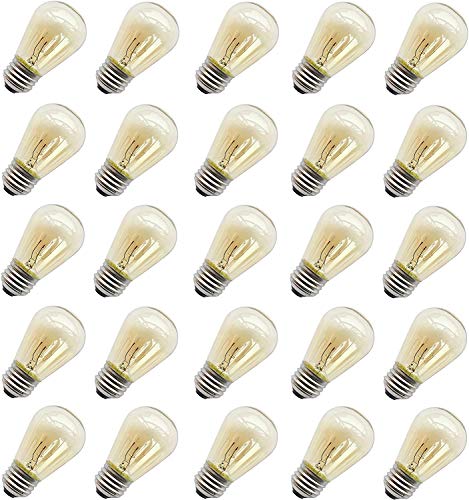
Rolay 11W Outdoor String Light Bulbs with E26 Base, 25 Pack

dalattin 24 Pack LED Bulbs Daylight White 5000K, 60W Equivalent A19

dalattin A19 Dusk to Dawn Light Bulbs 9W LED 4 Pack

Moonflor 26 Pack S14 Incandescent Light Bulbs 11W 2700K

dalattin 12 Pack A19 Vintage LED Edison Bulbs Dimmable

Seentech 12 Pack 60W E12 B10 CTC Candle Bulbs 2700K
Why These Options Stand Out
Picture a backyard strung with warm, glowing bulbs on a summer evening. That’s the scene the Brightown S14 pack is built for. Each bulb measures 1.8 inches and runs on a standard E26 base at 120V, drawing 11W to produce a notably warm 2200K glow that feels closer to candlelight than to a typical reading lamp. The nickel-plated aluminium base is the practical detail here, since it resists rust in damp weather where uncoated brass tends to corrode over a season or two.
With 30 bulbs in a single pack, this is the kind of buy that handles a full patio string plus spares for inevitable breakage. I think these fit people who want a soft, vintage-style patio and don’t mind swapping a bulb every couple of years. The warm tone leans amber rather than bright white, so it’s more about mood than task lighting.
The Case For It
- 2200K glow reads warmer than standard 2700K bulbs, giving string lights a distinctly vintage feel
- Nickel-plated aluminium base holds up against rain, snow, and humid coastal air
- 30-pack size covers a typical 25-foot patio string with replacements left over
- E26 base fits common outdoor string light sockets without adapters
Things To Consider
- The very warm 2200K tone can feel too dim for anyone wanting a brighter entertaining space
- Glass bulbs in outdoor setups eventually need replacement, so keep a couple of spares handy
Who It Suits Best
Homeowners setting up patio string lights who want a soft, candle-like glow and live in climates with humid or rainy weather.
Consider Something Else When
Shoppers wanting a brighter, slightly cooler outdoor tone should look at the Moonflor 26 Pack S14 Incandescent Light Bulbs instead, which sit at a more neutral 2700K.
The Rolay 25-pack exists for a specific moment: you already own a great string light set, and half the bulbs finally gave out. Rather than replacing the whole strand, this refill pack lets you swap in fresh 11W S14 bulbs on a standard E26 or E27 socket. The clear glass carries a subtle amber tint that warms up the light, though the exact depth of that amber can vary a bit from batch to batch. For most patio setups, that’s a small detail rather than a real issue.
These aren’t LED bulbs, which matters for shoppers chasing that traditional incandescent warmth. I find them most useful for anyone refreshing an existing patio setup rather than starting from scratch. Compared with the Brightown pack above, you trade a few bulbs and the rust-resistant base for a simpler, lower-cost replacement option.
Standout Benefits
- Universal E26/E27 socket fit covers most standard string light fixtures on the market
- 25-pack hits a sweet spot for replacing worn bulbs in an existing patio setup
- Clear glass with subtle amber tint adds warmth without going too dim
- Traditional incandescent glow keeps the warm character older fixtures were designed for
Worth Noting
- Amber tint can vary between batches, so colour consistency across a full string isn’t guaranteed
- Base isn’t described as rust-resistant, so coastal installations may see wear sooner
Key Specs
Made For
Anyone refreshing a worn patio string light set who wants a simple, traditional incandescent replacement.
Look Elsewhere When
Shoppers starting a brand-new outdoor setup in wet or coastal weather should reach for the Brightown S14 30 Pack, which has the rust-resistant base.
Strictly speaking, this isn’t an incandescent bulb, but it earns a spot here for people who want the brightness of one with the efficiency of LED. The dalattin A19 swaps a 60W incandescent draw for just 9W while still pushing 800 lumens out at a crisp 5000K daylight tone. The colour temperature (the warmth or coolness of the light, measured in Kelvin) sits firmly in the cool, energizing range, which makes it a different beast from the soft amber of the patio bulbs above.
You may find this pack most useful in a home office, garage, or kitchen where you want clear, focused light rather than mood lighting. The 80+ CRI rating (CRI, or Color Rendering Index, measures how accurately a bulb shows colours compared to natural light) means colours look reasonably true without veering into professional-grade territory. It’s a practical pick for utility spaces rather than cozy ones.
Bright Spots
- 5000K daylight tone delivers crisp, focused light for task-heavy spaces
- 9W draw replaces 60W incandescents, trimming energy use across an entire home
- E26 base fits standard table lamps, ceiling fixtures, and floor lamps
- 24-pack covers most rooms in a typical apartment or small house
Points To Note
- Non-dimmable design means these won’t work with dimmer switches
- Cool 5000K tone can feel harsh in a bedroom or living room setting
Right Fit For
Homeowners outfitting a kitchen, garage, or home office who want bright daylight-level lighting at a low operating cost.
A Better Fit Elsewhere
Shoppers after a softer, decorative incandescent glow for a living room should consider the dalattin 12 Pack A19 Vintage LED Edison Bulbs instead.
A photocell sensor is a small component that detects ambient light and switches the bulb on or off automatically based on the level of darkness. The dalattin Dusk to Dawn bulb uses one to handle a job most people forget about: turning the porch light on at sunset and off again at sunrise. At 9W it replaces a 60W incandescent, and the 5000K daylight tone means it doubles as a security-style light rather than a warm welcome glow. It’s an LED bulb, but it solves a problem many people used to solve with incandescent porch fixtures.
The sensor reads only natural sunlight, so nearby porch or window lights shouldn’t trick it into staying off. For most suburban entryways and yard fixtures, that means installing it once and never thinking about it again. I think it’s a good match for anyone tired of remembering to flip a porch switch.
What Helps Most
- Photocell sensor handles on/off automatically based on natural light levels
- 9W draw replaces a 60W incandescent, cutting energy use across nighttime hours
- Sensor ignores nearby artificial lights, so it works reliably in mixed lighting conditions
Honest Caveats
- 4-pack size is small, so larger properties may need to buy multiples
- Cool 5000K tone leans toward security-lighting rather than cozy entryway lighting
Best Suited To
Homeowners wanting a hands-off porch or yard light that runs only after dark and saves energy overnight.
Skip It When
Shoppers decorating a patio for warm evening entertaining should look at the Brightown S14 30 Pack instead, which focuses on ambiance over automation.
The Moonflor 26-pack sits in the middle ground between the two earlier string light options. Each S14 bulb draws 11W and outputs at 2700K, which is the classic warm white most people picture when they think “soft incandescent.” The glass housing is described as waterproof, and the brand markets it for year-round outdoor use through rain, humidity, and temperature swings. For most climates, that’s a sensible claim.
I think these fit people who want a slightly cleaner, brighter warm tone than the very amber 2200K of the Brightown bulbs. Compared with the Rolay pack, you trade the universal E26/E27 compatibility emphasis for a more weather-focused build. It’s a sturdy replacement option rather than a decorative specialty.
Where It Helps
- 2700K warm white sits in the familiar, neutral-warm range for everyday patios
- Glass housing is built for rain, humidity, and temperature extremes
- 26-pack covers a typical string light run with a couple of spares in the drawer
Possible Compromises
- Glow isn’t as warm or vintage-toned as the 2200K Brightown option
- Incandescent bulbs still use more energy than the LED alternatives in this roundup
Who Should Grab It
Shoppers wanting a reliable, weather-tough outdoor string light bulb in a familiar warm white tone.
Another Choice May Suit
Anyone chasing a deeper vintage amber glow should pick the Brightown S14 30 Pack, which runs noticeably warmer at 2200K.
Edison-style bulbs have a particular charm: visible filaments, clear glass, a soft amber glow. The dalattin Vintage LED mimics that look while running on just 8W per bulb. The exposed filament-style design is the point, since these are meant to hang bare in pendants or chandeliers rather than hide behind a shade. At 2700K and 800 lumens, the colour temperature lands in a comfortable soft white range.
Unlike a true incandescent Edison bulb, this one dims smoothly across a 10–100% range, which matters for anyone who actually uses dimmer switches at home. It’s an LED, not a real incandescent, but for shoppers who want the visual style with less heat and lower energy draw, it’s a fair compromise. For most decorative fixtures, I think the filament look holds up well at this price point.
Advantages To Know
- Visible filament design suits pendants, chandeliers, and exposed-bulb fixtures
- Smooth 10–100% dimming range works with standard dimmer switches
- 8W draw replaces 60W incandescent equivalents for meaningful energy savings
- CRI80+ rating keeps colours looking natural in living spaces
Small Caveats
- Filament-look LEDs don’t quite match the warm flicker of a true incandescent filament
- 12-pack may be too few for larger homes with many decorative fixtures
Perfect Match For
Design-minded decorators who want Edison-style bulbs in pendants or chandeliers with dimmer control and lower energy use.
Where A Sibling Pick Shines
Anyone wanting genuine incandescent filaments rather than the LED imitation should look at the Seentech 12 Pack E12 Candle Bulbs, which is a true incandescent option.
Chandeliers, ceiling fans, and pendant fixtures with small candelabra sockets need a different kind of bulb entirely. The Seentech 12-pack uses an E12 candelabra base (the smaller screw-in socket, narrower than the standard E26) at 60W and 2700K, delivering the familiar warm white glow in a slender B10 candle shape. The transparent CTC (candle tubular crystal) styling is the visual point, since these bulbs are meant to show.
Unlike the S14 patio bulbs earlier in the list, this is a real incandescent at full 60W, which means more heat and more energy draw than any LED alternative. For most dining rooms and formal fixtures, however, that warm output is exactly the look the room was designed around. They’re also dimmable, which matters for chandeliers wired to dimmer switches.
The Good Stuff
- E12 candelabra base fits chandeliers, ceiling fans, and small pendant fixtures
- True 60W incandescent output delivers the warm glow these fixtures were designed for
- 2700K warm white sits in the classic, comfortable range for living and dining spaces
- Dimmable design works with standard dimmer switches for adjustable mood
A Few Limitations
- 60W draw per bulb adds up quickly in fixtures with multiple sockets
- Real incandescent filaments have a shorter lifespan than LED replacements
Feature Snapshot
Whose Shelf It Belongs On
Homeowners restoring or maintaining a chandelier or ceiling fan fixture that needs traditional warm candle-style incandescent bulbs.
Swap It Out When
Shoppers wanting similar candle styling with lower energy draw should consider the dalattin Vintage LED Edison Bulbs for visible-filament alternatives.
What Matters Most Before Choosing Incandescent Bulbs
Match the Base to Your Fixture First
The single biggest mistake people make is buying a beautiful bulb that doesn’t fit. Standard lamps and ceiling fixtures use an E26 base, while chandeliers, ceiling fans, and small sconces usually need an E12 candelabra base. Outdoor string lights typically run on E26 or E27. Check the existing bulb or fixture label before anything else, since the wrong base means the bulb simply won’t screw in.
Color Temperature Sets the Mood
The Kelvin rating (K) tells you how warm or cool a bulb reads. Around 2200K feels candlelit and amber, 2700K is the familiar warm white, and 5000K lands in crisp daylight territory. Patios and reading nooks generally look best in the lower Kelvin range, while kitchens, offices, and garages benefit from cooler tones that keep you alert.
Wattage, Lumens, and Efficiency
Incandescent wattage tells you how much energy the bulb uses, while lumens measure actual brightness. A traditional 60W incandescent produces around 800 lumens, which is the same output the LED alternatives in this roundup deliver at a fraction of the wattage. For genuine incandescents, think in watts. For LEDs, look at lumens.
Real-World Use Case
Outdoor setups need weather-resistant bases and glass that handles temperature swings. Indoor decorative fixtures benefit from dimmable options and warm tones. Utility spaces like kitchens and offices handle cool daylight tones better. There’s no single best bulb, only the right one for the socket and the room.
Key Considerations Across These Picks
Pitfalls Shoppers Hit
The most common slip-up is grabbing a 60W-equivalent LED and expecting it to dim on an old dimmer switch, which causes flicker or buzz. Another is buying S14 patio bulbs for indoor chandeliers, since the shape and base rarely line up. Always confirm the base type, the dimmer compatibility, and whether the fixture is rated for the wattage before clicking through.
The Upgrade Payoff
Spending more on premium incandescents usually gets you better glass clarity, more consistent colour from batch to batch, and tougher base coatings that resist rust. For high-traffic outdoor setups or visible decorative fixtures, that upgrade shows up in fewer early replacements and a cleaner look over time. For utility rooms or low-visibility fixtures, the basic tier performs just fine.
Frequently Asked Questions
How long do incandescent bulbs typically last?
Most traditional incandescent bulbs are rated for somewhere around 1,000 to 2,000 hours of use. In a lamp that runs three hours a day, that’s roughly a year to a year and a half before the filament gives out.
Can I use an LED bulb in a fixture rated for incandescent?
In most cases, yes, since LEDs run cooler and use far less wattage. The main concern is dimmer compatibility, since older dimmer switches sometimes cause LED bulbs to flicker or buzz.
What’s the difference between warm white and daylight white?
Warm white (around 2700K) reads yellow-amber and feels cozy. Daylight white (around 5000K) reads blue-white and feels crisp. The right choice depends on whether the room needs mood lighting or task lighting.
Are outdoor string light bulbs safe in the rain?
Outdoor-rated bulbs with waterproof bases and glass housings handle rain and humidity well. Always confirm the bulb is rated for outdoor use before installing it in an exposed fixture.
Why do some Edison bulbs look different from regular bulbs?
Edison-style bulbs have visible filaments and clear glass designed to show them off. They’re meant for fixtures where the bulb itself is part of the visual, like pendants and exposed-socket chandeliers.
The Takeaway
Incandescent bulbs aren’t a one-size-fits-all product, and the right pick depends on whether you’re lighting a patio, a chandelier, or a home office. For cozy outdoor strings, the Brightown and Moonflor S14 packs handle the job well. Decorative fixtures call for the Edison-style dalattin Vintage LEDs or genuine Seentech candle bulbs. Utility spaces get the most from the daylight-toned dalattin A19 LEDs or the set-and-forget dusk-to-dawn option. Match the base, choose the right Kelvin, and the rest usually falls into place.