

Storms knock out the grid more often than most households expect, and fumbling through junk drawers for dying batteries is a rough way to spend a Tuesday night. I put this list together for anyone who wants a real emergency light on hand before the next outage, not just a spare gadget.
View on AmazonA Closer Look At The Lineup

OLIGHT ArkPro EDC Flat Flashlight (Black CW)

OLIGHT Baton4 Premium Edition EDC Flashlight

ALSTU 2 Pack Rechargeable 99,000-Lumen Flashlight
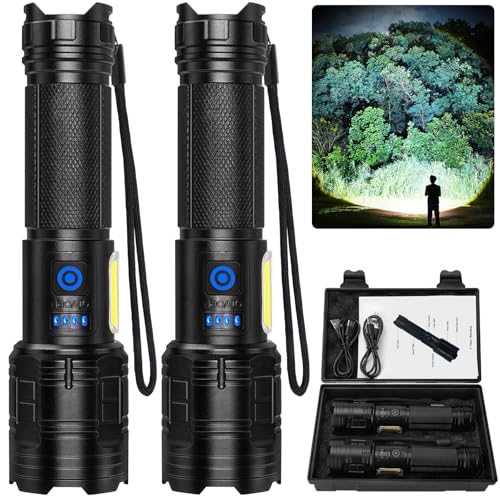
ALSTU 99,000-Lumen Flashlight with COB Side Light

ALSTU 3 Pack 90,000-Lumen Rechargeable Flashlight

RYOBI PCL660B ONE+ 18V Cordless LED Light

Milwaukee 2354-20 M18 Search Light
The Picks, Examined More Closely
The ArkPro leans into the multi-tool side of emergency lighting, packing four distinct light sources into a flat, pocketable body that disappears in a jacket pocket. Where the Baton4 below is a single-beam pocket rocket, this one is built for the moment you need a flood, a throw, a UV check, and a green aiming beam without grabbing a second device.
For most households, that means a single flashlight covers checking a breaker panel, scanning a backyard, finding pet stains on carpet, and signaling a partner across a dark room. The flat form factor also rides comfortably in a pocket without printing like a tube light.
Points In Its Favor
- Four light sources cover routine checks, long-distance scans, and specialized tasks from one body.
- Flat shape slides into a pocket or organizer pouch more cleanly than traditional tube lights.
- Rechargeable battery setup removes the need to stockpile spare cells for a single device.
- Green beam can be combined with other modes, giving flexible signaling during a power outage.
Things To Consider
- More modes mean a slightly steeper learning curve for anyone who just wants a basic on-and-off light.
- Multi-function bodies tend to need occasional cleaning around the mode selector to keep grit from interfering with the switch.
Key Specs
Made For
Households that want one premium light covering daily carry, home emergencies, and a few specialized tasks like UV inspection.
Consider Something Else When
The ALSTU 99,000-Lumen flashlight is a smarter call for shoppers who want a throwaway-priced spare for the kitchen junk drawer rather than a feature-dense flagship.
The Baton4 stays small enough to live on a keychain or in a back pocket, yet still pushes a 1,300-lumen high mode with up to 170 m of throw. In a real outage, that means you can keep it on you at all times without thinking about it, and it has the power to light a hallway or check the front yard when needed.
A two-way pocket clip and a built-in tail magnet make it easy to clip to a hat brim for hands-free work or stick to a metal cabinet while you sort through a fuse box. Compared to the ArkPro above, this is the simpler, lighter choice that still feels solid in the hand.
The Good Stuff
- 1,300-lumen high output is more than enough for hallway and room-scale emergency lighting.
- Magnetic tail frees up both hands for breaker panels, fuse work, or under-sink repairs.
- Compact body fits a pocket, glove box, or small drawer without dedicating storage space.
Worth Noting
- Maximum output drains the battery quickly, so most real-world use will rely on lower modes.
- OD green finish shows wear faster than darker anodized options if dropped on hard surfaces.
- Single-beam design lacks the side COB flood found on the ALSTU 99,000-lumen model below.
Feature Snapshot
Right Fit For
Anyone who wants a small, reliable light in their pocket every day and the same light doubling as a home emergency option.
Look Elsewhere When
Shoppers who want a wider flood beam for room-filling light should look at the ALSTU 99,000-Lumen with COB side light instead.
Two flashlights in one box changes the math on emergency prep: one lives in the kitchen, the other rides in a car or a travel bag. The IPX7 waterproof rating, which means the light can survive full submersion for a short period, makes these a sensible pick for storm-prone regions where flooding or heavy rain is a real concern.
Five modes and an adjustable focus let you dial in either a wide room-filling flood or a tighter spot beam. Compared to the OLIGHT picks above, this set trades premium feel for raw output and redundancy.
Benefits That Matter
- Two units let you place one in a fixed location and keep a second as a true spare or travel light.
- IPX7 sealing handles wet basements, flooded garages, and wet-weather outdoor work.
- Adjustable focus shifts between a wide room-filling beam and a long-distance spot.
Trade Offs
- High-lumen claims at this tier often translate to shorter real-world runtimes, so most practical use will sit on lower modes.
- Bodies tend to run larger than the OLIGHT Baton4, so pocket carry is less comfortable.
Quick Facts
Who It Suits Best
Households in storm-prone regions who want a backup light in two locations without buying two separate products.
Skip It When
Homeowners who already own a RYOBI ONE+ battery system should put the RYOBI PCL660B on their shortlist instead.
The standout feature here is the COB side panel (a chip-on-board array that produces a wide, even flood) that turns the flashlight into a work lamp when laid on its side. Seven modes give more granular control over output, which is helpful when you want a low-glow nightstand option and a full-power search beam in the same tool.
For a garage, basement, or workshop setting, the side flood is the real selling point. Where the 2-pack above gives you spares, this 2-pack adds a work-light function that pairs well with a breaker-panel or under-hood task.
Useful Touches
- COB side panel delivers a wide, even flood ideal for working on a panel or under a sink.
- Seven modes offer finer control over brightness steps than the typical 3- or 5-mode setup.
- Two-unit pack gives one for the toolbox and one for general household placement.
Points To Note
- COB side panels are more exposed to scratches and grit than the main lens and may need occasional cleaning.
- More modes mean a slightly longer first-time setup to learn which setting does what.
At A Glance
Best Suited To
DIYers and homeowners who want a flashlight that doubles as a work lamp for breaker panels, plumbing, and garage projects.
Another Choice May Suit
Shoppers who need a long-throw search beam for property work should step up to the Milwaukee 2354-20 M18 Search Light.
Three flashlights solve the “where is the other one” problem that hits most families within a week of buying a single light. One in the kitchen drawer, one by the bedside, one in the car, and the household is essentially covered without moving lights around between rooms.
The 5-mode setup and waterproof build match what the 2-pack above offers, just with an extra unit in the box. For larger families or shared housing, that third light is a small detail that pays off the first time someone is in the shower during an outage.
Positive Points
- Three units let you dedicate one per high-priority location without swapping lights around.
- 5-mode output covers low-glow nightstand use and full-power search in the same light.
- Waterproof construction handles wet boots, damp basements, and outdoor rain.
Honest Caveats
- Bulk pack size takes up more storage space than a single premium flashlight for apartment dwellers.
- High-lumen output is best treated as a ceiling; sustained use at top brightness drains batteries quickly.
Who Should Grab It
Larger families, shared households, and anyone who wants lights stationed in multiple rooms without buying three separate products.
Reach For A Different Pick When
Solo apartment dwellers may find the OLIGHT Baton4 a tidier fit since one pocketable light is often enough for a small space.
The RYOBI PCL660B is built around the ONE+ 18V battery platform, which is the real pitch for anyone who already owns RYOBI tools. The 130° pivoting head makes it a directional work light, and the 280-lumen output is plenty for under-cabinet, under-hood, and crawlspace tasks.
Runtime is the standout spec here, reaching up to 22 hours on a charged battery in low mode. For households that already charge ONE+ batteries for drills and saws, this light slots into an existing routine without adding another charger to the wall.
Strong Points
- Uses existing RYOBI ONE+ 18V batteries, so no extra charger is needed for owners already in the system.
- Pivoting head lets you aim light where you need it without propping the light up.
- Up to 22 hours of runtime on a single battery in lower modes covers long overnight outages.
Points To Consider
- Tool-only listing means the battery and charger must be purchased separately if you do not already own them.
- 280-lumen output is modest compared to the ALSTU high-lumen options above, though it lasts far longer per charge.
- Heavier body weight makes it less pocketable than a dedicated EDC flashlight.
Whose Shelf It Belongs On
Existing RYOBI ONE+ owners who want a long-runtime emergency light that recharges on the batteries they already own.
Where A Sibling Pick Shines
Shoppers without RYOBI batteries should look at the OLIGHT Baton4 for a simpler, lighter self-contained option.
The Milwaukee 2354-20 is a different category of light entirely: 1,250 lumens with a 700-yard beam reach and a 198° rotating head. For homeowners with long driveways, large properties, or rural land, the throw is what separates this from the other picks on the list.
Four output modes (spot, flood, spot/flood combination, and strobe) cover signaling, room work, and search. The low-battery indicator is a small but real safety feature for emergency prep, since a quiet dead battery at 2 a.m. is the worst time to find out your light is out of juice.
Good Reasons To Consider
- 700-yard beam reach scans long driveways, fields, and wooded property edges from the porch.
- Four modes including a strobe cover signaling, search, and flood work in one device.
- Low-battery indicator helps avoid the dead-light surprise during a multi-day outage.
- 198° head rotation aims light without repositioning the body of the flashlight.
Trade-Offs To Consider
- Tool-only body means the M18 battery and charger are sold separately and add to the total cost.
- Larger, heavier form factor is a poor pocket carry, so it works best stored near an exit or in a vehicle.
Built With In Mind
Property owners, rural households, and Milwaukee tool-system users who want long-throw search capability on demand.
A Better Fit Elsewhere
City apartment dwellers will get more daily use out of the OLIGHT Baton4 than a long-throw search light.
What Matters Before Choosing Home Emergency Flashlights
Brightness Versus Runtime
Raw lumen numbers look impressive on the box, but high output drains batteries quickly. For most households, a mid-range setting used for room-filling light during an outage is more practical than chasing top-tier numbers. A light that runs 8 to 12 hours on lower modes is more useful overnight than one that blasts at maximum for an hour and dies.
Battery And Charging
Rechargeable lithium-ion lights (a common battery chemistry that holds a charge well and recharges via USB) are now the standard, and the main question is how you will keep them topped off. Pick a model whose charging method fits a habit you already have: a USB-C cable by the nightstand, a tool-system battery on an existing charger, or a hand crank for off-grid redundancy.
Beam Shape
Flood beams spread wide and are best for room work, while spot beams throw narrow and far for outdoor scanning. Several picks on this list, including the ALSTU COB flashlight and the Milwaukee search light, give you both. Decide which beam shape you would reach for first and let that guide the choice.
Build And Water Resistance
An emergency light lives in a glove box or a basement drawer, so IP ratings (Ingress Protection ratings, where the second digit rates water resistance) and impact resistance matter. IPX7 means the light can survive submersion in shallow water for a short time, which is the right level for storm-prone regions and damp basements.
Key Considerations Across These Picks
Where Shoppers Go Wrong
Treating the highest lumen number as the most important spec is a common trap. Run time, beam shape, and how the light actually feels in your hand for daily use matter more in a real outage. Buying one flashlight and stashing it in a single drawer is another misstep, since a multi-unit or multi-location setup covers more failure scenarios.
What Separates Premium From Basic
The price jump between a budget ALSTU pack and a premium OLIGHT or Milwaukee tool goes toward build quality, regulated output (steady brightness as the battery drains rather than a slow fade), better thermal management, and longer warranties. For most households, mid-tier options hit the right balance. Premium picks earn their place when you need the specific feature they offer, like a green aiming beam, a magnetic tail, or a 700-yard throw.
Frequently Asked Questions
How Many Lumens Do I Need For A Home Emergency Flashlight?
For indoor room lighting during an outage, 200 to 500 lumens is plenty. Higher output is useful for outdoor scanning and signaling, but most of your time will be spent on lower modes to preserve battery life.
Should I Pick A Rechargeable Or Battery-Powered Emergency Light?
Rechargeable lights are now the standard for home use because they are easier to keep topped off. Keep a small pack of spare cells on hand only for lights that use them, and recharge any lithium-ion lights every few months so they are ready when the grid goes down.
Where Should I Store Emergency Flashlights?
Place at least one flashlight in each frequently used room, plus one in the car. A bedside table, a kitchen drawer, and a hall closet are common starting points. Avoid basements and attics as primary storage since those are the hardest spots to reach during the very outage you need a light for.
How Long Should An Emergency Flashlight Run On A Single Charge?
Aim for at least 6 to 8 hours of useful light on a mid-level setting. Premium options like the RYOBI PCL660B stretch that to over 20 hours on low, which is helpful for multi-day outages.
Is A Higher Lumen Rating Always Better?
Not necessarily. Higher output drains batteries faster and rarely gets used at full power. A light that holds a useful mid-level brightness for hours is more valuable in a real emergency than one that peaks high and fades fast.
Bottom Line
The right home emergency flashlight depends on your space, your routine, and whether you already own a tool-system battery. Pocketable EDC picks like the OLIGHT Baton4 work for apartments, multi-packs like the ALSTU 3-pack fit larger homes, and long-throw tools like the Milwaukee 2354-20 shine on rural properties. Pick the one you will actually keep charged and within reach, and you will be glad you did the next time the lights go out.