

Picking the right headlamp changes how a hike, run, or after-dark chore actually feels. I look for solid beam quality, dependable runtime, and a fit that stays put when the pace picks up. The six tactical headlamps below cover the range I get asked about most, from featherweight commuters to hard-use pro builds.
Your Options, Compared

Nitecore NU25 360 Lumen Triple Output Headlamp (Black)

Nitecore NU20 Classic 360 Lumen Ultralight Headlamp

Princeton Tec Vizz Tactical MPLS Headlamp 550 Lumens

Princeton Tec VIZZ 550 RGB AAA Headlamp
Princeton Tec Vizz Tactical LED Headlamp 550 Lumen
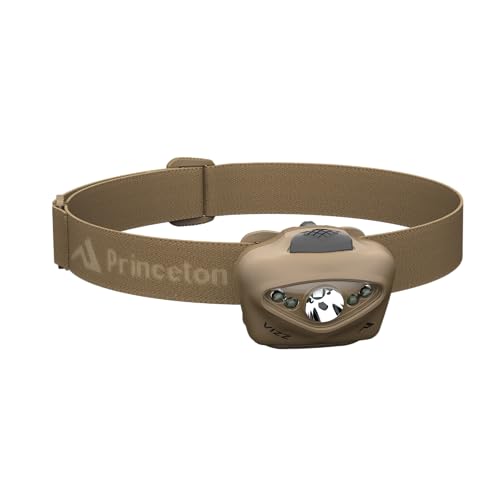
Princeton Tec Vizz 550 Lumen Dimmable Headlamp (Tan)
Taking A Closer Look At The Options
The Nitecore NU25 earns a spot in my kit because it disappears on my forehead yet throws real light when I need it. The triple-output setup pairs a CREE XP-G2 S3 main LED (the workhorse emitter behind the 360-lumen peak) with a high-CRI auxiliary (CRI, or Color Rendering Index, measures how naturally a light shows colors; higher is closer to sunlight) and a red LED for preserving night vision. On a pre-dawn trail run the white beam reaches 88 yards, which is plenty for spotting roots and trail markers, while the red light lets me check my phone map without killing my dark adaptation.
Weighing just 1.9 ounces with the band, the NU25 is comfortable for hour-long use, and the USB-rechargeable build means I top it off in my car between outings. Compared to the heavier Princeton Tec options later in this list, the NU25 is the choice for anyone who treats headlamp weight as a top priority.
The Helpful Details
- Triple-light design covers trail navigation, close-up tasks, and night-vision preservation in one unit
- Sub-2-ounce carry weight, light enough for fast-paced running and long hikes without neck strain
- 360-lumen main beam reaches roughly 88 yards, enough for trail jogging and campsite work
- USB-rechargeable battery means no coin-cell spares to track, a real convenience for travel
Honest Caveats
- Plastic housing tends to scuff over years of hard use, so owners who beat up gear may notice cosmetic wear
- Not rated for full submersion, so stream crossings and heavy rain call for care
- Lower output than the 550-lumen Princeton Tec models, which matters for wide-area scanning
At A Glance
Who It Suits Best
Trail runners, joggers, and casual campers who want a featherweight, USB-rechargeable headlamp that handles daily wear.
Where Another Pick Suits Better
Pros needing modular helmet mounting and infrared should look at the Princeton Tec Vizz Tactical MPLS Headlamp 550 Lumens instead.
The Nitecore NU20 Classic takes the ultralight philosophy a step further than the NU25 above. At 1.34 ounces it borders on forgettable, yet the 360-lumen peak output and 119-yard throw make it a serious trail tool, not just an emergency backup. The three-level white LED plus SOS (a distress signal pattern of three short, three long, three short flashes) and Beacon modes give it real flexibility for backcountry use.
Fast USB-C charging and a built-in battery keep the NU20 simple to live with. For ultralight backpackers and distance runners counting every gram, this one earns its place. Where the NU25 leans toward casual versatility, the NU20 Classic leans toward minimalist performance.
What Helps Most
- 1.34-ounce carry weight, one of the lightest full-feature headlamps available
- 119-yard throw gives surprising reach for such a compact housing
- USB-C fast charging cuts downtime between trips, helpful for busy weeks
- Auxiliary red light supports night-vision-friendly map reading
Trade Offs
- Plastic shell construction, so heavy impacts may crack the housing
- Built-in battery cannot be swapped in the field, a real drawback for multi-day trips away from power
- Lacks the IR (infrared) and specialty color modes of the Princeton Tec tactical models
Right Fit For
Ultralight backpackers, thru-hikers, and runners who measure gear by the gram and prefer USB-C charging.
Reach For A Different Pick When
Field-swappable batteries and longer regulated runtime matter more; the Princeton Tec Vizz Tactical LED Headlamp 550 Lumen is the better call.
The Princeton Tec Vizz Tactical MPLS steps out of the recreational lane and into professional territory. The Modular Personal Lighting System (MPLS) lets the headlamp mount on helmets, caps, or MOLLE (Modular Lightweight Load-carrying Equipment, the standard strap and webbing layout used on military gear) platforms, which matters when you need light exactly where your eye is looking, not bouncing on a headband. The 550-lumen max output covers patrol, search, and rescue work, and the inclusion of IR (infrared) makes it night-vision-device friendly.
White, red, blue, and green LEDs round out the color kit for map reading, blood tracking, and preserving dark adaptation. This is the pick I would hand to a law-enforcement officer or rescue volunteer who needs flexible mounting and a serious output ceiling.
A Strong Showing
- MPLS mounting adapts to helmets and tactical rigs, a real edge for pros
- IR mode supports night-vision-device use in the field
- 550-lumen output handles wide-area searches and room clearing
- Multiple color LEDs (red, blue, green) cover navigation, signaling, and tracking tasks
Worth Noting
- Heavier and costlier than recreational picks, so it is overkill for casual use
- Battery type and runtime specifics are not detailed in the listing, which complicates planning
- Specialty features like IR have little value for shoppers outside tactical or rescue roles
Feature Snapshot
Made For
Military personnel, law-enforcement officers, and rescue operators who need modular helmet mounting and IR compatibility.
Skip It When
A simple, lightweight trail headlamp is enough; the Nitecore NU20 Classic is the friendlier everyday choice.
The Princeton Tec VIZZ 550 RGB is the headlamp I recommend when someone refuses to trust built-in batteries. Three AAA cells (the small, common cylindrical batteries found everywhere from gas stations to dollar stores) power this unit, which means a dead headlamp becomes a 30-second problem solved with spares from a glove box. The 550-lumen peak output with a dimmable spot and flood beam handles everything from reading a map to lighting up a trail junction.
IPX7 waterproofing (a rating meaning the unit survives full submersion in up to one meter of water for 30 minutes) lets the VIZZ shrug off downpours and brief drops in streams. Red, green, and blue LEDs cover specialty tasks like preserving night vision or tracking game. For backpackers and emergency-prep folks, the AAA format is a quiet superpower.
The Value In It
- AAA battery power swaps anywhere, ideal for off-grid trips and emergency kits
- IPX7 waterproofing handles rain and accidental drops in water
- Dimmable spot and flood beam adapts to close work and distance scanning
- RGB color modes add task flexibility beyond basic white light
Points To Keep In Mind
- AAA cells cost more over time than a rechargeable pack, especially for daily users
- Plastic body construction, so heavy drops may damage the housing
- Heavier than the Nitecore ultralights, noticeable on long fast-paced runs
Key Product Details
Best Suited To
Backpackers, emergency-prep households, and campers who prefer replaceable batteries over USB charging.
Swap It Out When
Lower carry weight matters more than battery flexibility; the Nitecore NU25 360 Lumen Triple Output Headlamp fits that bill.
The Princeton Tec Vizz Tactical LED Headlamp targets the user who cannot afford to run out of light. The regulated output circuitry holds brightness steady as the battery drains, instead of dimming gradually like most headlamps. The 66-hour runtime figure is the headline for me, because it covers multi-day trips where charging is not an option.
At 92 grams (about 3.2 ounces) the Vizz Tactical is heavier than the Nitecore ultralights, but the trade is a tougher housing and full RGB plus IR coverage. Programmable specialty color modes let me pick which colors I cycle through, tailoring the headlamp to my workflow rather than living with a fixed order. This is the pick for field operators and serious outdoors people.
What Works In Its Favor
- Regulated output keeps brightness consistent as the battery drains, a real safety feature
- 66-hour runtime supports multi-day missions without recharging
- RGB and IR LEDs cover night-vision and specialty signaling needs
- IPX7 waterproofing handles harsh weather and brief water immersion
A Few Limitations
- 92-gram weight is noticeable on long, fast-paced runs compared to ultralight picks
- Specialty features raise the price over recreational headlamps, so casual users may not benefit
- Programming the color cycle takes a learning curve for first-time users
Whose Shelf It Belongs On
Tactical operators, search-and-rescue volunteers, and serious outdoor users who value regulated output and extended runtime.
Look Elsewhere When
Carry weight and simplicity matter most; the Nitecore NU25 360 Lumen Triple Output Headlamp is a friendlier everyday pick.
The Princeton Tec Vizz in Tan rounds out the list as the most versatile recreational option in the lineup. The 550-lumen LED handles hiking, camping, running, and safety-preparedness duties without specializing too hard in any single direction. The tan housing also blends into backcountry environments better than a black tactical look, which matters for hunters and wildlife photographers.
Programmable color modes (white, red, blue, green, IR) plus an IPX7 rating make this a credible emergency-prep choice as well. Compared to the Vizz Tactical LED Headlamp covered earlier, this model leans recreational while keeping the regulated-output DNA. For someone who wants one headlamp that does everything reasonably well, this fits.
Positive Takeaways
- 550-lumen output covers most recreational and emergency scenarios
- Programmable RGB and IR modes adapt to specific field tasks
- IPX7 waterproofing holds up to heavy rain and accidental submersion
- Tan housing blends into natural settings, useful for hunters and photographers
Practical Considerations
- Heavier than ultralight Nitecore picks, so runners may feel fatigue on long efforts
- Specialty color modes add complexity for shoppers who only need white light
- Plastic housing, like most headlamps in this category, so hard drops remain a risk
Perfect Match For
Hikers, campers, and emergency-prep households who want a flexible, rugged headlamp with programmable color modes.
A Better Fit Elsewhere
Runners who prize low weight above all else will prefer the Nitecore NU20 Classic 360 Lumen Ultralight Headlamp.
What To Weigh Before Choosing Tactical Headlamps
Output and Beam Pattern
Lumen counts tell part of the story, but beam shape matters just as much. A tight spot beam throws farther for trail navigation, while a wide flood beam lights up a campsite or work area. Most tactical and outdoor users benefit from both, which is why dimmable dual-beam designs like the Princeton Tec VIZZ 550 RGB and the Vizz Tactical models earn their keep. Pure ultralight users, like thru-hikers, can often get by with a single balanced beam if it keeps the weight down.
Power Source and Runtime
Rechargeable lithium packs, like the Nitecore NU25 and NU20 Classic, are light and convenient but limit off-grid trips. AAA-powered models, like the Princeton Tec VIZZ 550 RGB, swap batteries anywhere but cost more over time. Regulated output, a feature on the Princeton Tec Vizz Tactical LED Headlamp, keeps brightness steady as the battery drains instead of fading gradually, which is a real safety plus for tactical and rescue work.
Mounting and Fit
Headband-only designs suit most hikers and campers. Helmet-mount compatibility, like the MPLS system on the Princeton Tec Vizz Tactical MPLS Headlamp, matters for climbing, caving, search and rescue, and military use. Weight also feeds into fit: anything over about 3 ounces starts to feel heavy on a long run, which is where the sub-2-ounce Nitecore models shine.
Specialty Modes
Red LEDs preserve night vision for map reading and astronomy. Green and blue LEDs support hunting, tracking, and signaling. IR mode pairs with night-vision devices for military and law-enforcement applications. Shoppers who do not need these features can ignore them and save money; shoppers who rely on them should prioritize a model like the Princeton Tec Vizz Tactical LED Headlamp that covers the full RGB plus IR kit.
Key Considerations Across These Picks
Common Shopping Slip Ups
The biggest mistake I see is chasing the highest lumen count and ignoring beam shape. A 550-lumen headlamp with a wide flood beam does less for trail navigation than a 360-lumen headlamp with a focused spot. Another trap is overbuying specialty modes: IR and RGB lighting have zero value for casual hikers, so spending extra on features you will not touch is a real waste.
Where The Extra Money Goes
Higher-tier models like the Princeton Tec Vizz Tactical LED Headlamp and the Vizz Tactical MPLS Headlamp cost more because they add regulated output, programmable modes, modular mounting, and tougher housings. For most casual users, a mid-tier pick like the Nitecore NU25 covers everything that matters. For tactical operators, search-and-rescue volunteers, and serious backpackers, those upgrades pay off in reliability and runtime that budget picks cannot match.
Frequently Asked Questions
What lumen count do I actually need for a tactical headlamp?
For most trail running and camping, 300 to 400 lumens is plenty. Tactical and rescue work often pushes toward 500 to 600 lumens for room clearing and wide-area scanning. Anything brighter than that is useful mainly for specialty tasks and burns through battery faster.
Is red light really necessary on a headlamp?
Red light preserves your night vision, which matters for astronomers, hunters, and anyone moving between dark shelters without losing dark adaptation. It also keeps you from blinding campmates when checking a map. For purely urban or in-home use, red is a nice extra rather than essential.
How important is waterproofing?
IPX7, which means the headlamp survives full submersion in up to one meter of water for 30 minutes, is the level I look for. It covers heavy rain, stream crossings, and the inevitable accidental drop in a puddle. Lower ratings handle drizzle but fail in real downpours.
Rechargeable or replaceable batteries?
Rechargeable lithium packs are lighter and cheaper over time for daily users. Replaceable AAA or CR123A cells, like the Princeton Tec VIZZ 550 RGB uses, win for off-grid trips and emergency kits where charging is not an option. The honest read is that many serious outdoors people carry both styles.
Do I need IR mode?
Only if you pair the headlamp with night-vision devices, which is mostly military, law-enforcement, and some hunting applications. For hiking, camping, running, and home use, IR adds cost without adding value.