

I keep flashlights in three places around my home, plus one in each vehicle, because the moment the power blips or a tire goes flat at night, you really do not want to be hunting for one. The trouble is, not every rechargeable light earns the space it takes up. Some are too dim to be useful outdoors, some chew through cells in a couple of hours, and a few feel fine on a desk but wobble once you hand them off to a kid on a campout.
This shortlist focuses on six rechargeable options that fit specific jobs: a pivoting work light for a garage, a professional-grade torch for first responders, a foldable shop light, and a few high-output handhelds built for the backyard and the trail. Each pick comes with honest trade-offs and a clear sense of who should actually grab it.
How The Shortlist Stacks Up

DEWALT 20V MAX LED Work Light (DCL040)

Streamlight 74348 Strion LED Rechargeable Flashlight

Makita DML801 18V LXT Cordless 12-LED Flashlight

ALSTU 2-Pack 99,000 Lumen Rechargeable Flashlight IPX7
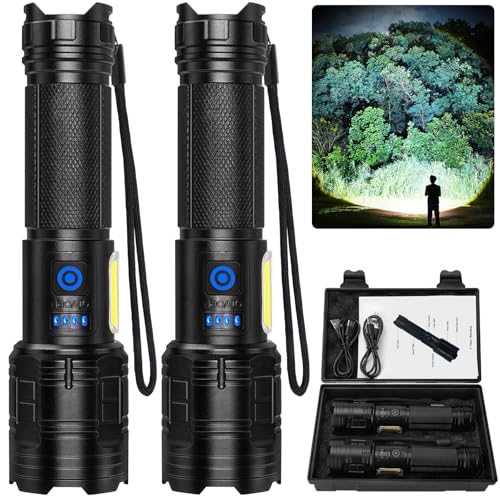
ALSTU Rechargeable 99,000 Lumen Flashlight 7 Modes (2-Pack)

ALSTU 90,000 Lumen Rechargeable Flashlight 5 Modes (3-Pack)
A Deeper Look At The Lineup
The DEWALT DCL040 is the kind of light that earns its place on a pegboard rather than in a drawer. It runs on the same 20V MAX battery platform that already powers much of the brand’s cordless line, so anyone who owns a drill or impact driver from the family can swap packs in seconds. The head rotates through 120 degrees, which matters more than it sounds once you are underneath a sink or propped over a fume hood trying to keep both hands free.
Where it fits well is in a garage, basement, or working truck, anywhere you want a stable beam pointed at a fixed task. Compared with the slim Streamlight covered later, this one trades pocketability for the kind of hands-free setup a mechanic or remodeler actually needs. You may find the 110 lumen output modest for trail use, but for indoor and shaded outdoor work, the lower heat signature compared to older Xenon bulbs is a quiet quality-of-life upgrade.
Useful Strengths
- An integral hook lets it hang from a rafter, ladder rung, or door frame in seconds.
- Rotating head lands light where your hands are, not just where the flashlight is pointing.
- LED bulb runs cooler than Xenon, so the housing stays comfortable during long tasks.
- Battery platform compatibility means one charger covers multiple tools.
- Compact enough to toss in a tool bag without weighing it down.
Things To Consider
- Battery and charger are sold separately, which adds to the real cost if you are starting from zero.
- 110 lumens feels thin on a dark trail or large open yard.
- Plastic body is durable for shop use but is not built for heavy drops onto concrete.
Who It Suits Best
Shops already invested in 20V MAX batteries, or anyone rebuilding a fuse box at midnight and needing a steady, pivoting beam that frees both hands for the actual work.
Look Elsewhere When
The ALSTU 2-Pack 99,000 Lumen Rechargeable Flashlight IPX7 makes more sense for families who need one light per room rather than a dedicated work lamp.
The Streamlight Strion is the smallest body on this list, but the build feels heavier in the hand than the size suggests. Machined aluminum construction, a C4 LED rated for tens of thousands of hours, and three brightness levels plus a strobe function make it read like a duty light rather than a household torch. The rechargeable stick battery clips into the body without tools, and a full top-up takes roughly three hours.
This is the light I would hand to a security guard, a roadside mechanic, or anyone walking a parking lot after midnight. Unlike the DEWALT covered above, it slips into a coat pocket and rides on a belt without feeling like a brick. You may find runtime shorter than the larger ALSTU units, but the trade shows up in portability and the more controlled beam pattern that suits close-to-mid-range work.
A Favorable Mix
- Three lighting levels plus strobe give quick access to the right output for the moment.
- C4 LED is shock-resistant and rated for a long service life.
- Compact aluminum body takes belt carry without weighing you down.
- Grooved barrel helps with grip in wet or gloved conditions.
Worth Noting
- Light only is sold without the charger or battery stick, which raises the entry cost.
- Run times vary from roughly 2 hours on high to 7.5 hours on low, so heavy users top up often.
- The purple finish looks distinctive but can show scuffs faster than black anodizing.
Made For
Patrol officers, mechanics, and homeowners who want a compact, durable light with multiple outputs in a pocket-friendly body.
Not Your Match When
The Makita DML801 18V LXT Cordless 12-LED Flashlight is a better fit when the job is more about lighting a wide stationary area than carrying a beam around a building.
The Makita DML801 leans into the same hands-free idea as the DEWALT but adds a wider, softer field. Twelve individual LEDs spread the beam out, so it floods a workbench or an engine bay instead of throwing a single tight cone. The flashlight head folds and locks at seven positive stops, and the whole barrel rotates side to side for those awkward angles where a fixed light just will not cooperate.
A swiveling metal hook folds away when not in use, which is the kind of detail that matters once the light lives in a crowded toolbox. Where it fits best is in an auto shop, a paint booth, or anywhere a single tight beam is less useful than a broad wash. You may find it bulkier than the DEWALT for travel, but for stationary indoor tasks, the extra spread often beats a brighter hotspot.
Positive Takeaways
- 240 lumen output from twelve LEDs covers a wide work area without harsh hotspots.
- Head folds and locks at multiple stops for precise angle control.
- Metal hook swivels 360 degrees and folds flat when you want a clean profile.
- Two-mode switch lets you drop output when full brightness is too much.
Honest Caveats
- Battery and charger sold separately, which is a familiar catch for cordless tool-platform lights.
- Larger body than typical handheld torches, so it wants shelf space rather than a glove box.
- LEDs cast a wide, even beam but do not throw as far down a driveway as tighter designs.
Right Fit For
Auto technicians and detailers, plus hobbyists who already own Makita 18V batteries and want a wide, stationary light for benches and project tables.
Consider Something Else When
The ALSTU Rechargeable 99,000 Lumen Flashlight 7 Modes (2-Pack) suits shoppers who want grab-and-go handhelds for the house instead of a dedicated shop lamp.
This ALSTU pair reads more like a household emergency kit than a single tool, because you get two lights with the box. Each one ships with five operating modes, an adjustable focus that narrows the beam into a tighter throw, and an IPX7 waterproof rating, which means short-term submposure is covered. The advanced LED chip pushes claimed output high enough to light a campsite or a dark side yard without straining your eyes.
What sets this bundle apart from the DEWALT and Makita covered above is the fact that none of those tools rely on a proprietary battery platform. Anyone can grab one and charge it from a standard USB source. For families who want one torch per car and one per closet, the two-pack format lands well. You may find the size chunkier than a dedicated EDC torch, but the upside is real reach in the dark.
Well-Handled Touches
- Adjustable focus shifts between a wide flood and a tight spot beam.
- IPX7 rating handles rain, splashes, and brief dunks better than typical household lights.
- Five modes give you a low-output option to save battery on a long night.
- Two-pack format covers a car, a kitchen drawer, and a go-bag in one purchase.
Some Limits To Know
- Body is larger than compact daily-carry torches, so it lives best in a bag or a glove box.
- Highest modes drain cells fast, which makes the low and medium settings the practical daily drivers.
- No hands-free hook or magnetic base like the DEWALT and Makita work lights offer.
Best Suited To
Campers, homeowners in storm-prone regions, and anyone building a basic emergency kit with two lights instead of one.
Skip It When
The Makita DML801 18V LXT Cordless 12-LED Flashlight is a better call for hands-free shop work where a pivoting, hookable light matters more than raw throw.
This ALSTU pair leans into the versatility angle with seven operating modes and a built-in COB side light, which is the kind of flat, broad beam that works well for reading a map or lighting a small tent without blinding everyone nearby. The main emitter claims output high enough to handle a long driveway, and the rechargeable cell tops up through a standard port for easy household charging.
Compared with the simpler 5-mode ALSTU covered above, this one trades a couple of redundant brightness steps for a side COB panel. That detail makes the difference when the light doubles as a lantern on a picnic table. The honest read is that most people settle into two or three modes and ignore the rest, but the option is there if you want it. Run time on high is the main trade-off, since pushing that much output pulls the battery down quickly.
Good Reasons To Consider
- Seven modes plus a COB side panel handle task, area, and signal lighting in one body.
- Two-pack value means you can stage lights across the house without buying separately.
- Rechargeable cell uses a common port, so you likely already own a cable that fits.
- High claimed output works well for spotting a trail marker or a neighbor’s address from the curb.
Factors To Consider
- Top-end brightness drains the battery faster than mid or low settings.
- Body is bulkier than a pocket EDC, so it lives best in a drawer or a backpack.
- More modes than most people use day-to-day, which raises the learning curve for first-timers.
Who Should Grab It
Households that want one flashlight that doubles as a lantern, plus families keeping a backup charged and ready in a closet or vehicle.
Reach For A Different Pick When
The Streamlight 74348 Strion LED Rechargeable Flashlight suits shoppers who need a compact, durable, single-hand carry light more than a multi-mode household tool.
This three-pack leans into pure coverage. Three handheld lights, five modes each, a waterproof housing, and a rechargeable cell add up to a household bundle that places a usable torch in the kitchen, the garage, and a bedside drawer without anyone having to share. The advanced LED chip drives output high enough for outdoor walks and yard work, and the simple mode cycle keeps the controls approachable for less technical users.
Where this set earns its keep is during outages, when a single flashlight tends to vanish into someone’s hands and never come back. A three-pack solves that problem quietly. Compared with the DEWALT covered earlier, there is no pivoting head or hook, so it is a handheld tool rather than a stationary work lamp. For most families, that trade is exactly the right one.
Standout Benefits
- Three-light bundle covers the home, a vehicle, and a go-bag in one purchase.
- Five modes give a usable low-output setting that preserves battery life.
- Waterproof housing handles wet-weather use and accidental splashes.
- Simple on/off cycling keeps operation easy for kids or older family members.
Details To Watch
- No hands-free hook, so it sits on a counter rather than hanging over a task.
- Top output drains cells fast, which makes lower modes the practical default.
- Bigger than pocket EDC lights, so it lives in drawers and bags rather than a coat pocket.
Whose Shelf It Belongs On
Families who want a flashlight in every main room and a backup already charged, plus anyone stocking an emergency kit on a budget.
Swap It Out When
The Makita DML801 18V LXT Cordless 12-LED Flashlight is the better choice for shop and garage work where a pivoting, hands-free beam matters more than multi-room coverage.
Picking A Rechargeable Flashlight That Actually Earns Its Space
Match the light to where it lives
A pivoting work light with a hook belongs in a garage or basement, while a compact aluminum torch rides better on a belt or in a coat pocket. Household torches with broad beams and simple controls work best for kitchen drawers and bedside shelves. Before picking a lumen count, think about where the light will spend ninety percent of its time.
Battery platform matters more than people expect
Tool-platform lights from DEWALT and Makita only make sense if you already own batteries for that system, since the battery and charger are usually sold separately. Standalone rechargeable lights use a common USB-style port and skip that whole ecosystem question. For mixed households, the standalone format is usually simpler.
Runtime and modes in real use
High lumen claims look great on a listing, but high modes drain cells fast and rarely run for a full evening. Look for a low or medium mode that covers your most common task, since that is the setting you will actually use day-to-day. Strobe and turbo modes are bonuses, not daily drivers.
Waterproofing and drop behavior
An IPX7 rating covers rain and short dunks, which matters for camping and storm-prone regions. Drop behavior is harder to verify without using the light, but machined aluminum bodies like the Streamlight tend to handle drops better than thinner plastic housings. Keep that in mind for jobsite and outdoor use.
Key Considerations Across These Picks
Pitfalls Shoppers Hit
The most common mistake is chasing peak lumen numbers and ignoring how the light feels at the modes you actually use. A second trap is buying a tool-platform light without checking the battery and charger cost, which can quietly double the total spend. A third is assuming a high-output handheld can replace a pivoting shop light, when the form factors serve genuinely different jobs.
Where The Extra Money Goes
Higher-tier lights like the Streamlight Strion tend to spend the budget on a machined aluminum body, a regulated LED with a long service life, and a rechargeable stick battery that replaces cheaply. Premium household torches add side COB panels and multiple modes, which is helpful if you want a light that doubles as a lantern. The honest read is that the upgrade pays off for daily and professional use, while occasional-use households do fine with a simpler multi-pack.
Frequently Asked Questions
How long do rechargeable flashlight batteries typically last on a single charge?
Run times vary widely depending on the mode, but most quality rechargeable flashlights deliver several hours on medium or low and a shorter window on the highest setting.
Can rechargeable flashlights be used while charging?
Some models support pass-through charging, but many do not, so it is worth checking the manufacturer’s notes before relying on that feature in a power outage.
Is a higher lumen count always better for everyday use?
Not really. Very high output drains batteries quickly and can wash out close-up tasks like reading a map, so a balanced low and medium setting matters more for daily carry.
What does IPX7 waterproofing actually cover?
IPX7 means the light can survive brief submersion in water, which handles rain, splashes, and accidental drops into a puddle without damage.
Do rechargeable flashlights lose capacity over time?
Yes, all lithium-ion cells gradually lose capacity with charge cycles, so storing the light at moderate charge and avoiding full discharges extends its useful life.