

A reliable pocket flashlight is one of those tools you forget about until you actually need it: a dropped key under the car seat, a sidewalk with a busted streetlamp, a power outage that drags past sunset. The market for these little lights has matured fast, and what fits in a pocket today outshines flashlights twice the size from a few years ago. I pulled together six options that cover the everyday carry (EDC) basics: a flat-format workhorse, classic pen-style lights, a keychain backup, and a few versatile picks that double for outdoor use. Each one is sized for daily carry, rechargeable through a modern port, and built to take the bumps of real life. If you want a light that lives in a pocket rather than a drawer, start here.
A Quick View Of The Lineup

OLIGHT ArkPro EDC Flat Flashlight (Black CW)

OLIGHT Baton4 Premium Edition EDC Flashlight
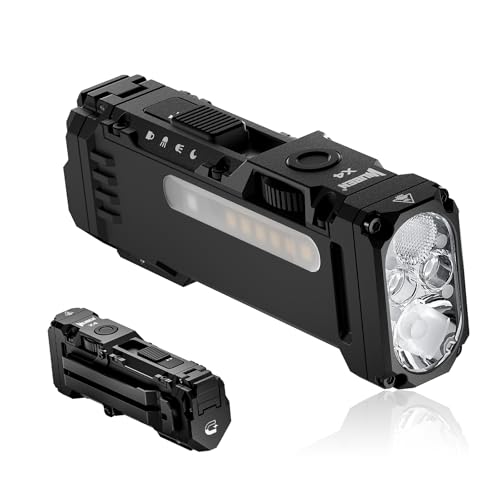
WUBEN X4 Rechargeable EDC Flashlight with RGB

WUBEN X4 EDC Compact Flashlight with RGB

Brinyte A02 Rechargeable Key Chain Flashlight

WUBEN X4 Compact EDC Flashlight with RGB Lighting
Why These Options Stand Out
The ArkPro trades the classic round tube for a slim, flat shape that disappears in a front pocket next to a wallet and phone. For people who carry a light at work, whether that’s a tradesperson crawling through an attic or an apartment dweller hunting for a fuse box, that flat profile feels less bulky in the waistband and easier to index by touch.
Unlike the round Baton4 reviewed next, this one leans into a multi-source layout with flood, spot, UV, and a green beam option, with the green beam rated Class 3R under 5mW. That mix makes it useful for everyday tasks and a few specialized jobs without dragging along a second tool.
Bright Spots
- Flat, pocket-friendly shape that sits flush against a phone or wallet
- Four light modes cover broad flood, long-distance spot, UV, and a Class 3R green beam
- Rechargeable battery cuts down on disposable cells in a daily-carry bag
- Versatile enough for inspections, dog walks, and quick home fixes
Things To Consider
- Flat profile can feel odd if you’re used to gripping a round penlight
- Multi-mode layout means more buttons or sequences to learn before it becomes second nature
- Green beam output under 5mW is purposeful but not for everyone
Key Product Details
Who It Suits Best
Anyone who wants a single EDC flashlight that handles home tasks, dog walks, and the occasional specialized job without carrying extras.
Where Another Pick Suits Better
Shoppers who prefer a classic round flashlight shape with one-handed tail-switch use will find the Baton4 a more familiar fit.
The Baton4 sticks to a familiar round tube shape that slips into a pocket the same way a pen does. For someone who already carries a folding knife or a penlight and wants the new light to feel invisible, that matters more than any spec sheet.
Where the ArkPro leans multi-mode, the Baton4 narrows in on the basics: a 1,300-lumen high setting, a 170-meter throw, a tail-mounted magnet, and a two-way pocket clip. In a parking garage or a basement closet, that magnet alone changes how often I actually use a flashlight rather than phone light.
The Case For It
- Compact round body feels natural next to a knife or pen in a pocket
- Tail magnet sticks to ferrous surfaces for hands-free tasks under a sink or hood
- Two-way clip lets you secure it to a belt brim, cap, or backpack strap
- Simple mode layout is easier to learn than the ArkPro’s multi-source layout
Honest Caveats
- Round tube shows up more obviously in a front pocket than the flat ArkPro
- Less versatile than four-source lights for specialized jobs
Right Fit For
Commuters and homeowners who want a small, dependable flashlight that rides in a pocket and pulls double duty on home repairs.
Swap It Out When
Outdoor campers and night-walk regulars get more out of the WUBEN X4 thanks to its long throw and warm side lights.
The X4 splits itself in two: a forward main beam for distance, plus side-mounted lights that range from a 1-lumen warm glow up to 100 lumens, with RGB options in between. For camping dinners, late-night trail walks, or tent lighting, those side lights cover roles a standard flashlight can’t.
Compared with the Baton4’s single-source setup, the X4 carries more capability in roughly the same pocket footprint. Owners commonly use the warm side array as a low-level camp lantern, while the 1,500-lumen main beam still reaches out 205 meters for trail-finding duty.
Practical Advantages
- Dual light sources in one body, no second lantern needed
- RGB side lights handle red, green, and blue tasks at low output
- Warm side beam runs from 1 to 100 lumens for tent or close-up work
- Long 205 m throw from the main beam for outdoor use
Points To Keep In Mind
- RGB modes are fun but add complexity in a true emergency
- Side lights drain battery faster than a single-mode flashlight
Feature Snapshot
Built With In Mind
Campers, hikers, and dog-walkers who want one light that handles trail finding and tent lighting without packing extras.
Look Elsewhere When
Shoppers looking for a thin, minimal pocket profile should consider the flat ArkPro instead.
This X4 leans into the same dual-light layout as the previous model but pushes its weight toward the compact EDC side of the category. Travelers packing light want one tool that disappears in a bag and still does more than a single-beam light.
The 1,500-lumen main beam paired with the warm side lights and RGB options covers hotel-room power outages, hostel reading lamps, and trail walks. In a small crossbody or jacket pocket, the size trade-off feels reasonable for the flexibility.
A Strong Showing
- Two light sources in a small body save bag space
- Rechargeable battery recharges from a power bank or laptop
- RGB options help preserve night vision on overnight travel
- Long 205 m throw covers urban exploration and trail edges
Worth Noting
- Multi-mode layout takes a few uses to feel natural
- Heavier than a single-mode keychain light
Best Suited To
Light packers, hostelers, and frequent flyers who want one rechargeable light that handles hotel rooms, trails, and transit stops.
Reach For A Different Pick When
People who mostly want a backup on a keyring should look at the lighter Brinyte A02 instead.
The A02 is the smallest pick in the lineup by a wide margin. It is built to live on a keychain, in a glovebox, or tucked into a jacket pocket so you stop thinking about it. For dog-walk home trips or finding a seatbelt buckle at night, a 125-lumen beam covers what most people actually need.
Compared to the heavier X4 models reviewed above, the A02 sacrifices throw distance and RGB flair for a fraction of the size. In a glovebox or on a keyring, the difference between “I have a light” and “I don’t” is the whole point.
A Favorable Mix
- Keychain-tiny body adds no bulk to daily carry
- Four modes including a strobe for emergency signaling
- USB Type-C charging matches modern cables
- Memory function returns to the last-used mode
Trade Offs
- 33 m reach limits it to close-range tasks
- Side button is small and may be hard to find by feel in the dark
Quick Facts
Who Should Grab It
Anyone who wants a barely-there backup light on a keychain, in a glovebox, or clipped to a zipper pull.
A Better Fit Elsewhere
Outdoor campers who need a long throw and warm camp-lighting should step up to the WUBEN X4 instead.
The third X4 in the lineup settles into a middle ground between the two X4s already reviewed. It carries the same dual-light layout, the same 1,500-lumen main beam, and the same warm side lights, but its listing points to a compact EDC framing for general use.
For shoppers torn between the more outdoor-leaning X4 reviewed earlier and a simpler tubular light like the Baton4, this version sits in a practical middle. In a backyard, a parking garage, or a late-evening dog walk, it does the job without forcing a choice between throw and flood.
Standout Benefits
- Compact body makes it pocket-friendly for daily carry
- Warm side lights handle reading and tent-lighting roles
- RGB modes add signaling and night-vision options
- Long 205 m throw covers general outdoor tasks
Practical Considerations
- Multi-mode layout has a learning curve compared with a single-mode tube light
- Owners commonly report that side lights drain the battery faster than expected on higher settings
Perfect Match For
Everyday carry shoppers who want a balance of pocket size, throw distance, and ambient lighting without going full camp-mode.
Consider Something Else When
If a flat, flush-carry profile matters more than multi-mode versatility, the OLIGHT ArkPro fits that style better.
What Matters Before Choosing A Pocket EDC Flashlight
Size And Carry Shape
The first question I always come back to is how the light rides in a pocket. Round tube lights like the Baton4 feel familiar because they mimic pens and knives, while flat-format lights like the ArkPro sit flush against a phone or wallet. For daily EDC, this shape decision matters more than peak lumen output, because a flashlight that feels bulky stays home.
Beam Type And Throw Distance
Throw distance is how far the beam reaches a useful level of brightness, and lumens measure total light output. A 30-meter reach handles apartment hallways, door locks, and short walks. Anything beyond a 150-meter reach opens up trail work, parking lots, and signaling. Dual-source lights like the WUBEN X4 add a separate wide or warm beam for area lighting, which fills the role of a lantern at camp or on a nightstand.
Charging And Battery Habits
USB Type-C charging is now the standard for pocket EDC, and it removes the need for a separate cradle or cable. Side lights and RGB modes are fun but draw the battery faster, so frequent outdoor use calls for either a power bank or a second light. Magnets and clips also change how often a flashlight gets used in real life, since hands-free work under a sink or hood is where a flashlight earns its keep.
Reliability And Build
Drop resistance, water resistance, and a solid pocket clip are the small things that decide whether a light survives a year of daily carry. Owners commonly report that lights with flimsy clips end up in a drawer, while those with confident clips and tail magnets keep showing up on jackets and tool belts.
Key Considerations Across These Picks
Pitfalls Shoppers Hit
The most common mistake is chasing the highest lumen number and ending up with a light that drains itself in a pocket or feels too aggressive for indoor use. A pocket EDC flashlight that runs hot on high is one people stop carrying. Another trap is buying a keychain-sized light expecting it to throw across a parking lot, then realizing 33 meters is the realistic reach.
Where The Extra Money Goes
Stepping up to a higher-priced pocket flashlight typically buys a more refined pocket clip, a sturdier tail switch, multi-source flexibility, and a tighter beam for distance work. For people who carry a light daily, those upgrades show up as fewer “I wish it had…” moments. For a once-a-week glovebox light, a simpler keychain option handles the job without the extra cost.
Frequently Asked Questions
How many lumens do I really need in a pocket EDC flashlight?
For door locks, stairs, and short walks, 100 to 300 lumens covers most tasks comfortably. Outdoor use on trails or in parking lots benefits from 1,000 lumens or more.
Is USB Type-C the standard charging port now?
Yes. Most newer pocket EDC flashlights charge over USB-C, which matches phone and laptop cables and removes the need for a separate cradle.
How far should a pocket EDC flashlight throw?
Close-range lights reach around 30 meters, which suits home and keychain duty. For trails and outdoor use, throw of 150 meters or more handles most scenarios.
Are multi-mode lights harder to use in an emergency?
They can be, since muscle memory takes longer to build. Memory functions, where the light returns to the last mode, help reduce that learning curve.
Do pocket EDC flashlights hold up to daily carry?
Most modern options are built for daily carry, with metal bodies, secure clips, and rechargeable batteries. Lighter keychain lights trade some durability for size, so matching the light to the carry style matters.