

Lighting a backyard, a job site, or a long driveway at night is one of those things you don’t think about until you’re standing in the dark with a flashlight clamped between your teeth. I talk to homeowners, contractors, and weekend tinkerers all the time who finally upgrade to LED and wonder why they waited. The right flood light turns a sketchy side yard into a usable patio after sunset, helps a mechanic see what they’re wrenching on, and makes a parking area feel less like a trap. I’ve spent years reading spec sheets, talking to installers, and watching how these fixtures hold up in real weather. Below is a list of ten LED flood lights that cover most of the scenarios shoppers actually face, from a cordless jobsite light to a 300W parking lot fixture.
The Picks In Brief

Milwaukee Electric Tool 2361-20 M18 LED Flood Light
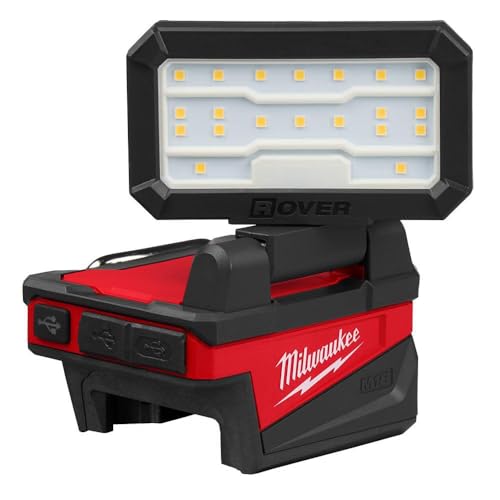
Milwaukee M18 Rover Compact Folding Flood Light

NUWATT 90W White Outdoor LED Flood Lights, 3CCT

NUWATT 90W Outdoor LED Flood Lights Bronze, 3CCT

NUWATT 50W White LED Flood Lights Outdoor, 3CCT

Milwaukee M12 Rechargeable Area Flood Light

HOPEDAMAI 100W LED Flood Light, 14000 Lumens
Leddictive 2 Pack 100W LED Flood Lights, 10000LM

HOPEDAMAI 300W LED Parking Lot Light, 42000LM

HOPEDAMAI 200W LED Parking Lot Light, 28000LM
Meet The Standout Selections
There’s a reason this Milwaukee sits at the top of many contractor carts. It runs on the M18 battery platform, so anyone already invested in those tools can drop in a pack and get to work without dragging an extension cord across a job site. The octagonal body is the kind of design touch you don’t appreciate until you’re lying on your back under a sink and need to prop the light at an odd angle, and the roll-cage frame takes the abuse of a real truck bed.
For trades who already own M18 batteries, this is one of the easiest upgrades they’ll make all year. It’s a bare tool, which means the price only buys the fixture, not a battery or charger, so factor that into the decision.
Useful Highlights
- Octagonal body sits flat on multiple faces for hands-free aiming.
- Roll-cage frame protects the LED during drops and truck rides.
- Compatible with any Milwaukee M18 pack the shop already owns.
- Replaceable lens extends the fixture’s working life on rough sites.
Honest Caveats
- Battery and charger are sold separately, which raises the entry cost for new shops.
- No corded fallback, so a dead battery means a dark site.
Right Fit For
Contractors and serious DIYers who already own Milwaukee M18 batteries and want a light that fits the same ecosystem.
Consider Something Else When
The Milwaukee M18 Rover Compact Folding Flood Light is a better call for crews who need a smaller head that pivots and folds for tight mechanical work.
The Rover is Milwaukee’s take on the modern folding flood light. The head rotates 300 degrees horizontally and 180 vertically, which sounds like marketing until you try aiming it into a crawl space or under a dashboard. The TRUEVIEW output pushes 1,000 lumens with four modes, so a technician can dial it down for a long inspection or crank it up to find a dropped fastener in the grass.
The bonus here is the dual USB ports: 12W USB-A and 27W USB-C power delivery to keep a phone or laptop topped off during a long service call. For mobile trades and road warriors, this is a quiet but meaningful upgrade over the older M18 lantern.
Where It Helps
- Folding head reaches awkward angles that fixed-body floods cannot.
- USB-C power delivery turns the fixture into a jobsite charger.
- Four output modes balance runtime against brightness on demand.
- Compact form fits in a service van alongside cases and parts.
Trade Offs
- Still a bare tool, so the cost climbs once a battery is added.
- Plastic hinges are a common wear point if the light gets tossed in daily.
Who It Suits Best
Field service technicians and mobile mechanics who want one light that doubles as a charger on the road.
Look Elsewhere When
The Milwaukee Electric Tool 2361-20 M18 LED Flood Light is the better call for crews who need a stationary light to throw across a whole room rather than pivot into one panel.
NUWATT built this 90W fixture for homeowners who want a real lighting design, not just “the brightest thing on the shelf.” The 3CCT switch lets the installer pick 3000K warm white, 4000K neutral, or 5000K daylight at install time, which is a small thing that changes how a facade actually feels after dark. Pair that with a dimmable driver and a die-cast aluminum body, and it’s the kind of fixture that disappears into a landscape and just does its job.
The half-inch knuckle mount is the same thread style used on much of the commercial landscape lighting world, so it pairs cleanly with existing ground stakes and junction boxes.
A Favorable Mix
- Tunable white at install for matching brick, siding, or stone.
- Dimmable output avoids the “stadium lighting” look on small homes.
- Corrosion-resistant die-cast body for long-term outdoor use.
- Standard half-inch knuckle thread accepts common landscape mounts.
Points To Note
- Hardwired installation requires a junction box and basic wiring comfort.
- White finish shows dirt and water spotting more than bronze.
Made For
Homeowners and light commercial installers who want a tunable, dimmable flood that blends into a designed landscape.
Swap It Out When
The HOPEDAMAI 100W LED Flood Light suits shoppers who want plug-and-play convenience and don’t want to open a junction box.
Same engine as the white version above, wrapped in a bronze housing. That color swap isn’t cosmetic only: bronze hides mineral spotting, irrigation overspray, and pollen dust much better than white or aluminum finishes. The output is the same 3CCT tunable range, the dimmable driver behaves the same way, and the rugged locking teeth on the knuckle arm keep the aim locked in place once tightened.
For coastal homes, pool decks, or anywhere irrigation water hits the fixtures every other day, the bronze finish is the practical pick over its white sibling.
Real Benefits
- Bronze finish hides water spots and oxidation in wet climates.
- 12,600-lumen output covers a two-car driveway with margin to spare.
- Locking knuckle teeth hold aim through storms and ladder bumps.
- Tunable CCT keeps the color consistent across multiple fixtures.
Things To Consider
- Still requires hardwired mounting, which raises install cost for some.
- Heavier bronze housing may need a sturdier junction box bracket.
Best Suited To
Coastal property owners and landscapers who want a tunable fixture that survives salt air and irrigation spray.
Reach For A Different Pick When
The NUWATT 50W White LED Flood Lights Outdoor is a better match for smaller yards where 90W would be overkill.
The 50W sibling in the NUWATT line keeps the 3CCT switching, dimmable driver, and half-inch knuckle mount, but cuts the output to a friendlier level for modest homes. A typical 50-by-30-foot backyard gets comfortable coverage without the glare that makes neighbors call. The 150-degree beam angle is wide enough to wash a facade without producing hot spots on the wall.
It’s also a useful second fixture to pair with the larger 90W versions on the same property, so the color temperature and finish match across the install.
Real-World Strengths
- Right-sized output avoids the stadium-light glare on small yards.
- Same 3CCT switch as larger siblings for design consistency.
- Half-inch knuckle threads accept standard landscape stakes.
- Wide 150-degree beam softens shadows across a facade.
Small Caveats
- Lower output can read as dim on commercial lots or long driveways.
- Hardwired only, which may require hiring an electrician for some.
Who Should Grab It
Homeowners lighting a side yard, shed, or modest patio who don’t need the heavy output of a 90W or 100W model.
A Better Fit Elsewhere
The Leddictive 2 Pack LED Flood Lights Outdoor is worth considering for anyone who wants two fixtures shipped together for symmetrical coverage.
This older Milwaukee lantern remains a popular pick because the beam rotates 180 to 360 degrees, so a single unit can switch between a focused task light and a wide area lantern. It runs on the smaller M12 battery platform, which trades raw output for portability, but most owners find 400+ lumens more than enough for a tent, a tailgate, or a roadside tire change.
The 2.1A USB port on the back is a quietly useful feature for campers and roadside kits where a phone or tablet needs charging.
What Makes Sense
- Adjustable 180-360 degree beam adapts to task and area lighting.
- M12 battery platform keeps the weight manageable in a pack.
- USB charging port covers phones on weekend trips.
- Compact body fits in a glove box or camping kit easily.
Points To Keep In Mind
- Lower lumen output than the M18 models, so it dims over distance.
- Older design lacks the folding head of the newer Rover.
Perfect Match For
Campers, road trippers, and homeowners who want a grab-and-go light for power outages and outdoor projects.
Skip It When
The Milwaukee M18 Rover Compact Folding Flood Light is the better option for anyone who needs pivoting aim and modern USB-C output.
For shoppers who don’t want to touch a junction box, the HOPEDAMAI 100W ships ready to use. The 16.4-foot cord ends in a US plug with an inline switch, so the install is essentially “mount it, plug it in.” The 108 LED chips push 14,000 lumens at a daylight 5000K color temperature, which covers up to 2,600 square feet when aimed correctly.
That makes it a strong match for barns, detached garages, and driveway edges where running new wire would be a deal-breaker.
A Strong Showing
- Plug-in design avoids hiring an electrician for a simple install.
- 16.4-foot cord reaches distant outlets without an extension.
- 14,000 lumens covers most residential driveways and yards.
- Inline switch adds convenience for daily on-off use.
Worth Bearing In Mind
- No dimming or color tuning, so the light is what it is.
- Corded design requires weatherproofing at the outlet.
Key Specs
Built With In Mind
Rural homeowners and shop owners who want serious brightness without hiring an electrician for a hardwired install.
Where A Sibling Pick Shines
The HOPEDAMAI 200W LED Parking Lot Light is the better call for very large driveways or small commercial lots that need more throw.
Two fixtures in one box solves the most common installation headache: matching color and brightness across a symmetrical install. Each 100W head runs 120 LEDs at 6000K, producing 10,000 lumens, and the die-cast aluminum shell with a finned radiator is the kind of construction detail that hints at decent thermal management.
The two-pack format is a quiet value play, especially for garages, barns, and sheds where a single 100W wouldn’t quite reach both corners.
What Earns Its Place
- Two-pack format covers both sides of a garage or barn.
- Finned aluminum body helps shed heat during long runs.
- Die-cast shell handles weather and ladder knocks.
- Cool 6000K reads as crisp and alert in security applications.
Honest Caveats
- Cool color temperature can feel harsh on warm-toned homes.
- No dimming or color tuning on this model.
Whose Shelf It Belongs On
Homeowners with a two-bay garage, a long barn, or a symmetrical facade who want matched fixtures in one shipment.
Not Your Match When
The NUWATT 90W Outdoor LED Flood Lights Bronze is worth a look for buyers who want a tunable, dimmable single fixture instead of two fixed units.
This is the heavyweight of the list. The 300W fixture runs on standard 120V and pushes 42,000 lumens through a 120-degree beam, which is enough to cover up to 8,000 square feet with uniform, shadow-free light. That’s the kind of output that used to require a metal halide pole light, so seeing it in a single LED shoebox-style housing is a real shift in the category.
For small businesses, churches, equestrian properties, and acreage owners, it offers commercial-grade illumination without the commercial-grade install cost.
Positive Takeaways
- 42,000 lumens replaces legacy metal halide pole lights.
- 120-degree beam keeps coverage uniform across large lots.
- Runs on standard 120V for simpler retrofit wiring.
- Wide 8,000 sq ft coverage suits small commercial lots.
Practical Considerations
- Requires a sturdy mounting arm or pole, which adds install parts.
- Cold 6500K tone reads as institutional rather than residential.
- Hardwired install is not a casual DIY project.
Feature Snapshot
The Right Fit
Small business owners, church groundskeepers, and homeowners with several acres who need a single fixture to throw serious light.
Another Choice May Suit
The HOPEDAMAI 200W LED Parking Lot Light is the smarter pick for properties that don’t quite need 42,000 lumens of output.
Think of this as the lighter-duty version of the 300W above. The 200W fixture delivers 28,000 lumens across a 120-degree beam, covering about 5,200 square feet with even light. The integrated aircraft-grade aluminum housing is the manufacturer claim, and the lighter weight makes it easier to mount on a standard pole arm or even a heavy-duty wall bracket.
For long residential driveways, equestrian arenas, and rural homes with a workshop out back, it’s a sensible middle ground between the consumer-grade flood lights and full commercial lighting.
What Helps Most
- 28,000 lumens covers mid-sized lots without overkill.
- 120V operation simplifies retrofit on existing circuits.
- Integrated aluminum housing reduces mounting complexity.
- 120-degree beam washes long driveways evenly.
Some Limits To Know
- Cool 6500K reads cold against warm-toned landscapes.
- Hardwired install still calls for an electrician on most properties.
Who Will Love This
Owners of long driveways, small ranches, and rural workshops who need commercial-style light without stepping up to 300W output.
Where Another Pick Suits Better
The HOPEDAMAI 100W LED Flood Light is the better match for shoppers who want a plug-in install and don’t need 28,000 lumens.
Picking The Right Flood Light For Your Space
Three attributes tend to separate the useful flood lights from the frustrating ones, and they matter more than the headline lumen number. First, consider the color temperature. Color temperature is measured in Kelvin (K), and it describes whether the light looks warm and golden or cool and bluish. A 3000K to 4000K range tends to feel comfortable on homes, while 5000K to 6500K reads as security or commercial lighting. If the fixture is going to live near a living space, lean warm; if it’s lighting a parking area, the cooler side is fine.
Second, think about beam angle and throw. A 120-degree beam is wide and forgiving, ideal for washing a facade. A tighter beam throws farther but creates hot spots on nearby walls. For most residential installs, anywhere from 90 to 150 degrees hits the sweet spot.
Third, decide on power and control. Cordless tools like the Milwaukee units trade raw output for portability. Plug-in fixtures like the HOPEDAMAI 100W skip the electrician but limit placement. Hardwired commercial fixtures offer the most output but require a real install. Dimmable and CCT-tunable fixtures, like the NUWATT line, add flexibility if the lighting plan might evolve.
Finally, match the IP rating to the environment. IP rating (Ingress Protection) is a two-digit code that describes how well a fixture resists dust and water. A wet-rated fixture is fine under eaves and against downpours, while anything near a pool or irrigation spray benefits from a sealed, corrosion-resistant housing. Bronze finishes and die-cast aluminum bodies tend to hold up best in tough climates.
Key Considerations Across These Picks
Pitfalls Shoppers Hit
The most common mistake is buying a fixture that’s too bright for the space. A 100W or 200W flood aimed at a backyard can light up the neighbor’s kitchen, which leads to friction and complaints. Match the lumen output to the square footage you actually need to cover, and consider dimmable fixtures if you’re unsure.
The second mistake is ignoring color temperature. Two different fixtures on the same property, one warm and one cool, look like a mistake even when they’re both high quality. Stick with one tone across the install, or use a CCT-tunable fixture so the color is locked in at the switch.
What The Higher Tier Buys
Spending more on a flood light usually buys three things: better thermal management, tunable controls, and sturdier housings. The NUWATT line, for example, adds 3CCT switching and a dimmable driver for a modest price bump over fixed-output fixtures. The HOPEDAMAI commercial-grade fixtures buy integrated housings and heavier aluminum construction that lasts longer in harsh weather.
For most homeowners, the upgrade to a tunable, dimmable fixture is the most rewarding. For shops and commercial users, the upgrade to heavier construction and higher output is usually worth the extra spend.
Frequently Asked Questions
How many lumens do I need for a backyard flood light?
A small backyard under 500 square feet usually looks good with 2,000 to 4,000 lumens. A typical driveway benefits from 8,000 to 14,000 lumens. Anything above 20,000 lumens starts to feel like commercial lighting and may bother neighbors.
What is the difference between warm white and daylight flood lights?
Warm white (2700K to 3500K) feels softer and more residential. Daylight (5000K to 6500K) reads as crisp and alert, and is the standard for security and commercial fixtures. Pick the one that matches the mood of the surrounding space.
Can flood lights stay outside in the rain?
Most outdoor-rated flood lights are designed to handle rain and snow, but check the IP rating before mounting. A wet-rated fixture can sit in direct weather; a damp-rated one should live under an eave or covered area.
Do LED flood lights use a lot of power?
LED flood lights use a fraction of the energy of older halogen or metal halide fixtures. A 100W LED often replaces a 250W halogen, which is a meaningful drop on the monthly bill over many hours of nightly use.
How long do LED flood lights last?
Most quality LED flood lights are rated for 25,000 to 50,000 hours of use, which works out to roughly a decade or more of typical residential evening runtime. Heat management and driver quality have the biggest impact on real-world lifespan.
Bottom Line
The right flood light comes down to where it’s going and how you plan to use it. Cordless Milwaukee units make sense on jobsites and camping trips; tunable NUWATT fixtures shine on designed landscapes; and the plug-in and hardwired HOPEDAMAI options cover everything from a single backyard to a small commercial lot. Match the output and color to the space, and you’ll wonder how you ever lived with the dim, yellow halogen light from before.