

A good flashlight can change a shift. Smoke fills a hallway, the power drops, and the only thing between a firefighter and a bad call is a beam they can trust. The wrong light sputters, weighs down a pocket, or flickers right when it matters. I put this list together for the folks who want gear that survives bunker drills, ladder work, and long vehicle extrications without complaining.
Most picks below lean toward intrinsically safe, helmet-friendly, or hands-free designs, because that’s where firefighter flashlights earn their keep. A few general-purpose high-lumen torches show up too, since off-duty use and vehicle kits matter just as much. Every option below gets used in the field, not a lab.
The Shortlist At A Glance

ULTRAFIRE Red Light Flashlight with Picatinny Mount

Streamlight 69140 Vantage Helmet-Mounted Flashlight

ULTRAFIRE Rechargeable Red LED Flashlight C15S-R

Streamlight 90545 Survivor Right-Angle Flashlight

Streamlight 68750 Dualie 3AA HAZ-LO Flashlight

Nightstick XPP-5422G Intrinsically Safe Dual-Light

SKYFIRE 5000 Lumen Rechargeable Zoomable Flashlight
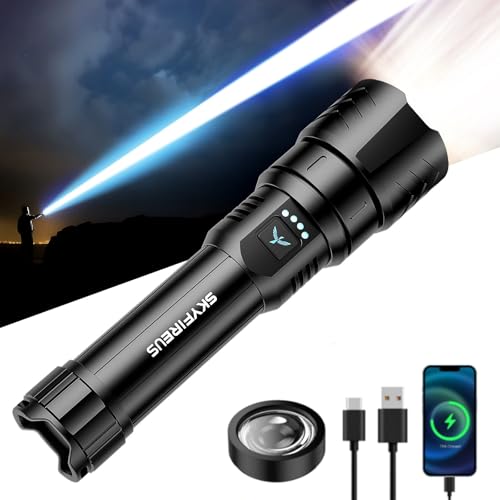
SKYFIRE 3000 Lumen Rechargeable Flashlight with Ignition Lens

ULTRAFIRE Mini Rechargeable Red Flashlight
ULTRAFIRE T1 Ultra-R Tactical Red Flashlight
Inside Each Recommended Option
Most firefighter flashlights aim for raw white-light output, but this ULTRAFIRE model takes the opposite route, leaning into a 620-630nm red beam at 250 lumens. Red wavelengths preserve night vision and keep wildlife or targets from spooking, which is why hunters and tactical responders often keep one strapped to a long gun. The included 20mm Picatinny mount and dual-mode pressure switch let a shooter click the light on without breaking their grip.
For a firefighter moonlighting as a hunter, or a tactical medic who wants a hands-free option that mounts on a rifle or shotgun, this build fills an odd but useful niche. It looks more “predator hunting” than “structure fire,” yet the rail mount and pressure switch carry over well to any team that runs shotguns or less-lethal platforms.
Everyday Advantages
- Red beam at 620-630nm preserves natural night vision during long shifts or outdoor work
- Tight 150-meter throw keeps the beam on target without flooding a wide area
- Included Picatinny mount and pressure switch enable true hands-free activation
- Dual-mode remote lets the user pick brightness without cycling through complex menus
- Compact tactical body stows easily in a turnout coat pocket or range bag
Worth Noting
- 250-lumen output feels modest next to high-output tactical lights reviewed below
- Red wavelength is a poor choice for reading smoke or searching structural interiors
- Mount-and-switch kit is built around firearms, so non-tactical users get features they may not use
Right Fit For
Night hunters, tactical medics, and firefighters who also serve on wildlife or rural response teams.
Swap It Out When
The Streamlight 69140 Vantage is a better match for structure firefighters who need a helmet-mounted white beam rather than a rail-mounted red one.
The Vantage is one of the most familiar helmet lights in any fire station. It clips onto a traditional firefighter helmet and aims a focused 140-lumen beam wherever the wearer turns their head, which is exactly the hands-free behavior a nozzle operator or officer wants. The rear-facing blue taillight helps crew members track each other in smoky hallways, a small detail that pays off on accountability.
Compared to the rail-mounted ULTRAFIRE I covered above, the Vantage trades weapon compatibility for true helmet integration. It’s a different tool for a different job, and it’s the one I keep coming back to when thinking about interior attack.
Everyday Wins
- Helmet-mounted design keeps both hands free for tools, hose, or victims
- Rear blue taillight improves crew visibility in smoky or zero-visibility conditions
- Push-button switch is easy to operate with a gloved hand
- Lightweight polymer body stays comfortable on long calls
Things To Consider
- 140 lumens is solid for close work but can feel underpowered on large, open structure fires
- Helmet compatibility depends on the brim and mount style, so confirm fit before buying
Key Specs
Whose Helmet It Belongs On
Interior attack crews, officers, and any firefighter whose helmet accepts a front-mounted light bracket.
Reach For A Different Pick When
The Streamlight 90545 Survivor is a stronger option for crews who need a right-angle intrinsically safe light they can clip or stand alone in a hazmat zone.
If Item 1 felt underpowered for long-distance spotting, this C15S-R steps up the throw distance considerably. The 10W red LED pushes a claimed 1312-foot reach, which is more than enough to track a moving coyote or scan a fenceline from a UTV. A 6061T aluminum body handles drops and weather, and the Type-C charging port means fewer proprietary cables to keep track of at the station.
For rural firefighters who also run predator control, this gives a much wider field application than the smaller rail-mounted ULTRAFIRE I covered earlier. It’s a working flashlight, not a backup.
Strengths Worth Knowing
- 1312-foot reach is genuinely useful for long property scans or rural patrol work
- Type-C charging matches modern station and vehicle gear
- Dual-mode operation keeps the controls simple in the dark
- 6061T aluminum body resists drops and sheds heat during long runs
Trade Offs
- Larger than pocket-friendly EDC options like Item 9
- 2600mAh battery is replaceable, but runtime varies widely with mode use
- Red wavelength sacrifices close-up detail compared to white-light units
Built With In Mind
Rural firefighters, game control officers, and anyone who needs long-distance night scanning without spooking wildlife.
Look Elsewhere When
The ULTRAFIRE Mini Red Light Flashlight is a better everyday-carry option when pocket size matters more than throw distance.
The Survivor is a classic for a reason: it’s intrinsically safe (Class I, Div 1 rated, which means the light is engineered so it cannot ignite flammable gases or vapors in hazardous areas), it stands upright on its own, and it clips to turnout gear without fuss. With 175 lumens on high and a low mode that stretches runtime for extended overhaul or rehab, it bridges the gap between the helmet-mounted Vantage and a dedicated right-angle work light.
The trade-off is weight. Carry it for a full shift and you’ll feel it, but for hazmat, refinery, or industrial firefighters, the intrinsically safe rating is worth the bulk.
The Practical Payoff
- Class I, Div 1 intrinsically safe rating for flammable environments
- High/low output extends runtime for long overhaul or rehab operations
- Right-angle body clips to turnout and stands upright as a scene light
- Glove-friendly push-button switch
- 2-meter impact resistance rating stands up to harsh work conditions
Small Caveats
- Heavier than straight tactical lights, which matters on long shifts
- 175-lumen high mode is solid but not as bright as some consumer-grade torches
- Rechargeable battery pack adds bulk compared to AA models like Item 5
Best Suited To
Hazmat technicians, industrial firefighters, and refinery response crews who require an intrinsically safe light.
Where Another Pick Suits Better
The Streamlight 68750 Dualie 3AA HAZ-LO is a lighter intrinsically safe alternative for crews who prefer AA batteries and dual beam patterns.
The Dualie’s draw is simple: two LEDs, two jobs. Run the spot beam for distance, the downward flood for stepping over debris in zero light, or both at once to light up the immediate path without shadows. That dual-beam setup is genuinely useful for confined-space work and vehicle extrications where you need light at your feet and a few feet ahead at the same time.
AA power is also a meaningful feature. Stations can hand out fresh cells from bulk stock, no special chargers required.
A Strong Showing
- Dual LED system supports spot, flood, or both at the same time
- Spot beam reaches 171 meters for distance checks
- 18-hour runtime on spot mode handles long calls
- Runs on three AA batteries that are easy to source and replace
- Intrinsically safe body for hazardous areas
Points To Note
- Yellow safety body is easy to spot, but it stands out on plain gear setups
- Spot and flood together produce less combined output than a single high-lumen light
Feature Snapshot
Made For
Confined-space rescue techs, vehicle extrication crews, and firefighters who prefer field-replaceable AA power.
Consider Something Else When
The Nightstick XPP-5422G is a comparable dual-light option for crews working in mining or grain silo rescues.
Nightstick’s XPP-5422G carries both ETLus and MSHA listings (independent safety certifications covering electrical and mine-safety standards respectively), which is the paperwork mine rescue and grain elevator crews often need before they can bring a light on-site. The polymer body keeps weight down, and the three-mode design (flashlight, floodlight, both) gives a similar experience to the Streamlight Dualie but with slightly different ergonomics.
For most structure firefighters, the Streamlight above is the more familiar choice. For mine-rescue-certified operations, this Nightstick is a serious option.
Real Benefits
- ETLus and MSHA safety listings cover mine rescue and grain facility requirements
- Three-mode operation: flashlight, floodlight, or combined dual-light
- Engineered polymer housing reduces weight on long shifts
- 170-meter beam distance handles large interior spaces
Where It May Fall Short
- 260-lumen combined output is lower than some non-certified consumer lights
- AA batteries sold separately, which adds to upfront ownership
Quick Facts
Who Should Grab It
Mine rescue teams, grain elevator responders, and any crew that operates under MSHA jurisdiction.
Where Another Pick Suits Better
The Streamlight 68750 Dualie is the more familiar choice for general hazmat and industrial crews that don’t need MSHA paperwork.
Stepping away from the fireground-certified picks for a moment, the SKYFIRE 5000-lumen torch is more of an off-duty and rescue-utility workhorse. The patented ignition lens adds a fire-starting feature, which feels redundant at a structure fire but genuinely useful for wildland, search-and-rescue, and camp setups. The zoomable head and six modes cover everything from wide-area scene light to focused throw.
This is the kind of light that lives in a POV vehicle’s trunk, not on a turnout coat.
Standout Benefits
- 5000-lumen ceiling covers wide-area scene lighting for vehicle kits
- Zoomable head adjusts from flood to focused beam on demand
- Ignition lens feature adds backup fire-starting capability in wilderness settings
- Rechargeable battery keeps the light running without disposable cell swaps
Practical Considerations
- Not certified for hazardous environments, so it’s not a primary fireground light
- Fire-starting lens is a niche feature for most firefighters
- Six-mode interface is more complex than simpler two-mode duty lights
Perfect Match For
Off-duty firefighters, wildland responders, and rescue squad members who carry a multi-tool flashlight in their vehicle.
Skip It When
The Streamlight 90545 Survivor is the better call for interior attack and any scene requiring intrinsically safe certification.
This is the smaller sibling of the SKYFIRE above. Output drops from 5000 to 3000 lumens, which is more than enough for most off-duty and rescue uses, and the body is a bit friendlier for everyday carry. The ignition lens feature carries over, so wildland crews and SAR volunteers get the same fire-starting backup in a more pocket-friendly package.
Compared to the bigger SKYFIRE, this one trades raw output for size and weight savings, which is the right trade for general vehicle and pack use.
Strong Points
- 3000-lumen output handles most off-duty search and scene tasks
- More compact body fits comfortably in vehicle door pockets and pack lids
- Rechargeable design avoids disposable cell waste over time
- Ignition lens offers a real-world backup for emergency fire-starting
A Few Limitations
- Waterproof rating details aren’t specified for this listing, so care around prolonged wet exposure is reasonable
- Lower lumen ceiling than the 5000-lumen SKYFIRE sibling
Who Will Love This
Off-duty firefighters, campers, and volunteers who want one flashlight for the truck, the pack, and the campsite.
A Better Fit Elsewhere
The ULTRAFIRE Mini Red Light Flashlight is a more pocket-friendly option for anyone who wants a smaller light for map reading and quick tasks.
Sometimes the most useful light is the one you actually have on you. The ULTRAFIRE Mini slips into a cargo pocket, charges over USB-C, and runs a single-mode red beam that turns on the moment you press the button. No mode cycling in the dark, no fumbling through strobe and SOS settings.
For map reading at the command post, checking vitals in a darkened room without waking a patient, or preserving night vision during a long rural response, this mini earns its spot.
Where It Delivers
- Compact pocket-size body disappears into turnout or uniform pockets
- USB-C charging matches modern station electronics
- Single-mode design turns on instantly with no menu cycling
- Red wavelength preserves night vision for navigation and patient assessment
Less Ideal Details
- Single-mode design means no high-output burst for long-distance spotting
- Smaller body trades away the throw distance of larger ULTRAFIRE models
Made For
Command staff, EMS providers, and any firefighter who wants a backup pocket light for navigation and documentation.
Where A Sibling Pick Shines
The ULTRAFIRE C15S-R is a stronger option for long-range night hunting and rural scanning.
Wrapping up with another ULTRAFIRE entry, the T1 Ultra-R trims features to focus on a single job. The 620-630nm red LED pushes out 1000 lumens with a 218-yard throw, all controlled by a single-mode interface that prevents accidental mode changes mid-task. It’s essentially a more focused, brighter alternative to the rail-mounted ULTRAFIRE I started with.
For the firefighter who wants a no-nonsense red tactical light without extra remotes or mounts, this is the cleaner option.
What Pays Off
- 1000-lumen red beam throws 218 yards in a single-mode design
- Single-mode switch removes accidental mode cycling during critical work
- Red wavelength preserves night vision for wildlife observation and stealth movement
Possible Compromises
- Single-mode design is limiting for users who want adjustable brightness
- No included pressure switch or rail clamp out of the box
Who It Suits Best
Night hunters, rural patrol volunteers, and tactical responders who want a simple, bright red flashlight without extra accessories.
Not Your Match When
The ULTRAFIRE Red Light Flashlight with Picatinny Mount is the better fit for anyone who needs the included rail mount and pressure switch kit.
Picking The Right Beam For The Job
Beam pattern matters more than raw lumens for most fireground use. A tight spot beam helps in smoke and long hallways, while a wide flood light is better for overhaul and rehab areas. For interior attack, right-angle lights that clip to turnout gear let a firefighter aim with head movement, which is faster than adjusting a handheld torch with a gloved hand.
Battery type shapes daily ownership too. Rechargeable packs cut long-run expense but require a charging station and spare batteries. AA-powered lights are heavier and shorter-lived per cell, but every firehouse has AA batteries in bulk, so replacements are never far away. Crews that respond to refineries, mines, or grain elevators should also confirm the light carries the right certifications (intrinsically safe ratings or MSHA listings) for the environments they enter.
Durability is the easy checkbox: look for impact-resistance ratings (in meters) and water-resistance ratings (IPX4 handles rain, IPX7 handles brief submersion). Glove-friendly switches are non-negotiable. A thin push button is unusable in structural PPE, so look for raised or oversized switches.
Key Considerations Across These Picks
Pitfalls Shoppers Hit
Many shoppers focus on the lumen number and ignore the beam shape. A 5000-lumen flood light sounds impressive, but inside a smoky structure it bounces off particles and creates a whiteout that blinds the user. For interior attack, a focused beam in the 100-300 lumen range often performs better than a 5000-lumen wall of light.
Another common miss is ignoring certification paperwork. A regular rechargeable flashlight is fine for a turnout coat pocket, but in a Class I, Div 1 environment it becomes a liability. Confirm the rating matches the worst environment the user expects to enter, because ratings are not interchangeable between agencies.
Where The Extra Money Goes
Premium firefighter lights earn their price through three things: certified safety ratings, better switches and seals, and longer warranties backed by American-based support. A $40 light may claim 5000 lumens, but a $150 intrinsically safe light from a known brand tends to deliver consistent output over years of station abuse.
The upgrade is worth it for anyone who lights up on real fireground calls. For occasional use, off-duty carry, or vehicle kits, the lower-cost options above hold up just fine.