

Swapping old incandescent bulbs for modern LEDs is one of those small home upgrades that quietly pays off for years. I put this roundup together for anyone staring at a wall socket wondering whether 9 watts really feels like 60, or which bulb actually belongs in a damp porch fixture. The picks below cover the everyday A19 shape, dusk-to-dawn sensors, vintage filament looks, and a few specialty options for refrigerators and puck fixtures.
Your Options, Compared

dalattin 24 Pack LED Bulbs 60W Equivalent Daylight 5000K

dalattin A19 Dusk to Dawn Light Bulbs 9W 4 Pack

TJOY 12 Pack LED Light Bulbs 100W Equivalent Daylight 5000K

TJOY LED Light Bulbs 100W Equivalent Daylight 5000K

dalattin 12 Pack A19 Vintage LED Edison Bulbs Dimmable

Megereet Refrigerator LED Bulb E17 3.8W Daylight 5000K

Legental GU24 LED Puck Light Bulb 10W Cool White 2 Pack
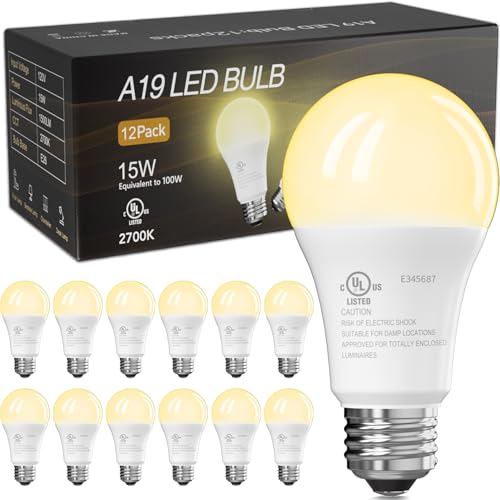
TJOY LED Light Bulbs 100W Equivalent Soft Warm 2700K
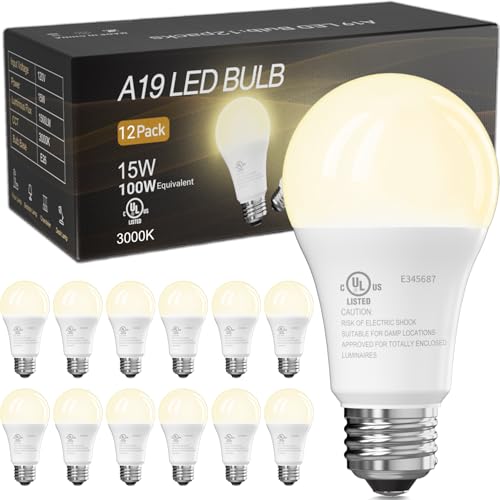
TJOY LED Light Bulbs 100W Equivalent Soft Warm 3000K
A Breakdown Of The Leading Choices
For a whole-home retrofit on a normal budget, a 24-pack of standard A19 LEDs covers most table lamps, ceiling fixtures, and hallways in one shot. The dalattin set runs at 9 watts while putting out 800 lumens, which is the typical 60-watt replacement spec, and the 5000K daylight tone feels crisp without skewing blue in most rooms. CRI, or Color Rendering Index, measures how accurately a light shows hues compared to natural daylight, and this bulb lands at 80+, which is the practical baseline for living spaces.
The E26 base (the standard screw-in size used across North America) drops into virtually any common socket, and the non-dimmable design keeps things simple for shared fixtures where dimmer switches aren’t in play.
Positive Points
- Bulk 24-pack covers a whole apartment without second orders
- 9 watts replaces a 60-watt incandescent for meaningful kilowatt-hour savings
- 5000K daylight tone suits task-heavy rooms like home offices and kitchens
- UL listing signals it has passed third-party safety checks
- Rated life around 13.7 years at three hours of daily use
Worth Noting
- Non-dimmable, so pairing with an existing dimmer switch can cause flicker or buzz
- 5000K reads cool in living areas that lean cozy; some prefer a softer 2700K there
Key Specs
Who It Suits Best
Renters and homeowners doing a whole-home swap on a single order, especially in cool-tone kitchens, bathrooms, and garages.
Look Elsewhere When
Pick the dalattin Vintage LED Edison Bulbs if your fixtures are open pendants where the bulb itself becomes part of the decor.
The second dalattin pick moves outdoors, where a porch light left on by accident overnight is a real money leak. A photocell sensor (a small light-sensing component) tells the bulb when ambient daylight has dropped and switches it on, then turns it off at sunrise without any app or timer. Compared to the 24-pack above, this set is built for a specific job rather than a whole-home sweep.
You get the same 9-watt draw, the same 5000K daylight tone, and the same E26 base, so it lands in standard porch lanterns. Owners commonly note the bulb ignores neighboring artificial light, so it won’t fight a nearby streetlamp or security fixture.
What Stands Out
- Photocell handles on/off automatically, no smart-home hub needed
- Runs only after dark to avoid wasted daytime energy
- Same 60W equivalent output as the indoor 24-pack
- Ignores nearby artificial light sources, so it won’t flicker on at dusk from a porch neighbor’s lamp
Trade Offs
- The photocell needs the bulb exposed to actual sky light, so enclosed lantern globes can confuse it
- Only four bulbs per pack, so larger yards may need more than one order
Feature Card
Right Fit For
Anyone wanting hands-off porch, garage, or yard lighting that only runs after dark.
A Better Fit Elsewhere
Choose the dalattin 24-pack instead for indoor whole-home retrofits where a sensor isn’t useful.
Some rooms need real punch, and a 60W equivalent just won’t cut it. The TJOY 12-pack steps into the 100W replacement tier while still running on standard A19 LED wattage, so it lands in any normal lamp or ceiling fixture. The daylight 5000K tone makes it a strong fit for workshops, basements, and kitchen task areas where detail work happens.
For someone whose old house had a row of 100W incandescents in the kitchen ceiling, this is the cleanest one-order solution I see in the roundup.
Useful Highlights
- 100W-equivalent output covers high ceilings and large rooms in fewer fixtures
- Same standard A19 shape as lower-wattage bulbs, so no special housing required
- 15000-hour rated lifespan trims ladder time over the years
- 12-pack works well for full-room retrofits without going to a 24-pack
Small Caveats
- Non-dimmable, so lamp dimmers may need to be bypassed or replaced
- 5000K can feel harsh in a cozy den or TV room
Built With In Mind
Homeowners replacing high-output incandescents in workshops, kitchens, and finished basements.
Reach For A Different Pick When
Pick the TJOY Soft Warm 2700K set if your goal is a cozy living-room glow at the same brightness level.
Sometimes a whole 12-pack is too many bulbs, especially for a single ceiling fixture or a quick kitchen swap. TJOY also sells this same 100W-equivalent daylight configuration in a smaller count, which I read as the brand’s middle-ground option between single-bulb retail packs and bulk buys. The 5000K tone matches the larger TJOY set above, so mixing rooms across both packs stays visually consistent.
For someone wanting higher output in just one or two fixtures without a stockpile, this lands in a sensible spot. Where the 12-pack rewards planning ahead, this one rewards a quick fix.
Real Benefits
- Smaller count suits single-room upgrades without leftovers in the closet
- Same 100W replacement brightness as the larger TJOY pack
- Daylight tone keeps color matching consistent across rooms
- A19 form drops into standard lamp and ceiling sockets
Honest Caveats
- Per-bulb cost usually runs higher than the 12-pack
- Not dimmable, so older rotary dimmers won’t get along with it
Best Suited To
Shoppers replacing a handful of high-output bulbs in one or two rooms without committing to a bulk pack.
Where Another Pick Suits Better
Choose the TJOY 12-pack 100W Equivalent Daylight set instead when outfitting a large kitchen or finished basement at once.
Every other pick on this list is meant to disappear. The dalattin Vintage Edison is the opposite: it wants to be seen. The exposed filament-style LED runs through clear glass in an A19 shape, so it works in open pendants, chandeliers, and sconces where the bulb itself becomes part of the room’s look. It draws clear inspiration from Thomas Edison’s original filament aesthetic, just in an 8W LED package.
Unlike the daylight 5000K picks above, this set runs at 2700K soft white, which feels warm and candlelit. It also supports dimming, which matters when the bulb is part of the visual centerpiece rather than a utility light.
Real-World Strengths
- Dimmable from roughly 10 to 100 percent for mood control
- Filament-style LED adds visual texture without the heat of an old Edison bulb
- 8W replaces a 60W incandescent for real wattage savings in decorative fixtures
- CRI80+ keeps warm wood tones and fabrics looking natural
- E26 base fits the same standard sockets as the rest of this list
Possible Compromises
- 800 lumens per bulb is lower than the 100W TJOY picks, so very large rooms may need more fixtures
- Clear glass exposes every speck of dust, so cleaning shows up on the chore list
Feature Snapshot
Whose Shelf It Belongs On
Design-focused renovators with open pendants, dining-room chandeliers, or decorative wall sconces where the bulb is on display.
Not Your Match When
Pick the dalattin 24-pack 60W Daylight bulbs instead for utility rooms where the bulb should disappear into the ceiling.
Refrigerator bulbs live in a different world than table lamps. The Megereet bulb uses a small E17 base (a miniature screw-in style roughly 17mm across) common in fridge and freezer light sockets, and it lists compatibility with Frigidaire, Kenmore, and Electrolux models. The 3.8W draw replaces a 40W halogen-style equivalent, which is meaningful since the fridge light often gets left on for minutes at a time.
You may find this bulb most useful as a one-off replacement when an old fridge light finally burns out, rather than a sweeping upgrade. The daylight 5000K tone helps when sorting leftovers at the back of the shelf.
Strengths Worth Knowing
- E17 base fits common refrigerator and freezer light fixtures
- Low 3.8W draw cuts heat output inside the appliance
- Wide 100 to 265V operating range handles both US and European fridge wiring
- Daylight 5000K tone makes food labels easier to read at a glance
Points To Note
- Sold as a single bulb, so backup spares cost more per unit than a multi-pack
- Some fridge models use proprietary bases, so confirm the E17 socket before ordering
Made For
Anyone replacing a burned-out Frigidaire, Kenmore, or compatible fridge light without buying a service call.
Swap It Out When
Pick the dalattin 24-pack 60W Daylight bulbs instead for any room with a standard E26 socket.
Most of this roundup covers the standard A19 screw base, but many ceiling puck fixtures use a GU24 twist-lock socket (a two-prong base that locks into place with a push-and-twist motion). The Legental puck bulb drops into that socket with 10 watts of draw and roughly 1000 lumens of cool 5000K output. That’s a notable jump from the A19 options, which sit closer to 800 lumens at lower wattages.
The wide 120 to 277V operating range makes it flexible across older 120V household circuits and the higher-voltage commercial circuits found in apartments. Compared to the TJOY 100W equivalents above, this leans brighter per bulb and targets a very specific fixture type.
Notable Gains
- GU24 base fits ceiling puck fixtures that won’t accept standard A19 bulbs
- 1000 lumens per bulb for higher ceiling output
- Rated life around 25000 hours for fewer ladder trips
- Operates on 120 to 277V circuits for flexible installs
Where It May Fall Short
- Cool 5000K tone can feel stark in a bedroom or dining setting
- Two-pack only covers two fixtures; multi-room kitchens may need extra orders
Who Should Grab It
Apartment dwellers and homeowners with GU24 ceiling puck fixtures who want a brighter, cooler swap than the stock CFL bulbs.
Consider Something Else When
Pick the TJOY 100W Daylight 12-pack instead for standard E26 ceiling fixtures throughout a kitchen.
The TJOY 100W equivalent line returns in a much warmer register. The 2700K soft white tone is the classic warm-white color associated with old incandescents, and at 100W replacement output it handles living rooms, bedrooms, and family spaces where brightness still matters. For someone whose living room needs both volume and a cozy color temperature, this is the middle ground between the daylight picks and the dimmable vintage bulb above.
You may find the 2700K tone reads slightly more golden than the 3000K TJOY pick below, which sits closer to a clean halogen look.
What Earns Its Place
- 100W replacement output with a warm 2700K tone for traditional room aesthetics
- A19 shape fits standard lamp and ceiling fixtures
- Same 15000-hour rated lifespan as the daylight TJOY siblings
- Works well for layer lighting, where warm output pairs with brighter task lamps
A Few Limitations
- Non-dimmable, so dimmer switches need bypassing
- 2700K can skew too golden for kitchens with cooler cabinet tones
Perfect Match For
Living rooms and bedrooms needing strong 100W-level output in a warm, traditional color.
Skip It When
Pick the TJOY 100W Daylight 12-pack instead for kitchens, workshops, and task-heavy spaces.
The final TJOY entry shifts the color temperature up by a small but noticeable 300K. The 3000K tone reads as a clean warm white, sitting between the candlelit 2700K option above and the cooler 5000K daylight siblings earlier in this list. That middle position makes it a flexible pick for hallways, dining rooms, and entryways where the room needs to feel inviting without skewing too golden.
Compared to the 2700K version, this is the choice for rooms with cooler paint tones, white trim, or modern furnishings. It also pairs nicely with adjacent 5000K task lighting in open floor plans.
Advantages To Know
- 3000K tone sits between warm and cool for flexible room use
- Same 100W equivalent output as the warmer and daylight TJOY siblings
- A19 shape drops into common lamp and ceiling fixtures
- Useful for open floor plans mixing warm and cool zones
Factors To Consider
- Non-dimmable, so dimmer-equipped rooms may need hardware swaps
- Color sits between two camps, so it can feel lukewarm in rooms that lean fully warm or cool
Who Will Love This
Homeowners with mixed-tone interiors who want bright 100W equivalent output without committing fully to warm or daylight.
Where A Sibling Pick Shines
Pick the dalattin Vintage Edison bulb instead for visible decorative fixtures where dimming is part of the design.
Picking The Right Bulb Before You Click
Before choosing between these energy efficient light bulbs, the most useful filter is the room and fixture, not the brand label on the box. Match three things in order: the base type, the brightness tier you actually need, and the color temperature that suits the space. Getting those right is what makes an LED swap feel like an upgrade rather than a compromise.
Match The Base First
The base is non-negotiable. Most of this roundup uses the E26 standard screw base, but the Megereet fridge bulb uses the smaller E17, and the Legental puck uses a GU24 twist-lock. Pull an old bulb from the socket and confirm before ordering, since returning the wrong base is the most common avoidable hassle in this category.
Brightness And Wattage Are Two Different Numbers
An LED’s wattage tells you how much electricity it pulls. Its lumens tell you how much light it puts out. A 9W LED at 800 lumens replaces a 60W incandescent. The 100W equivalent TJOY picks cover larger rooms, while the 800-lumen options handle standard lamps and ceiling fixtures fine.
Color Temperature Sets The Mood
Color temperature, measured in Kelvin (K), is what people usually call “warm” or “cool.” 2700K reads candlelit, 3000K reads clean and neutral, and 5000K reads crisp daylight. Cool kitchens and offices lean toward 5000K, while bedrooms and living rooms usually sit happier at 2700K or 3000K.
Dimmable Vs Non-Dimmable
Dimmable bulbs cost a little more per bulb but matter when the fixture is on a dimmer switch. Pairing a non-dimmable bulb with a dimmer often produces flicker, hum, or shortened lifespan.
What To Weigh Before You Check Out
Common Buying Slip Ups
The most common slip up is buying the right shape but the wrong color temperature, then realizing the living room now feels like a cafeteria. The second is overcounting how many bulbs a project needs. Measure fixtures, count sockets, and add one or two spares rather than guessing.
What The Higher Tier Buys
Higher-tier bulbs in this category tend to buy you a longer rated lifespan, a higher CRI for better color rendering, or dimming compatibility that lower-tier options skip. The upgrade is worth it most in fixtures that are hard to reach, in rooms where color accuracy matters, and in any space on a dimmer switch. For a basic table lamp that just needs to turn on, a standard non-dimmable option covers the job.
Frequently Asked Questions
How Long Do Energy Efficient Light Bulbs Actually Last?
Most LEDs in this roundup are built to run 15000 to 25000 hours, which works out to roughly a decade or more at typical home use. Lifespan assumes roughly three hours of daily use, so fixtures left on overnight will reach the end sooner.
Can I Put LED Bulbs In Any Fixture?
Most fixtures accept LED equivalents as long as the base matches. The exceptions are enclosed fixtures with poor ventilation, dimmer switches without dimmable bulbs, and specialty appliances like ovens that need high-heat rated bulbs.
Do Energy Efficient Light Bulbs Really Save Money?
LEDs use roughly a tenth of the electricity of the incandescents they replace, so the running cost drops sharply. The savings show up most in fixtures that run for many hours a day, like kitchens, home offices, and outdoor porch lights.
What Color Temperature Should I Choose?
Cool 5000K suits task-heavy rooms like kitchens, workshops, and bathrooms. Warm 2700K suits bedrooms and dining areas. A 3000K tone sits in between and works well in hallways and open living spaces.
Are Dimmable LED Bulbs Worth The Extra Cost?
Dimmable bulbs are worth the step up in any room controlled by a dimmer switch, since non-dimmable LEDs on dimmers often flicker or hum. In basic on-and-off fixtures, the extra cost is harder to justify.
Bottom Line
The right bulb is the one that fits the socket, matches the room’s tone, and handles the brightness tier the space actually needs. For whole-home retrofits, a daylight 24-pack covers the most ground. For outdoor porches, a dusk-to-dawn sensor pays for itself in forgotten-light savings. For visible fixtures, a vintage dimmable filament turns the bulb itself into part of the room.